Guest post by Bradley Berkman, associate product manager at Milwaukee Tool
As battery-powered equipment becomes more prevalent in professional landscaping, trailer design is emerging as a critical factor in operational efficiency and long-term success. The shift away from gas-powered tools is driven by growing regulations, fuel costs, and the ongoing innovation of battery technology. However, adopting battery-powered tools is only part of the equation. How those tools are stored, charged, and deployed throughout the day can significantly impact crew productivity and equipment longevity.
Whether transitioning gradually or outfitting an entire fleet, companies must consider how trailers support charging infrastructure, battery storage, and scalability. A well-designed trailer setup not only streamlines workflows and reduces downtime but also protects equipment, improves safety, and future-proofs investments as technology evolves. With thoughtful planning, trailers can become mobile energy hubs that support efficient, flexible, and sustainable landscaping operations.
Building a Flexible and Scalable Charging Ecosystem
Battery adoption typically begins with shop-based charging and evolves toward on-site or on-trailer solutions. This progression requires systems that support multiple charging environments. Chargers that can be mounted inside trailers or transported between locations offer the flexibility needed to adapt as battery usage increases. Choosing equipment that works seamlessly across shop and field settings minimizes the need for replacements and supports long-term growth.
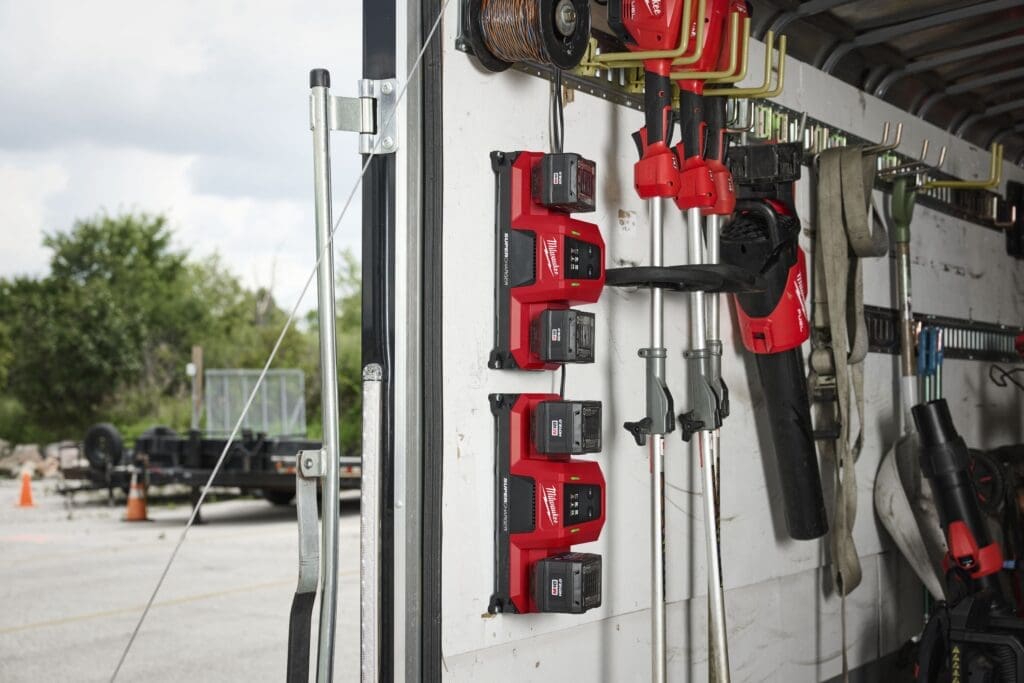
Estimating daily battery needs is another essential part of trailer planning. Companies should calculate the total number of battery discharges required for a typical workday by assessing runtime per tool. Basing estimates on average usage rather than peak demand helps avoid overinvestment. Access to power throughout the day can further reduce the total number of batteries needed, especially when using high-speed charging systems that enable multiple discharges from a single battery.
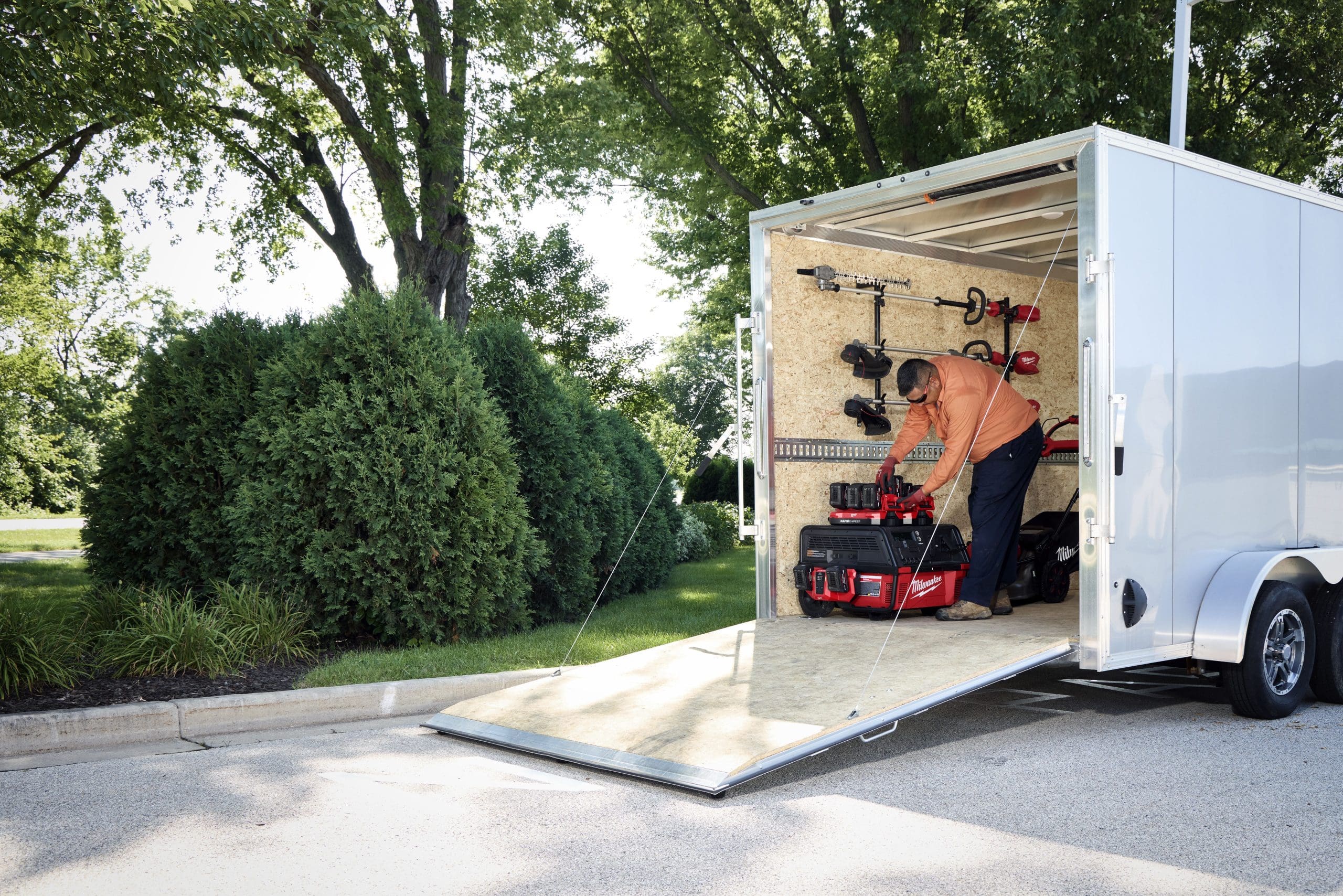
Portable power supplies play a vital role in enabling landscaping crews to recharge batteries while in the field. High-capacity systems designed for mobile use help reduce downtime and streamline daily operations. One example is the ROLL-ON7200W/3600W 6.0kWh Power Supply from Milwaukee Tool, a solution built specifically for on-the-go charging. With the capacity to support a full day of work, the ROLL-ON Power Supply allows crews to operate efficiently without interruption. It also functions as a centralized power management hub: at the end of the day, a single cord recharges every battery on the trailer, simplifying overnight prep and ensuring readiness for the next job.
Compatibility, Efficiency, and Power Management
Selecting platforms with consistent interfaces across generations of tools ensures that battery investments remain viable over time. Compatibility allows batteries to be deployed across multiple tools, reducing redundancy and simplifying inventory. Systems with a proven track record of backward and forward compatibility offer greater scalability and reduce the risk of obsolescence.
For companies using tools from multiple manufacturers, managing chargers and power systems can become complex. Brand-agnostic power management solutions help streamline operations by supporting a variety of chargers. However, minimizing the number of platforms on a trailer remains best practice, as it simplifies energy deployment and reduces daily setup complexity.
Safe and Smart Trailer Design
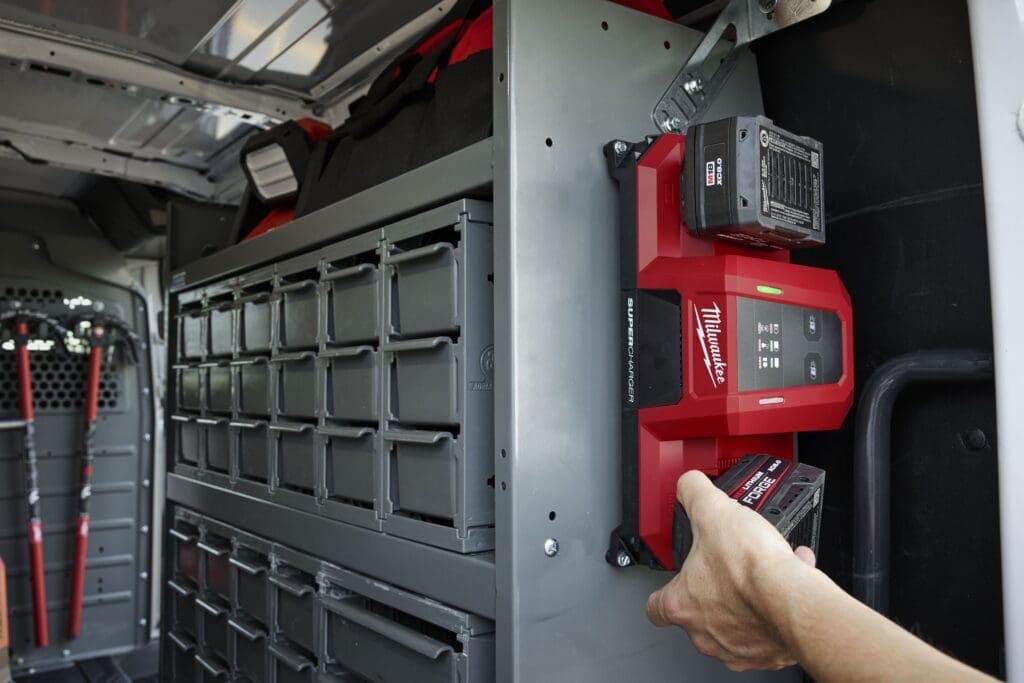
Trailers often house large equipment and sharp tools, making safety and accessibility top priorities for battery storage. Chargers should be mounted in secure, elevated locations to keep cords out of the way and reduce hazards. Accessible placement also enables quick battery swaps between properties, supporting uninterrupted workflows.
Transitioning to battery-powered equipment does not require a complete trailer overhaul. Certain manufacturers’ solutions are designed to integrate with existing setups, making retrofitting a time-effective approach. Companies can maintain their current workflows while gradually upgrading their infrastructure to support battery operations.
Building for Efficiency and Growth
As the landscaping industry continues its shift toward battery power, trailer outfitting will play a pivotal role in enabling efficient, scalable operations. By prioritizing flexibility, compatibility, and safety, companies can design trailer setups that meet current needs while remaining adaptable to future advancements. Thoughtful planning ensures that battery-powered workflows are not only sustainable but also optimized for long-term success.