

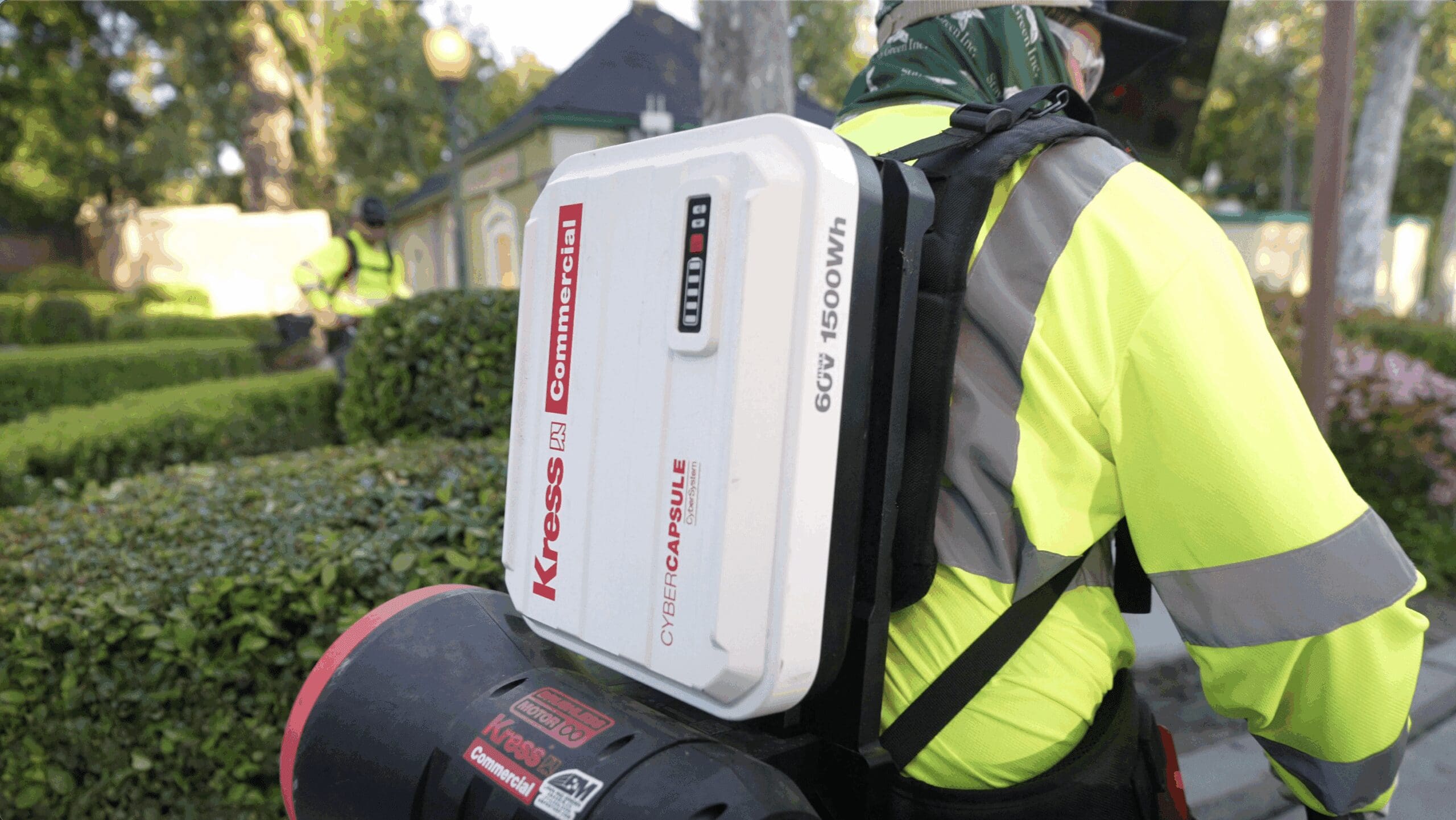
As more landscape companies move to integrating battery-powered equipment into their operations, the question of where the technology will evolve in the next few years is on everyone’s mind.
“That is the question of the century that we’re all trying to answer,” says Todd Zimmerman, SVP of dealer sales, operations and product at Kress. “From a manufacturing standpoint, there are two things that we’re trying to answer for landscapers. Can we charge batteries faster? Can we charge them remotely? Meaning can they be charged on the trailer versus having to be plugged in all the time.”
Expected Advancements in the Near Future
Aaron Griffith, director of professional dealer sales with Stanley Black & Decker, says that thanks to advances in battery chemistry, they foresee charging technology will become faster and more efficient.
“Improved battery management systems (BMS), combined with intelligent software, will enable a quick charging process,” Griffith says. “Emerging technologies like power factor correction, scheduling capabilities, and smart charging methods will help optimize how batteries draw power, helping to reduce overall user downtime.”
Zimmerman agrees that as battery cell technology develops, batteries will be able to charge faster.
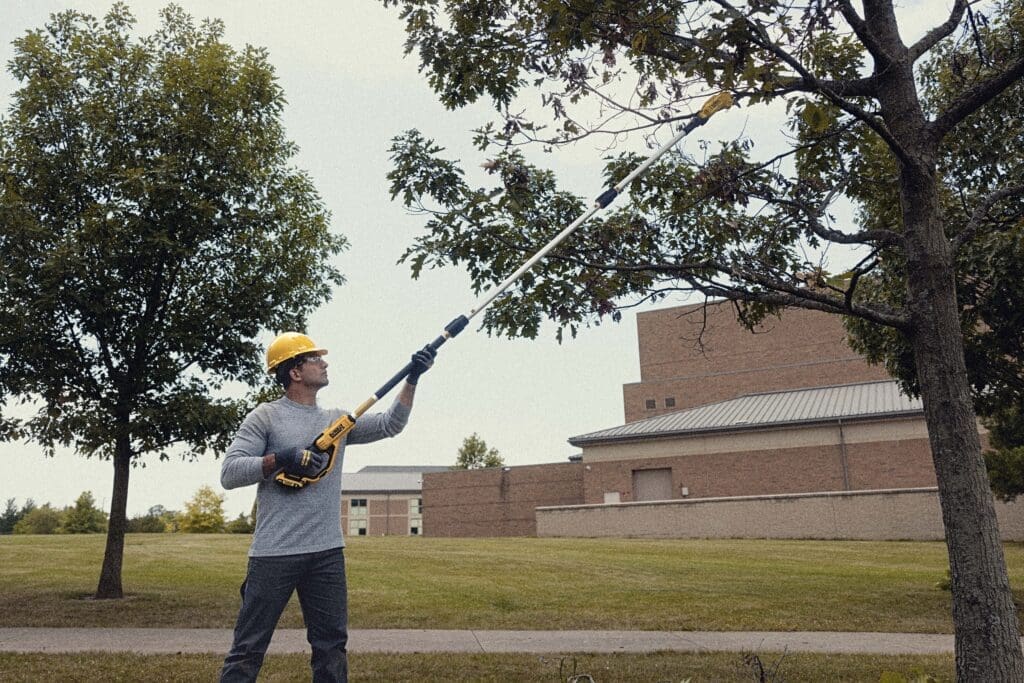
“We have an 11-amp hour battery and a 4-amp hour battery that, because of the cell technology, we can charge them in 12 minutes, and if it’s not fast enough, we can charge it in eight minutes,” Zimmerman says.
Ron Silorio, Chief Technology Officer for TOWA Industries, Inc., says they see the future focused around adaptive charging systems that integrate seamlessly with cloud-based energy management tools, dynamic load balancing across multi-bay chargers, and the integration of AI-based charging algorithms that optimize battery health and charging time.
“For the landscape industry specifically, portable and jobsite-ready charging infrastructure will be key to overcoming current limitations with range and downtime,” Silorio says.
Griffith also says connectivity will play an important role in the future, as users will be able to customize their chargers’ settings, resulting in a smooth workflow and clear visibility of battery status.
Top Requests for Charging Technology
Faster charging times and charging on the go are the two main requests from landscape professionals.
“Since many crews rely on multiple tools throughout the day, they need faster charging to limit the need to swap batteries,” Griffith says. “They also demand a universal battery platform that offers backwards compatibility, removing the hassles of wasted investments and incompatible technologies.”
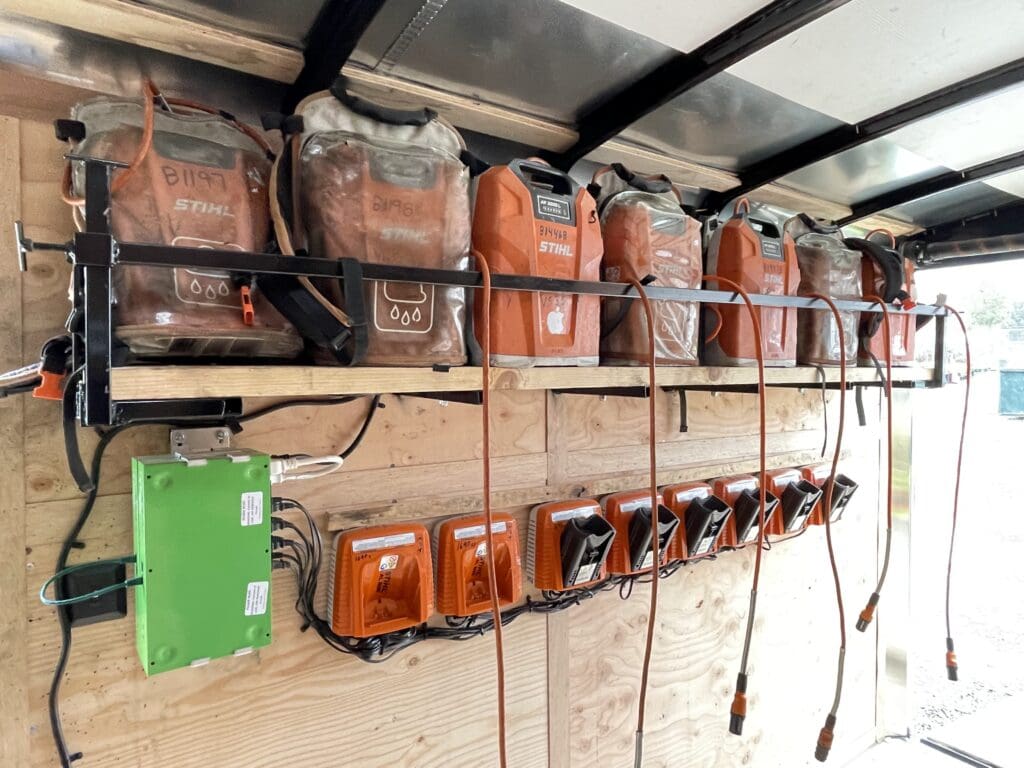
Silorio says with mobile charging, there is a growing demand for solutions that support all-day operations without returning to a depot or babysitting.
“Additionally, users are seeking smarter charging arrays that can report energy usage, monitor battery health, and manage energy costs across multiple tools and crews,” Silorio says. “The demand for scalable, modular solutions is rising, and our product suite is built with that foresight.”
Griffith notes that landscape companies are looking for scalable charging solutions that are customizable to their various workflows.
“For instance, they want to choose how much gas goes into their tanks — rather than a one-size-fits-some system,” Griffith says.
Zimmerman says another desire from landscape professionals is tools to improve their infrastructure in their yards so they can support converting multiple crews to battery power.
“We’re working with different industry experts to see how we might be able to help landscapers look at the infrastructure needs differently,” Zimmerman says. “We’re not electrical engineers by any stretch, so we’re working with a couple of third-party groups that we can use as resources to hand over to the landscaper.”
Griffith argues that a reliance on battery technology shouldn’t hinge on an expensive electrical upgrade.
“By offering fast charging, flexible power management, and features tailored to meet individual needs, manufacturers can best support professional landscaping crews, while helping to keep them running at full capacity,” Griffith says.
As charging speeds increase, Zimmerman says landscape professionals follow the safety warnings in the owner’s manual. Silorio recommends training crews on safe charging protocols and regularly inspecting charging equipment, especially in dusty or wet environments.
“With higher charging currents comes increased heat and higher amperage, making proper ventilation and thermal control essential,” Silorio says. “Crews should be aware of cable ratings, avoid daisy-chaining or overloading circuits, and ensure connectors are clean and secure.”
