


Manufacturers are currently in pursuit of battery cell technology that will allow them to provide faster charging times for landscape companies.
As technology advances, below are some of the areas to be mindful of as you scale with battery power and what to expect in the near future.
Faster Charging Considerations
One of the concerns with faster charging is the possible impact on the batteries’ overall lifespan.
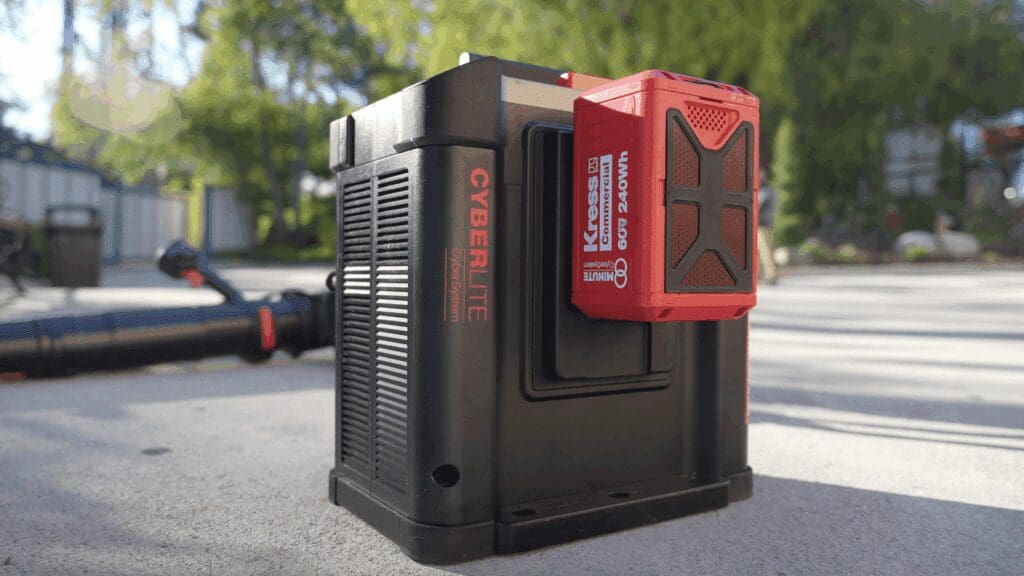
“For a lithium-ion battery, if you continue to charge a lithium-ion battery in 30 minutes over the life, you reduce the number of cycles because you’re heating that cell up faster, and as you’re heating up faster, it’s going to reduce the number of cycles that it can charge,” says Todd Zimmerman, SVP of dealer sales, operations and product at Kress.
However, advances in battery chemistry will help mitigate this problem.
“Some of the latest formulations in battery chemistry are designed to handle increased currents more efficiently, thereby generating less heat and lowering the risk of long-term damage,” says Aaron Griffith, director of professional dealer sales with Stanley Black & Decker. “Additionally, smart monitoring of voltage, current, and temperature enables chargers to precisely regulate power flow, preventing unnecessary helping to reduce strain on the cells.”
Ron Silorio, Chief Technology Officer for TOWA Industries, Inc., agrees that smart chargers mitigate the risk by regulating temperature, charge curves, and depth of charge.
“For professional users, pairing rapid charging with smart thermal management is crucial to balancing performance and longevity,” Silorio says. “By combining hardware safeguards with data-driven logic, we can help extend battery life while keeping productivity high.”
Grid Concerns
As the usage of battery-powered equipment and EVs becomes more prevalent, another potential challenge is grid overload and peak charging times evolving.
“As electrification scales up, many businesses will face demand charges from utilities unless they implement load management systems,” Silorio says. “The solution lies in smart energy scheduling, local energy storage, and possibly leveraging solar or off-peak charging strategies.”
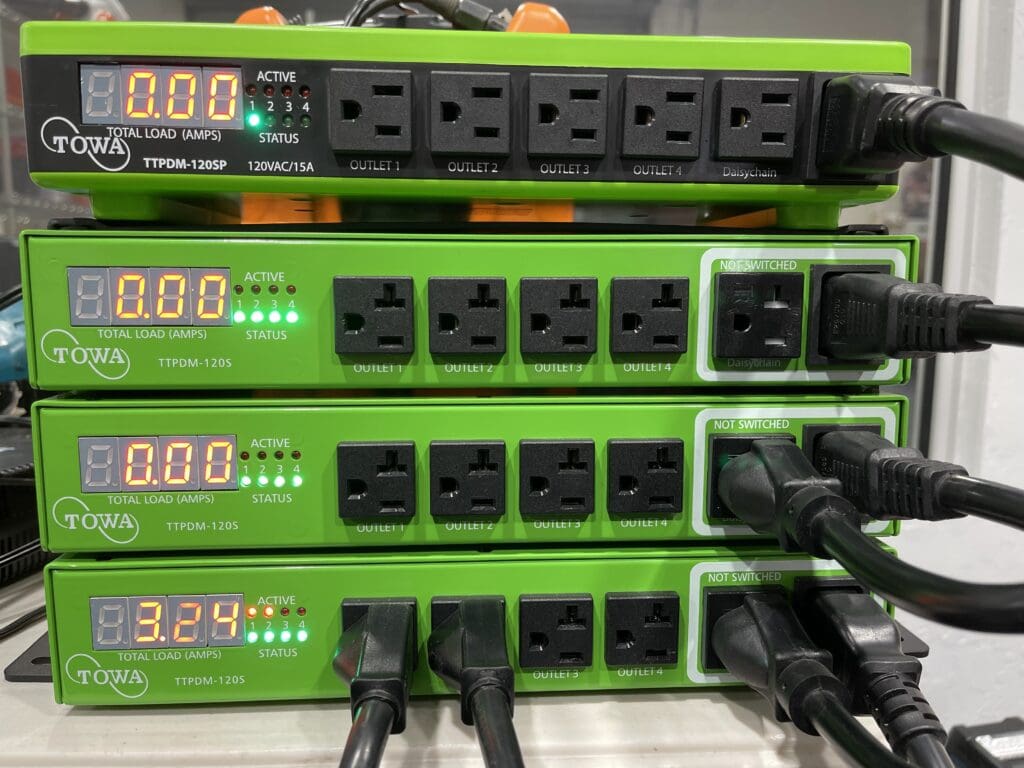
Currently, 9 p.m. to 7 a.m. is off-peak charging time. Zimmerman says he can’t predict how energy companies will respond or adjust their pricing as EV charging becomes more common.
“I’m hoping there will always be an off-peak time when people are asleep,” Zimmerman says. “TVs go off, lights go off. So, although EV cars may be plugged in, I’m hoping off-peak will still stay there.”
Silorio predicts that as more users switch to overnight charging to avoid peak rates, utility providers may restructure time-of-use pricing or introduce EV-specific rates.
“The key will be to work closely with utility providers and potentially installing smart charging solutions that automatically optimize charging schedules based on rate structures and time of use,” Silorio says.
Silorio says energy intelligence is just as crucial as energy delivery.
“We will ultimately be able to include rate-aware scheduling and recommend optimal charge windows based on our predictive algorithms and historical usage,” Silorio says. “Companies that implement smart charging scheduling will be best positioned to retain off-peak rate access as competition for nighttime energy increases.”
Griffith notes that smart charging also helps alleviate the burden on the grid by managing time-of-day usage and preventing overuse when it’s not needed.
Wireless/Inductive Charging Viability
While wireless charging is commonplace for smartphones, it remains to be seen if this method of charging will be worthwhile for landscape companies.

“Because of its simplicity, wireless (or inductive charging) may sound appealing for continuous top-offs, however, this technology is not ideal for power tools and yard equipment at this time,” Griffith says. “It’s significantly slower and less efficient than traditional wired charging, which can lead to unnecessary heat buildup, stress on the power grid, and higher overall costs.”
“For handheld tools or small mowers, we may see semi-inductive docking solutions at depots or trailers,” Silorio says. “But for true in-field applications, ruggedized plug-in systems remain more practical and cost-effective for now. We are certainly keeping an eye on wireless advancements, but we are doubling down on rugged, reliable, and deployable systems that crews can count on for their needs today.”
