

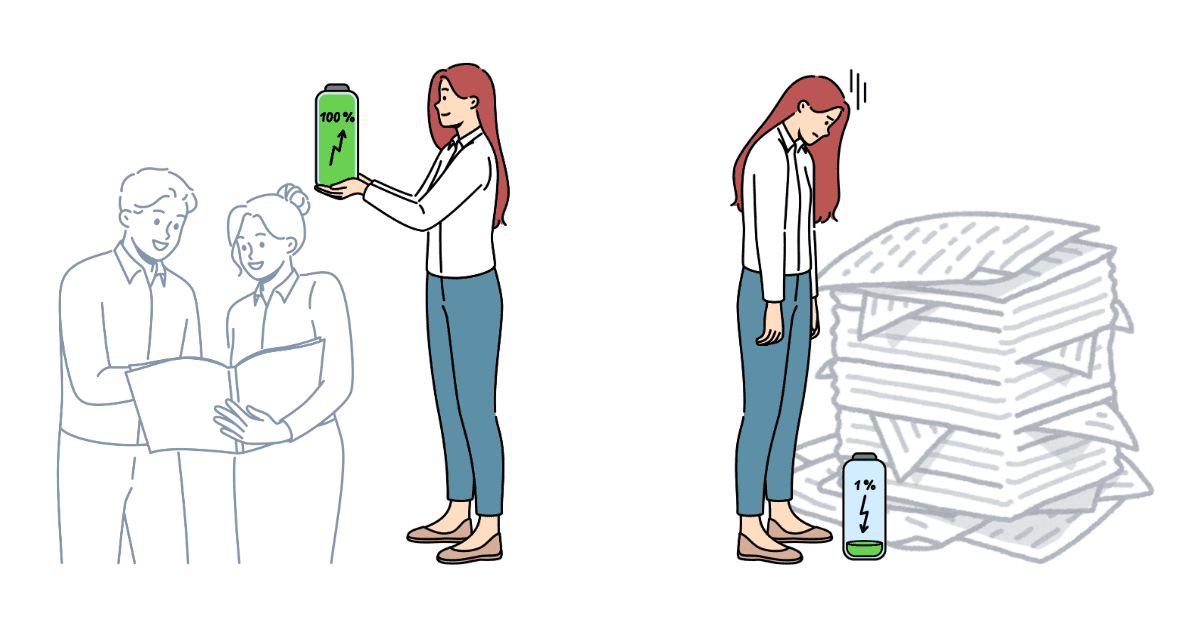
High achievers understand that those who hustle are rewarded.
“Unfortunately, there’s a really dark flip side to that, where people ruin their health,” says Erin Stafford, social psychologist and best-selling author of The Type A Trap: Five Mindset Shifts to Beat Burnout and Transform Your Life. “We all know the people who are perfectly healthy and kicking butt in life, and then they drop dead of a heart attack because they’ve been ignoring all the warning signs. Or their marriage suffers, and all of a sudden they’re now divorced, or their kids don’t talk to them because they’ve prioritized their work and the hustle constantly over their family, over their friends, over their relationships, over their health.”
She says there is no denying that hustle culture can bring success, but in the long term, it can ruin your life. Thankfully, there are ways to still perform at a high level without sacrificing your overall well-being.
Stafford will help leaders unlock next-level performance while maintaining balance during her keynote, “Burn Bright, Not Out: The Blueprint for Leaders and Teams to be Unstoppable” on Sunday, Nov. 2, at 1:15 p.m. during the NALP Women’s Forum at ELEVATE.
“It is going to leave you feeling reengaged, fired up, not only about your work, but about your life,” Stafford says. “It’s incredibly relatable. It’s fun. They’re definitely going to laugh. They’re going to leave recharged, but more importantly, they’re going to leave with tools that they can actually put to use immediately. It’s not just about motivation and inspiration. They’re definitely going to get that, but they’re also going to feel seen, heard and understood.”
Early Warning Signs of Burnout
There are 13 universal signs of burnout, including exhaustion, irritability, a sense of dread, physical pain, poor choices, isolation and lack of motivation.
“As a leader, you’re a bit more disengaged, more aloof, and over-delegating to your team,” Stafford says. “I call it abdication, instead of delegation. You’re not delegating. You’re just straight-up abdicating. The second something gets forwarded on to somebody else on your team, you’re like, ‘Okay, I’m done. I don’t have to think about that anymore.’”
If you are not contributing to meetings and not being your best self at work, these can all be indicators that you’re becoming disengaged and more likely to burn out.
Choosing To Do Less
Too often, we feel like we need to fill every single moment of our day.
“We are so used to living in a constant state of exhaustion, we don’t even know what the alternative feels like,” Stafford says. “When was the last time that when someone asked you how you were doing you were like, ‘Oh, my God, I have so much free time on my hands. I’m so well rested.’”

Instead, we often default to talking about how busy and/or tired we are. Stafford says the first step is getting out of the mindset that busyness and fatigue equal productivity.
Stafford suggests that before starting your week, take one task off your calendar.
“For all the naysayers that are like, ‘Hey, I’m so busy. You don’t know how busy I am,’ I always just say, ‘Just take off some guilt. Take off some shame. Go with some ‘shoulds’ and give yourself a break,’” Stafford says.
Stafford notes that leaders need to model the behavior they want to see in their employees, so if you are never taking any time off or are constantly calling and emailing outside of normal business hours, this can trickle down to your team.
“When we model that behavior, our employees think that that’s what they have to do,” Stafford says. “They’re like, ‘Oh well, my boss always responds. She always responds when she’s on vacation. I have to do that too.’ So that gets exhausting for employees.”
She adds it’s important to make your team members feel safe enough to admit when they are struggling.
Realigning Success and Seeking Joy
Stafford says that one way to free yourself from the hustle culture is to redefine what success looks like.
“So often we’re told that success is just money and job title,” Stafford says. “How do we reimagine that and realign to make sure that we are chasing what actually matters to us? Because I’m sure we all know people who have all sorts of money and have that great job title, but they are absolutely miserable. So how do we avoid that? How do we make that not who we are?”
She encourages others to determine what is enough, because chasing more and more will never lead to happiness.
“We’re never, ever going to get there,” Stafford says. “Because the second we get there, we’re just going to the next level again.”
Too often, leaders can get too caught up in the day-to-day and forget why they’re doing all this in the first place. Stafford says tapping into connection and gratitude can help you focus on moving in the direction you want to go.
Stafford says you should take the time to do more of what makes you happy.
“When we’re feeling overwhelmed or stressed out, those little moments of joy, just those little things that are a little pick me up that might just make you happy for the next hour, connecting with your friends, connecting with your family, those are the little things that carry us through,” Stafford says.
Looking for methods to combat burnout? Register for NALP’s Women’s Forum at ELEVATE and we’ll see you in Phoenix, Arizona!
