

This article is written in an “As Told To” format. Chris Lee is the president of EarthWorks, a $37 million full-service landscape management company, based in Lillian, Texas.
2015 was probably the worst year I have ever experienced as a business owner. It was also an eye-opening ordeal that helped us change for the better.
It all started in March when we discovered for the first time that we would not be receiving our 120 H-2B workers, which made up about half of our workforce at the time. Our go-live date was April 1, and I knew there was no way we could hire, onboard and train enough replacement workers by then.
Once the initial shock and horror that this was really happening wore off, the first thing we decided to do was to scale back our business portfolio. Rather than waiting for our quality to decline and end up with angry customers, I made the call to cancel about a third of our maintenance contracts.
At the time, I felt like the last eight years of work had just vanished. There were numerous nights of self-pity, but I didn’t bring this negative attitude to work. I knew everyone was looking to me for guidance and to set the tone. I couldn’t act defeated, otherwise everyone else would believe we couldn’t win either.
When deciding who to terminate, we considered each account’s profitability, location and if it was part of a larger portfolio.
I also made sure we were transparent with our customers. I explained the situation with the visa program and let clients know we’d be happy to have them back once we had the labor to support them. Because we had strong relationships, a lot of clients gave us grace and were sympathetic to our situation.
After right-sizing as best as we could, it became apparent we’d still need everyone to work six days a week. I knew we were going to bleed money, but we had to get the work done. Thankfully, we had a nice cash reserve that enabled us to pay overtime.
When we moved into the enhancements season in mid-April, we were still falling short on capacity. The team could get properties mowed, but there weren’t enough people to handle all the extra tasks.
Then one morning, someone on the management team decided they were going to take a couple of guys to go knock out an important job. That quickly turned into a 13-week period where the management team committed Mondays and Tuesdays to doing their normal job and then Wednesday through Saturday, they’d come in and dispatch with the rest of the crews.
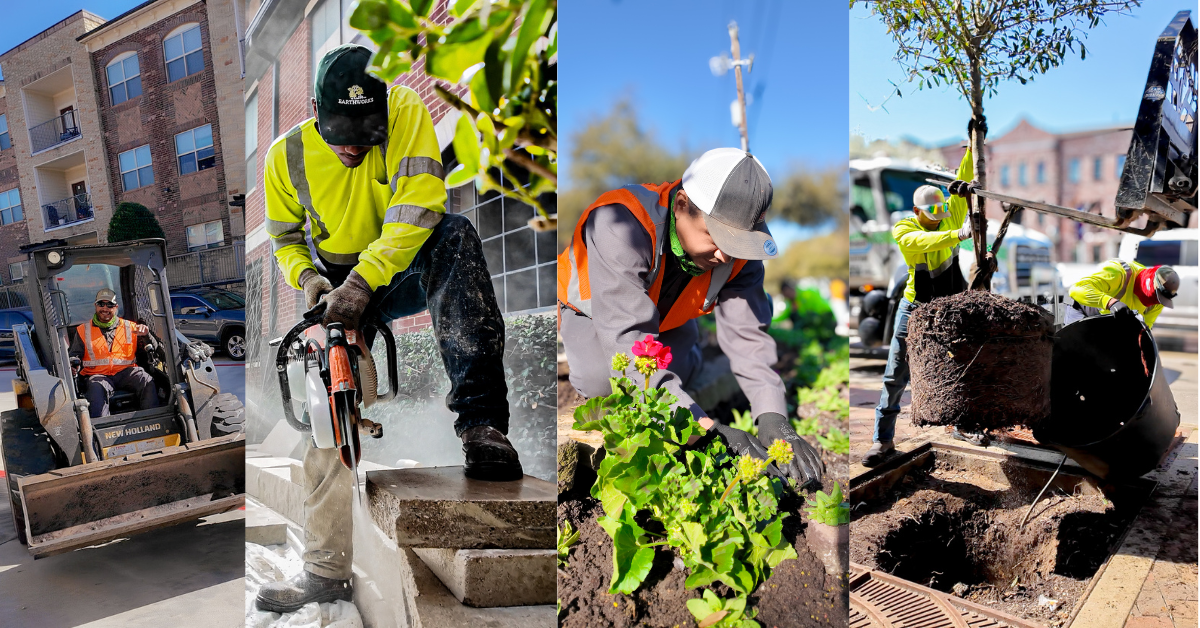
I never mandated this practice. It just started with a couple of managers stepping up until the whole management team was doing this. We’d throw our safety vests and our hats on and do anything from chemical applications and enhancements to mulching and pruning.
I’ve never experienced anything that has built such a strong camaraderie within my team. When our field staff saw managers out there planting shrubs, pulling weeds and pruning hedges alongside them, that let them know we were going to get through this.
The management team didn’t stop working in the field until backup arrived. When the supplemental visas were released, we ended up bringing in about 40 H-2B workers in July, as we’d given up so much work, we didn’t need the total 120 visas.
Within 60 days after cancelling accounts, we started getting calls from the clients we had terminated. They wanted to know if we had fixed our labor challenges yet, as they wanted to come back.
Aside from getting our H-2B workers, our other labor solution required paying higher wages than ever before. I then had to tell these terminated clients that while we had solved our labor problems, our cost to provide services had gone up about 20%, and I knew they couldn’t afford that, or their budget wouldn’t allow for it.
To my surprise, the first client’s response was for me to send them our new number. I knew they wouldn’t sign it, but I sent it anyway…and then they signed it.
Other returning clients did the same thing, signing new contracts despite the higher prices. That’s when I had the realization that I’d been underpricing and undervaluing what we brought to the table the entire time I’d been doing business.
We ultimately ended up re-onboarding about 60% of the clients we had canceled through the rest of that year by next January.
Despite all the challenges, we actually still made money that year. While we are typically around 10-12% net profit, in 2015 we had 2-3% net profit with $12.5 million in revenue.
By the next year, things were back to normal and we scaled back our usage of the H-2B program. Last year we had 74 visas, and we’re twice the size we were in 2015. Additionally, we developed backup plans for what to do if something like this happened again in the future.
Aside from hiring a recruiter, we’ve also focused on creating a great place to work. I recognized the less employees we lose, the fewer we have to hire.
I definitely recommend having a war chest, so you have options if something like this happens. If you’re broke, you don’t have the possibility of paying overtime or hiring subcontractors.
While I was going through it, 2015 was absolutely horrible, but once the smoke cleared, this trial may have been the best thing that could have happened to my company. My team is stronger, and this experience gave us the confidence to walk away from bad jobs.
Not only did I learn to charge people the value of our services, but I also discovered the value of culling your client list. Now, every spring, we look at the bottom 10% of our portfolio and reprice it to the point where they’ll either leave or no longer be in the bottom 10%.
