

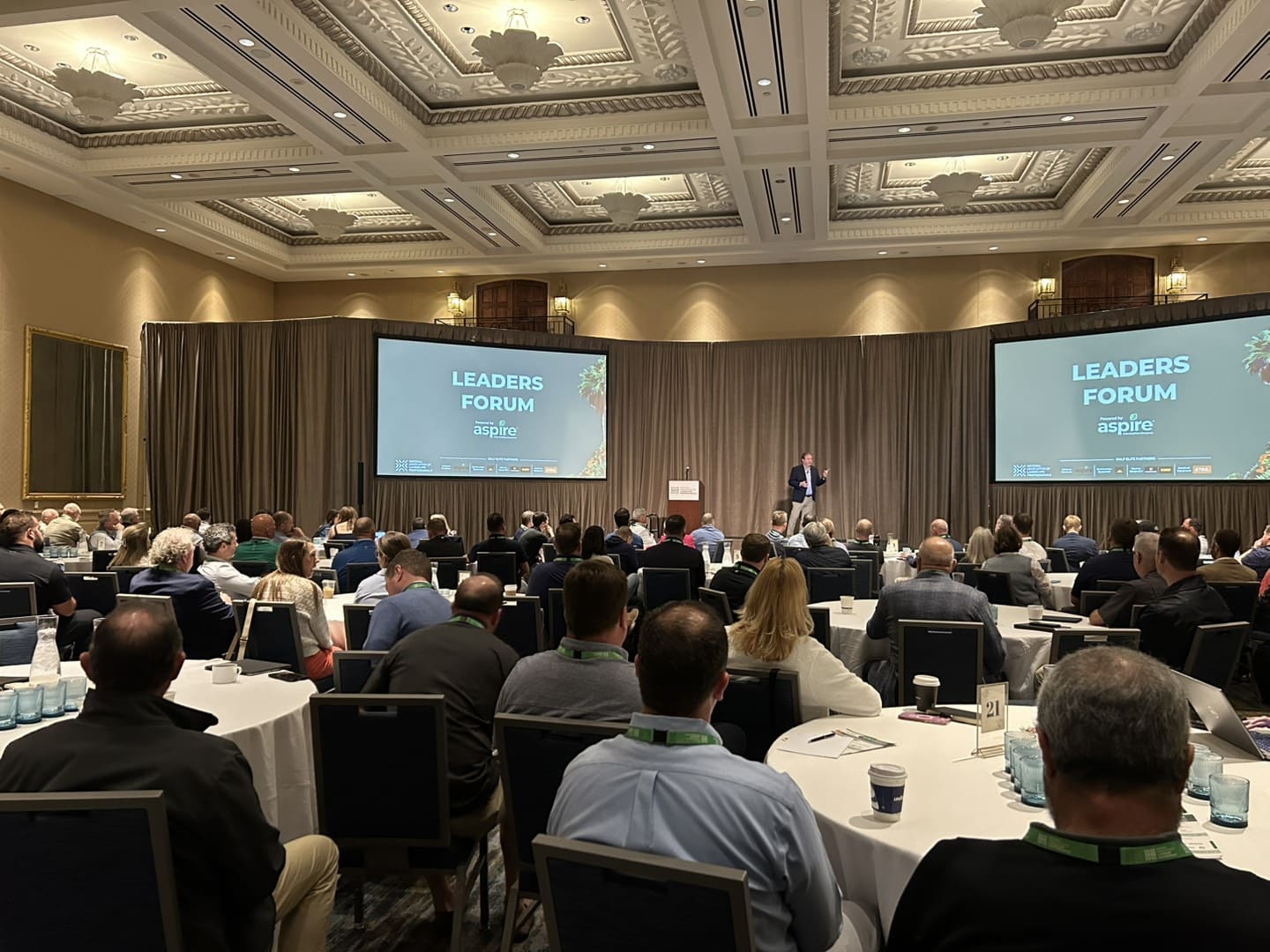
Industry leaders gathered valuable knowledge on the external factors that will impact their business in the coming years at Leaders Forum, presented by NALP and powered by Aspire, in Santa Barbara, California, on Feb. 4-7, 2026.
Attendees were also able to network and share their different perspectives on how they tackle various challenges and changes they face in running the business.
Government Affairs Outlook
Starting off this year’s event, Andrew Bray, NALP senior vice president of government relations and membership, updated attendees on priority issues for the industry, including H-2B and pesticide regulations.
Bray shared the rollercoaster journey the H-2B program has recently experienced, starting back in June 2025, when the certified seasonal employer language was included in the appropriations bill. After the government shutdown in October and November 2025, no supplemental visas were announced until Dec. 31, which was much later than it has been announced in the past.
However, this announcement specifically excluded the landscape industry, despite it using 40% of the H-2B visas. The NALP government affairs team immediately began advocating for the landscape industry’s need to access these supplemental visas.
After lobbying with the Seasonal Employment Alliance, they were able to secure President Trump’s support of the program. Yet ICE operations in Minnesota triggered a partial government shutdown, and the CSE provision was held up in the Department of Homeland Security’s FY 2026 appropriations.
Industry ally Rep. Andy Harris for Maryland spoke with the White House and was able to convince the administration to release all 64,716 visas. Bray notes that not going backwards in the past four years with the number of visas available is significant.
“That’s no light push,” Bray says. “That takes resources, and I’m grateful for your support with this.”
Bray anticipates most landscape companies will receive their visas this year, at least by May 1.
Looking ahead to FY 2027, NALP is continuing to work to include the CSE language, and Bray is optimistic that there will be some true immigration reform that will take place.
Other regulatory issues NALP is monitoring and advocating for are the EPA’s approval of new pesticide formulations, instead of slowing the process, and fighting the pressure to remove turf from spaces as water restrictions ramp up in certain parts of the country.
Tapping Into Your Team’s Voice
During the following session, Gabe Adams, a behavioral scientist with UVA Darden School of Business, gave attendees a peek into one of the topics taught during the NALP Executive Leadership Program, on managing employee voice and team dynamics.
Adams outlined a specific scenario where participants had crash-landed in the Sonoran Desert and had to rank the importance of 15 different items for their survival. Individuals first ranked the items on their own and then discussed at their tables to create a ranking for their group. Adams then shared the true rankings based on a survival expert’s advice, and the teams were able to see if their score improved or worsened as a group.
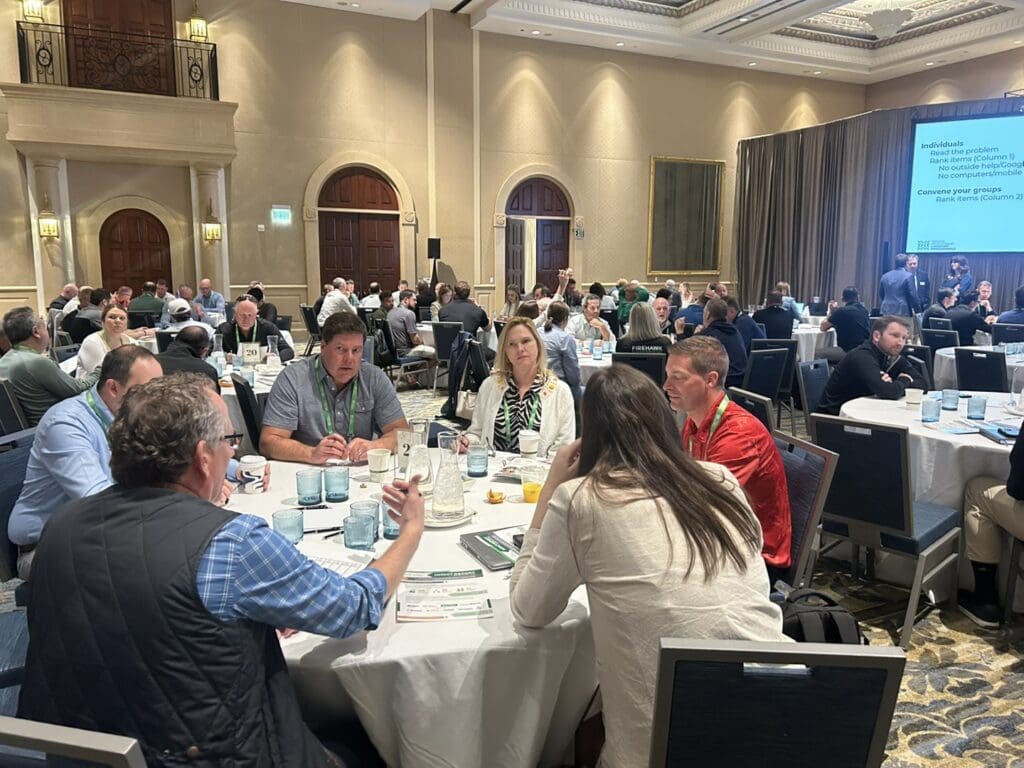
In the instance where a table’s score was worse than their average individual score, they experienced process loss, while the groups who performed better than their best individual score experienced process gains.
Adams explained that too often teams are trying to reach agreement as fast as possible and fail to engage in healthy debate. For the tables that didn’t score well as a group, it was revealed that they often went straight into comparing their rankings and reaching a consensus, versus discussing the potential uses of each item.
Similarly, in meetings, there is a tendency for teams to dive into the task rather than having an intentional conversation about why they are meeting, what they want to achieve and how they want to achieve it.
Adams also pointed out in certain cases, tables had an individual with a strong personal score, but this wasn’t carried over to the group’s score, meaning either they silenced their subject matter expert or the expert did not speak up enough.
“If you don’t know who your expert is, that makes listening to everyone all the more important,” Adams says.
Economic Predictions
Attendees also received tailor-made industry insights on what to expect from the economy over the next four years. Taylor St. Germain, an economist with ITR Economics, forecasts the U.S. GDP will grow until 2030. This is thanks to retail sales continuing to grow in 2026, as well as capex spending finally coming off the bench after uncertainty holding organizations back is finally abating.
With tariffs and the global economy, St. Germain recommends owners take a look at their supply chains and seek North American sources. He says companies still have yet to feel the full impact of tariffs, but we are heading into a higher cost environment.
There are four main factors driving expected inflation increases, including higher labor costs, the government’s fiscal policies, electricity costs and nationalism in the form of tariffs.
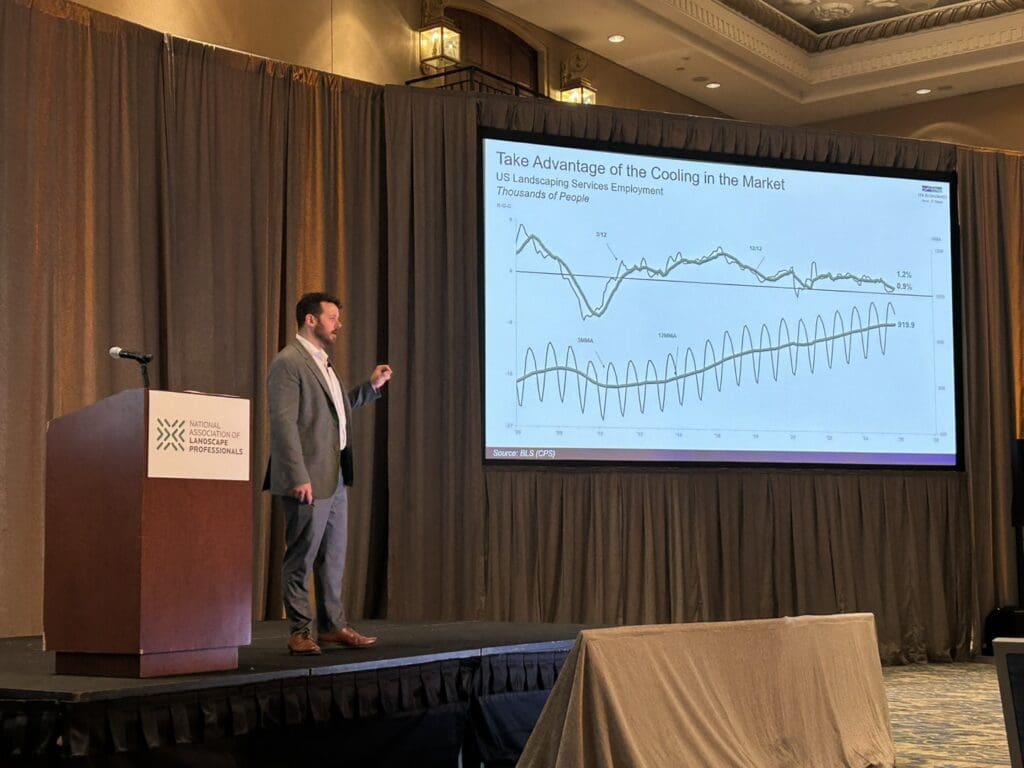
Even with a slightly cooled labor market, the cost of labor will increase 4 to 4.5% every year for the next four years. Meanwhile, as the government continues to issue treasuries, interest rates will rise to 7-8% by 2030. St. Germain recommends that companies capitalize on borrowing money sooner rather than later as rates go up.
Additionally, St. Germain says the cost of electricity will skyrocket due to the $39.3 billion worth of data centers being constructed.
As prices increase due to these reasons, owners will need to work to become more efficient to protect their profit margins.
“I’m not worried about your sales and revenue,” St. Germain says. “I’m worried about your profit margins.”
On the commercial side of the business, St. Germain anticipates there will be more growth and opportunity for landscape companies during the second half of the year. He does note that landscape professionals will have to work harder to earn this market share.
St. Germain says that as immigration is currently stifled, employment will become even more challenging for companies, but one area of opportunity is attracting Gen Z to the industry, as they currently only make up 55% of the U.S. workforce.
As for the 2030s, ITR predicts there will be a Great Depression, and St. Germain recommends business owners set themselves up to capitalize on this period of time.
“There’s a big difference between being prepared and unprepared for a recession,” he says.
Companies should review their interest rate sensitivity, price sensitivity, dependence on specific markets that will be impacted in the 2030s, if they are positively correlated with financial markets and if they are a candidate for a possible divestiture or acquisition.
NALP members can access the full economic forecast from ITR here.
Thank you to our title sponsor, Aspire; our Elite partners, Cat, Stanley Black & Decker and STIHL, as well as our additional partners, Rancho Mesa, 3PG Advisors, Bobyard, Boss by Integra, Kress, Vermeer and Wilson360.
