

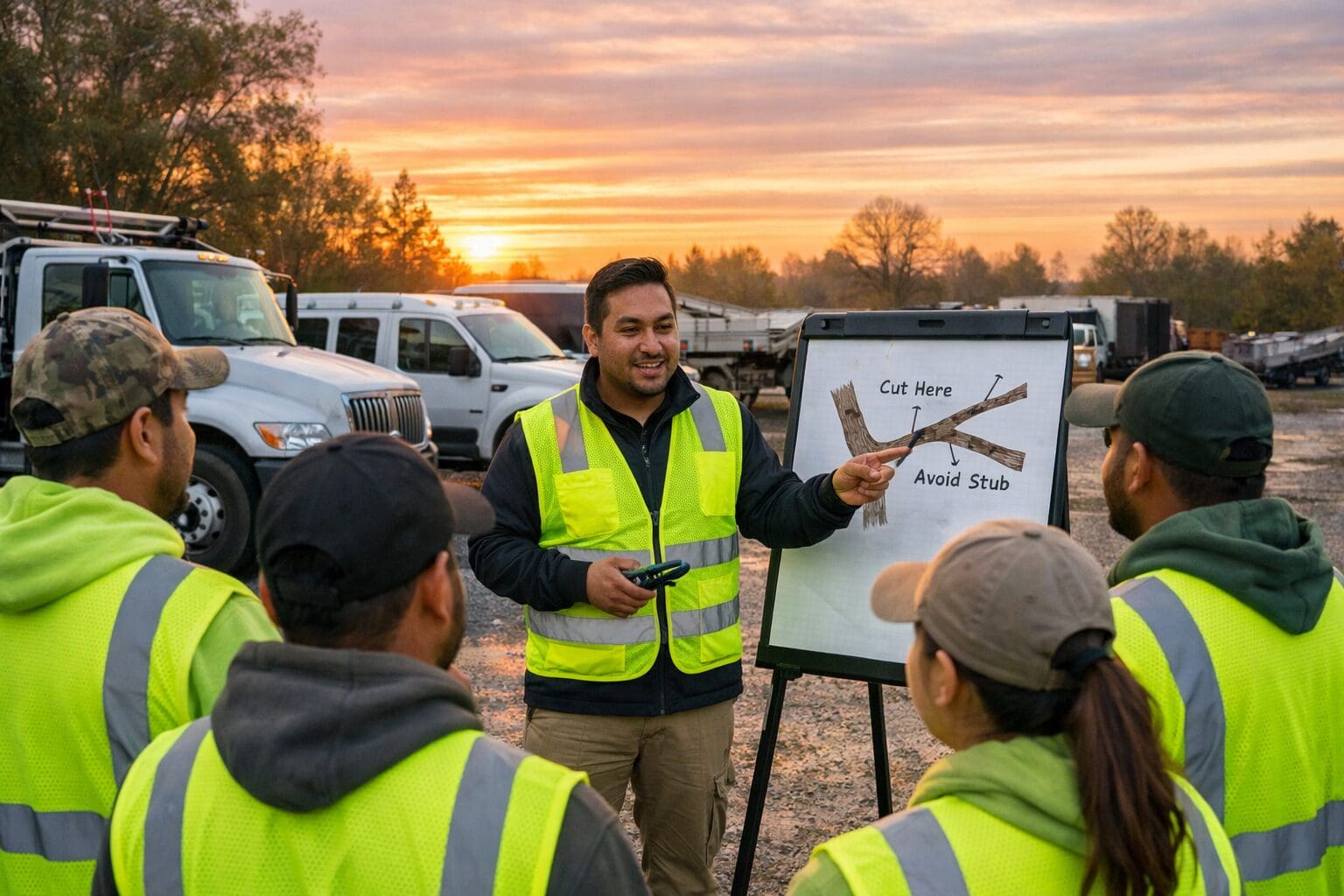
Kicking off the season with a strong spring rodeo is a great way to get your team up to speed on training, but this isn’t the only time your crews should be instructed on safety and best practices.
By implementing short daily training huddles, you can not only reinforce what was covered more in-depth early on but also keep safety and quality standards top of mind.
Taking the time to implement these five- to-10-minute sessions can help reduce accidents and strengthen your crews’ performance.
Creating Micro-Learning Sessions
To ensure your daily huddles don’t end up being pushed to the back burner, start by building out a training calendar that lists a series of themes to rotate through the week, such as safety, equipment, landscape maintenance, landscape installation, irrigation, quality standards, and customer service.
Then, you can cover a topic relevant to the team’s workload for that day. For instance, if Monday’s theme is safety and your team is going to be working in a high-traffic area, you could conduct a micro-training about the importance of flaggers and what their responsibilities entail.
One resource for topics you can tap into is NALP’s Safety Tailgate Training Toolkit, which covers 62 safety topics and includes quizzes to reinforce knowledge. Meanwhile, NALP’s Landscape Technician Bootcamp Manual has 44 lesson plans you can use as a jumping-off point to break into more bite-sized sessions.
Whatever topic you choose to cover, make sure to focus on one actionable takeaway per session.
It’s best to hold these huddles before crews leave the yard and have a crew leader or safety coordinator lead the micro-training. Cover real jobsite examples so employees can make the connection between the training and their everyday tasks.

How To Help Make Micro-Training Stick
If you’re taking the time to hold these daily huddles, it’s important to make sure they’re structured in a way where they’re memorable for your crew members.
Involving team members through demonstrations is one of the keys to effective learning as hands-on learning tends to produce better outcomes. When talking about backpack sprayer operation, have the sprayer on hand to show exactly how a task should be performed.
Encouraging participation by asking employees to explain the concept back or show themselves doing the task can also help with knowledge retention.
Share the real consequences of when these standards aren’t followed. For example, if you’re covering the importance of proper mulch depth, show pictures of what happens to plants when mulch volcanoes are formed and how this leads to issues like root girdling.
An example structure of a micro session looks like this:
- Introduce the skill. Spend one to two minutes outlining the task or safety point you’ll be covering.
- Demonstrate the skill. Take three to four minutes to show team members the correct method.
- Practice the skill. Allow one or two volunteer employees to perform the task for two to three minutes and correct them if there are any missteps.
- Question the skill. Take a minute to ask one question to confirm understanding with your crew.
Mistakes to Avoid
The key to effective micro-training is not covering too much in one huddle. If you have too many points to convey in a session, it defeats the purpose and lessens the likelihood of retention.
Some topics require deeper instruction, so be mindful of this when selecting your session subjects. One option is taking a larger topic, such as irrigation troubleshooting, and breaking it up over several days or weeks.
It’s also best to focus on training that is relevant to the season and work at hand. If you’re going over mower maintenance, but the company is transitioning into snow removal season, it’s far more likely that crews will disengage.
Also, make a point to monitor where your team is struggling in the field, either with quality or safety. Shift your micro-training sessions to address these weak areas until improvements are seen.
Lastly, be consistent with your micro-training. It is only when you are holding these on a regular basis that this routine can become a habit.
