

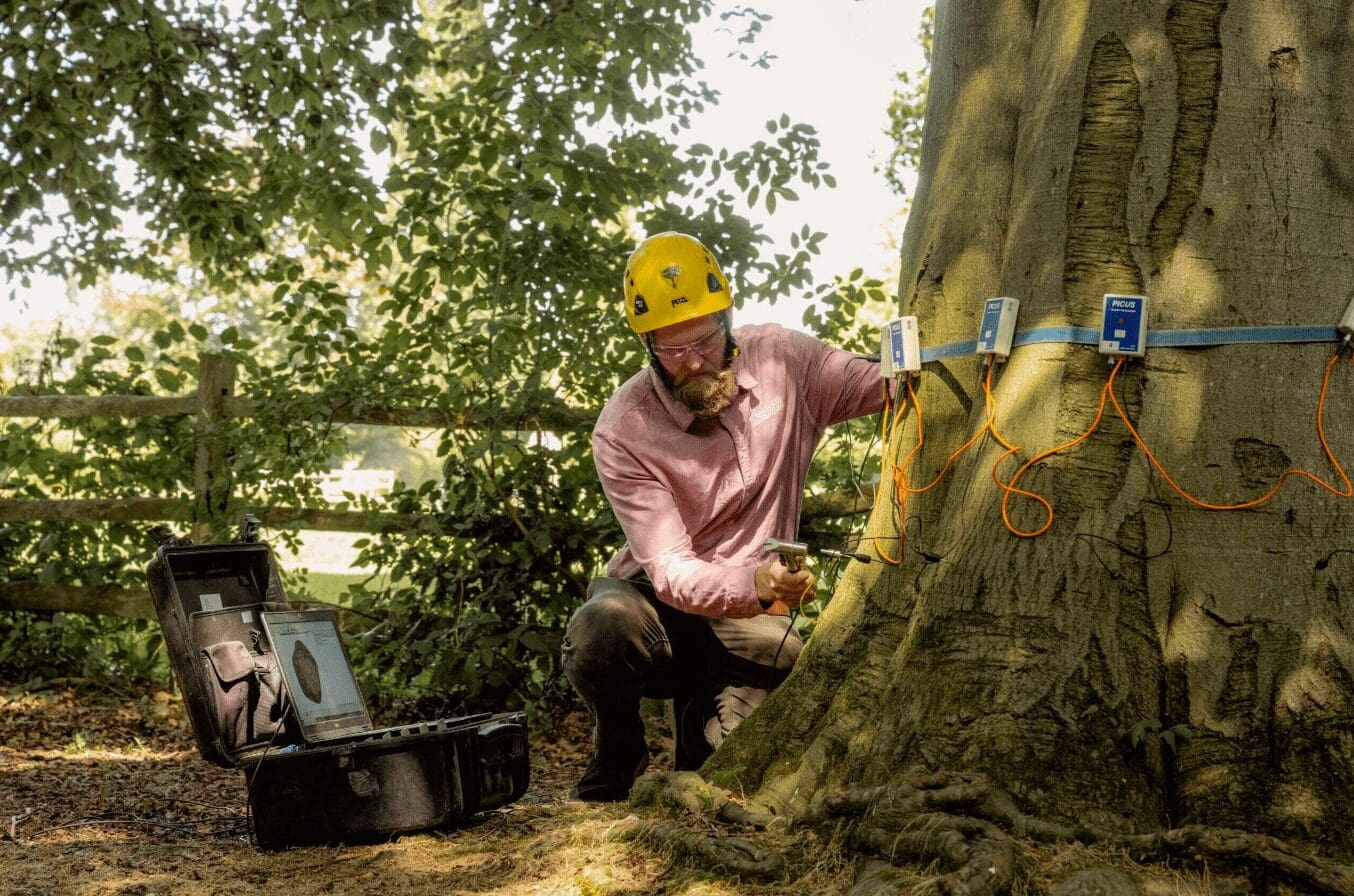
Trees can be beautiful additions to any landscape, but it’s essential to conduct tree risk assessments on a regular basis to ensure that these assets don’t become a liability at some point.
Hazards trees pose include damaging property and potentially injuring or killing nearby pedestrians.
“It’s good for preventing property damage or injury, identifying any sort of structural weaknesses in the trees early on, rather than waiting for later in the season, when a storm happens, and then finding out that something went wrong,” says Megan Kacenski, ISA Certified Arborist and VP of corporate relations for Bartlett Tree Experts, based in Stamford, Connecticut. “If you can identify something early on, you can maybe put a cable in the tree or a brace rod or support the root system, instead of finding out later on that you could have done more than you end up losing the tree entirely.”
Key Elements to Examine
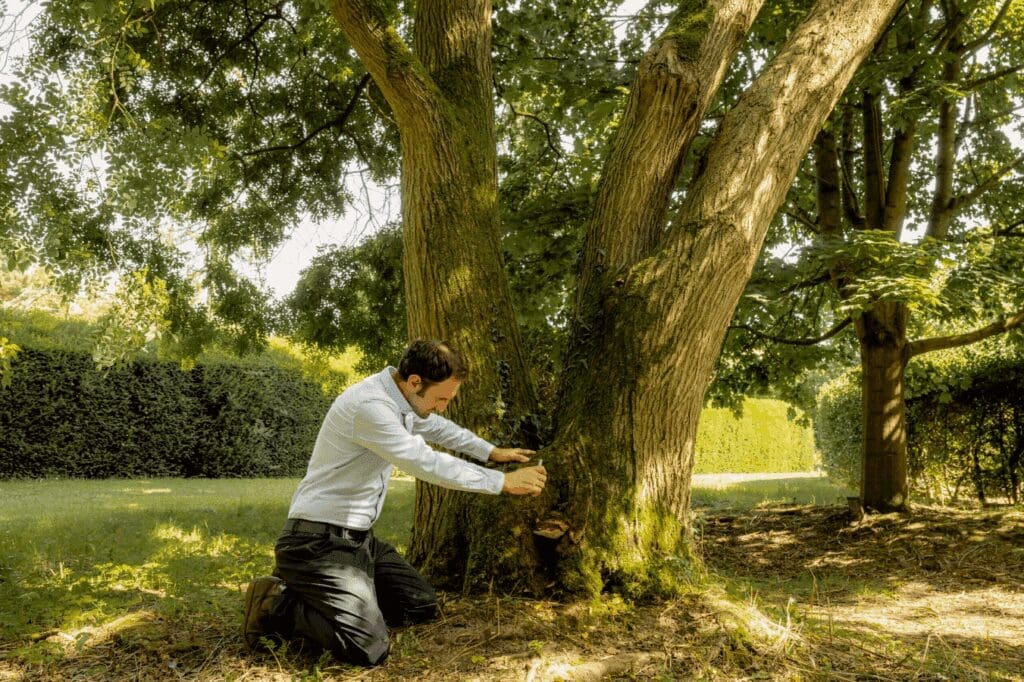
When conducting a tree risk assessment, look for structural defects like cracks, dead branches, or V-shaped unions in a tree.
“The V shape, they’re rubbing up against one another, and the limbs push against so over time, they start to try to heal those wounds that they’re creating amongst themselves,” Kacenski says. “That new growth that they’re pushing out to try to heal starts to almost act like a wedge, and then you get a lot of decay in there. That’s usually where we see failures is a V-shaped union point.”
Also examine past pruning cuts to see if the tree has put out the new branch at a different angle.
“It’ll maybe grow at a 30-degree angle, and then nothing happens for four or five years,” says Scott Seargeant, ISA Certified Arborist and owner of Seargeant Landscape & Arboriculture, based in Visalia, California. “They don’t come back and re-trim it. So now we have a lot of torque on there. It’ll not grow out straight out most of the time. They’ll grow at an angle. That attachment has a lot of stress on it, and if you let it grow too far, they’ll twist, crack and fall.”
He adds that bad pruning cuts, like flush cuts, can lead to damage and rot inside the trunk.
“That’s a major thing and then it’ll also lead to structural integrity losses where the pruning cuts are,” Seargeant says. “You’ll get a lot of sprouting right around that area. If those limbs are allowed to grow out and get fairly large, that’s a great place for them to crack off.”
Seargeant also recommends looking for past mechanical damage from mowers, as this can lead to larger issues.
Additionally, during your assessment, look for soil compaction.
“Anytime you have equipment or high traffic, you’re going to start compacting that soil,” Kacenski says. “You take the oxygen out of the soil. The trees need oxygen to breathe, to do everything that they need to do. Understanding the soil health, knowing your compaction levels I think is really important because that can start to diminish root growth. That’s your structural support. If I don’t have a lot of roots, it’s easier for me to topple over.”
Signs of root damage will appear in the trunk or the branches.
“I look for dead limbs, especially on one side of the tree,” he says. “You follow it down, and you might find a dead part of the cambium layer of the bark when you peel that back and look. You go all the way down, and go, ‘Okay, we got a dead root down here.’”
Kacenski says that root girdling can be another issue where if a tree has been planted too deep can end up with roots cutting off the tree’s circulation.
Commonly Overlooked Aspects
Aside from looking for obvious warning signs like dead branches or soil heaving, Kacenski says you should also consider the specific tree species and the localized problems of that area.
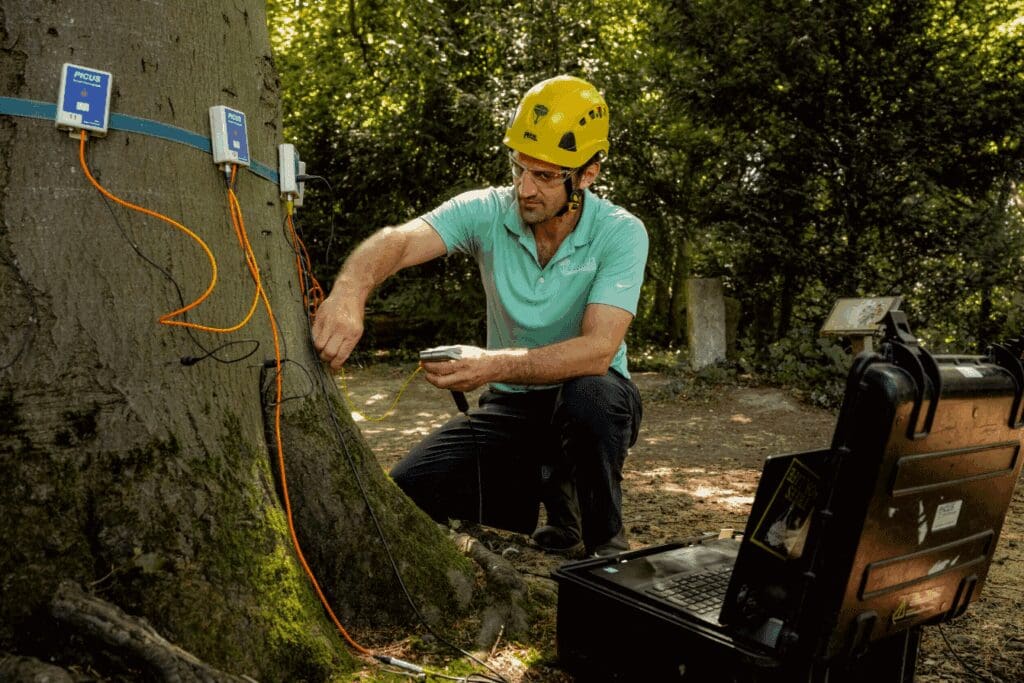
“The way that we assess an ash tree, knowing that it could be impacted by EAB, is going to be very different than how we assess a maple,” Kacenski says.
Kacenski also recommends being on the lookout for any type of animal in the tree. For example, if a raccoon is in the tree, there may be a decay spot it is living in.
Seargeant says some other elements to keep an eye out for include weeping bark, included bark or double leader limbs that are not attached too well. All of these factors can result in tree or limb failure.
Kacenski says you should also take into account the likelihood of failure and the impact if said tree failed. For instance, a tree falling in an empty field is much less of a threat than one in the middle of playground with park benches underneath it.
She adds it’s also important to delve into the tree’s history and what happened on the site 20 years ago. For instance, if a tree suddenly dies one day, but it turns out a septic tank was installed years ago and severed part of the root system, the tree’s demise is only a matter of time.
“All that history is super important,” Kacenski says. “Any sort of work on the tree or pruning that was done, any improper pruning that you might see, could cause extra decay in the tree. If someone took too big of a cut out of the tree, that could be an issue.”
