When it comes to practices that benefit the environment, do you tend to wait for your clients to request these aspects to be incorporated into their landscape design or do you suggest them as natural recommendations to consider?
Sarah Vanek, a landscape consultant located in Omaha, Nebraska, with Ryan Lawn & Tree based in Merriam, Kansas, says she doesn’t expect her clients to request native plants. Instead, she believes professionals in the industry should be ready to initiate the dialogue and help drive change.
“My role as a consultant isn’t only to listen to and help achieve the client’s vision, but it’s also to offer my own expertise and help guide them through the process,” Vanek says. “Among many other questions during a consultation, I often ask if they have a goal to support pollinators or songbirds. Once asked the question, many people will respond, ‘Sure, of course.’ When clients have no idea where to begin, why not start by thinking about native options first?”
Native Plants and Their Value
While there are a number of definitions associated with the term ‘native plant,’ Vanek considers natives to refer to the wild form of a plant that has naturally evolved in the local area, around 100 miles, before European settlement.
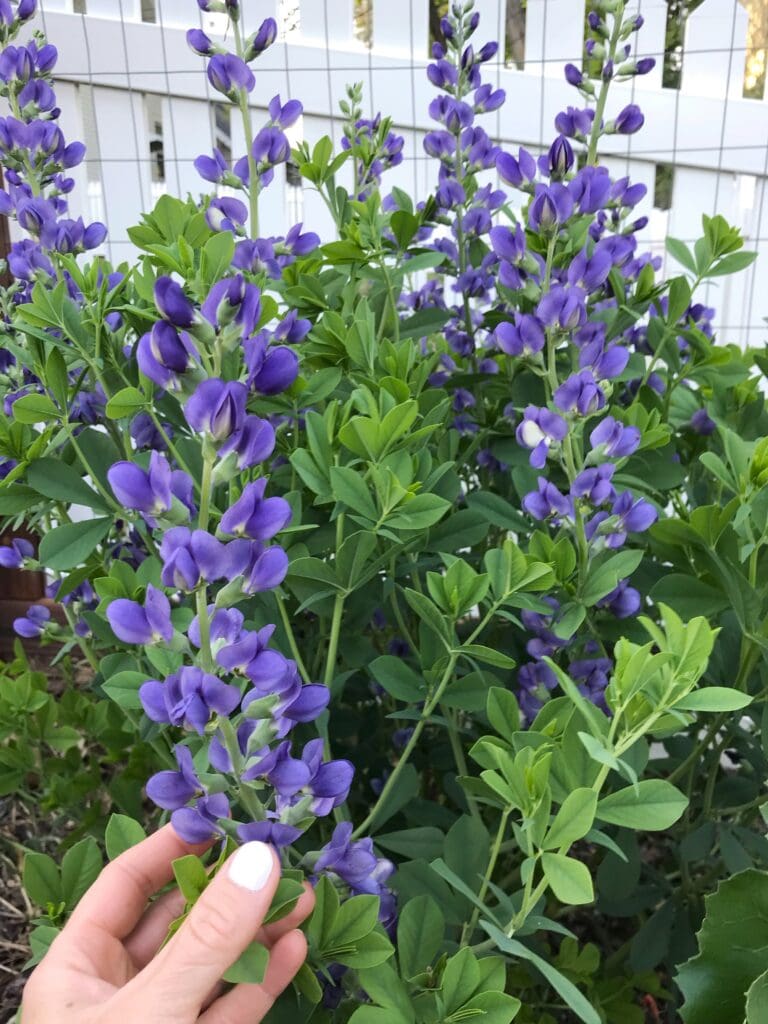
She notes that some native plants have been bred for specific traits like a compact growth habit or foliage color, but these should be called ‘nativars’ as they are cultivars bred from native parents.
“It’s important to be aware of the distinction because nativars don’t always offer the same ecological value as their wild parents,” Vanek says. “For example, structural changes in flowers that are bred for double blooms might mean that the plant is no longer a good nectar source for pollinators.”
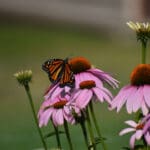
Entire ecosystems depend on native plant communities, like how the monarch butterfly’s young can only survive on milkweed.
“If we can, in some way, use our urban spaces to reduce that environmental impact, we should,” Vanek says.
Choosing to install native plants in your landscape designs can help boost biodiversity, sustainability and aesthetics.
“Because native plants are adapted to the local ecosystem, if they’re planted in the right space, they tend to fare better against the adversities of the local environment – for example drought, heat, difficult soils, and so on,” Vanek says. “That means less water consumption and other resources are needed in trying to keep them alive or having to replace them.”
Vanek notes that rather than pursuing the look of another state’s local ecosystem, choosing to use native plants can highlight the beauty of that specific region.
Overcoming Misconceptions and Incorporating Natives Successfully
Vanek says that DIYers are showing more interest in native plants than Do-It-For-Me homeowners.
“People need to be inspired,” Vanek says. “I would love to see more native-plant heavy landscapes in major public spaces – community destinations designed by professionals. When people feel inspired by native plantings, they’ll start to reframe their thinking about traditional landscaping norms.”

One common misconception is that native plants are ‘messy.’ Part of this perception is due to native plant enthusiasts who don’t follow a lot of design rules.
“As professional designers, we need to show how native plants can also be incorporated into highly ordered spaces too,” Vanek says.
Vanek suggests one way to bridge the gap with more formal landscapes is to utilize boxwood shrubs, but sprinkle in color with native perennials like purple coneflower or Missouri evening primrose.
The greatest challenge with the incorporation of native plants currently is availability. A limited number have made it to the mainstream wholesale market and removing nativars limits the list even more.
“From my personal experience, it seems that our industry has a chicken-and-egg problem,” Vanek says. “Designers don’t want to use plants that are difficult to source, and growers don’t want to grow plants that are rarely used. Unless you’re specifically specializing in native plantings, it can be a tough problem to crack.”
Vanek suggests special-ordering plants from specialty native nurseries. She notes these tend to be less mature, but once they’re planted, they can catch up quickly.

When augmenting your plant palette with natives, these native growers can also be a valuable resource for information. The Biota of North America Program (BONAP) is another tool to find the county-level native distribution of thousands of plants.
“When choosing locally native plants, it’s a good idea to look for those whose native range also extends further south of your location,” Vanek says. “This way, as temperatures continue to rise with climate change, your plants will have a better chance of handling the changing conditions.”
As you incorporate native plants into your designs, don’t feel like it has to be all or nothing.
“Even just choosing native shade trees like oak, poplar, maple, or elm, which serve as hosts to a wide variety of caterpillars, can have a big impact in supporting the local bird population,” Vanek says.