

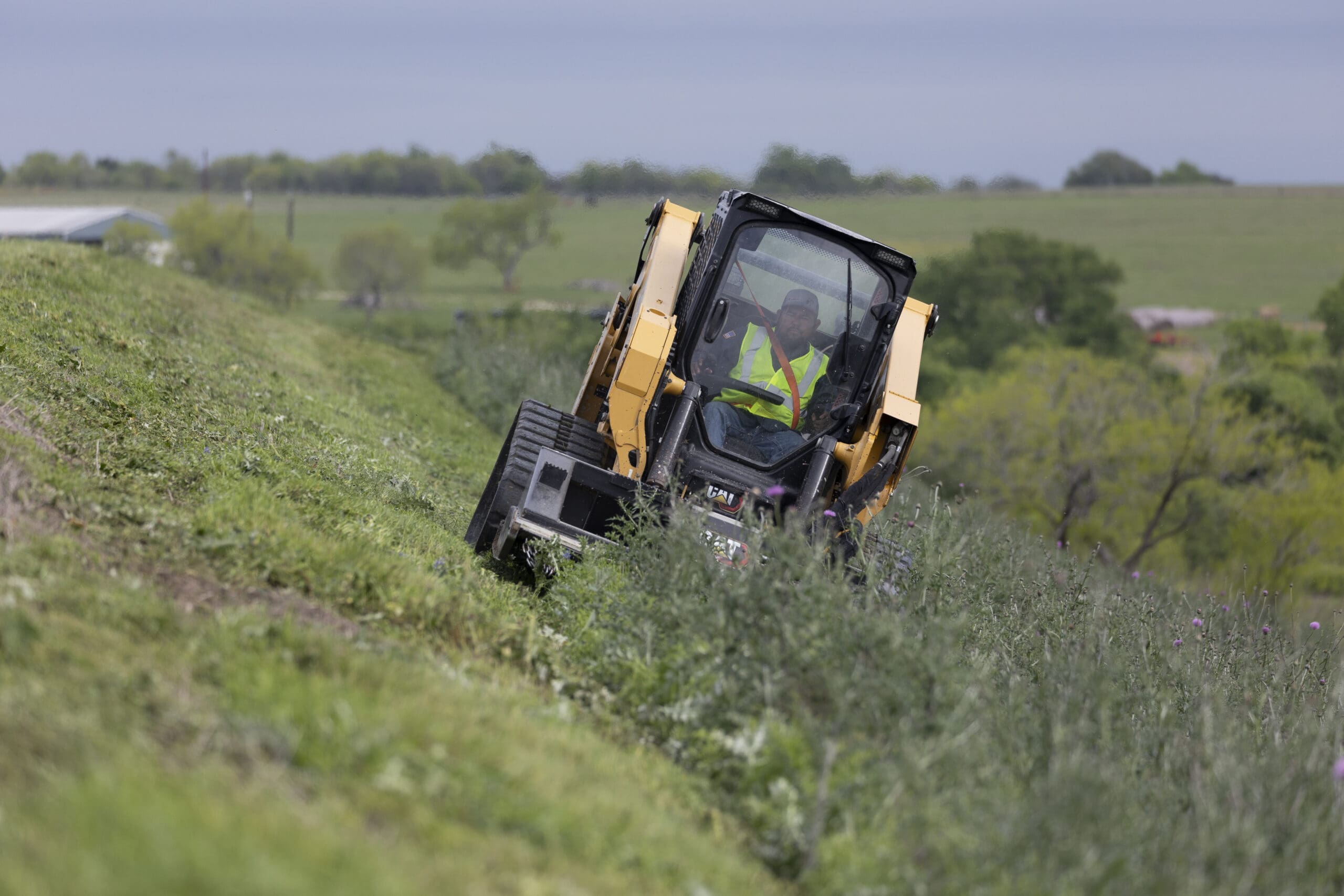
Your team works with a variety of equipment on a regular basis, and many of these tools can pose serious hazards if not operated in a safe manner.
Encouraging simple safety habits can drastically decrease the number of injuries caused by equipment on the job.
Conduct Daily Pre-Use Inspections
Just because a piece of equipment worked fine the day before doesn’t mean you should assume it will perform fine the next day. Get your crews in the habit of inspecting all their equipment before departing the yard for the day.
Develop a checklist employees can use so they don’t overlook any key components that need to be in good working condition. This list should include reviewing elements, such as blades, hydraulic hoses, undercarriage, oil levels, stress points and safety guards.
Also, make sure any heavy equipment leaving the shop is clean. Slippery steps, handrails, pedals, grab irons, and cab floors are hazardous.
If damage or excessive wear is found, these problems should be reported to a supervisor or your on-site mechanic if you have one. This is why it is critical to have backup tools available so you don’t have to send a crew out with faulty equipment.
Prioritize Proper Training
Most equipment accidents occur when operators use them improperly or lack the necessary knowledge. Make sure your operators feel comfortable and confident using the equipment you send them out with.
If you regularly add new equipment, provide hands-on demonstrations and allow employees to familiarize themselves with the controls and safety protocols before having them operate it on a job.

Teach employees the proper way to mount and dismount equipment, using three points of contact. Do not jump out of the equipment.
Your team members should also understand machine load limits so they can estimate the weight of loads on the job and know if they are safe for the equipment to lift.
Wear Personal Protective Equipment
Failing to wear personal protective equipment (PPE) is a frequent violation in the landscape industry. Not wearing eye and face protection is a commonly cited OSHA standard. Yet this can serve as a last line of defense for your employees as they operate various equipment.
Don’t let employees get away with failing to wear the necessary PPE, such as safety glasses, earplugs, steel-toed boots, or hard hats. Conduct regular site visits and hold employees accountable for repeat failures to wear the required PPE.
Educate your team members on how each piece of PPE serves to protect them. For instance, oftentimes heavy equipment is loud, requiring ear protection. Explain how exposure to sounds over 70 dB can permanently damage their hearing over time.
Each day, approximately 2,000 U.S. workers suffer job-related eye injuries that require medical treatment. Safety glasses can prevent permanent blindness or the loss of an eye by deflecting debris or particles from entering the eyes.
If your crews frequently work with hardscaping materials that generate silica dust, stress the importance of wearing a respirator to them. Breathing crystalline-silica dust can cause lung cancer and silicosis, a non-reversible, often-fatal disease
Utilize Spotters on Jobsites
Contact with objects or equipment is a frequent cause of fatalities in the landscape industry. This is why utilizing spotters whenever you have compact or heavy equipment in use is crucial.
Accidents often occur when the machine’s operator establishes a routine, makes a quick turn, and hits someone standing to the side, or backs over someone or something behind the unit. Spotters can help operators navigate around hazards like overhead powerlines or ground obstacles. They’re also recommended when the machinery has large blind spots or poor visibility.
Spotters should wear high-visibility clothing and agree on hand signals before starting a job. They should keep constant visual contact with the operator when the equipment is in motion. Two-way radios can be used if the spotter cannot stand in a spot where their hand signals are visible.
Conduct Proactive Maintenance
Regularly maintaining your equipment will help minimize the chance of mechanical failures occurring that could injure operators or bystanders. Not only does proactive maintenance extend the lifespan of your equipment, but it also gives your team members more peace of mind, and they will be less likely to bypass safety steps.
Follow the manufacturer’s service intervals for tasks like filter replacements, oil changes, and other routine tasks. Also, monitor other parameters that might indicate a service task should be conducted before one of these designated times.
Also, conduct regular checks to confirm that each piece of equipment’s safety guards, shields, roll bars and emergency shutoffs are fully functional. Keep detailed maintenance logs for each piece of equipment, making it easy to identify which ones are in need of inspection.
Train your employees to report any strange or out-of-the-ordinary experiences with equipment, such as vibrations, odd noises or warning lights that appear.
All of these actions can seem small, but they add up to a larger safety impact for your organization.

NALP’s safety programs are produced in partnership with Rancho Mesa.