

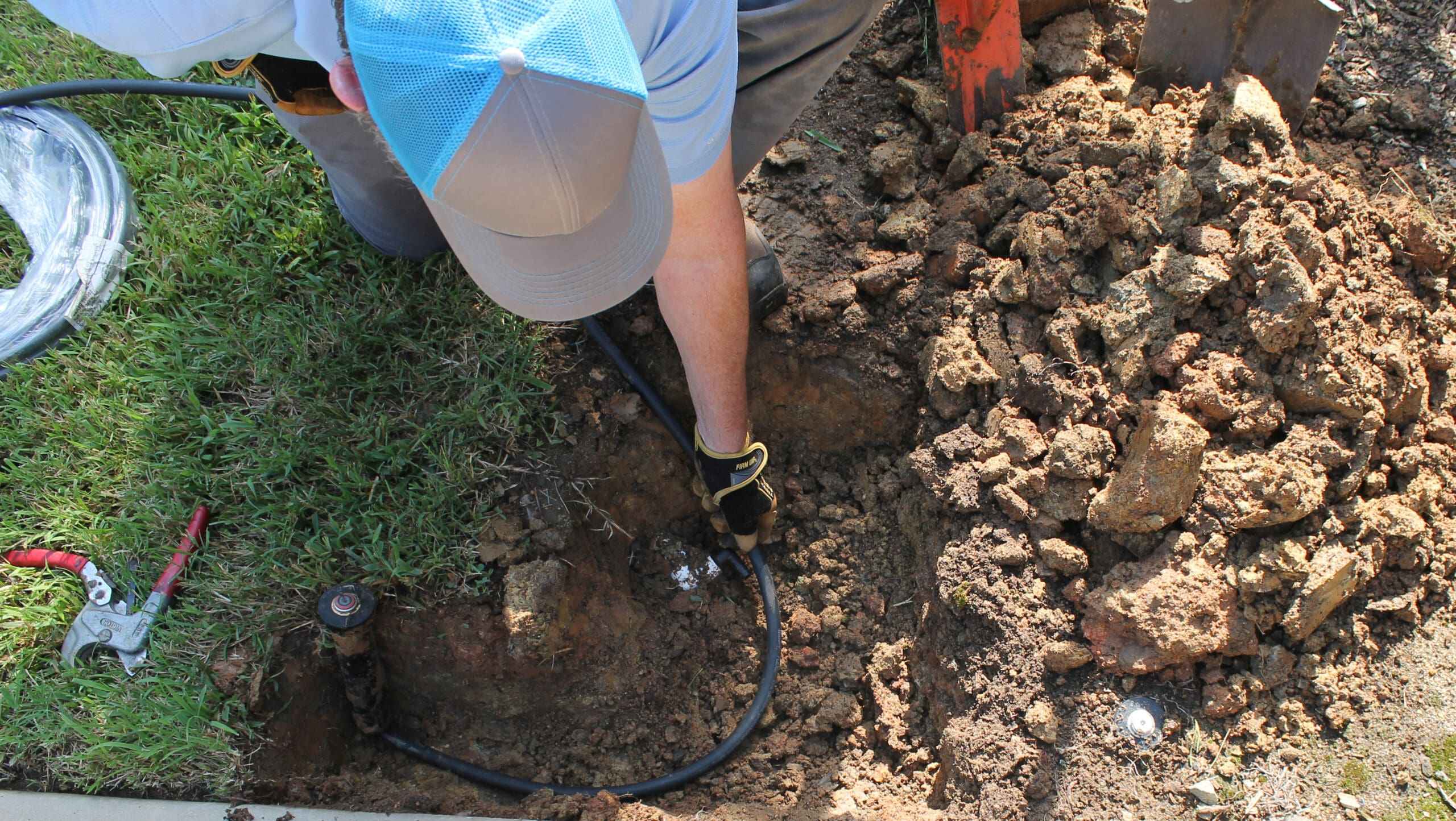
Conducting irrigation system evaluations for your customers can help with optimal water efficiency, improved plant health and increased customer satisfaction.
Dan Duren, Badgerland Irrigation & Lighting Service, based in Stoughton, Wisconsin, says how frequently you should review irrigation systems will vary based on your location. In the Midwest, he recommends at least once per season, but he’s found twice a year is ideal.
“However, weather alone is not the only factor to consider,” Duren says. “Sports fields or other high traffic areas should be checked more frequently.”
As plant material reaches maturity, Kurt Thompson, director of educational programs and an instructor with IrriTech Training, suggests also reviewing which plants don’t need irrigation anymore because they’ve become established and are the right plants for the right place.
He says it’s particularly important to check up on aged irrigation systems. The older a system gets, the chance is the more hands have touched it and most of these hands have been attempting to fix something.
“At some point in an older system, you’ve got to do an annual look or at least every other year look at this stuff to catch it before it gets too far,” Thompson says.
Conducting An Irrigation Performance Evaluation
Thompson suggests reviewing operating pressure, sprinkler head placement, the nozzles on the sprinklers and their physical condition. You should also look at the frequency and duration the system runs.
“When conducting a site audit of an irrigation system, the primary inefficiencies we look for are broken or failing heads, making sure the correct heads and nozzles are used for a particular area, over or under watering, does the system have a rain sensor, and making sure the turf and plant material is healthy and if any changes need to be made to the schedule,” Duren says.
Some easy fixes that can be made during an evaluation include reviewing the pressure and replacing broken or inefficient sprinkler heads.
“They can accidentally put a full circle nozzle that should be in a full circle sprinkler, and it’s in a quarter circle sprinkler,” Thompson says. “That’s going to be four times wetter there than it was before.”
Duren says adjusting the watering schedule for optimal root depth and plant health is another simple adjustment that can be made.
If plant material is struggling, make sure you’re planting the right plant in the right place. In most cases, you need to increase the watering frequency or duration to make sure the plant material is getting enough irrigation. Duren says it is better to adjust the heads and scheduling to match the needs of the plant material in the zone.
“Ultimately, if the zone is getting too much or too little water and the proper heads are in place, you would want to adjust the duration rather than the frequency to encourage a healthy deep root growth,” Duren says.
Duren recommends having a highly skilled irrigation technician on staff to calculate run times and distribution uniformity.
“With water conservation practices and new technology coming out each year, it is important your irrigation system is being serviced by someone who is familiar with all aspects of irrigation, from hydraulics and scheduling to new technology and best practices,” Duren says.
Improving Overall Water Efficiency
Performance evaluations are particularly valuable for water savings.
“By making the easy fixes, you could easily see a 30% water savings,” Duren says. “Just changing an old time-based controller to a smart controller can see water savings of 30%-50%. The overall water savings you can see from making fixes really comes down to how inefficient the system was to start.”
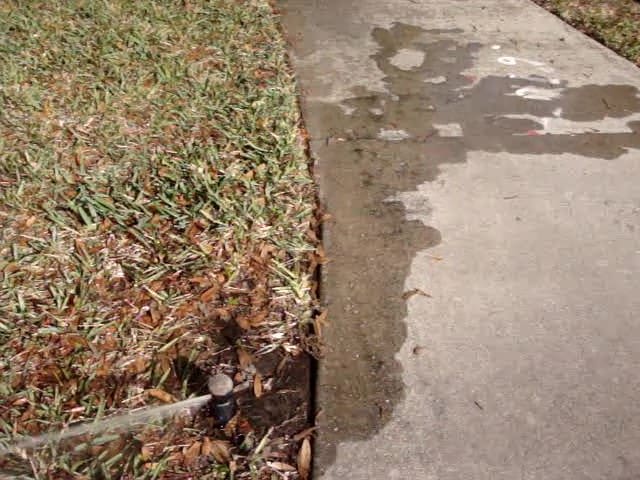
Thompson agrees that water savings can be quite dramatic the older the irrigation system gets.
“Usually, when you get past the five-year point if a system has never really been looked at for five years, you’re probably going to catch a whole bunch of things,” Thompson says.
For instance, as sprinkler seals dry out, this can result in a two- to four-gallon-a-minute leak.
“In perspective, a six-rotor zone on average should be 12 to 15 gallons a minute,” Thompson says. “Well, I now add an extra two gallons a minute for six sprinklers, I’ve pretty close to doubled the flow.”
Thompson says that studies have shown that raised and straightened sprinklers can save up to 20% of water usage. While smart controllers are highlighted as an easy win, Thompson says you should work to improve the irrigation system’s coverage first, and then work on improving the irrigation run times.
“If the sprinkler system has horrible coverage, it’s lipstick on a pig at that point,” Thompson says. “You got a great controller on a piece of crap system that isn’t performing. The low-hanging fruit is always the coverage.”
When To Replace
In some cases, it may be easier to choose to abandon and replace an irrigation system. However, this route is expensive and possibly stressful for plants as you dig and cut around root systems.
Duren says starting from scratch might be a good idea if the landscape has changed significantly from when the system was originally installed.
Thompson notes that if a customer has attached additional zones over the years to the irrigation system, this will add more flow demand, resulting in poor coverage and dry spots.
“Hydraulics is the limiting factor,” Thompson says. “You can only get out of all the sprinklers that are running at the same time, like on one single zone, what the water source can provide and the piping system can deliver.”
