

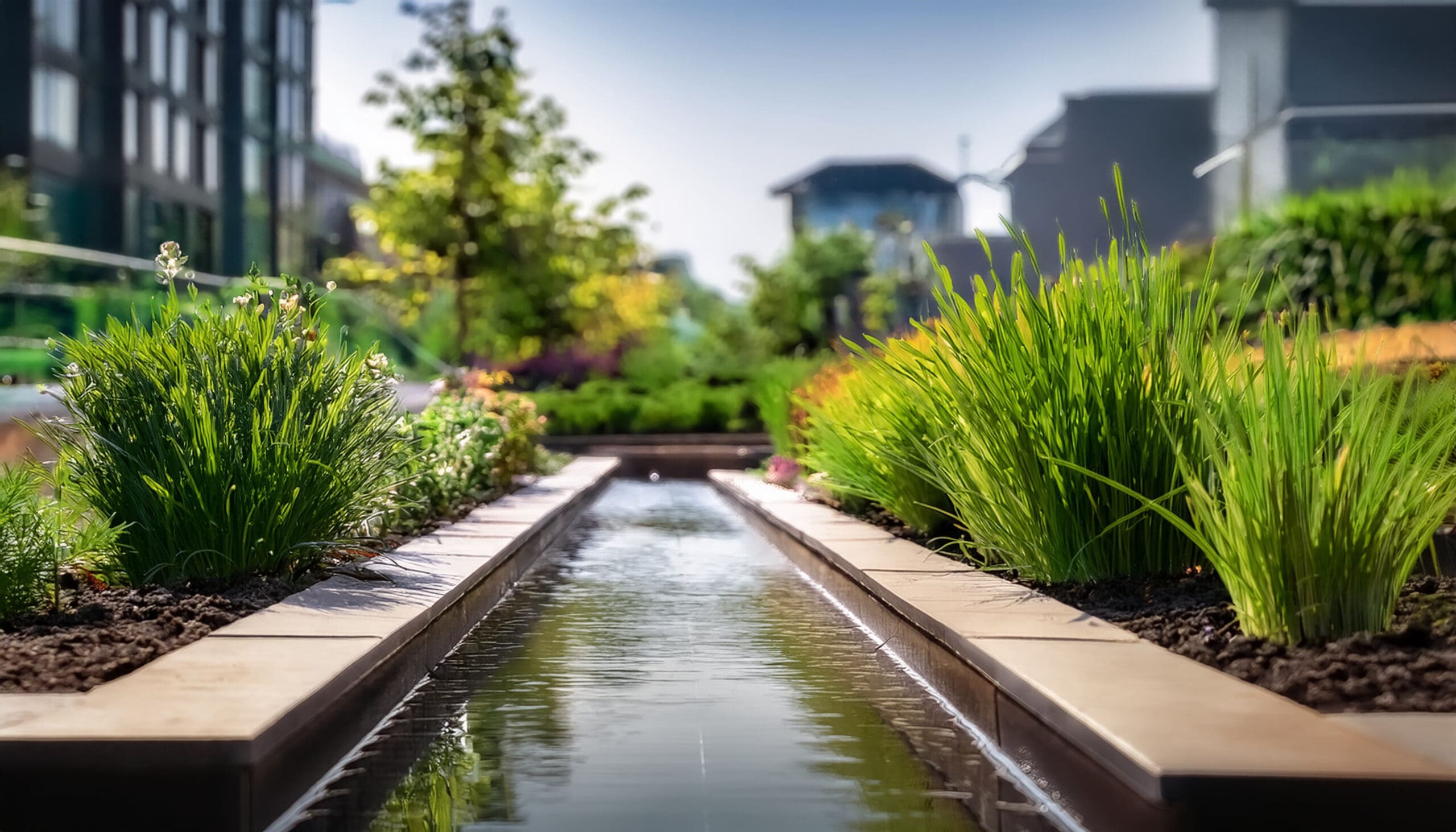
Just as the economy can impact consumer trends, the changing climate is also driving shifts in the demand for certain residential design features.
With frequent natural disasters and extreme weather conditions, the need for versatile plants and landscapes that can endure various challenges is bringing sustainability to the forefront of clients’ minds.
Adapting to Local Environments
As the intensity of natural disasters increases, homeowners are seeking resilient landscapes.
“Over the past 3-4 years, we have had an increase in clients asking about how to plant with severe weather in mind,” says Michele Dupuis, owner of Giving Gardens & Landscapes, based in Collinsville, Connecticut. “I now initiate conversations with every client to acknowledge potential challenges on their properties. We are living in an evolving environment of extremes.”
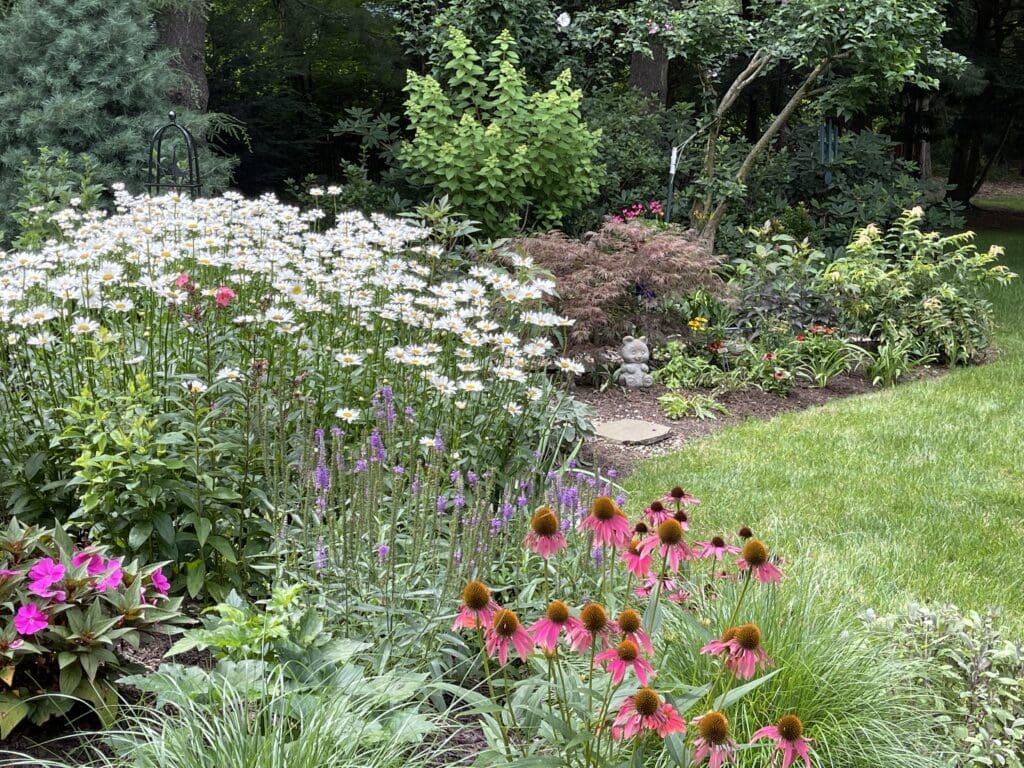
Kyle Cahill, founder and horticulturist for Grow and Company, based in Houston, Texas, says in their area, they have had record freezes, tornadoes, and hurricanes over the recent years.
“Personal landscapes are a considerable investment for our clients, and designing resilience into them is extremely important for the long-term success,” Cahill says. “From plant material selections to stormwater management to efficient irrigation designs, we must take them all into account.”
Dupuis says not only are they dealing with weather events where 3+ inches of rain falls in a very short period of time week after week, but during the fall they entered a severe drought with no rain for over 60 days.
“The challenge we have had in the Northeast over the past few years has been drastic swings between drought and heavy rain,” Dupuis says. “There has been a significant shift toward trying to find plant materials that can handle these drastic changes that occur season to season or even within the same growing season, as we saw this year.”
Meanwhile, in the Southwest, Jaclynn Neu, lead designer with Rock & Rose Nursery + Landscape, based in Truckee, California, expects low-water use plants will be popular in 2025 as they have seen an increased desire for drought-tolerant landscapes in their area.
Joel John, owner and president of M.J. Design Associates, Inc., based in Plain City, Ohio, says more of their clients are requesting irrigation after last year’s drought.
Stormwater Management Solutions
Zach Gebel, director of operations for Brook Landscape, based in Brooklyn, New York, says flooding has been happening more frequently in their market, so it’s become a high priority for them to incorporate stormwater management into every design.
“We’ve found it’s a critical consideration to both protect our clients and prevent our team from needing to respond in an emergency scenario,” Gebel says.
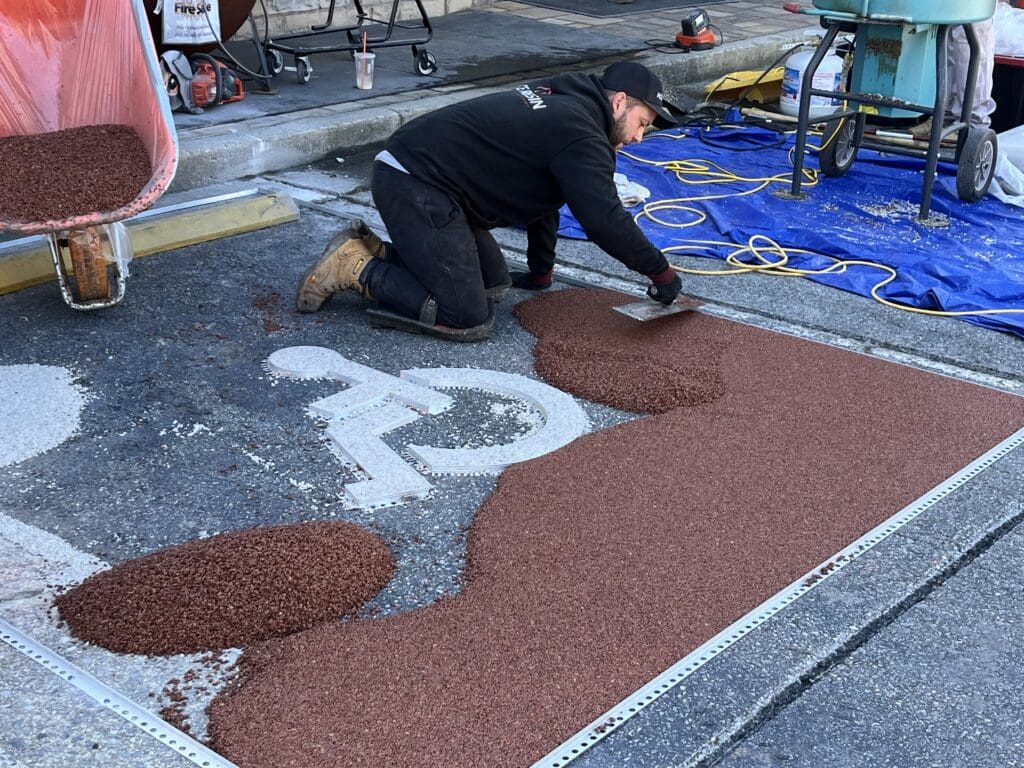
Photo: SiteOne Landscape Design
Gebel says they try to layer in as many protections as. They will make strategic grade pitches, use municipal storm connections and install French drains and drywells. If a large portion of a space is paved, they try to balance that with deeper permeable substrates.
“Bioswales are definitely something we are using to manage some of the severe rainfall events we have been dealing with,” Dupuis says. “Educating our clients about the benefits of bioswales has been much easier with recent experiences of torrential rains. When clients are looking to add or update their hardscape spaces we are discussing the benefits of permeable pavers. I do believe we will see more of a shift toward use of them as time goes on.”
Chris Noone, senior director of category management for hardscapes with SiteOne Landscape Supply, says there has been a big push for stormwater management not only from customers, but also from city ordinances changing.
“In some areas, when you want to put in a pool, you can only have so much hard surfaces,” Noone says. “I think it could be permeable pavement. There’s a big push right now on resin-based aggregate. It is an old-school look but a better technology. You’re not always limited on permeable pavers.”
Cahill says that both clients and municipalities are becoming more aware of the benefits of managing stormwater on-site.
“Solutions like bioswales, permeable pavers, and rain gardens are becoming standard requests in our projects,” Cahill says.
Native and Well-Adapted Plant Palettes
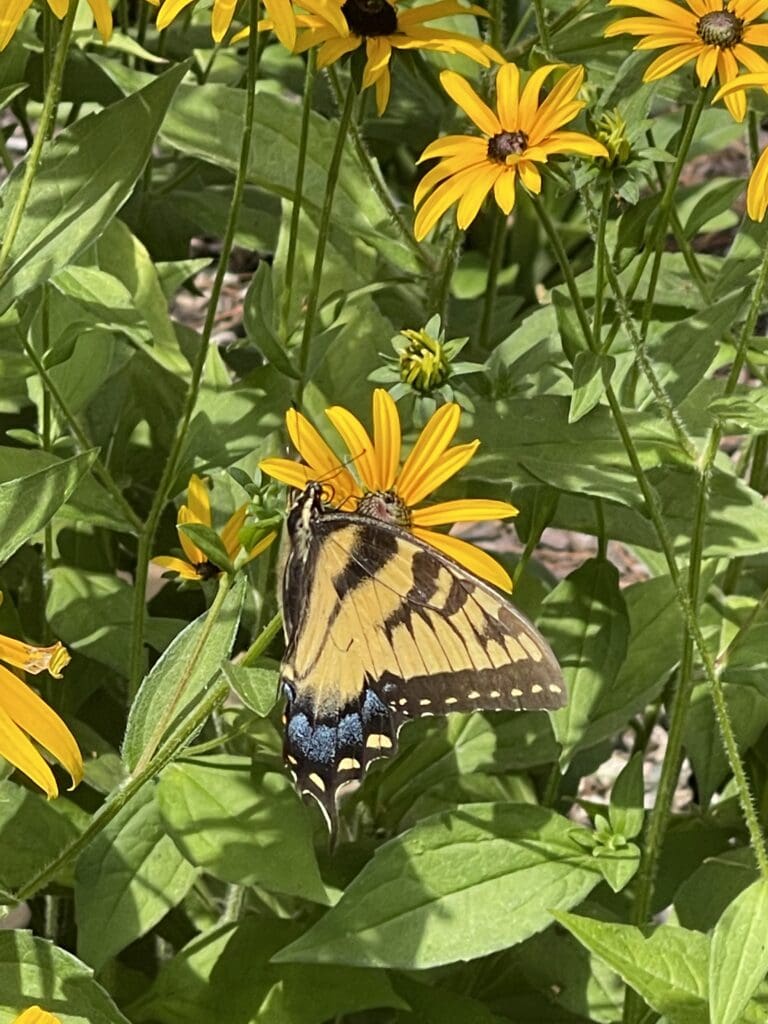
Another sustainability element that is in demand is native plants. John says that customers are asking for this type of plant material but do not know what it is. Dupuis agrees the requests for native plants have been growing year over year.
Cahill notes that native plants and/or regionally appropriate and well-adapted species provide ecological benefits like supporting local wildlife, reducing water use, and thriving with minimal intervention.
“They’re a win-win for clients and the environment, and I see their popularity continuing to grow,” Cahill says.
