

There are countless causes that your business can support as a form of community service. Rather than letting choice overload prevent you from giving back at all out of a concern that you can’t help everyone, starting off with just one effort can open the door to other opportunities.
“One of my favorite quotes is, ‘I can’t help everybody, but we all can help one person,’” says Tony Nasrallah, president and founder of Ground Works Land Design based in Cleveland, Ohio. “It’s just very contagious and good for our employees and our vendors all to get together. So, it’s always a good thing.”
How to Choose a Cause
You might think it’s best to select a community service project objectively and leave individual preferences out of it. However, for many lawn and landscape companies, the organizations they choose to work with are selected for personal reasons.
For instance, Nasrallah launched Ground Works Out Drives Alzheimer’s Golf Outing after recognizing the impact of his mother’s Alzheimer’s diagnosis on his wedding day in 2017.
“We were doing the mother and son dance, and that’s where it really hit me, because she got really confused, and she didn’t know what to do,” Nasrallah says. “The whole thing got very emotional.”
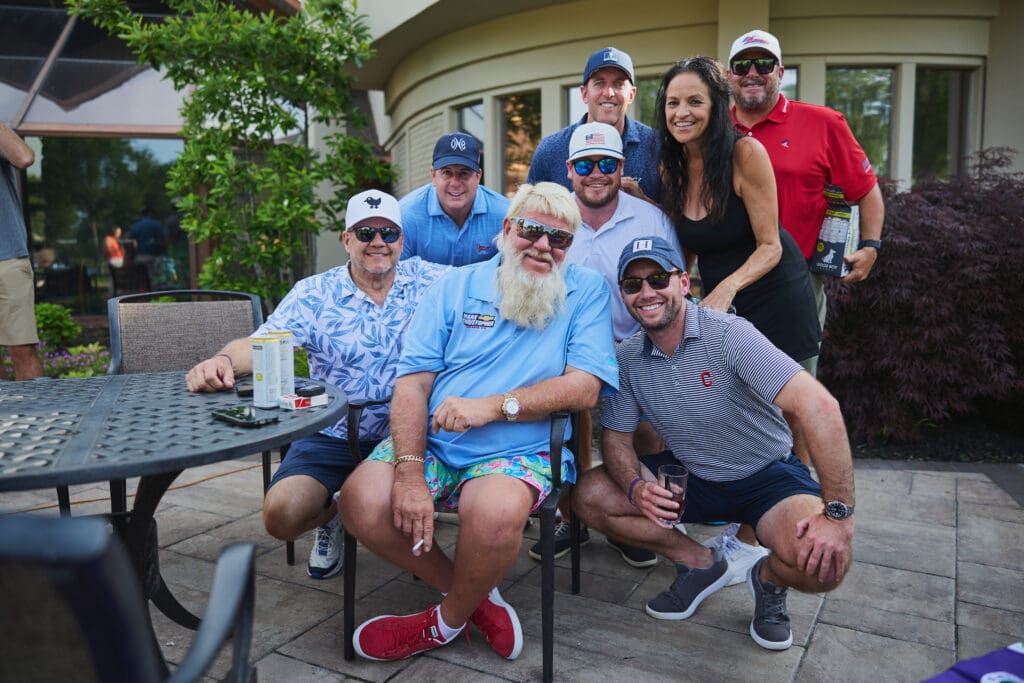
He began to consider the disease’s impact on other families and launched the golf fundraiser in 2019 with the help of friends. Over the years, this outing has raised over $220,000 that has gone to fund the Alzheimer’s Association’s research.
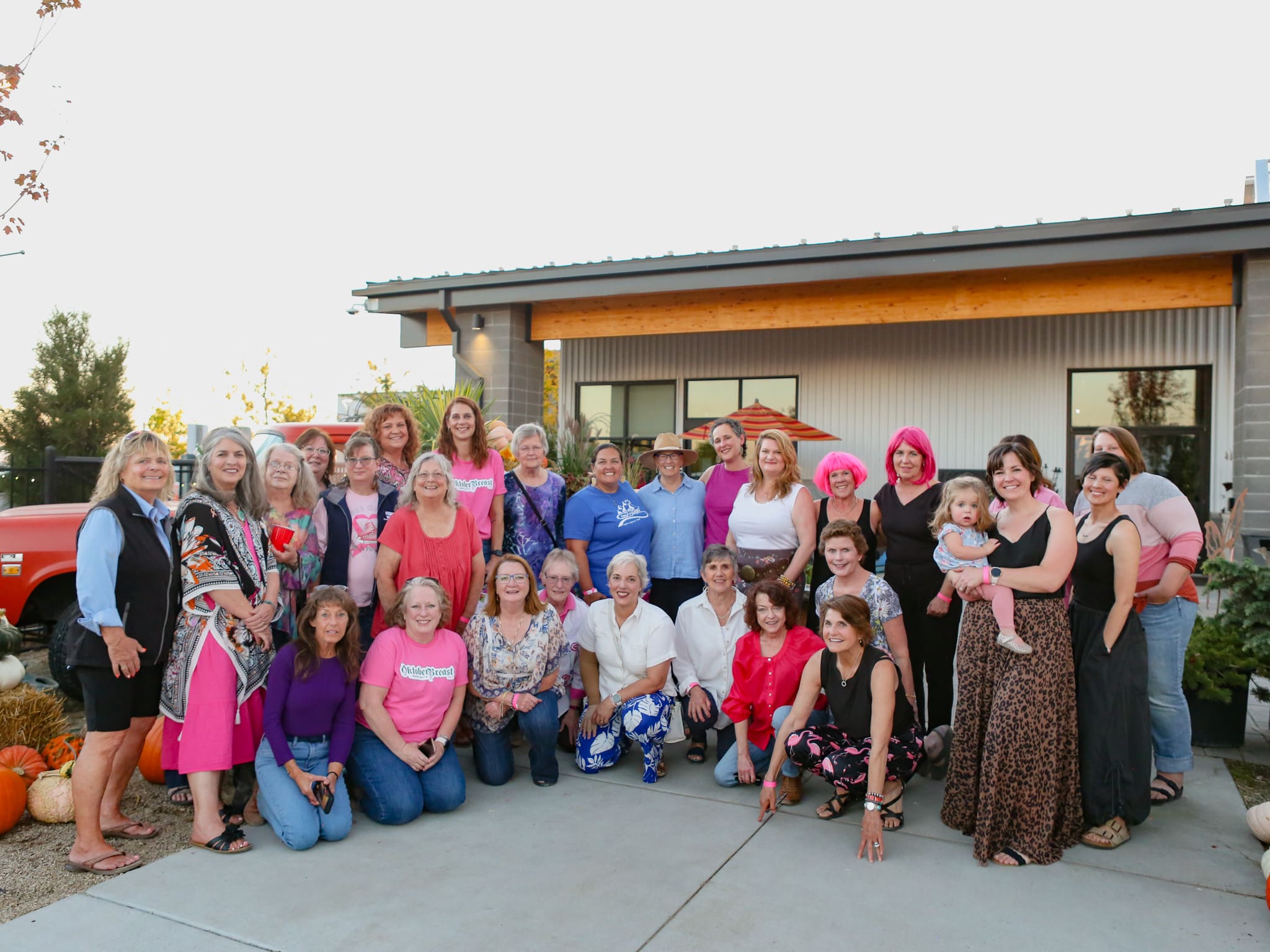
Similarly, Franz Witte Landscape Contracting, Inc., based in Nampa, Idaho, created the fundraising event OktoberBreast to give back to local nonprofits, Casting for Recovery and Expedition Inspiration. Casting for Recovery offers free retreats to Idaho breast cancer survivors, while Expedition Inspiration strives to find new cures and prevention strategies in the fight against breast cancer.
“One of our then employee’s (now a partner) wife had been through treatment and recommended Casting for Recovery because she had gone to one of their retreats and it made a huge impact on her,” says Seneca Hull, president of Franz Witte. “We contacted them and they came out to meet with us. It was a very moving meeting, and we were all in tears by the end of it!”
Hull says she selected Expedition Inspiration because her OBGYN was very involved with them, and she had recently passed away from metastatic breast cancer.
“Another reason to pick the two we did was to hit breast cancer from both ends,” Hull says.
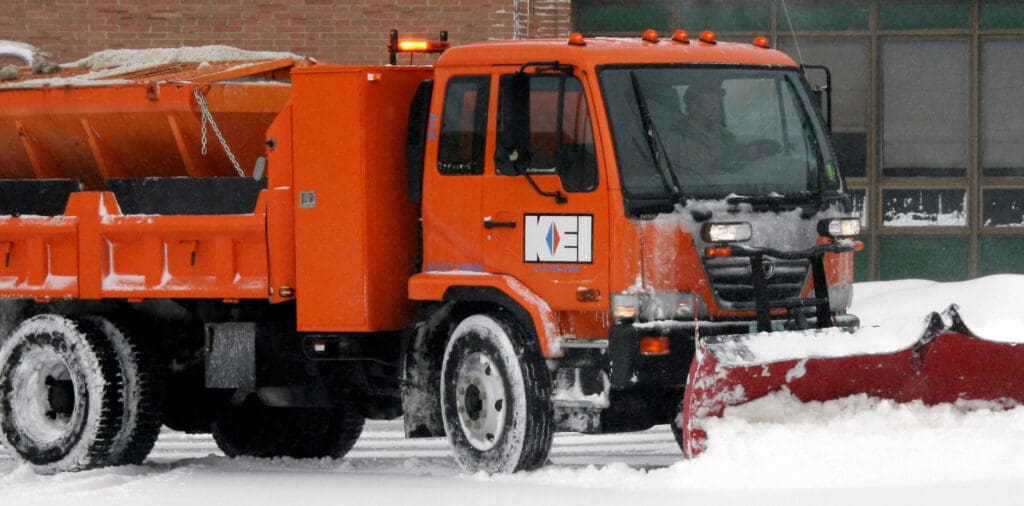
In another case, Kujawa Enterprises, Inc., a Sperber company based in Oak Creek, Wisconsin, became involved with GreenCare for Troops because Chris Kujawa, president and CEO of KEI, served on the Project EverGreen board when the initiative was first launched. GreenCare for Troops provides complementary landscape services to the families of deployed active-duty military members.
“Once I got back to our company, all of us there thought it was a great initiative as well,” Kujawa says. “Helping the families of deployed troops. It’s needed. It’s appreciated. It is a no-brainer.”
David Koehn, regional director for the Southeast for Bland Landscaping Company, headquartered in Apex, North Carolina, says they are always looking for organizations they can help by donating their expertise.
“We sit down as a team and decide,” Koehn says. “I always like to put it out there. Is there anything that you guys are passionate about? So I extend it out, and then I get feedback.”
Koehn’s director of construction at the time introduced him to K9 for Warriors, which pairs service dogs with veterans suffering from PTSD, traumatic brain injury and/or military sexual trauma. Meanwhile, Koehn learned about Seamark Ranch, a children’s home, and Rethreaded, an organization that empowers survivors of human trafficking, through his church.
Now, they continue to support these organizations as well as participate in Bland Landscaping’s annual Day of Service.
“That’s something that they’ve been doing for a long, long time,” Koehn says. “That was a core alignment when I was going through the transition, and I was really pleased. We were being acquired, and I’m going to be partnering with some like-minded owners who also give back.”
Types of Community Involvement
Once you’ve identified an organization you’d like to support, then you can meet with your team to determine the best way to give back.
If your staff has selected a cause related to disease research or aiding those currently suffering from an illness, hosting events and fundraisers like Ground Works and Franz Witte is a good way to raise money and involve your team.
“Our marketing team is also very involved in the planning and working the day of,” Hull says. “Many of our owners and employees volunteer to help at the event also.”
Initiatives like GreenCare for Troops can be easily integrated into your current routes. Kujawa says their crews are assigned by geography. They let the team know they are engaged and why, but keep the exact location private.
“Project Evergreen handles all outreach, matching families with contractors, initial communications, confidentiality concerns, etc.,” Kujawa says. “All the contractor really needs to do is meet with your beneficiary, set the scope and expectations, and show up to do the work.”
Koehn says they typically choose to help install a specific project versus doing maintenance work. They have installed pergolas, brick paver patios, landscape lighting, and other enhancements for the nonprofits they work with. He says he reaches out regularly to see what these organizations need and what would be the most impactful.
For instance, when Seamark Ranch installed a pool last year, Koehn’s company did all the landscaping as an in-kind donation.
“It probably would have been $50,000 job if we ran it through as a full project, but I had the nursery give them a heavy discount on the plants,” Koehn says. “They bought the plants directly for $13,000. We came in and put all the material in. So a $50,000 install only cost them $13,000. So those are huge benefits for those types of organizations because, of course, they operate on donations.”
No matter how you choose to engage with the community, take the time to share these efforts with your team. Nasrallah says even during their onboarding and training, they go over their community service.
“Not only do we talk about it, we also give the people the opportunity to be involved in it as well,” Nasrallah says. “We also have conversations where people will pitch me suggestions on some way we can donate or be a part of something. I’m always open to everything.”
Measuring Impact
All of these companies choose to volunteer in their communities simply because it is the right thing to do. However, they have also reaped tangible benefits on a personal and professional level.
Nasrallah says his efforts to fund Alzheimer’s research have allowed him to open up about a matter he previously kept to himself.

“The biggest impact I see is that people actually come to me and talk to me, and people are more open to talk about too now,” Nasrallah says. “It’s not a private thing. It’s ‘Hey, how can we help each other? How can we support each other?’ People just open up more, and then I get to talk about something that I’ve kept inside quietly for a long time.”
Hull says with the funds they’ve raised through OktoberBreast, Casting for Recovery can now hold two retreats a year, instead of just one. Also, they now fund the Young Investigator award for Expedition Inspiration and one of the research doctors they funded was able to document the gene that makes cancer go metastatic.
“I would say doing this has made a huge impact on me,” Hull says. “I have not had breast cancer, and the things I have learned about the disease are amazing. The women who are involved in this event are my superheroes. And everyone knows someone who has had it. It needs to be stopped!”
Kujawa says the greatest impact they experience is when a servicemember’s family calls to thank them and compliment their work.
“We always communicate that to the entire company,” Kujawa says. “It makes for some great opportunities to say, ‘Thanks’ internally, and to reinforce our culture of ‘giving back.’”
Serving in the community has also positively impacted these businesses’ overall company culture.
“Companies that have a focus on truly improving their community and the people in it are generally companies that value relationships and kindness,” Hull says. “They are leaders not only in their industry, but in the communities that support them. The culture you build when you invest in others generally comes back to you tenfold, but it has to be authentic.”
Nasrallah says they’ve attracted good employees as well because they want to be part of a good culture that wants to give back.
Meanwhile, Koehn says the publicity of their involvement with multiple charitable organizations has helped open doors for them with new clients.
“There’s an unspoken value,” Koehn says. “There’s no way to put a dollar figure on it. If you say, ‘I invested $50,000 into community involvement. What is my return?’ If you’re doing it for that, then it’s not going to work. It has to just be because you genuinely want to help other people.”
This article was published in the September/October issue of the magazine. To read more stories from The Edge magazine, click here to subscribe to the digital edition.
