

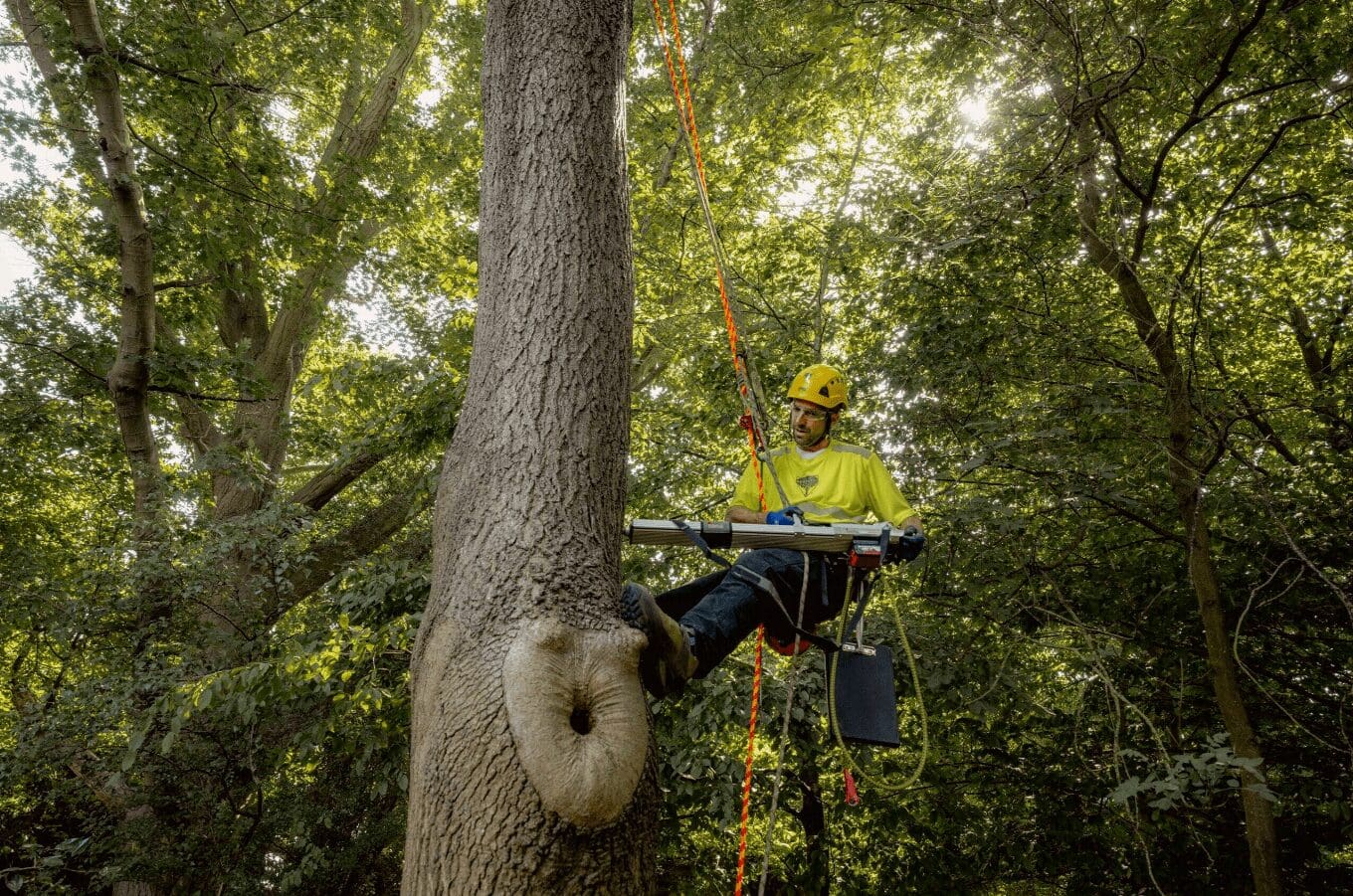
Tree risk assessments are ideal for long-term client relationships and can help with preserving your customers’ trees.
If you are considering offering tree risk assessments as a service, make sure that you or someone on your staff has the proper certifications, like the International Society of Arboriculture’s Tree Risk Assessment Qualification (TRAQ) program, which designed to train and assess tree care professionals who have specialized knowledge in tree risk assessments.
“You got to know what you’re doing,” says Scott Seargeant, ISA Certified Arborist and owner of Seargeant Landscape & Arboriculture, based in Visalia, California. “You got to have the knowledge, and you have to gain some experience.”
Seargeant highly recommends learning from a mentor in the field before offering tree risk assessments yourself.
“You can have all the licenses that you want, and you can have that book knowledge, which is extremely important, and I can’t stress that enough, but then to go out and start doing them on your own, I think is a little bit risky,” Seargeant says. “I think you should work for somebody, or tag along, or do an internship, which I’ve done for a couple of people, and then you can get the ins and outs.”
When To Conduct Assessments
Megan Kacenski, ISA Certified Arborist and VP of corporate relations for Bartlett Tree Experts, based in Stamford, Connecticut, says in general, trees should be assessed at least every three years but for those in high-use areas, tree risk assessments should be done annually.
Seargeant says it’s also wise to assess trees after any sort of major weather event. Reviewing trees after windstorms or when flooding occurs post-drought can be critical. High winds can create cracks and shift the root plate. Wet soil plus weakened roots can increase the fall risk.
Seargeant and Kacenski both recommend reviewing trees after construction projects.
“A risk assessment after things have been built is really important because roots are hard to see and it’s not so easy to interpolate what’s going on below ground,” Seargeant says.
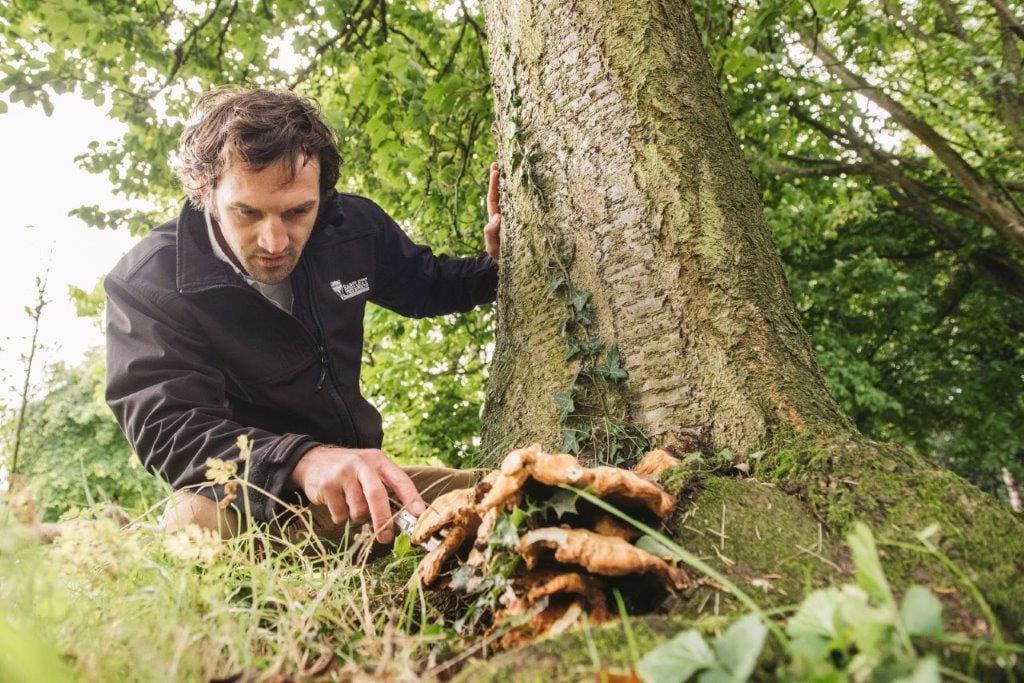
Kacenski says if anything visibly changes in the tree, like sudden mushroom growth, theses signs can also warrant conducting a tree risk assessment.
Communicating with Clients
After identifying a threat, the final call of action falls on the client, so it is critical to convey the urgent need to act. Kacenski says that if a homeowner has been made aware of your assessment and fails to take action, they can be held liable.
“If there’s an imminent danger, you as an arborist, have to follow through, and if the homeowner won’t do it, you have to notify everybody that’s within the fall zone of that tree that that’s a hazardous tree,” Seargeant says.
He recommends doing your due diligence and following up with the homeowner to ensure that they are aware of the imminent danger. Have proof that you conveyed the message to the client as well.
“Always make sure that they understand English,” he says. “Because sometimes I get people who speak German, I get people who speak Spanish, and if they don’t understand, I got to get somebody who could interpret for them. You’ve got to make sure that your communication is understood.”
He says one effective way to convey the severity of the assessment is to take pictures and outline the specific hazard as well as the potential fall zone.
“The other way is to write a report and write it right away, especially the more risk there’s involved, the more you need to make sure you don’t wait till next Tuesday to write something up,” Seargeant says.
Kacenski says they have their own software for tree risk assessments and can generate reports with diagrams and graphs educating the client.
“Anyone with their TRAQ learns a lot of specific language and learn how to take the jargon that we use at an industry level and how to communicate that down to what a client can understand is really important with giving recommendations,” Kacenski says. “We use rating scales as well.”
Seargeant says it also helps to have a plan of action so the homeowner knows what next steps to take. He has a couple of tree trimmers on standby who can address these emergency situations.
Kacenski says they will often provide tiered recommendations so the client can make a final decision they feel comfortable with.
Advice for Others
Ethically, Kacenski says it is an arborist’s responsibility to review all the trees on a property to ensure there are no warning signs.
“If the client points to one tree, try to assess everything because there may be something that the clients don’t notice,” Kacenski says. “A tree that they don’t care about might actually be a bigger hazard than the tree that they do care about. Try to walk the whole site, get the whole picture, so that you can be as effective as possible.”
It’s also a good idea to put eyes on the trees you’re monitoring at least once every season to see how they’re performing during different parts of the year.
“The more that you can get to know a tree, the better that your recommendations will be,” Kacenski says.
She also recommends staying up to date with your certifications and education.
“We’re dealing with living things,” Kacenski says. “Science changes. We learn more, so it’s always good to keep up with what’s going on in the industry.”
When creating your tree risk assessment reports, strive to stay as consistent as possible.
“If you can utilize any sort of software that’s out there to help document the photos, and keep all that housed, and be able to track the tree’s progress and changes over time from the all in one house I think that’s really great as well,” Kacenski says.
Kacenski says it’s important to remain objective and not let the fact you’re assessing your favorite clients’ favorite tree make you biased.
