

It’s Monday morning, and three of your crew members are no-shows. It’s a headache you don’t need but can occur quite often if you don’t have the proper policies in place.
Rampant absenteeism can create a negative ripple effect in your landscape company that results in crews operating shorthanded, longer work days, missed production goals and frustrated team members.
Why Letting Poor Attendance Slide Is a Bad Idea
While it can be tempting to overlook this behavior, especially if you are desperate for laborers, Becky Conn, human resources director for The Greenery, Inc., based on Hilton Head Island, South Carolina, stresses owners can’t afford to disregard absenteeism issues.
“They will lose good employees due to poor behaviors of others and will continue to affect productivity,” Conn says.
Joe Chiellini, VP of Florida for Yardnique and founder of ASI Landscape Management, based in Tampa, Florida, adds that when you tolerate employees consistently being late to work or not showing up at all, you set the tone that you are okay with that type of behavior.
“We believe that is contagious,” Chiellini says. “If it’s okay if John misses a day every week well, then what’s the big deal if I miss a day every week? When you tolerate that behavior, we believe it just spreads like wildfire.”
Aside from having more employees not show up regularly, absenteeism can also hurt employee morale as reliable team members end up consistently overworked as they pick up the slack.
Set Proper Expectations Early
To mitigate absenteeism, it’s best to have a set policy in place and communicate this from day one with new hires.
“All employees are required to review and sign acknowledgment of the employee handbook, which contains the attendance policy,” Conn says. “Expectations are also reviewed during onboarding.”
Chiellini agrees you need to be clear about how your company does not tolerate tardiness or no-call, no-shows.
“I tell people the day that you onboard somebody is the most powerful day that you could have as far as making an impression on that new team member and how professional you are,” Chiellini says.
When crafting your attendance policy, consider what time you expect employees to arrive and at what point they are considered late. Also, have a set call-out procedure, documentation requirements and a defined discipline process.
For instance, Conn says their team members must call out no later than prior to the start of the workday, and they will ask for a doctor’s note if an employee is out for three days or more.
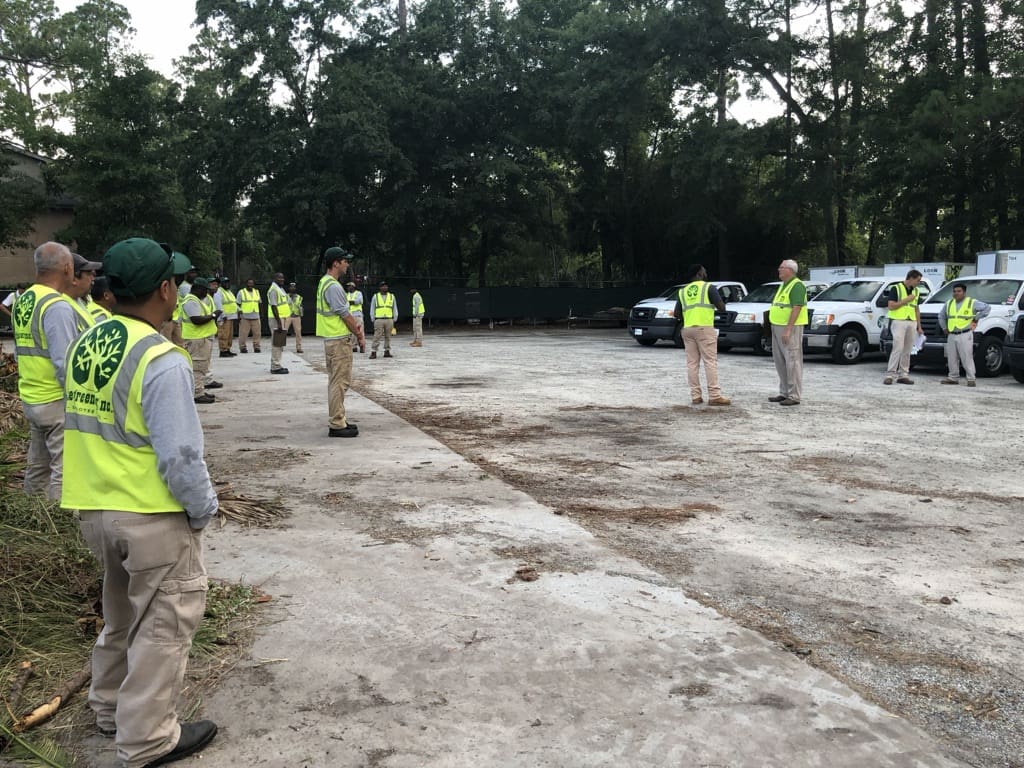
Chiellini says in their morning huddles, crew members must line up on their numbers by their trucks by 6:45 a.m. or they are considered tardy.
“The first one’s a warning, and then a write-up, and then the third one you’re terminated,” Chiellini says.
Exercise Accountability
After laying the ground rules, then you have to hold your team members to this standard. Chiellini says only five to 10% of their workforce typically no-shows, but these individuals don’t last long at their organization.
It is a good idea to talk to employees about why they were absent so you can identify if they are experiencing barriers preventing them from getting to work versus poor habits. Conn says when employees do call out, it tends to be because they are sick or experiencing transportation issues.
“We have conversations with the employees in the event they are out for a number of days due to illness,” Conn says. “We may ask for a doctor’s note.”
Chiellini says absenteeism tends to rise in the summer months, as new hires are not accustomed to the heat and physical nature of the job.
Chiellini says if there starts to be a lot of occurrences a particular branch, it’s best for the branch manager to talk to the time and share how an individual’s actions are impacting the larger team.
“Talk to them how now your truck went out with three guys instead of four guys, and how much harder that day was,” Chiellini says. “‘Hey, listen, we all want to get home to our families. You’re not the only one who wants you to be home.’”
Reward Good Attendance
Aside from punishing absentee employees, it’s also a good practice to reward team members who are dependable.
Chiellini says one reward program they are piloting in Florida right now where if someone shows up every day they’re assigned for work for a month, they receive an extra PTO day, are entered for $200 cash drawing at the end of the month and their name gets added to a drawing for the end of the quarter for another prize.
“They don’t want to be at day 20 of let’s say 22 workdays, and they miss that day, they just cost their whole month, they had a reward coming, they were going to be in a raffle,” Chiellini says.
He says since implementing this program, their overtime costs have gone down year-over-year.
Chiellini says one key to a successful reward program is to publicly celebrate the individuals with excellent attendance.
“We call every individual’s name at that branch who made that,” Chiellini says. “They’re hearing their name called.”
Advice for Others
Chiellini recommends that if you want to roll out a new attendance policy, introduce it in the slower winter months so employees can adjust to these new expectations before peak season arrives.
“You have to have a policy to enforce,” Chiellini says. “You can’t just roll out a fun program like we have. That’s going to almost fall on deaf ears. I think you’ve got to put the policy in place. Now there’s a punishment that we can do, but now we’re going to start rewarding it. There needs to be a healthy balance.”