

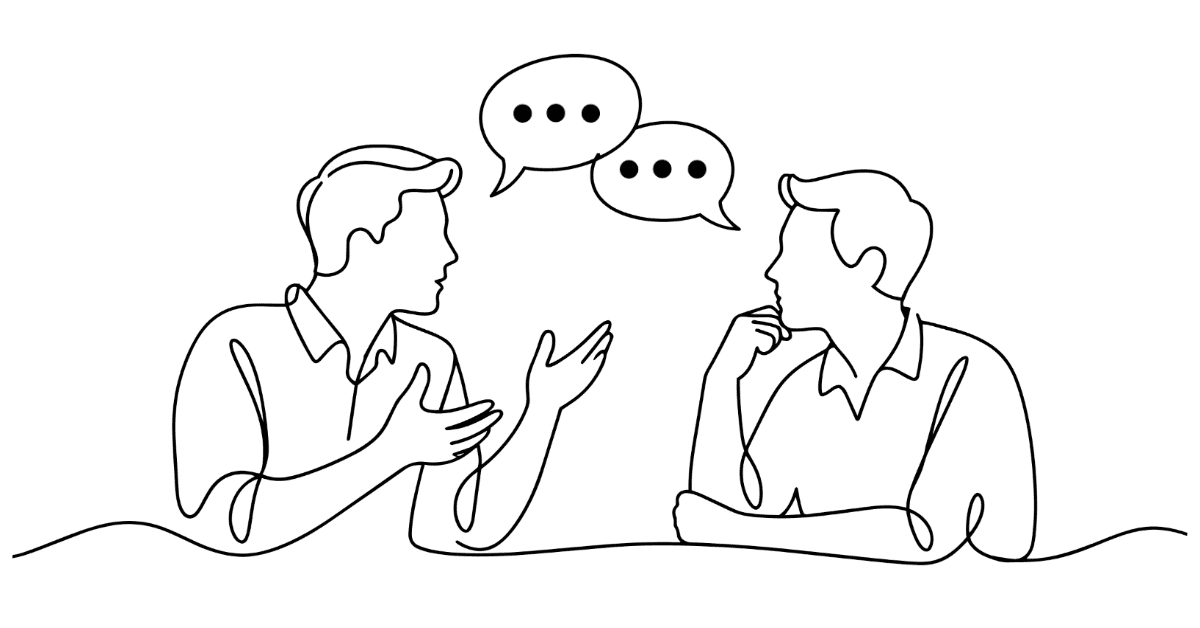
Are you having the difficult conversations in your company, or are you avoiding important discussions in an attempt to keep the peace?
Dr. JP Pawliw, co-founder of the Institute for Health and Human Potential and New York Times best-selling author, says this last 8% of the conversation that owners aren’t having is the gap between what people know they should do and what they actually do when the pressure is on.
“It’s not a knowledge problem,” Pawliw says. “Almost everyone in that room already knows they should give the honest piece of feedback, have the hard conversation, or name the thing nobody’s naming. The gap is between knowing and doing under pressure, and that gap is closeable.”
During Pawliw’s keynote presentation on Feb. 4, 2027, held during Leaders Forum, presented by NALP and powered by Aspire, in Fajardo, Puerto Rico, he will explore why leaders struggle with having these conversations as well as how to say what needs to be said.
For leaders who excel at the technical and operational side of the business, the hardest part is having hard conversations like telling a crew leader their performance has slipped, pushing back on a client’s request, or naming a succession issue.
“All require the capability and courage to step in,” Pawliw says. “Those are universal leadership moments, and this session gives people a concrete way to handle them differently — not theory, something they can use on a job site or in a truck the next morning.”
Why These Conversations Are Left Unsaid
Pawliw explains the reason so many leaders avoid these hard conversations is because the brain treats it like a physical threat.
“The moment you’re about to say something that risks your reputation, your relationship, or your standing with someone, the amygdala can hijack the prefrontal cortex — the part of your brain responsible for clear thinking and working memory,” he says.
Biologically, your amygdala treats a social threat almost the same as a physical one. Your heart rate increases, working memory narrows, and the prefrontal cortex has less access.
“That’s why people report feeling like they’re ‘speaking from inside a tunnel,’ or losing access to exactly the words they’d planned to say,” Pawliw says. “It’s also why tone and body language shift without you choosing it — you come across as more defensive, more rigid, or more clipped than you intend to, because the part of your brain responsible for reading the room and adjusting in real time is the same part that just went offline.”
Pawliw says one conversation that is typically put off for too long is when you need to tell a loyal, long-tenured employee that their performance or their role has to change.
“It’s the conversation leaders dread most, because it feels like a betrayal of someone’s history with the company, so they let it slide for months or years, hoping it resolves itself,” he says. “It almost never does. And the irony is that the leaders who finally have that conversation, done with real care, are usually surprised by how much relief the other person feels too — most people already sense something’s wrong, and living in that uncertainty is often worse than hearing the truth.”
The Consequences of Not Speaking Up
While avoiding a hard conversation can spare you stress in the moment, putting it off continually will cause it to compound, where it either erodes trust and performance or becomes an even larger issue.
Pawliw says one example of this is when a manufacturing client had a problem that could have cost $10 to $20 million if it had been raised early, but ended up costing four times that, because nobody wanted to be the one to escalate it.
“That’s the pattern: avoidance doesn’t make the issue go away; it just moves the cost downstream and adds interest,” Pawliw says.
Pawliw adds that the higher up you go, the less candid the feedback becomes as people are managing their risk. Yet the information that goes unsaid is often what would help move the business forward.
How To Hold Candid Conversations
You shouldn’t wait to have the perfect version of the conversation you’ve been putting off.
“I’ve watched senior leaders wait months, sometimes years, preparing pages of notes because they wanted to say it flawlessly — and the moment never gets easier by waiting; it just gets more overdue,” Pawliw says.
Instead, you should take notice of the state you’re in when you’re trying to have a tough discussion. If you are currently activated, you won’t think clearly. Take a beat to pause and ground yourself.
“If you’re not regulated, the other person will feel that before they hear a word you say,” he says.
Next, you need to reframe the conversation. Pawliw says the goal isn’t to be right, but to learn something.
“The best version of a hard conversation usually starts with a genuine question, not a verdict already delivered,” Pawliw says.
It’s also important to practice having these hard conversations in general.
“The discomfort you feel isn’t a sign you’re doing it wrong,” Pawliw says. “A part of the brain, the anterior mid-cingulate cortex, only grows when you push through wanting to quit. Avoiding the discomfort doesn’t protect you. It just means you never build the capacity for the next one.”
To create a culture of psychological safety where everyone feels comfortable speaking up, Pawliw says you need to provide high care and high accountability.
“Care without accountability just produces a nice place where nobody tells the truth,” he says. “Accountability without care produces a place people are afraid of. You need both, modeled from the top — I’ve watched a CEO, in front of his own senior team, catch himself mid-mistake and name it out loud without flinching. That one moment does more to build safety than any values statement on the wall.”
When you and your team begin to consistently have these critical conversations, problems get caught faster, and trust grows as people see saying the hard thing doesn’t end badly; it gets handled.
“I’ve seen this show up in hard numbers, too: one client cut turnover nearly in half within eighteen months of deliberately building a culture where honest, direct feedback became the norm instead of the exception,” Pawliw says. “That’s not a soft outcome. That’s millions of dollars and a workforce that actually knows what’s going on.”
Ready to learn how to master difficult conversations with your team? Register now to take advantage of tier 2 pricing for Leaders Forum through Dec. 2.