
If your clients’ cool-season lawns appear to have been burned to a crisp during this summer’s brutal heat, the fall months are an opportune time to go beyond just repairing the damage.
Cool-season grasses like Kentucky bluegrass, tall fescue, fine fescue and perennial ryegrass are prone to go dormant during the summer. Yet with the arrival of fall, more moderate temperatures and increased rainfall allow these varieties to recover before winter. It’s also a chance for your maintenance team to identify the core issues and boost turfgrass rehabilitation.
Review the Symptoms
As conditions become more favorable for cool-season grasses, this is a good time to monitor customer properties to see which portions were merely dormant versus which sections may have died. If the lawn is experiencing heat stress, root dieback can cause canopy decline and yellowing of the grass blades. Meanwhile, drought stress appears as grass wilting, rolling or folding.
It’s easy to assume heat and drought are the causes of death, but take the time to review the symptoms as other root causes can call for different responses. For instance, insect damage like white grubs will be apparent if the grass can be rolled back like a carpet. Insecticides can be used to treat white grubs, but the effectiveness will depend on the timing.
Because cool-season grasses are more susceptible to disease when they are stressed, they can also exhibit signs of disease. Dollar spot, brown patch, and leaf blight are all diseases that can impact cool-season grasses in warm, humid weather conditions.
What Does the Lawn Need to Recover?
Based on what is observed on your properties, you can determine which sites need basic fall maintenance and which may call for more extensive service and attention.
For turf that is greening up on its own, you can support recovery with nitrogen fertilization. Consider whether the yard is mature or newly seeded or sodded when calculating the needed nitrogen. While cool-season grasses greatly benefit from fall fertilization to support root growth, it’s best to conduct a soil test to determine your specific potassium and phosphorus needs.
For properties that have experienced high foot traffic over the summer or show signs of compaction, core aeration can help improve the movement of water, nutrients and air to the root zone. If conditions remain hot and dry in your area, wait before attempting to apply fall fertilizer or conduct core aeration, as both practices need moisture to be effective.
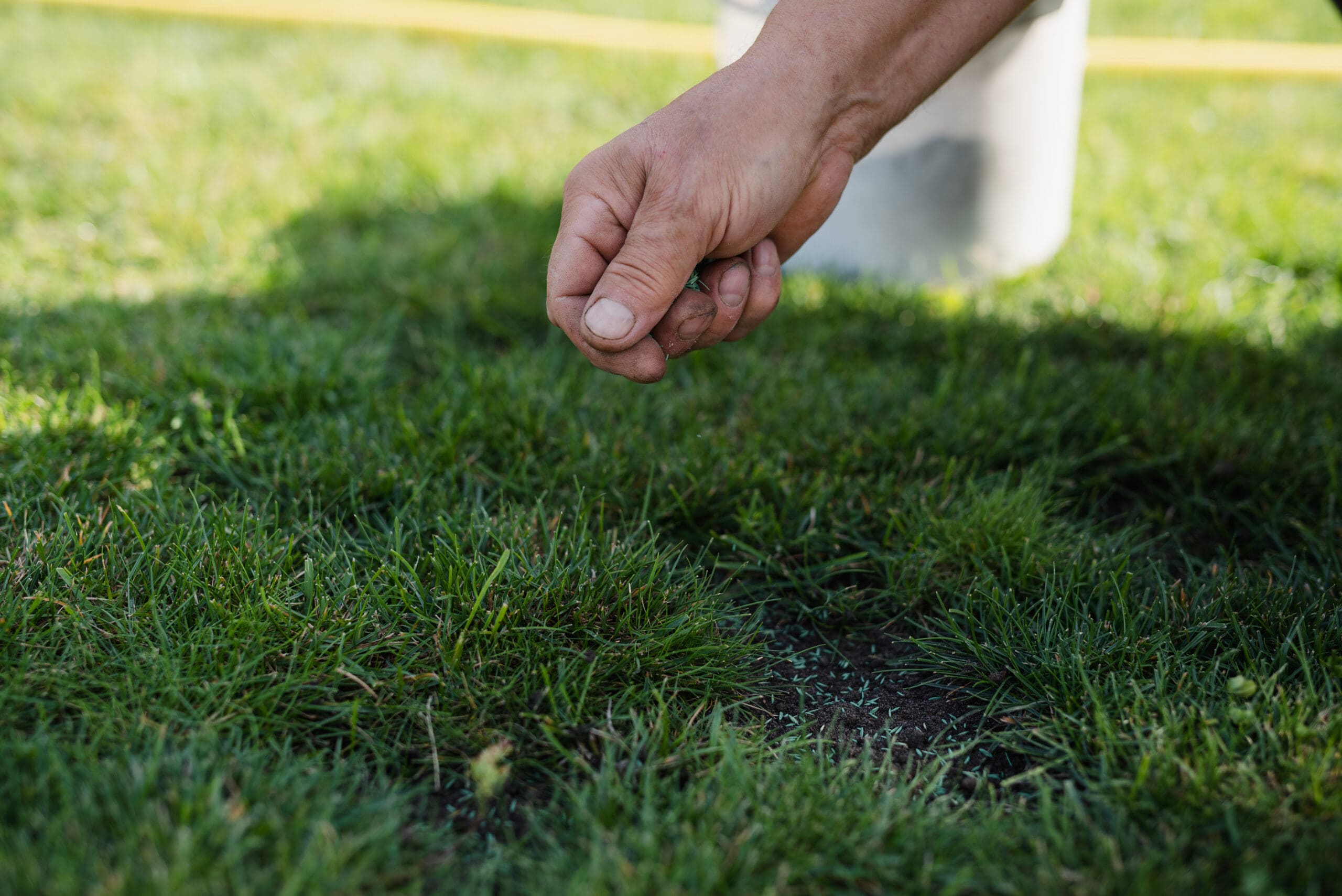
If thin spots remain where the cool-season grass hasn’t returned, use this time to overseed. To prep these spaces, loosen the soil to ensure good seed-to-soil contact. These areas should be watered more frequently to assist with germination. If weeds have laid claim to these weak spots already, check the product label before applying a pre-emergent herbicide.
You also want to set clear expectations after treating a cool-season lawn in the fall so clients understand the timeline for the grass to green up or for spots to fill in from overseeding.
Fix What Made It Fail
If every year the same section of the yard fails, look at the bigger picture and ask why. Questions to help get to the core issue include:
- Is there proper irrigation coverage for this space?
- Is this the best turf species for this space?
- Is traffic concentrated here?
- Are cultural practices encouraging shallow roots?
Once you know why a lawn struggled, you can take corrective action, so when the cool-season grass is once again faced with the dog days of summer, it has a stronger root system and fewer vulnerabilities.
Also, don’t forget to educate clients on the part they play in caring for their lawns. They may be tempted to cut their lawns too short to reduce how frequently they need to mow, but this can leave lawns in a stressed state. Overwatering is another major point to educate customers on, as it can foster diseases.