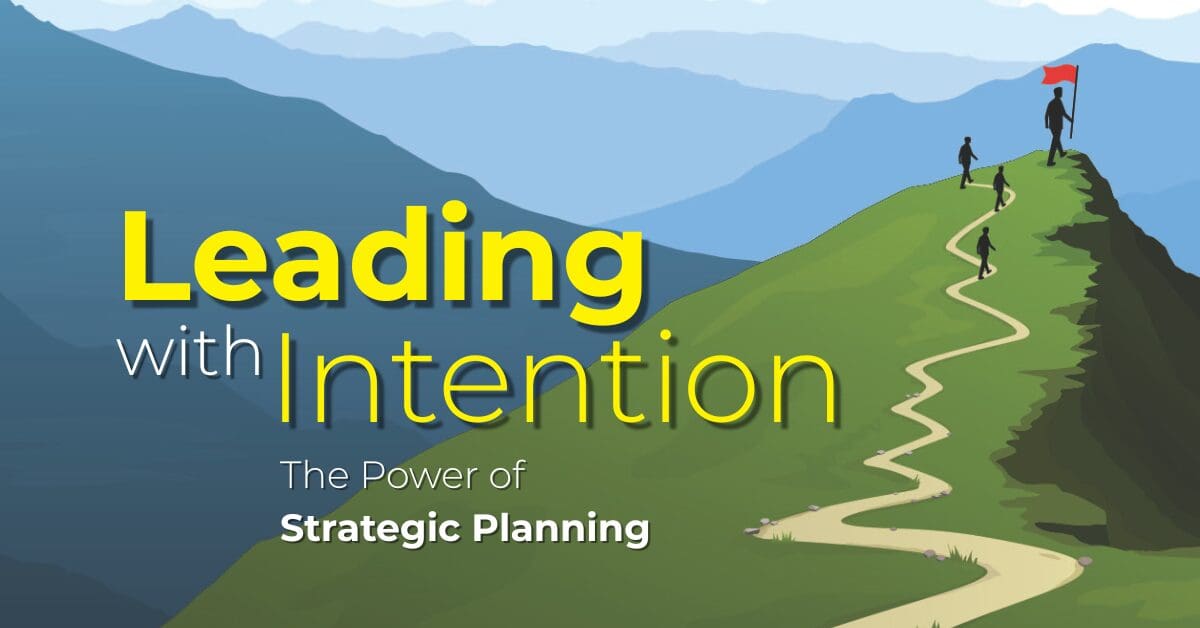
When you first started your business, chances are you were far more focused on making payroll than creating a strategic plan for your organization. However, as you continue to grow and scale, taking the time to develop a strategic plan can be critical for breaking through certain plateaus.
“If I could go back, I would do these from day one,” says Tony Nasrallah, president and founder of Ground Works Land Design, based in Cleveland, Ohio. “If you are really serious, you should have a plan, but especially when you hit that $1 million mark, so then you have a plan for that $3 million. I wasted a lot of money, and I wasted time on people too. I didn’t even realize it until I had accountability, metrics and KPIs. Once you get the $1 million and moving forward, you should have a strategic plan really for everything.”
Jono Fries, VP of operations for Schill Grounds Management, based in Westlake, Ohio, adds that strategic planning should never be optional.
“The goal of our strategic plan is to turn the company’s vision and mission into actionable initiatives that actually move the business forward,” Fries says. “At the end of the day, it creates alignment and accountability while helping the organization stay focused on the things that truly move the dial instead of getting distracted by noise.”
Chris Angelo, president and CEO of Stay Green, Inc., based in Santa Clarita, California, notes that when more than one individual controls financial outcomes or when team members have more decision-making autonomy, your team is ready for strategic planning sessions.
“I’d say once we hit that $10 million plateau, it just became a lot more important to align the organization and to do that from a more strategic planning level,” says Tim Gardiner, president of Meridian Landscaping, LLC, based in Sterling, Virginia. “We probably should have started it sooner than we did because it definitely isn’t like turning on a light switch.”
There are two main challenges to effective strategic planning. One is creating a meaningful strategy in the first place, and the second is breaking it down into achievable action steps.
Achieving Alignment
The main reason strategic plans are beneficial for organizations is how they create alignment, accountability and clarity.
“We are all speaking and trying to achieve the same outcome,” Gardiner says. “We tend to involve our entire leadership team around that, so that we can align to what is success and what is failure. Where did we drop the ball? Is what I am doing – does that project align to our vision? Does that align to our strategic planning, and where and if it does, then we say what are the key results to it?”
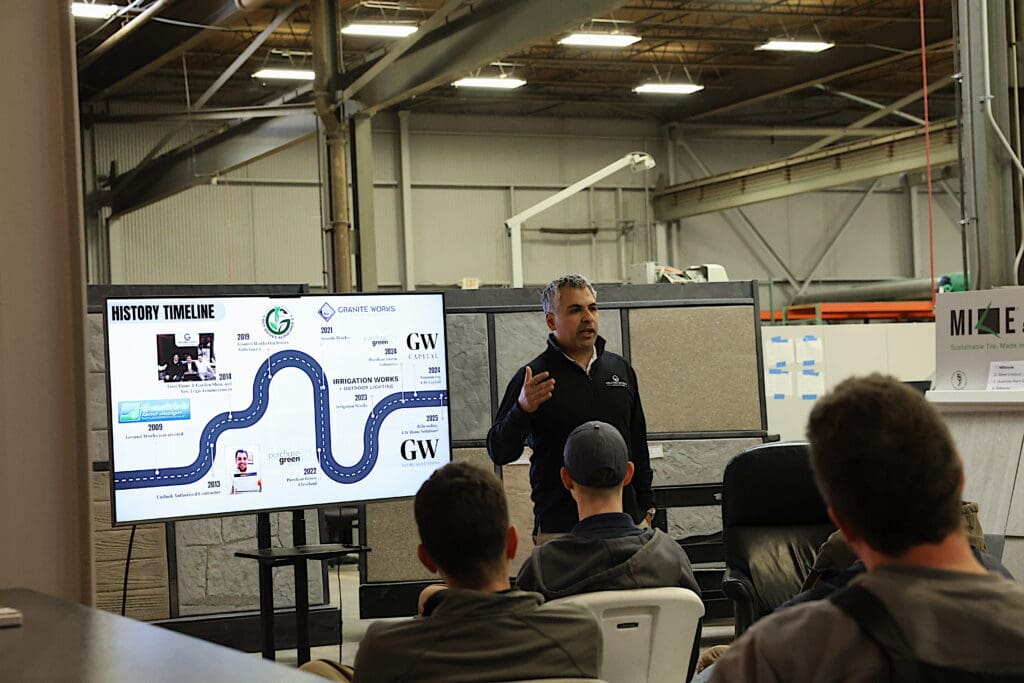
Nasrallah notes that without a strategic plan, it’s easy to get excited about different ideas and not focus on the big picture. It also helps team members know what they are fighting for.
Angelo says in the beginning it can be difficult for owner-operators to separate strategy from tactical day-to-day aspects. He says once they involved a larger audience of employees, they were able to dive deeper, reevaluating previous years’ behaviors, outcomes, and then address some of those for future years.
As your company grows, strategic planning will become more complex. It’s important to have the right people participate in the process while avoiding adding too many cooks to the kitchen.
“It’s basically key organizational stakeholders, so people who move the needle financially, culturally, and people who are really decision makers and have ownership thinking, so job titles that would consist of in our organization: vice presidents, branch managers, key regional business developers, key administrative support function roles,” Angelo says.
Fries says they have a large amount of pre-planning that happens where department leaders will work with their groups on initiatives and strategies they want to bring forward into the larger planning sessions.
“I like to go in a group setting when we have a productive meeting with a checklist of everything we need to talk about, but I don’t involve everybody in everything,” Nasrallah says. “I would have some one-on-ones, and I start collecting information, and then I’ll work on putting everything together with my CFO, and then we’ll go ahead and talk about each line item, and then get everyone’s input. We’re not involving everybody through every process of every decision-making, because then you’re just having meetings; they’re unproductive, and I hate having unproductive meetings.”
Making Planning Sessions Productive
Angelo says they have found they have the best outcomes when they use a third-party facilitator. He says that you can also build traction by consistently using the same facilitator.
“Strategic planning is extremely different than just a typical logical meeting session,” Angelo says. “You’re asked to think in ways that you may not have trained your mind to behave or think, and so when you have other team members that the only time they reflect deeply is situations like a strategic planning session, having a facilitator who is familiar with your company and your group has created good outcomes for us.”
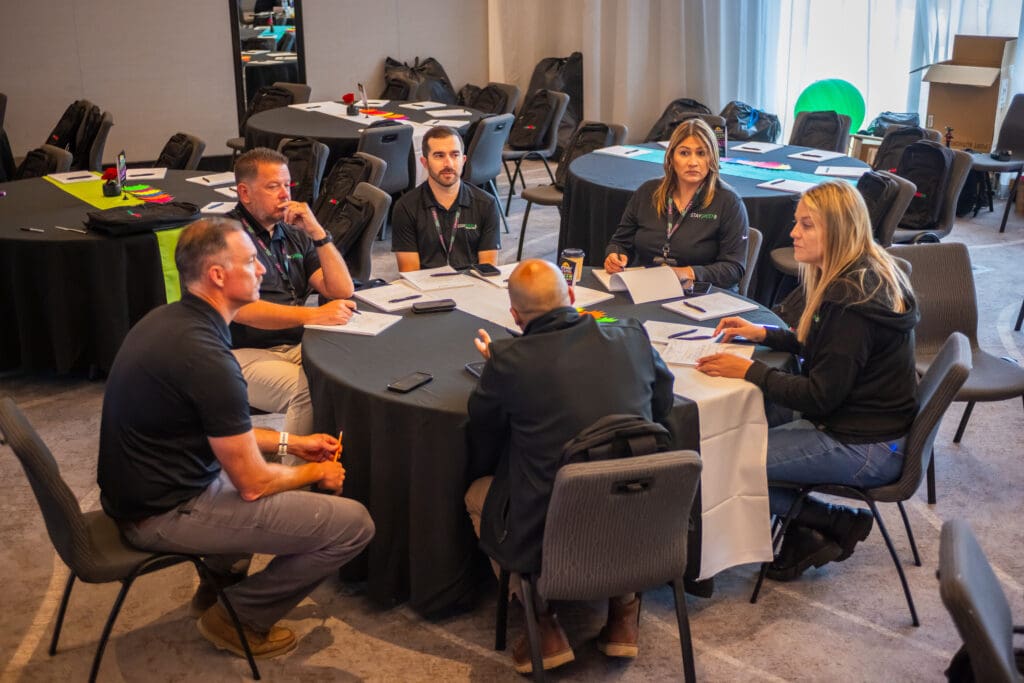
Gardiner says even with his group of six, who are involved in their strategic planning, they have benefited from working with a third-party facilitator. He says it is harder than you’d think and there have been times where they have struggled to get on the same page about what they want to do and how they want to get there.
“They’re all not like, ‘Wow,’ you walk out of it, and there are aha moments there,” Gardiner says. “There’s a lot of frustration along the way. We didn’t really accomplish all the stuff that we needed, and there’s disagreement on what it is, and so there is a little bit of trial and error with it.”
When in the year you decide to conduct your strategic planning should also be considered. There is no right or wrong time, but it can impact when your team is able to execute on the new objectives.
“We prefer to do strategic planning at the beginning of the year while we are reviewing the current state of the business, evaluating challenges, and discussing ongoing initiatives,” Fries says. “We also need the timing to align closely with the budgeting process so the strategic plan and financial plan are tied together.”
Meanwhile, Gardiner says they meet in the October timeframe to discuss their multi-year objectives. Similarly, Angelo says they like to conduct their strategic planning sessions in the late fall/early winter, so they have at least three months of data from the prior year.
“We’ll look at our trailing 12,” Angelo says. “We’ll look at our quarter-by-quarter comparison to see if that data that we’ve collected is moving toward our one-year to three-year plan or outlook.”
Balancing Long-Term Vision with Short-Term Execution
Strategic planning allows you to set a vision for where you want your company to be in the next few years, but it does you no good if these objectives aren’t broken into more achievable, short-term goals.
As for how far ahead to look, five years down the road is realistically the farthest out to set your ambitious goals and have them still be applicable.
“In my mind, 10-year plans aren’t really relevant in today’s world,” Angelo says. “We don’t know what 10 years are going to look like. It’s hard enough to put together a three-year plan. We focus on three-year initiatives and a five-year outlook. There’s not a lot of heavy build-out around what five years looks like. Just high points, whether it’s top line, bottom line, geographical areas, number of team members, number of clients, type of services, those types of things. For three years, we will back into our one-year objectives based on where we want to be in three years.”
Fries says from their five-year goals they will back into them through two-year strategy increments, with annual and quarterly goals.
“That approach gives us a long-term target while still allowing flexibility and accountability in execution along the way,” Fries says.
Gardiner says they will set their most audacious goal for where they think they will be in five years but only define hard objectives and results over a 12-month period.
However, Nasrallah says they have created a 10-year plan as he wants to be well prepared to take advantage of the coming ‘silver tsunami’ as more Baby Boomers retire.
“I want to double our business every three years,” Nasrallah says. “I know that’s difficult and crazy to say, but we go ahead and plan that. This is what we’re going to do. This is the money we put aside for maybe future acquisitions.”
To reach this goal, Nasrallah says they have hammered down into their data, so they know exactly how much money they need to spend to reach a certain number of leads and their org chart is tied to the revenue they produce.
Breaking Initiatives into Measurable Objectives
After taking the time to craft a strategic plan with your key employees, you must break it into action items to ensure the team is all working toward the same goal.
“At its most basic level, every initiative needs a due date and a clear measurement technique to define success,” Fries says. “That could be something like employee retention percentage, customer engagement scores, safety metrics, financial performance, or operational KPIs. If there is not a measurable way to define success, it becomes very difficult to create accountability around the initiative.”
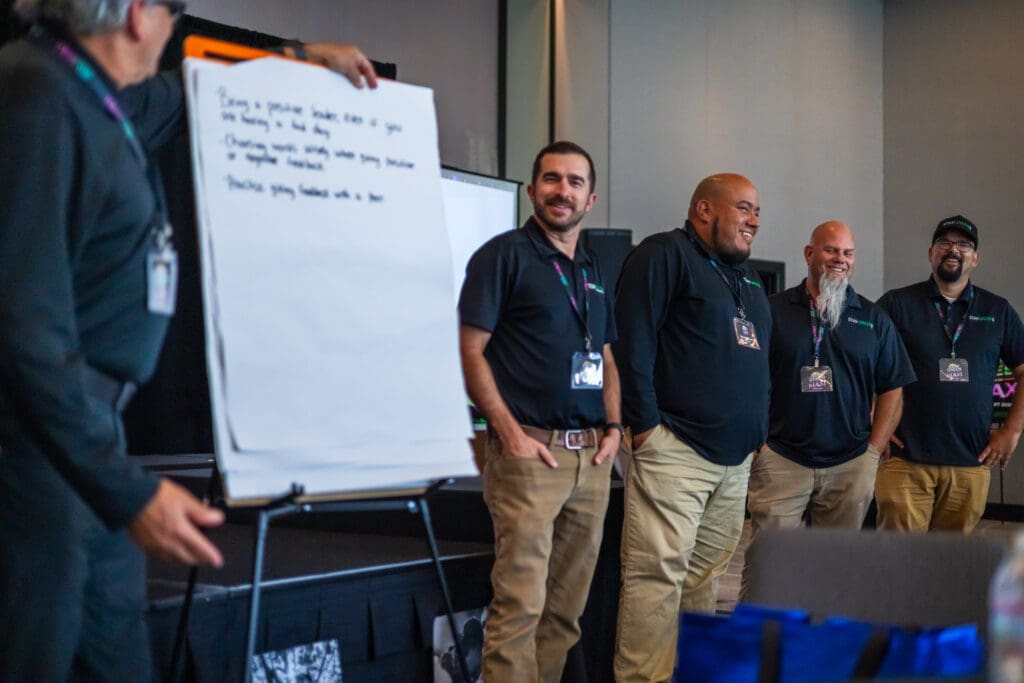
Gardiner says last year they implemented OKRs, which are objectives and key results, which have helped them set quantifiable results to their main objectives for the year.
“It’s not, ‘Well, we want to be a better company,’” Gardiner says. “It’s, ‘We want to achieve this type of turnover ratio, and how we’re going to do this is we’re going to go out, and we’re going to train people a little bit more; we’re going to hire the right people.’ So there are key results that manage it.”
Angelo says when strategic planning, your initiatives need to have tactical, measurable, achievable targets that can tie into your systems and processes so you can consistently produce the outcomes month after month.
“If we are trying to accomplish major growth initiatives, we have to evaluate whether organizational changes, infrastructure, or investment are needed to support that direction,” Fries says. “Budgeting and strategic planning have to work hand in hand; otherwise, the plan is probably not realistic to execute.”
Angelo says they keep their strategic plan top of mind weekly by tracking the KPIs that tie back into their different initiatives.
Fries agrees that your strategic plan must become part of your weekly rhythm.
“If you are not consistently talking about it, tracking against it, and revisiting the progress, it eventually loses momentum,” Fries says. “The key is making sure the strategic plan stays sticky within the organization and does not get buried underneath the daily pressures and the tyranny of the urgent.”
Creating Visibility and Accountability
Gardiner says each goal should be highly visible and heavily accountable.
“You either hit it, or you didn’t,” Gardiner says. “The simpler you can get it, the further it goes down in the organization, and the easier it is to track.”
What metrics you decide to track greatly depend on the goals your team has decided on.
Angelo says some of the measurables they prefer to track are client retention rates, employee retention rates, client net promoter scores, employee net promoter scores, their growth rates as they relate to the industry in their markets and their efficiency and profitability. Meanwhile, Nasrallah says they closely monitor their revenue and production rates.
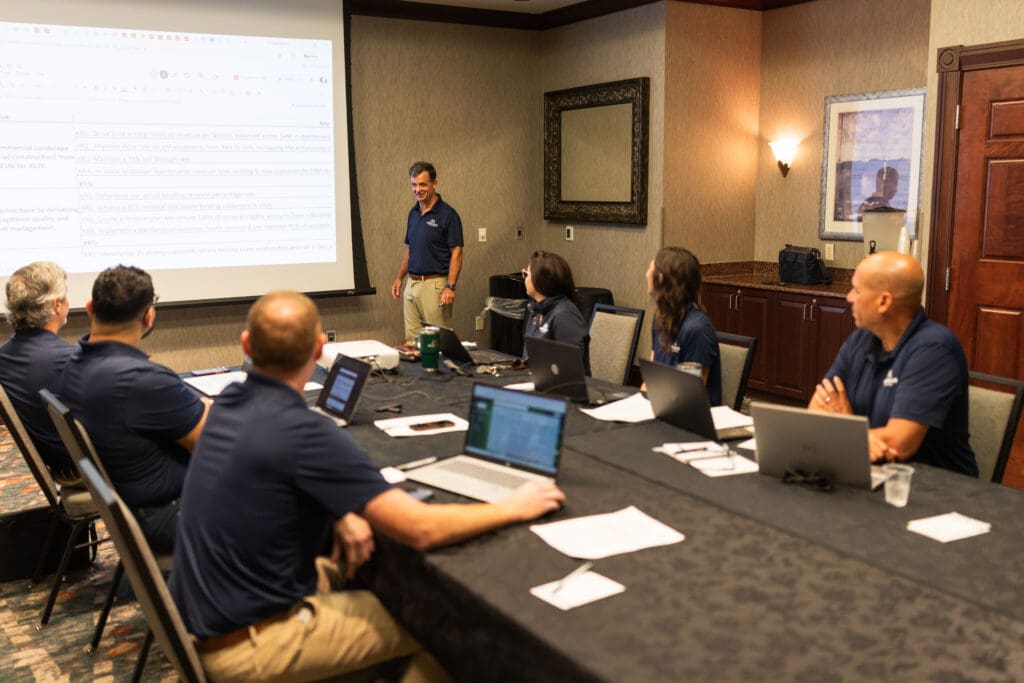
Fries says the visibility of the metrics you choose to track is equally important. They utilize the platform Monday.com to track their strategic initiatives and companywide projects, while divisional goals are managed through Microsoft Teams.
“If we establish clear initiatives that we are trying to improve, we want dashboards and scorecards that communicate whether we are winning or losing on those initiatives, in some cases as often as daily,” Fries says. “That level of visibility into the targets is imperative.”
For Stay Green, they use software called 90.io where they can input their vision and strategic plan and cascade it down through the geographical branch or department and build out each section’s annual objectives and targets.
“We have a weekly scorecard that we look at and that is basically weekly KPIs,” Angelo says. “There are monthly KPIs we look at at the branch level, and then there are quarterly projects that we need to do over that quarter that will really help us move the needle to hit our strategic initiative in that year.”
Nasrallah says they use HubSpot and Claude to track their KPIs and data. He receives weekly reports and uses this data to hold his team accountable.
“Through Claude, it’ll tell us what we need to focus on,” Nasrallah says.
When to Adapt and When to Stay the Course
Regularly reviewing the numbers allows companies to know when to stay committed to the plan and when external factors impacting the market call for an adjustment.
Fries cautions against companies reactively changing their strategic plan through the year, as the initiatives should be ambitious goals that may take years to accomplish and require consistent focus and commitment over time.
“I think companies need to be careful not to confuse normal operational challenges or changing market conditions with reasons to alter the long-term strategic direction of the business,” Fries says. “In many cases, those types of adjustments should simply be handled as part of everyday business operations.”
Angelo recommends following the 80/20 rule where 80% of the plan will stay intact no matter what and the other 20% may be adjusted for significant circumstances. He says this only occurs if the disruption causes a double-digit impact on their revenue or team members.
“Typically, we are not abandoning our plan, based on the commitments that we made to each other,” Angelo says.
Gardiner says you also shouldn’t be so rigid in your plans that you can’t take advantage of certain changes in the marketplace.
Building Team Buy-In
It’s easy to set inspirational goals with your leadership team, but if you want buy-in from the rest of your team, you need to communicate how it directly impacts them.
Fries says they will adjust their messaging depending on their audience.

“A big part of getting buy-in is explaining the why behind what we are doing,” Fries says. “How does this initiative benefit the company? How does it benefit the employee? Why are we making these decisions?”
Buy-in is much easier to achieve when employees understand how the strategic plan influences their daily lives and careers.
Nasrallah says they hold summit meetings in March and August to communicate to the team so everyone knows what their strategic plan is. They also send out quarterly surveys asking the team if they understand what the company’s vision, goals and expectations are.
Angelo notes that by involving their key influential individuals in the organization during the planning process, they are then able to communicate the strategy effectively to the broader team and achieve buy-in.
“They’re the ones who are laying the fundamental groundwork in the yard locations that are promoting the plan,” Angelo says.
Gardiner says it’s also important to take field staff’s feedback into account when setting your goals because if they feel a number is way too high, they’re not going to be motivated.
“Truly the only way to break through these barriers and these revenue growth pieces is when you have buy-in at the organization level, and it’s not one person breaking through; it’s a team breaking through,” Gardiner says.
Angelo says that if you’re really empowering your team and letting them help build the strategic plan, you have to let them share the responsibility of owning the outcomes.
“Get out of their way and allow them to take risks, make mistakes, and report back,” Angelo says. “When you think about our industry, where we go wrong is trying to control the business by manipulating it and controlling our team members and that’s where you start to suffocate the organization.”
Gardiner agrees that you need to let go and let other individuals in your organization own certain goals.
“I’m only the owner of one of our OKRs,” Gardiner says. “There are other people who are responsible for it, and are doing a lot of the heavy lifting.”
Gardiner says another key to achieving buy-in is celebrating when your team hits certain milestones.
Fries says one of the best parts of strategic planning is that it allows your team a chance to sit still and dream big.
“Teams need space to think about where the company can go without immediately feeling crushed by the road it takes to get there,” Fries says. “Strategic planning creates the environment to have those conversations and unpack what it would actually take to accomplish something at that scale.”
This article was published in the Sept/Oct/Nov issue of the magazine. To read more stories from The Edge magazine, click here to subscribe to the digital edition.