

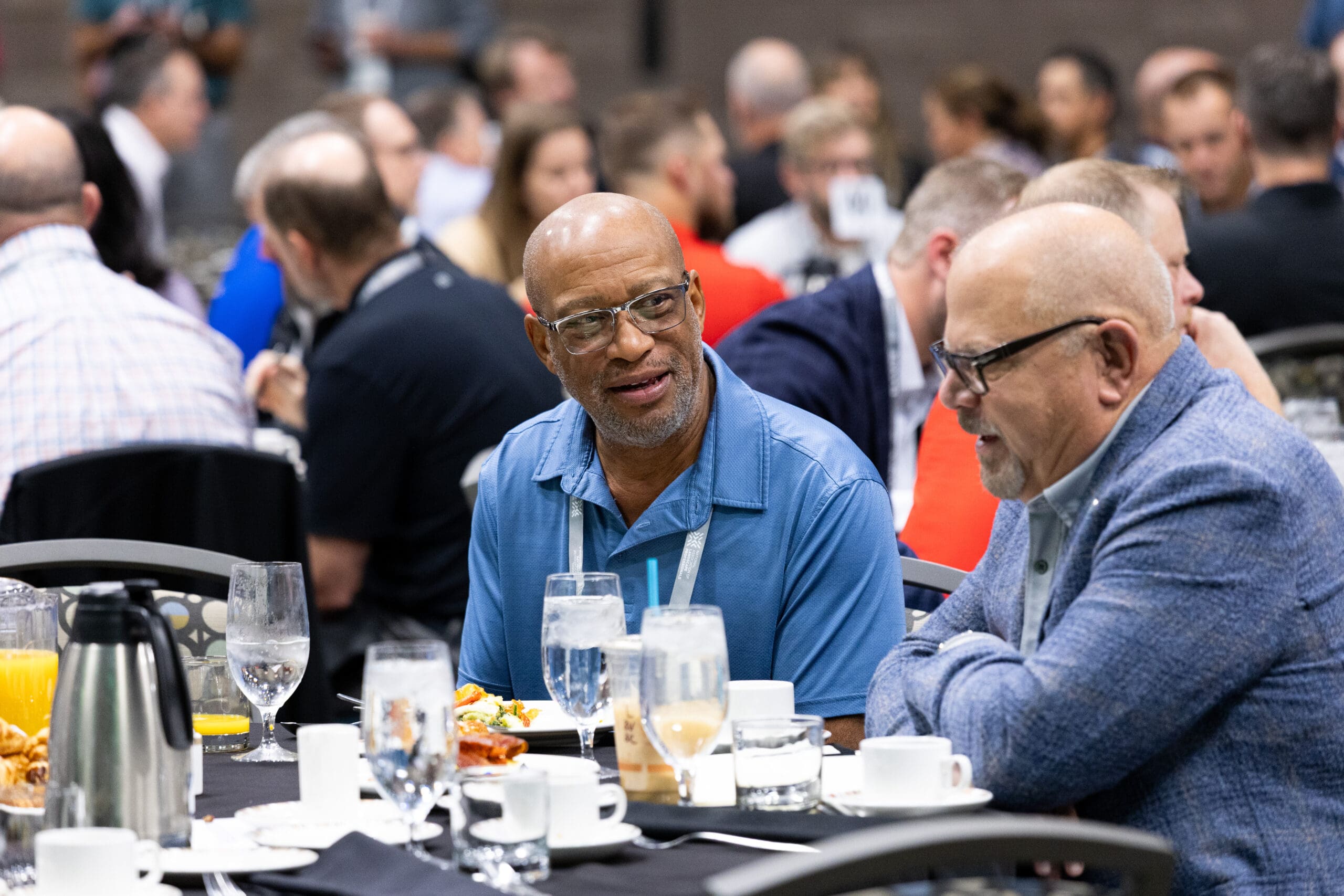
ELEVATE, presented by NALP and powered by Cat, is more than just a trade show. This event provides landscape professionals with the opportunity to connect with peers from across the country, attend practical education sessions and stay up to date on the latest innovations.
“We understand other people’s challenges from equipment theft to the price of fuel to logistics,” says Bobby Harmon, vice president of enterprise sales for Yardnique, based in Morrisville, North Carolina. “We can listen to their challenges and see how they may have overcome them and help us overcome ours. It’s really a good thing to stay in the loop on that. Also for operations, leadership, marketing, sales, it all goes hand in hand. You learn from your peers. They may be competition in some markets, but we’re all striving toward the same goal to make the industry more professional.”
If you want to ensure your time at ELEVATE is well worth the investment, here’s how to be more intentional during and after the event so the ideas you gather don’t stay trapped in a notebook.
Bring a Team
ELEVATE offers over 40 concurrent education sessions, 12 Peer Circle chats, and multiple networking sessions that are broken up by job role, business specialty and hot topics. Because it’s impossible to attend everything alone, many landscape companies opt to bring a core team.
Jack Armstrong, a branch manager with Nasim Landscape, based in Puyallup, Washington, says they generally bring four employees and educating their entire team has great value for them.
Harmon says they typically have three to five team members attend ELEVATE. They’ve brought everyone from the CEO and CFO to regional managers and sales team leaders. He adds they also use it as a reward for good performers on their team.
“You look and see who your team leaders are and your coaches, and then they can learn how to use different techniques to bring their teams up to a different level, too,” Harmon says.
When selecting which sessions to attend, Armstrong says they focus on ones that are prominent in their current training and business planning.
Harmon recommends attending the event with set goals in mind, as this can help you identify high-impact ideas.
ELEVATE features eight different education tracks including: AI, Technology & Innovation, Executive Growth & Strategy, Finance & Accounting, Human Resources, Recruitment & Retention, Leadership & Culture, Operations & Field Excellence, Sales, Marketing & Client Growth, and Sustainability & Technical Expertise.
Capture Takeaways
After ELEVATE, develop a system for collecting takeaways and debriefing with your team. Armstrong says their team who attended will lay out all their notes and pictures from the different sessions and see where they fall within their current priorities.
Harmon says he always makes a point of passing along notes relevant to different team members.
“If I see something that could help operations, I either send them a link or hook them up with somebody I met, like equipment dealers and stuff like that at the trade show,” Harmon says. “That’s always a good thing too because you can see the latest in technologies.”
Harmon adds that he uses a note-taking app now that can create a summary of the session that he can share with the right team member.
During your debriefing, you can discuss with your team which ideas are worth acting on.
Harmon says they focus on insights applicable to their business model. The takeaways they prioritize are those that impact safety, labor or sales.
“I look at it from what’s going to be our biggest impact when it comes to new ideas, new technologies to push,” Harmon says.
Armstrong says while cost ideas are evaluated by upper management and ownership, process ideas are discussed with the management team to determine whether they fit their needs and culture.
Turn Ideas into Processes
One of the challenges that can occur after attending any industry event is gathering lots of exciting ideas but failing to implement any of them into your business.
Armstrong says they have created a quarterly process to identify and complete priorities.
“We use an app called Align to identify the top three priorities, then break these down by what each team member needs to accomplish over the next 12 weeks,” Armstrong says.
Armstrong says several of the ideas he gathered last year during Ben Fisk’s session on how to build a great place to work have been incorporated into their hiring process. He says they now specifically write out the traits they want and focus on hiring someone who matches that criteria.
“We find that culture is often a better fit than just talent and experience,” Armstrong says.
Since codifying this process into their business, Nasim Landscape’s company culture has been strengthened.
Harmon adds that it also requires accountability to ensure these ideas become part of your organization.
“Everybody’s going to have what they consider a high-impact idea,” Harmon says. “The most important thing is to involve your leadership team in that process and then create accountability around that. The value of ELEVATE isn’t just what you know. It’s how you succeed and implement it moving forward.”
This article was published in the Sept/Oct/Nov issue of the magazine. To read more stories from The Edge magazine, click here to subscribe to the digital edition.
