

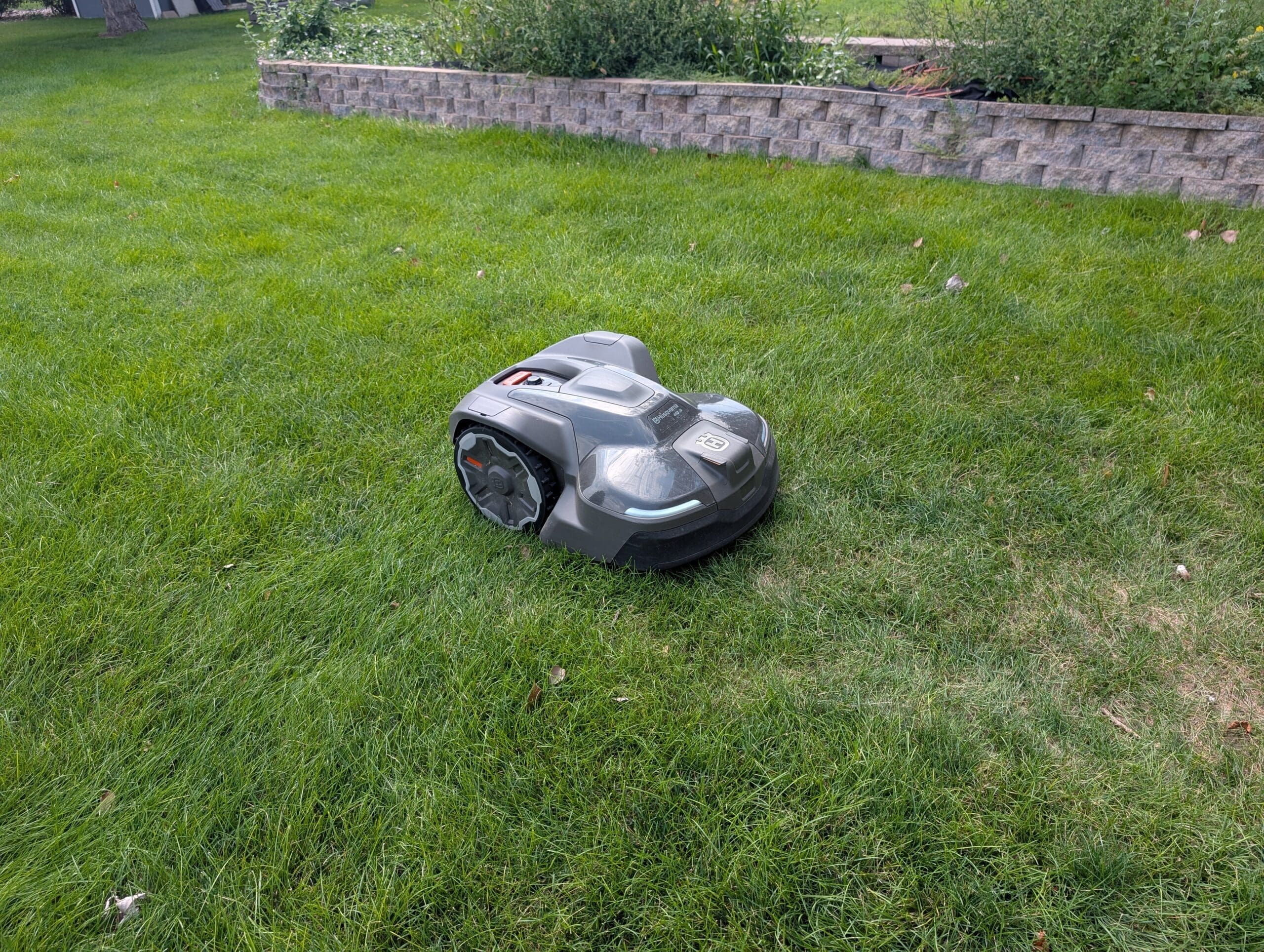
While robotic mowers have been around since the 90s, in recent years they have shifted from a novelty that landscape companies merely tested out into a true efficiency tool for operations.
Timber Toste, owner of Mow Bot Ltd, based in Longmont, Colorado, admits that originally, he felt that robots were going to take their jobs, but now he has a robot-first landscape company.
“Our core philosophy is that we put robotics first to create a higher standard of living for us all,” Toste says. “At our core, we are maintainers of the green industry. High schools and colleges today are heavily focused on teaching robotics. We want some of those students to look at the landscaping industry as a possible option for a career.”
Colby Kirwan, owner of Kirwan Design and Landscaping, LLC, based in Wagner, South Dakota, says the reason he waited so long before implementing robotic mowers was the cost of the models early on and his belief that the robotic mowers wouldn’t be able to operate reliably.
“I was like there could be a blind spot, and the mower won’t operate,” Kirwan says. “It’s going to get stuck behind a house and won’t see a satellite. I didn’t realize how dependable it was.”
Tyler Reiter, VP and director of operations for Florida Image Landscaping, Inc., recalls first seeing robotic mowers at GIE+EXPO in 2018 and his father dismissing the machines as a fad.
“Fast forward to now, it’s literally changed how we run our business,” Reiter says.
The Unexpected Wins
Since integrating robotic mowers, all three of these businesses have experienced both expected and unexpected benefits.
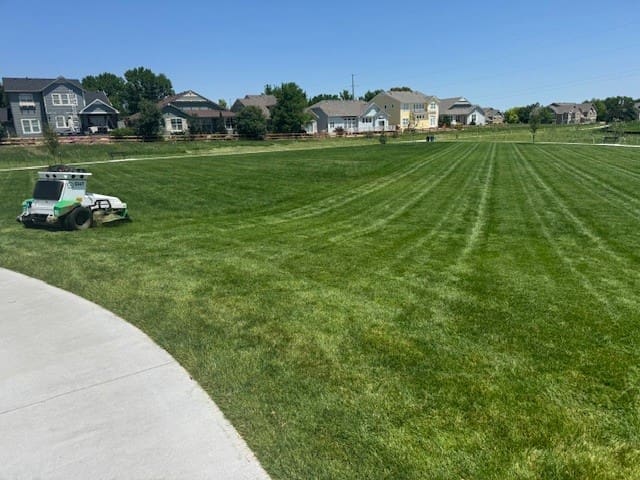
Toste says their Scythe robotic mowers serve as a force multiplier, allowing their technician to focus on higher-skilled tasks.
“Depending on the type of mowing, running two robots can be done by one senior technician,” Toste says. “With each of the mowers capable of mowing 1.5 acres an hour, you can get a lot of mowing done in an 8- or 10-hour shift.”
Reiter adds that with robotic mowers, they can take one of the most repetitious and time-consuming tasks in the industry off their crews’ plates and redistribute them. Because their Kress mowers are left on the property, they can cut up to three times a week, improving the overall quality of the lawn.
Being able to leave the mowers on properties has also allowed Reiter to begin to move away from a truck and trailer fleet.
“What I’m trying to accomplish is having almost a hybrid style setup, where we have a Ford Maverick with just weed eater, edger and blower racks on the side, and then just showing up to a job site, and then string trimming, edging and blowing and then making a mower blade change on the robot. That’s it.”
Reiter says another advantage is the decreased maintenance cost for autonomous mowers versus a traditional zero-turn mower.
“Just because you spend $13,000 or $14,000 on a 52-inch zero turn, no one factors in maintenance,” Reiter says. “It costs you probably $55,000 over five years, if not more, depending upon your oil change regimen, your oil filters, air filters, bearings, tires, all these little things.”
Toste says the robotic mowers being electric is the biggest pro for them.
“With the trend towards forced electrification in a number of states, having an all-electric autonomous robot just makes sense for our geographic area,” Toste says.
Kirwan says since adding autonomous mowers as a service, they’ve been able to pick up new clients who are seeking them out.
“It’s definitely caused some advertising and some popularity, and brought our name to light,” Kirwan says. “People are talking about how we have them. We’re the first area to have them. I’ve gotten some phone calls out of the blue for some people who are really interested in it, who have been looking at it for several years and then found out that we do it.”
Choosing the Right Robotic Mower Model
How productive autonomous mowers are in your own operations depends greatly on finding a brand that meets your specific needs.
“Not all autonomous mowers are created equal,” Toste says. “We had to test them in the real world — specifically looking at how well their GPS systems handled tree canopies and building interference, how the fleet management software worked, how long did the battery actually last, and how well they handled various terrain conditions.”
Kirwan says they looked at several different models and logistically, they needed a brand that wasn’t dependent on a reference station due to the rural nature of their customer base. This is what caused him to opt for Husqvarna’s EPOS model, which uses real-time kinematic (RTK) positioning, a satellite navigation technique that provides centimeter-level accuracy without guidewires.
Whether you take your robotic mowers from site to site or choose to leave them on property, will also play a factor in which models make the most sense.
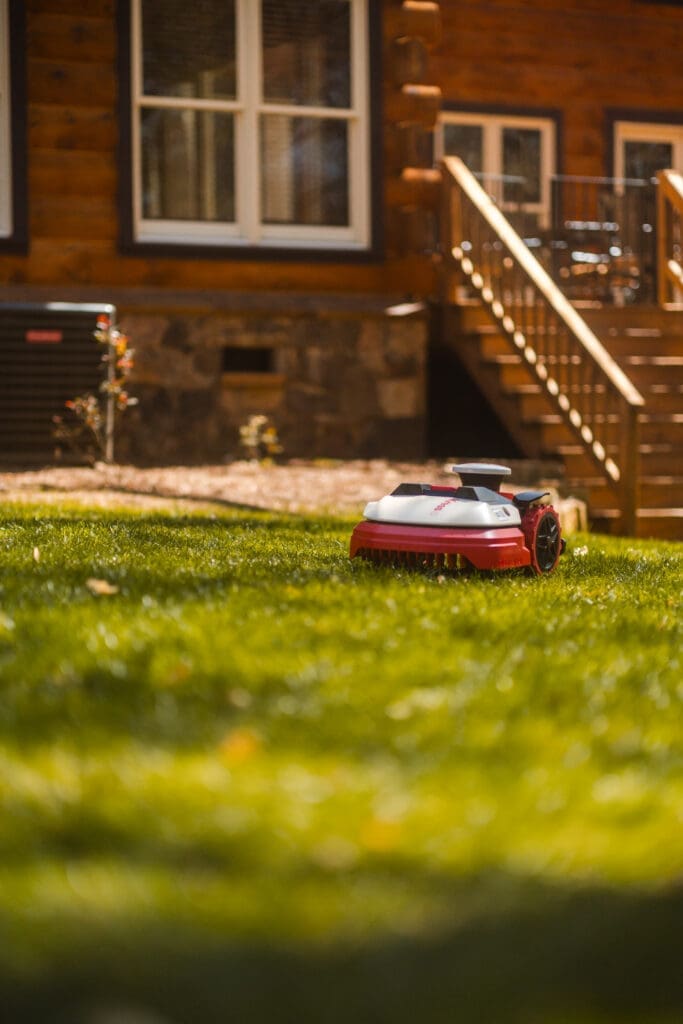
Reiter says they avoid the cut-and-go model as it tends to lead to more logistics. He says they started using Kress robotic mowers in 2023.
“In our business model, whether it’s HOAs, commercial properties or residential, we’re just hyper-focused on stationary, just because we’re getting more cuts out of it,” Reiter says. “That’s the biggest selling point, that I can outperform what my contract is with you with a zero-turn because I’m just deploying that mower cutting multiple times a week.”
Reiter advises focusing on working with one brand and paying attention to the dealer support provided.
“I think having that one brand and just being committed all in on it is super helpful with distribution and identifying mowers, educating your crews, and then having all the same parts, the same blades, the same screws, the same wheels,” Reiter says. “Then you can start pre-packing your trucks that way, so you’re always prepared.”
Pricing and ROI
Because robotic mowers are a significant investment, one of the biggest questions is often how to structure the pricing for this service to recoup costs quickly. What may work for one company might not work in other regions, so it’s important to run the numbers first before going all in on robotics.
“We operate robotics in a state that has one of the highest costs of living so when we can use a robot to offset higher labor costs, it works for us,” Toste says. “Additionally, we can pay our technician a higher wage because of the overall reduced cost per acre.”
Kirwan says, in his market, if he went to a customer and told them they were going to put a robotic mower on their property and charge 25% more, the answer would be ‘no’ every time.
“I had to calculate based off of what we were already charging, and see what would it take return on investment for that mower based on not changing our pricing,” Kirwan says. “What would that take? I calculated about a year and a half to two years.”
Reiter says he makes a point to educate the client first and understand their expectations before explaining the automation part of the service.
“We actually still bid the pricing out according to in person, just in case something happens,” Reiter says. “It’s always good to have a backup plan, but realistically, we make more money doing that.”
For example, a half-acre property in Wellington, Florida, would traditionally take two crew members two hours push mowing. With the robotic mower, now these employees only have to spend 30 minutes on the property string trimming, edging and blowing.
“Typically, we’ll give them 10% off or 20% off, just depending upon the complexity, the size of the property, and expectations,” Reiter says. “And then from there, not only are we saving them a little bit of money, but we’re also still making our money that we need, and then it just keeps that ball rolling.”
Reiter has found that they are able to reallocate their crew’s time to upsells, whether it be installing flowers, mulching or fertilizing.
Toste says one reason they opted to work with Scythe Robotics is because of their leasing program.
“We do not need to worry about ever owning the equipment, and the Scythe warranty program is exceptional,” Toste says. “Additionally, it is challenging to make a large investment in a new technology that is constantly changing; the equipment can be obsolete after a few years. The lease program helps mitigate some of this.”
Gone are the days when robotic mowers were viewed as a risky experiment. While adoption is still in its early stages, contractors who take the time to do the math and identify the right applications have an opportunity to gain a competitive edge.
Key Takeaways
- Contractors who once viewed autonomous mowing skeptically now say the technology is reshaping how they approach efficiency, labor allocation and service delivery.
- Factors such as geography, customer expectations, labor costs and whether mowers remain on-site or move between properties all impact profitability.
- Early adopters are gaining a competitive advantage. Contractors report increased visibility, customer interest and operational differentiation by becoming one of the first companies in their area to offer robotic mowing.