
Think about the last time you had to wear an ill-fitting piece of clothing. It could have been too baggy, too tight, or caused some other form of discomfort. Now imagine having to tackle landscaping tasks in those uncomfortable clothes.
For many women working out in the field, this is frequently a reality for them, as workwear is often designed primarily for men.
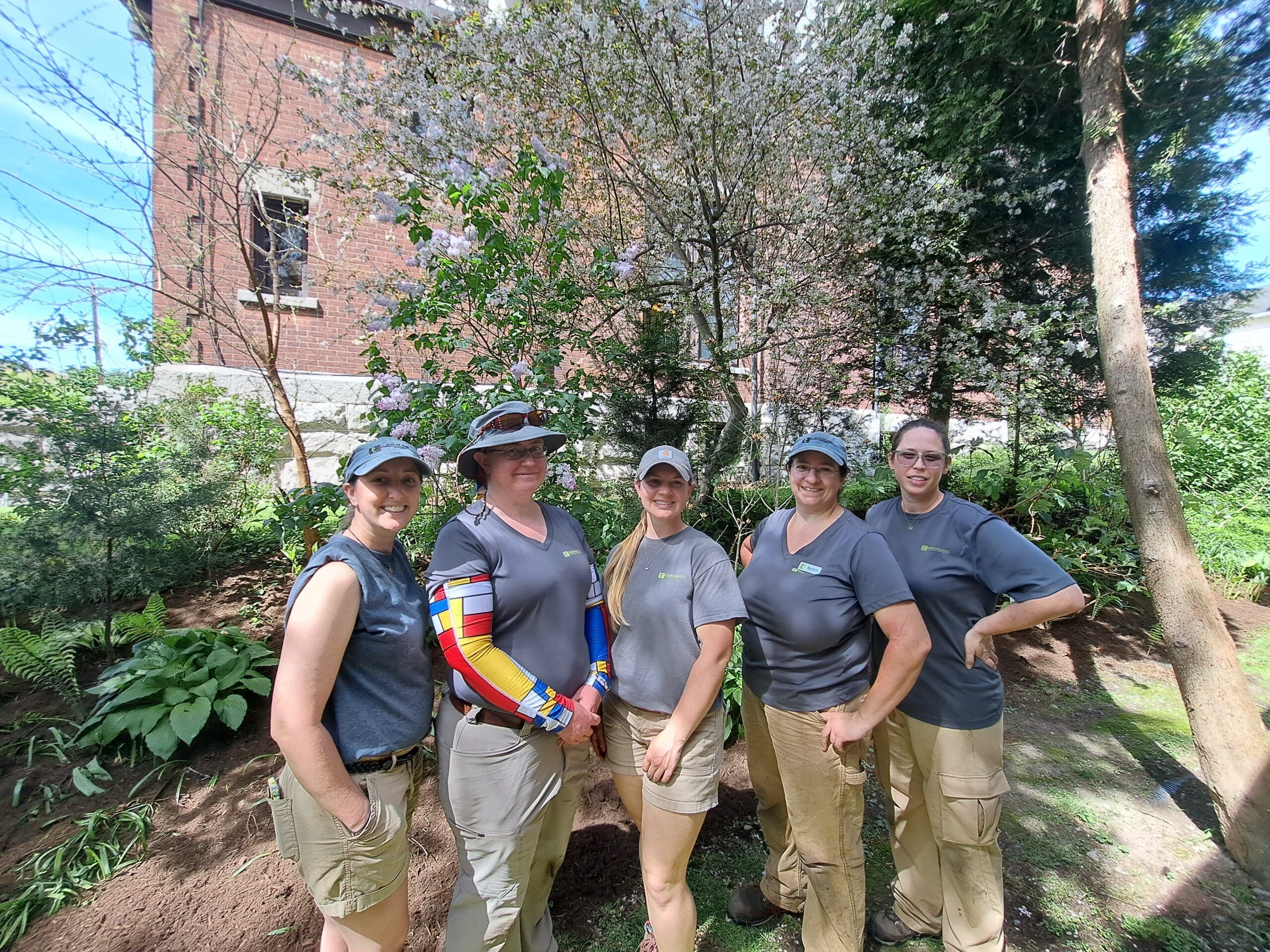
“When you work a physical job where you are moving, work in all the weather conditions, and are client-facing, it is important that everyone feels comfortable in what they are wearing,” says Alison Falkenburgh, container division manager, field manager and lead gardener for Poplar Point Studio, based in Genoa, New York. “We never want a team member to worry about their uniform not fitting correctly, or if it is a material they don’t feel comfortable in, etc.”
The Workwear Gap for Women in Landscaping
As the number of women in the landscape industry has increased, it has brought more attention to the gaps in appropriate workwear for them.
Falkenburgh says their female team members often have a hard time finding uniform options that fit right, are comfortable, affordable and hold up to the work they do as a gardening company.
“Also, the women’s options feel like they are not enough – for me personally, I do not fit into the Carhartt pants,” Falkenburgh says. “The options are not vast enough – size short may not be an option or they fit the waist and length, but the width of the pant leg could fit both of my legs in it. Nothing seems to be comfortable enough to work in, and no matter what style I try, something does not fit my body correctly. It is such a bummer because they feel like the go-to work pants, but I do not have that option.”
Adrienne Stutz, a branch manager with Russell Landscape Group, based in Sugar Hill, Georgia, says the lack of appropriately cut pants is often the biggest complaint from their women team members.
“Women’s pants are typically more oriented towards changing fashions and not practical for landscaping tasks,” Stutz says.
Finding workwear that fits and is good quality is the main complaint for Para Space Landscaping’s female employees.
“The women’s section in stores is usually non-existent or has only nursing and casual clothing,” says Katie Bush, irrigation and safety manager for Para Space, based in British Columbia, Canada. “If there is a section of workwear that’s women’s specific, the choices are slim. It takes much longer to find good-fitting and quality workwear due to the small selection.”
In the past, many manufacturers’ response has been to simply shrink clothing sizes, but this is not enough.
“Field testing revealed that women require different proportions, stretch placement, and construction to support mobility and comfort throughout the workday,” says Nadia Sinner, product marketing manager at Milwaukee Tool. “True women-specific workwear requires a deeper understanding of how tradeswomen move, work, and carry tools in demanding environments. Addressing these factors through thoughtful design results in workwear that performs to the same professional standards required across the trades.”
Why Workwear Fit Matters
Appropriately fitting workwear for women isn’t driven by a desire to be fashionable. When companies fail to provide uniforms that fit, this has a direct impact on their overall comfort, professionalism and safety.
“Poorly fitting workwear can introduce safety risks that are not always immediately apparent,” Sinner says. “Loose or oversized garments may catch on equipment, while restrictive fits can limit range of motion and increase fatigue. Inadequate coverage can also lead to increased exposure to environmental hazards such as sun, abrasions, or debris.”
Bush adds that ill-fitting gloves can cause poor grip or blisters, while poorly fitting shoes can also lead to blisters or muscle strain.
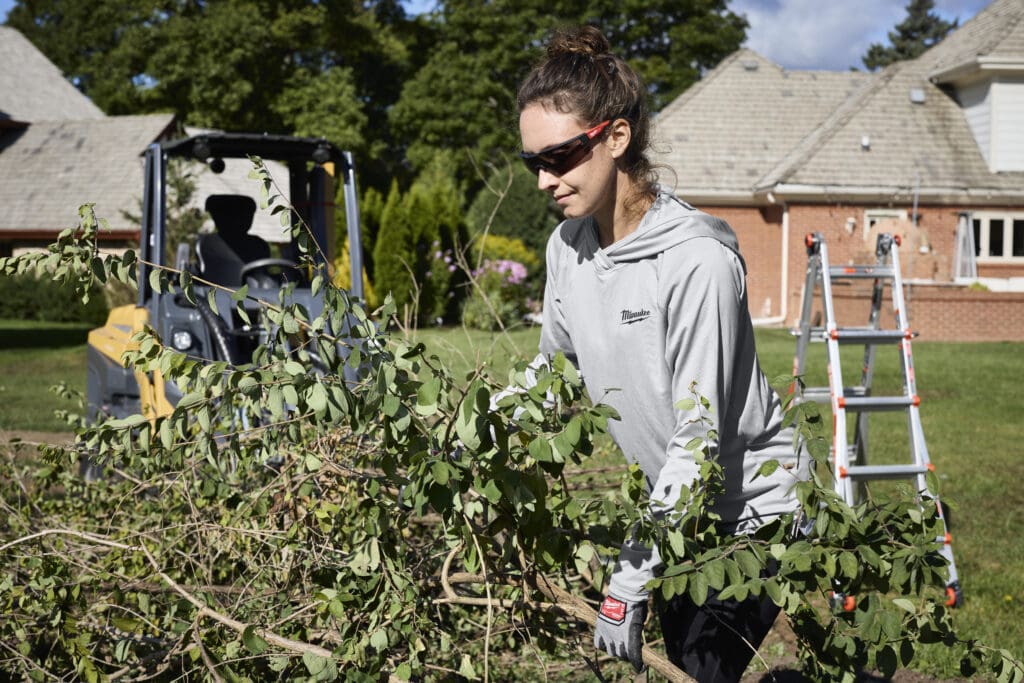
“When our team is in uniform pieces that fit them well and are in a material they feel comfortable in, there is one less thing to worry about, which helps increase productivity, confidence and job performance,” Falkenburgh says. “They take pride in looking presentable and showing off our company logo. It sounds silly, but even if a tank top does not fit properly, you spend time worrying about making sure the armpit area isn’t showing too much of your bra to the other employees or clients.”
Bush notes that when companies ignore complaints from female employees about their work apparel, it can erode company culture and employee motivation.
“It’s a way to show that the company is inclusive to a diverse workforce,” Bush says.
“Comfort and safety are important for a healthy and productive workforce. We think it’s an important way to remove a barrier of entry for women in landscaping.”
Falkenburgh says if a team member, female or male, doesn’t feel heard, they will not bring up other concerns in the future.
“Companies cannot always accommodate or make changes for individual team members; however, there still needs to be a discussion and openness from the company,” Falkenburgh says.
Landscape Companies’ Real-World Solutions
Just like there isn’t a one-size-fits-all piece of clothing for women employees, how different companies address the lack of women-specific workwear varies greatly.
Stutz says they have opted to provide their employees with T-shirts and safety vests rather than a complete uniform.
“Size availability has improved over the years, making fit and comfort a non-issue,” Stutz says.
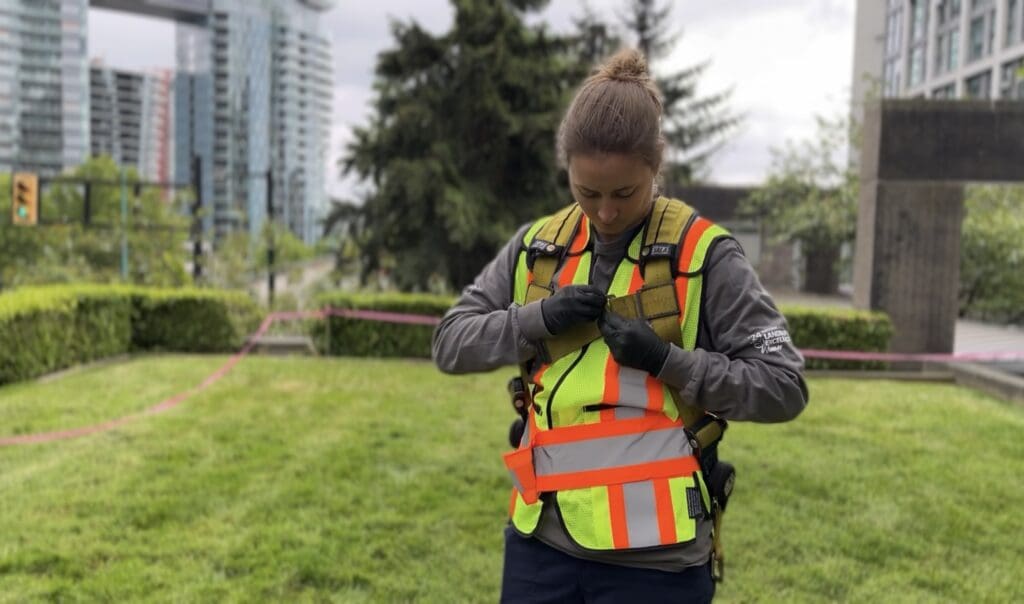
Similarly, Bush says their climate is too varied for set uniforms, so safety vests that feature their company logo serve as their uniform. They do ensure that the PPE they provide has adjustable sizing or comes in a selection of sizes. Bush says they trial all their PPE on people of a variety of sizes before purchasing.
“Leadership felt it was important to have proper fitting PPE and knew that the payoff would far exceed the initial cost or sourcing issues,” Bush says.
Para Space also offers a steel-toed boot allotment for workers who require them for certain tasks, allowing workers to find boots that fit them while assisting with the cost.
Poplar Point Studio requires their team to wear tan pants or shorts and allows their team to use their uniform stipend to find what works best for them since the right fit and style varies greatly. Falkenburgh adds that their team often shares with each other which pants and shorts fit them well, are durable and affordable.
Falkenburgh says they work with a local company called Glenview Printer and Stitched for their standard uniform pieces of short- and long-sleeve shirts, sweatshirts, and jackets. Because they offer these pieces in a number of materials and styles, she says they don’t always have all the inventory on hand.
“We have had women order what size they thought they would be, and when the pieces arrived, they did not fit properly, which means as a company we now have to order them new sizes or figure out a new plan,” Falkenburgh says. “We do not want people to ever feel uncomfortable, so oftentimes we will order new sizing and put the wrong-sized items in inventory.”
Key Takeaways
- Women in landscaping still struggle to find workwear that fits and performs well. Many brands design gear primarily for men, leaving women with limited options that are uncomfortable, poorly sized, or impractical for physically demanding work.
- Properly fitting workwear directly affects safety, productivity, and professionalism. Loose clothing can catch on equipment, while restrictive gear limits mobility. Comfortable uniforms help employees stay focused and confident on the job.
- Landscape companies are solving the issue in different ways. Some offer flexible uniform stipends, others focus on adjustable PPE or minimal uniform requirements — but all approaches prioritize employee feedback and proper fit.