

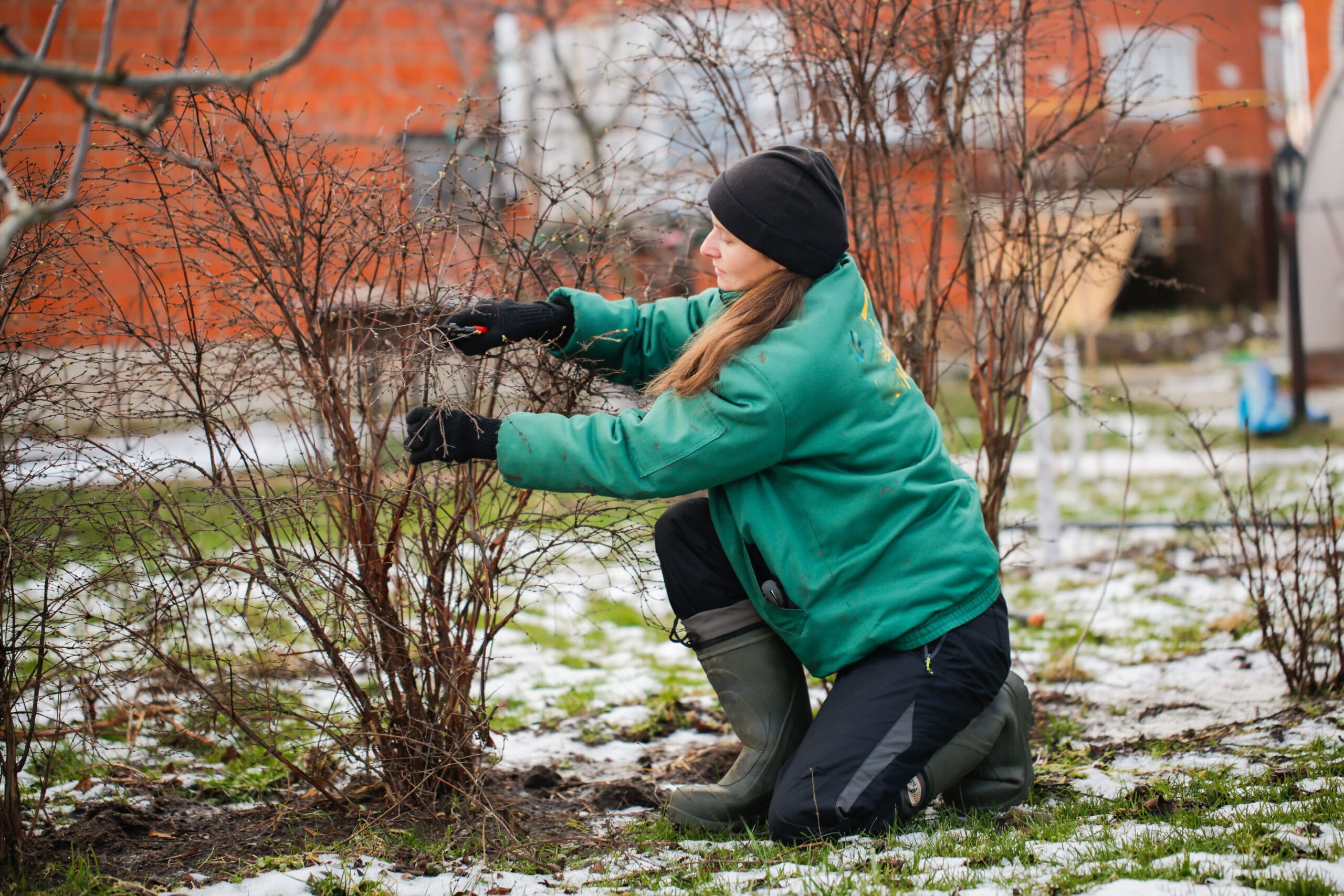
Winter pruning is a great way to extend the maintenance season and provide additional work for your employees. Not only that, but It also helps your clients improve their landscape for the upcoming year.
Shrubs
Many shrubs benefit from winter pruning, and this guide from the Morten Arboretum shares the right timing and pruning method for different shrubs.
No matter what you’re pruning, always remove dead or diseased branches. If you suspect a branch is dead, try bending it to see if it snaps (dead branches are usually brittle). You can also rub the branch to see if there’s green underneath the bark. In some cases, dead branches will be off-color or have peeling bark. Another thing to look for is crossing or rubbing branches. When two branches rub against each other, they form a wound that can lead to disease problems or damage the branch.
Shrubs are typically pruned using one of three methods. The first is renewal pruning, which removes 1/3 of the oldest stems. This can reinvigorate an older plant with only minor changes to its appearance. A common reason for renewal pruning is restoring stem color. Certain shrubs, like red-twig dogwood, lose their bright stem color as the plant ages. Removing 1/3 of the oldest stems encourages juvenile growth with better stem color.
If your client has overgrown shrubs, rejuvenation pruning may be needed. This method is simple and can done by cutting all the stems within six inches of the ground. Not all shrubs can be pruned this way, so make sure your staff knows what they’re pruning before making the cuts. Shrubs that can be rejuvenated often have multiple stems. A few examples are red-twig dogwood, ninebark, honeysuckle, and lilac. Rejuvenation can also help shrubs that are showing low vigor or dieback.
The final method is heading-back, which controls the size of individual branches. Like any pruning, the goal is to have a balanced-looking plant. A branch that is abnormally long or out of balance can be cut back to a bud or lateral branch to improve the shrub’s overall shape.
When to Prune
Shrubs set their flower buds at different times, so the right time to prune will vary. Some plants form new flower buds during the previous summer, meaning that winter pruning will remove the blooms. Lilac, chokeberry, and magnolia are good examples.
Timing also depends on the health of each plant. If your client has an overgrown shrub that needs rejuvenating, they might be okay with no blooms this year if they can have more blooms in future years. Just explain why a rejuvenation pruning will benefit the shrub in the long run. Shrubs grown for their foliage can usually be pruned in winter since the blooms are less of a factor. A few shrubs, like roses, have marginally hardy stems, leading to severe dieback in some regions. If that’s the case, wait until early spring (before new growth emerges) to prune those stems back to live growth.
Young Trees
With their extra vigor, young trees can develop bad habits that last until maturity. Take the time to examine each tree and look for branches that may become a problem later. Competing leaders can be an issue on trees with a decurrent growth habit, like honeylocust, redbud, and elm. Other trees, like some oak and conifers, have an excurrent habit that naturally forms a single leader. If you have competing leaders on excurrent trees, it’s best to reduce or thin competing leaders. Bartlett Tree Experts has a guide with tips for pruning different species.
Just like with shrubs, watch for crossing branches, which can damage other branches and create large wounds. If you see narrow branch attachments that are tighter than usual for a species, they should also be removed. Branch distribution is also a factor along the trunk. Large trees should have branches spaced 12-18 inches apart at maturity, while smaller trees can have branches 6-8 inches apart.
For water sprouts, focus on removing only one-third of them each year. If a tree has suckers, remove those as well.
As you make cuts, prune slightly beyond the branch collar without leaving a stub. If the collar is damaged or removed, the wounds take longer to heal and provide an opening for disease pathogens or insect pests. For each cut on a branch, make the cut about 1/4 inch above the bud and prune back to an outward-facing bud.
Large branches (over 1 ½ inches in diameter) should be pruned using the three-cut method to prevent tearing the bark along the trunk. The first cut is made on the underside of the branch about 12 inches from the branch collar. This cut should extend up to halfway through the branch. For the second cut, move an inch further out on the branch and cut on top until the branch comes off, leaving you with a stub. Lastly, make a final cut at the base of the branch to remove what’s left.
When to Prune
Late winter is considered the best time to prune, especially for oaks and some members of the rose family (crabapple, hawthorn, mountain ash). Oak wilt impacts trees in the red and white oak groups, so these trees should mainly be pruned in winter (exact months will depend on your location). Trees can be pruned throughout winter, but late winter allows the wound to heal quickly and reduce future pest problems.
Certain trees, like maple and birch, will bleed sap if pruned in winter. This won’t harm the tree, but you can prune them at other times (late fall or early summer) if the sap is a concern. Flowering can also be a factor for ornamental trees, like redbud, fringe tree, and magnolia. Since these trees flower on old wood, pruning should be done shortly after they bloom.
If your client has mature trees, it’s best to subcontract the work to a tree care company unless you have a certified arborist.
