

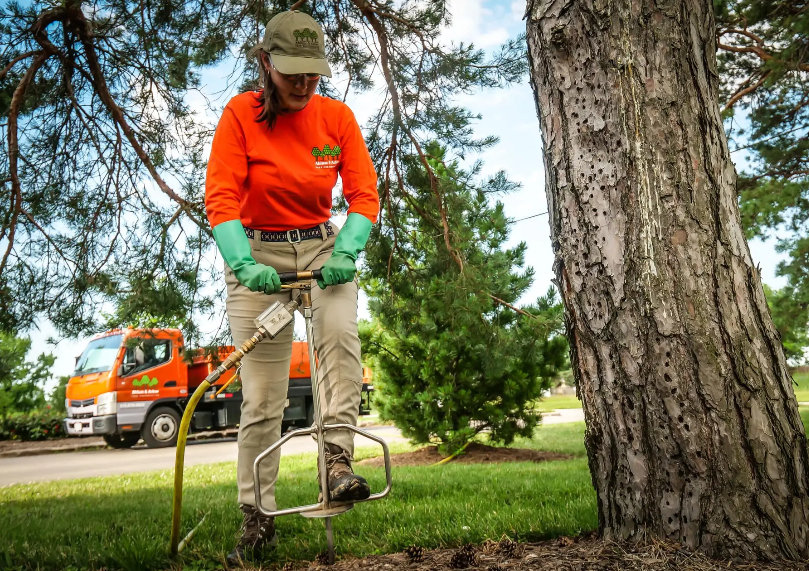
Tree and shrub fertilization is not a one-size-fits-all service, and it should be approached with caution, especially in the fall.
“In most cases, this type of approach will cause more harm than good for woody plants,” says Matt Evans, director of arboricultural training for Ryan Lawn & Tree, based in Merriam, Kansas. “Educated arborists look at fertilization the same way that a physician would look at nutrient deficiency in humans.”
What Are the Risks of Improper Tree Fertilization?
Evans says it is important to not think of woody plant fertilization as the same as turf or annual plant fertilization.
“In these two situations, we are dealing with crops that require regular, consistent fertilizer applications to perform at their best,” Evans says. “Woody plants are handled very differently.”
It is a bad idea to fertilize without a defined reason.
“I would never fertilize any tree species unless I first determined an objective for fertilization and verified a deficiency through testing if the objective required it,” Evans says.
Chris Ahlum, president of Ahlum and Arbor Tree Preservation, based in Columbus, Ohio, notes that overfertilizing can have a harmful impact, and sometimes pushing too much growth can cause insect issues.
“Proper fertilization throughout a tree or plant’s life is important to help keep it healthy, but with proper dosing and timing to make sure it’s needed is very important,” Ahlum says.
Ahlum says homeowners often use one or two tree fertilizer stakes when they frequently need to use far more, or they use a grass fertilizer that is high in nitrogen and little else.
When to Soil Test?
You may think soil tests are only relevant when it comes to lawn care, but it is a good idea to test the soil before fertilizing trees and shrubs as well.
“Modern woody plant fertilization is very similar to the interaction you would have with your physician,” Evans says. “In that model, if you have an issue, they often pull a blood sample. From that sample, they determine what is wrong and prescribe supplements to replace what is missing and monitor levels moving forward.”
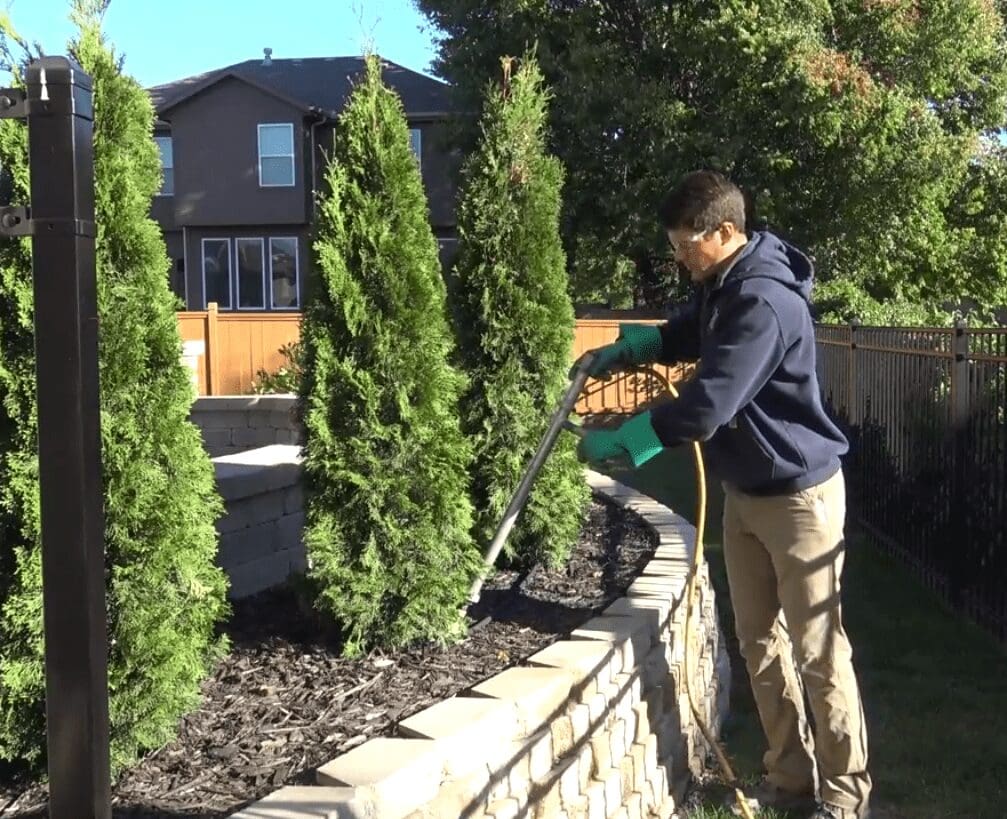
A basic soil test will let you know the macronutrient levels as well as the cation exchange capacity. More advanced soil tests will list the micronutrients and more specific details.
Ahlum says which nutrients are needed can vary based on your area or even microclimates.
“In one town, it could be different on different sides of town,” Ahlum says. “In my area, we have new subdivisions that are going in, and they remove the topsoil and all the organic matter and leave just subsoil. In this case, a general fertilizer could be very helpful for the trees and plants. In a more mature environment, it could be species dependent.”
In Ohio, Ahlum says maple trees are frequently manganese-deficient while oaks and birches are sometimes iron-deficient.
Evans says if your objective is to promote growth in a new plant, you can skip soil testing and apply nitrogen as it is typically limited in the soil.
Ahlum notes that urban trees often need to be fertilized because they are stressed or in a stressed environment.
“In an urban environment where leaves and organic matter are removed every year, fertilizer helps get the needed nutrients into the soil for the tree,” Ahlum says.
Ahlum adds it’s a good idea to soil test beforehand, as there may be cases where the pH of the soil doesn’t allow the tree to take up the nutrients.
“If your objective is to replace something that you suspect is missing, then you should do a soil sample to verify your hypothesis,” Evans says. “And in most cases, I recommend a tissue sample as well to verify that the deficiency is not caused by other factors like a defective root system.”
When Is the Optimal Time for Fall Fertilization?
If you have determined that a client’s trees do need fertilization in the fall, the timing is a critical factor to consider.
Ahlum says they like to wait until the temperatures are cooler, but before the ground becomes frozen. Evans adds that in general, woody plants absorb nutrients when their root systems are actively growing, which is typically when soil temperatures are between 50-60 degrees Fahrenheit.
When you should apply in the fall also depends on the type of fertilizer being used, such as a slow-release fertilizer.
“If you were to apply a nitrogen source like urea-formaldehyde (UF) in the fall, most of the fertilizer would not be available to the plant until the following spring as soil temperatures warm and microbial activity breaks down the fertilizer to a plant-available form,” Evans says.
