

The transition from gas to battery-powered equipment is a complex process. It requires rethinking a lot of your processes and determining the right charging setup to ensure your crews have enough power to get through the day.
“No two days are exactly alike, and factors like job type, site conditions, and charging accessibility all influence how crews adopt battery power,” says Bradley Berkman, associate product manager at Milwaukee Tool. “There is no single, one-size-fits-all approach to electrification, and we’ve seen companies adopt battery power in different ways.”
From Gas Cans to Batteries
One of the frequent questions landscape companies have when making the switch is how many batteries they should send out with their crews. Unfortunately, there’s no simple answer. Every operation is going to have different nuances that will determine the best battery management solution for their business.
“Where we have seen frustration is the ‘unknown’ in converting from gas to battery,” says Aaron Griffith, director of professional dealer sales with Stanley Black & Decker. “One battery typically does not equal one tank of gas; this learning period can impact productivity when users run out of battery halfway through their path of motion.”
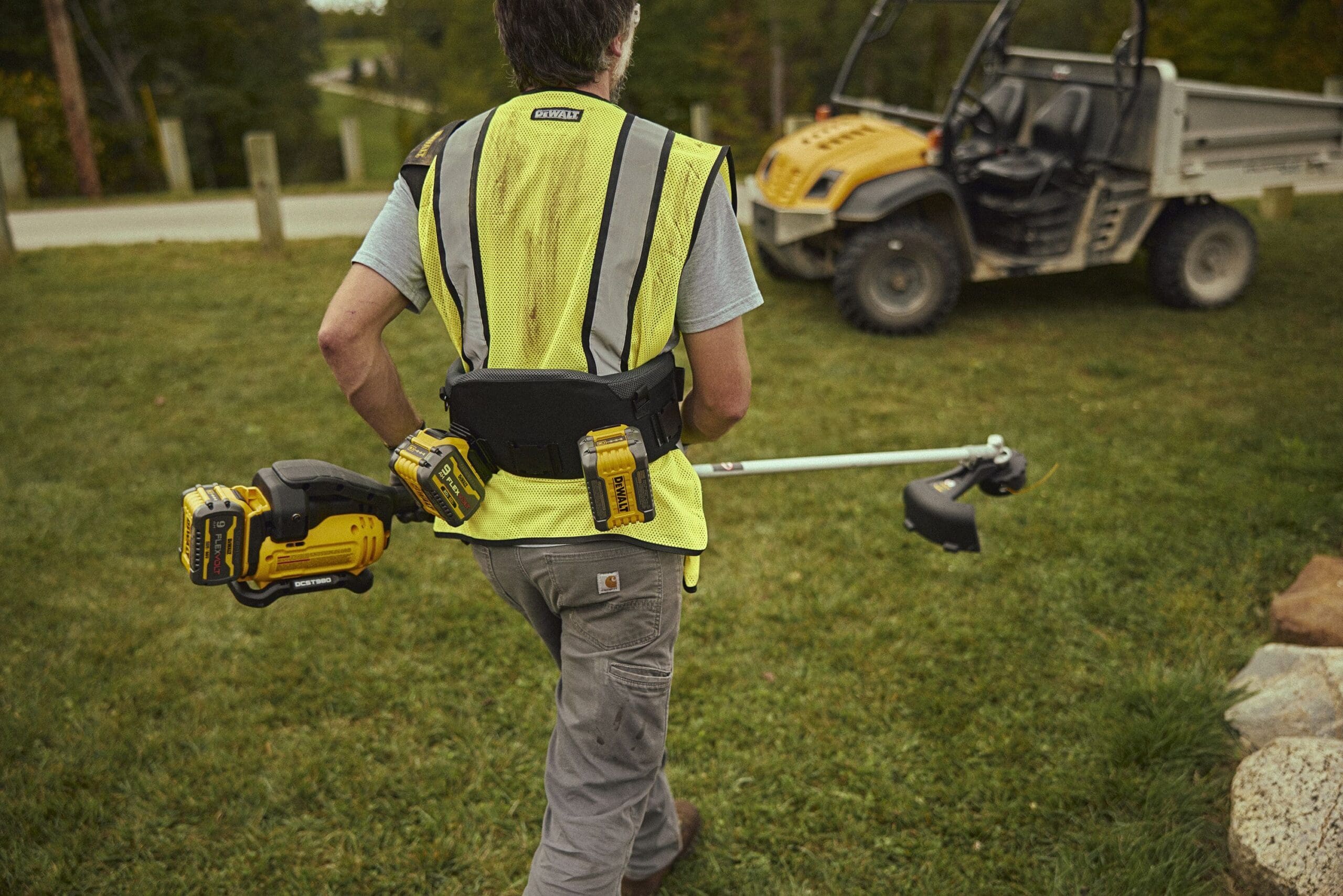
In response, DEWALT recently launched a new battery harness that enables users to carry two batteries while operating handheld equipment to help meet the runtime needs of a work loop that consumes a tank of gas.
Paul Beblowksi, a product manager with STIHL, recommends crews carry enough batteries to get through the day as it removes a singular failure point and then mobile charging can be used to flex upward if needed.
“It’s important to plan for the worst-case energy scenario,” adds Conrad Tufte, a manager of product – commercial OPE, at Chervon North America, EGO’s parent company. “When assessing your energy needs, consider demanding periods like spring/fall clean-up, rainy seasons, high-growth phases, or other energy-intensive situations. Add a 20% buffer to ensure you’re protected against any potential downtime.”
Tufte says to calculate how many batteries you’ll need, create a list of your electric equipment, then use the manufacturer’s guidelines on run times to estimate your energy needs for an average day.
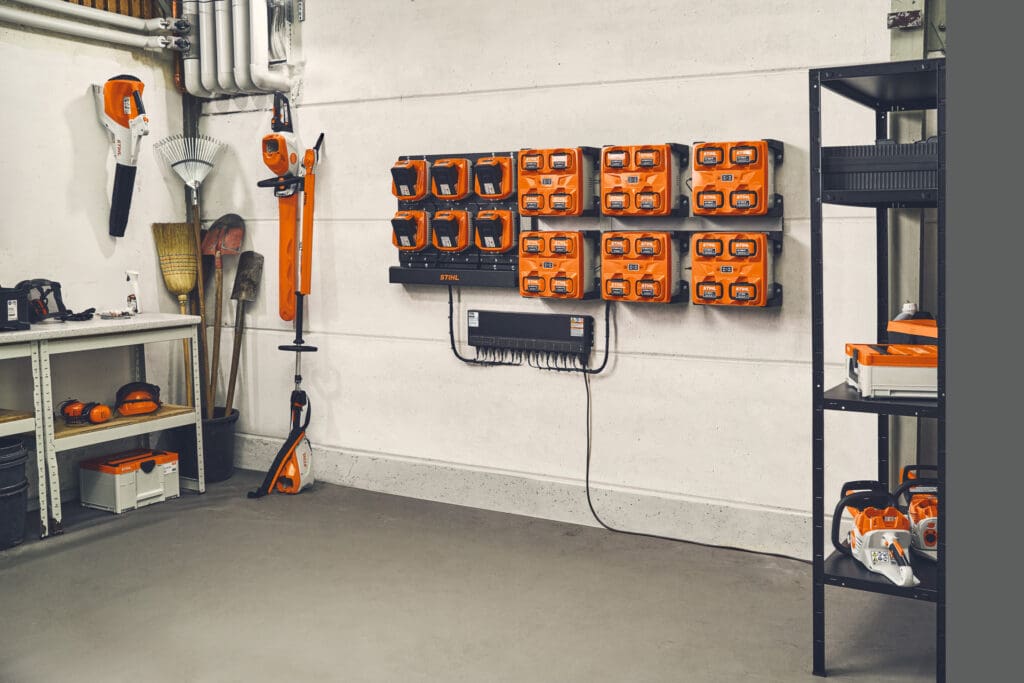
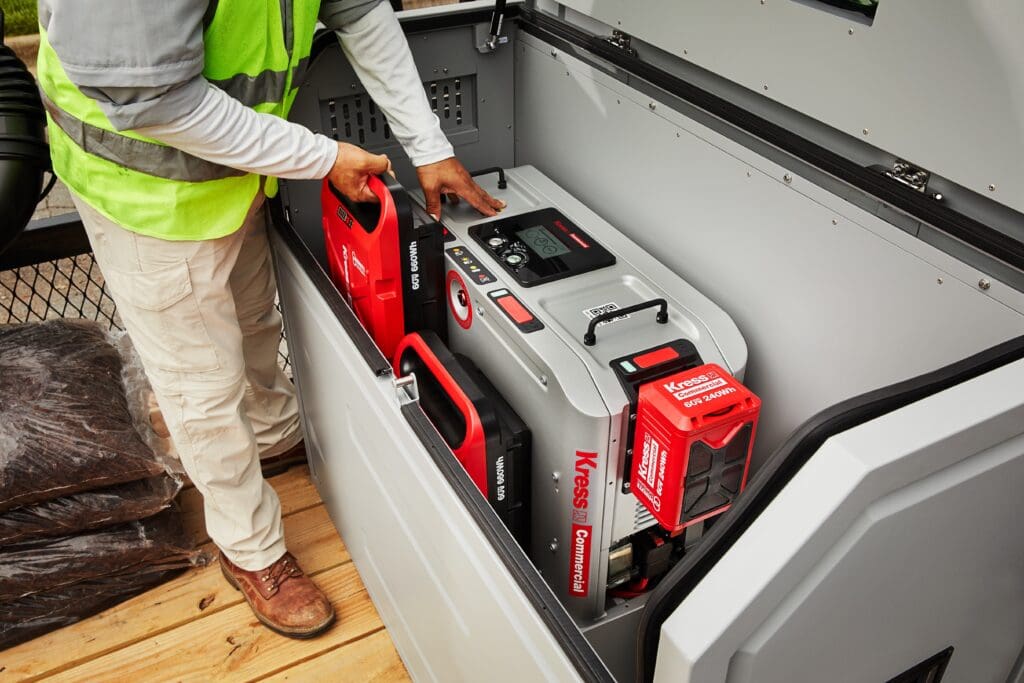
Todd Zimmerman, VP of product development at Kress, notes the need to carry enough standard lithium-ion batteries for a crew to make it through the entire day can be cost-prohibitive, which is why they offer charging technology to reduce the number of batteries needed.
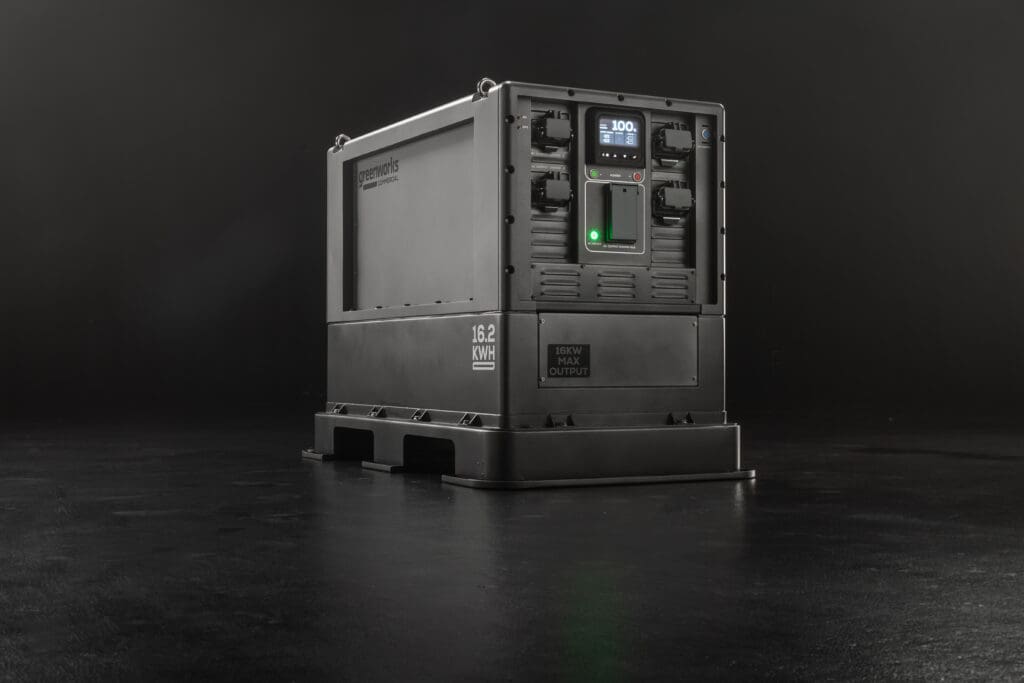
Per Kvarby, vice president of commercial product management for Greenworks Commercial, agrees that because numerous factors affect how many batteries a crew will need to make it through the day, on-the-go charging solutions are critical.
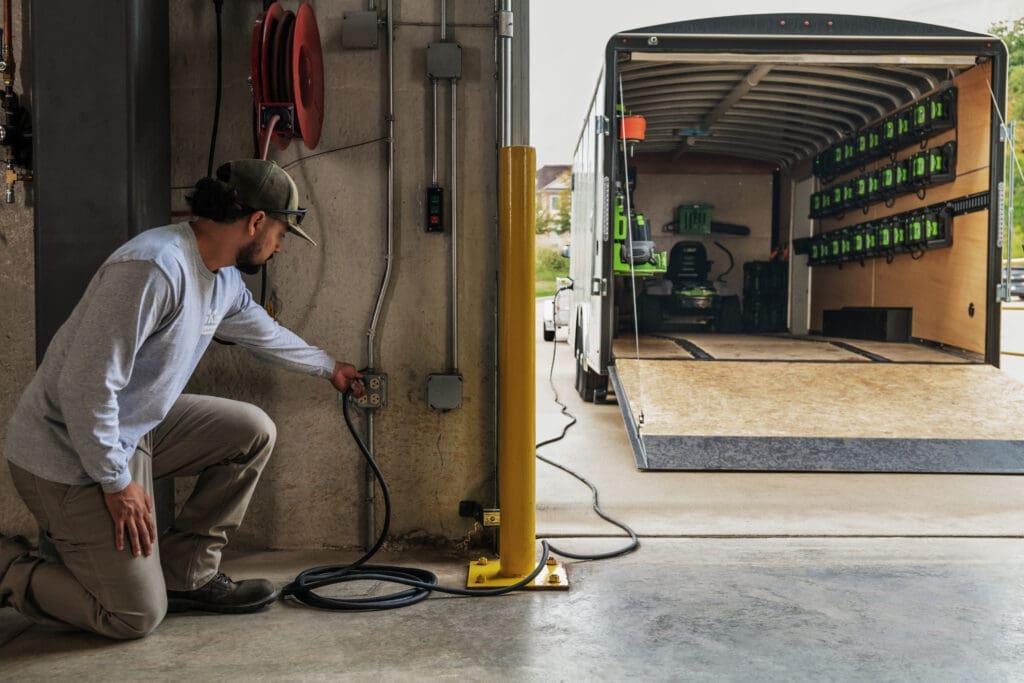
One method of on-the-go charging is utilizing a system that allows for on-trailer recharging batteries while crews work, reducing the total number of battery packs needed throughout the day.
“We believe that on-the-go charging is the future of landscaping because it allows crews to work more efficiently without carrying excess batteries,” Berkman says.
Scaling with Battery Power
Another consideration is how to effectively scale with battery power as you add more crews. More equipment and batteries will need to be managed as well.
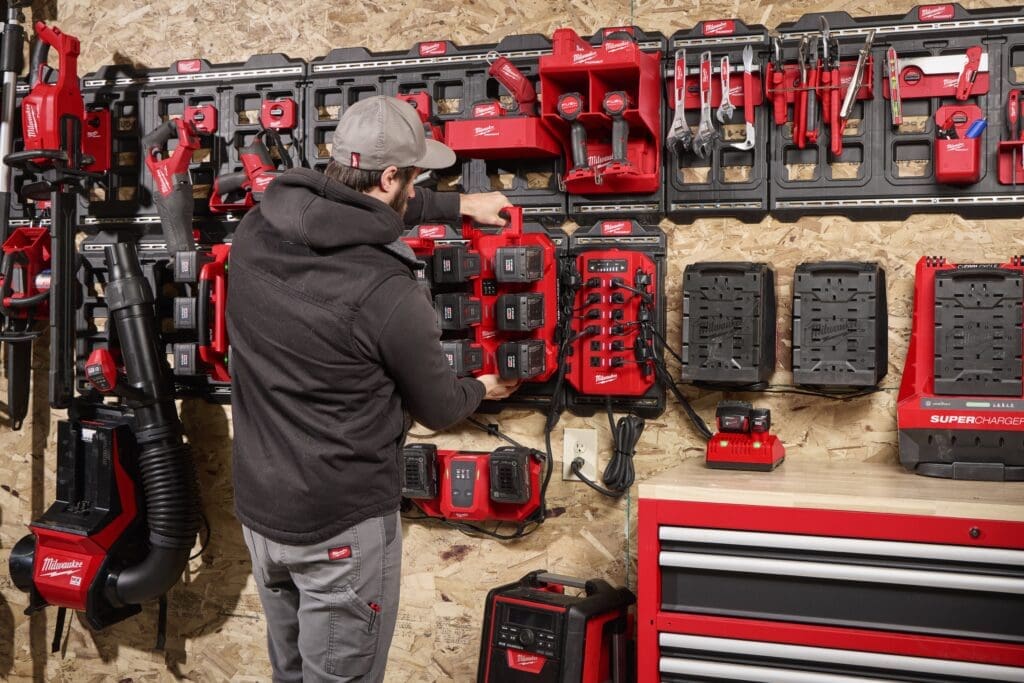
Many brands offer solutions that allow operators to charge anywhere from a couple of batteries up to 60 or 70 batteries on one plug.
“We have made a modular system where we can have a landscaper start off with just a couple of units, or even one unit and just a few batteries, and then as they adopt more and more, be able to increase that size and scale up so that their business can be able to support it,” Beblowski says. “What that does is it provides them with a flexibility and a security that they don’t make the full investment on the front end.”
Berkman says a key factor in scalability is system compatibility. He says Milwaukee Tool has maintained forward and backward compatibility with the M18 system since 2008.
“For landscapers investing in batteries and chargers, knowing their system will remain consistent over time is crucial,” Berkman says. “This stability allows businesses — whether small or large — to adopt battery power with confidence, knowing their investment will continue to support their growth.”
In this same vein, when selecting your battery-power equipment brand, review the warranties and support they provide for their products. Most manufacturers have a two- or three-year warranty on their batteries with Kress being the outlier. They offer a 6-year/3,000 charge cycle warranty on all Kress Commercial CyberPack batteries.
Also, consider if the equipment brand you’re reviewing offers a battery recycling program like Call2Recycle. Kvarby says Greenworks is currently finalizing a nationwide recycling program where landscapers can return dead batteries to their dealers.
Selecting Your Battery-Charging Solution
To find the right battery equipment option for your landscape company, Kvarby suggests first thinking about what you need to accomplish. Review different manufacturers’ available tool lineup as well as their charging solutions.
“You have to think about it as a whole platform,” Beblowski says. “How do the tools work with the charging system? How do the batteries talk with everything else? When they take a look at that, they need to think about taking a slow step in so that they can test it out.”
Zimmerman and Griffith also stress the importance of demoing different types of battery-powered equipment. Kress offers a 10-day free trial for crews to test out their equipment, while DEWALT has professional development managers and dealers who can provide demos to help select the right products for a hassle-free conversion.
Zimmerman also recommends tracking your equipment use, including gas and pre-mix usage per day per tool, any maintenance, refilling stops and any other downtime. This can help manufacturers provide more accurate recommendations for your needs and help track any savings realized by switching to battery power.
Tufte also suggests looking for battery power systems that are scalable and turnkey – eliminating the need for electrical infrastructure upgrades.
“When selecting battery charging solutions, landscape professionals need to look beyond just runtime and marketing claims,” Berkman says. “The best system isn’t just about how long a battery lasts — it’s about real-world performance, how the tool feels in hand, comfort in extended use, and how well the platform integrates across an entire fleet. Choosing a solution that prioritizes system compatibility, proven reliability, and application-based performance ensures that professionals get the power, runtime, and efficiency they need on the job.”
Key Takeaways
- Determining how many batteries a landscape crew needs depends on factors like job type, site conditions, and workload fluctuations. Planning for peak energy demands and using manufacturer guidelines can help estimate battery needs.
- Carrying a full day’s worth of batteries can be costly and inefficient, which is why many manufacturers focus on on-the-go charging solutions.
- Demo different battery-powered equipment and consider the whole platform before committing to a brand.
Looking for training on how to transition to battery successfully? NALP, in partnership with the American Green Zone Alliance, offers Battery-Power Equipment Training for Landscape Professionals.
