

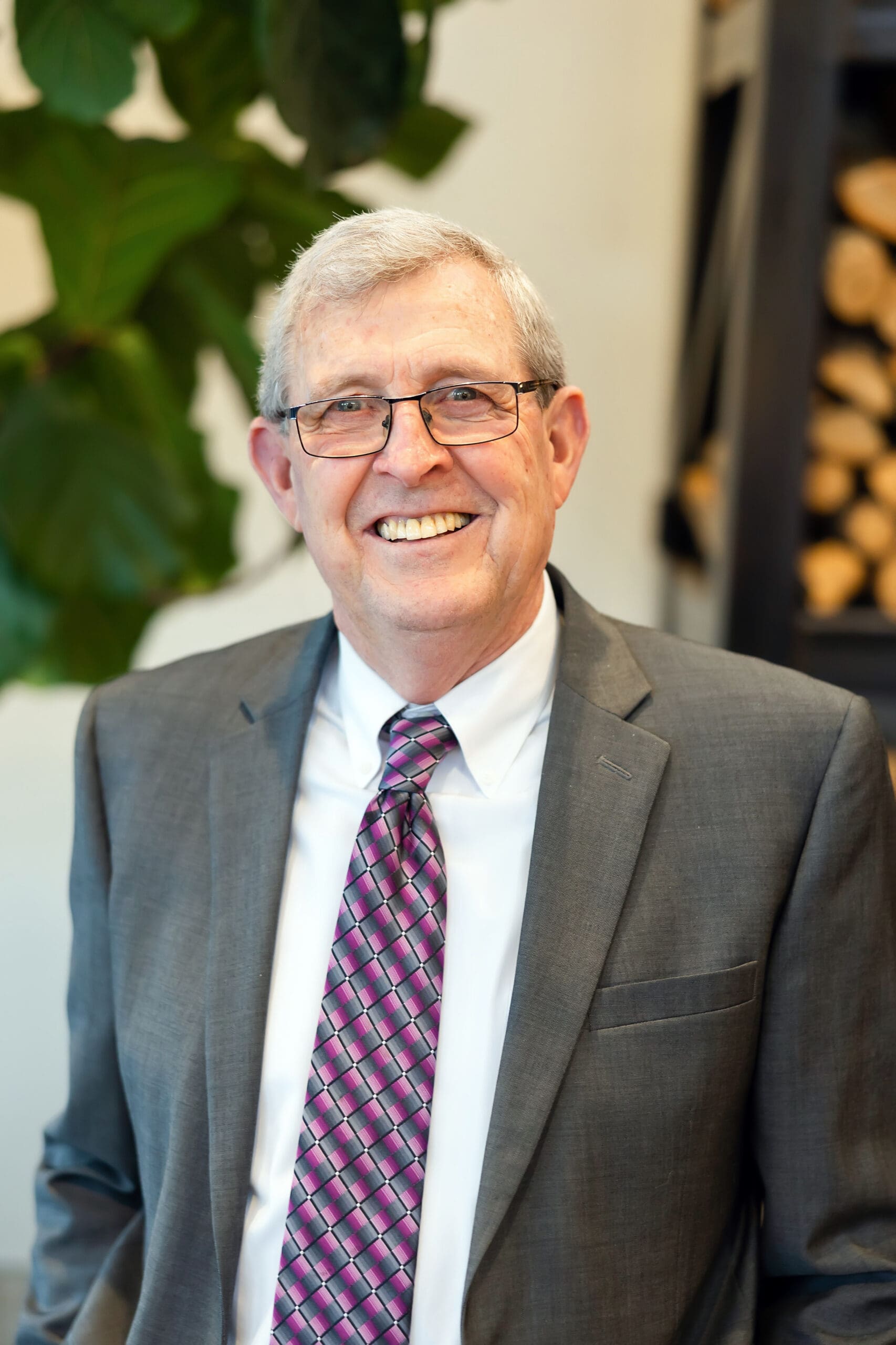
Larry Ryan is the founder and executive chairman of Ryan Lawn & Tree, based in Merriam, Kansas. He earned a degree in forestry from the University of Montana and started his company in 1987. Ryan converted his company to an Employee Stock Ownership Plan (ESOP) in 1998. He is passionate about developing a great place to work and providing great careers to their employees while they create healthier, more beautiful communities. Ryan recently stepped down as president after serving in the role for 38 years. He will continue to serve as the executive chairman of the Ryan board of directors. Chuck Monico, who joined Ryan in 2022 when their companies merged, has been named the new CEO.
How has your background in the restaurant industry driven your focus on customer service?
One of the interesting things about restaurants is when people are hungry, they have no tolerance and forgiveness is hard. You can lose a customer so quickly if you’re not on your game, if you’re not really present, if you don’t have that attitude of service. When we orient new people, I remind them that the service industry doesn’t mean serve us; it means serve them.
Did you ever imagine you’d grow this business to over 500 associates?
I did but in a different way. I worked for the guy who started Pizza Hut, Dan Carney, for a short period of time, early in my career. I saw how he built out Pizza Hut as national company through franchising very rapidly. I dreamed of that in the tree industry. My background was in forestry, but I did not understand the relationships you build. When you build on something with excellence, there has to be a commitment to each other. I had no idea how our company would morph into something that was beyond my dreams. We’re in four states. That’s small compared to what private equity is doing. I don’t care what they’re doing because I think ours has the ability to last.
How has being a faith-based organization impacted your company’s growth?
It has brought us a much higher quality of an employee. I really think customers and employees both look for there to be a lie there. That I’m using it to grow, but I don’t really live it. You have to live it every day. The interesting thing is living it every day really brings happiness to everybody.
How would you describe your leadership style?
I would say I’m not a good leader. I know I’m kind of weak in relationship building because I build it through woo. That’s my strength. I want to be liked so I go out of my way for people. You’re never better than your people. Your number one goal is to recruit hire and keep great people. I think it’s more than anything else what is separating us from the majority of companies in our industry is the quality of people we have. A lot of them, I just say, ‘How did we get you? Do we deserve you?’ They’re incredible.
What’s a strongly held belief you’ve changed your mind on over the years?
I didn’t understand what a great company was. I thought it really had to do with money because in the early years, I worked in the food business with some real wealthy people. But I really have learned that it has nothing to do with that. A great company can be in any industry. It’s not the people who are cheapest at what they do, like a Walmart or the most expensive of what they do. I think it’s a company that, more than anything else, really cares about the customer, the product they deliver to the customer, and the people who deliver it.
I didn’t build this company. I started it, but all you do is create the idea. Our people built it. I give the people credit for building this. When you put a group of people together and create a vision, they build it. It was their hard work and their ideas. I think one thing that I have done right is I didn’t try to hog all the credit for it.
Why did you decide to make your company an ESOP?
It was really built on the family farm back in the old days. The dads can’t get by without their kids because that’s your free labor. Because of that, most time the farmers gave a farm to their kids. That was the model for this company. How do I give it to the people? Because am I going to need it when I’m old? No. Our bank was an ESOP, and I asked them about it and they said, ‘Oh, it’s really a good idea.’
I tell people ESOPs don’t attract good people, young people, because they don’t get it. What they do is they keep your good people for years once they get established in the company, and those are the people who attract the good people.
What advice would you give other owners considering transitioning to becoming an ESOP?
If you really care about people and you want an amazing legacy, you should consider it, but ESOPs are expensive to set up. You have to be truly willing to become an employee because, after a period of time, you’re no longer the dominant owner. Even this past year, I’ve had some issues from time to time of ‘Okay, I can’t control anything anymore.’ You have to be willing to let it go.
What has the transition into the executive chairman role been like?
It’s a little bit like retiring because I’m giving up so much of what I thought I used to do, but they were doing it anyway. We have a management team in our company that was really doing it all. I think it’s going to be more and more rewarding all the time because we’ve done two tours so far of talking with companies that have expressed interest in being a part of us.
How did you select Chuck Monico as the next CEO?
Three internal people applied for it. Our board members just upfront stated, ‘Larry, you will not decide this person. We will.’ The beauty of that is it took the monkey off of my back, and it made it totally objective. All three were excellent candidates. There was just something about Chuck. Even though he’s only been with us three years, in so many ways, them picking Chuck was incredible because it says to other people who join us we’re not here to use you. We’re here because we think you have something to offer us, and that’s how he was chosen. I did a good job getting it to X level. Going from X to Y is Chuck’s job, and then Y the Z is going to be his successor’s job.
How has your company been involved with colleges over the years?
I realized somehow, I have to get affordable people who really care. To do that initially, if you find people in colleges who are enrolled in horticulture, the majority of them are there for a reason, or they develop the reason. In the pre-cell phone, pre-internet days, I just started knocking on college doors and started out with Kansas State because I’d gone there for two years before I transferred to Montana. That’s our closest land grant horticulture school, and we landed a gem for our first full-time employee. He helped attract the others.
I think out of 500 people, probably about half have a college degree. But you can’t walk in and tell who doesn’t have a degree because they will share that knowledge so thoroughly with each other over a period of time. I’m convinced that you don’t have to have a college degree to be good at this, but you do have to be a learner. You do have to care about customers. You do have to really want to know how to do things right.
What has been your biggest challenge leading Ryan Lawn & Tree?
It’s always finding the right person for the next job, and we still have some transitioning to do on that. Our industry could be at the apex of a transformation if people would see what was possible, and if you would commit to getting the right people and growing people.
Our biggest challenge will always be finding that next great person, but because we’re committed to it, we’ve always been able to find that person. I will tell you, we’ve picked up some duds, but you don’t keep them. But that doesn’t mean it’s bad because it’s hard.
In the early days building cars, they didn’t know where they were going. They didn’t know what a carburetor was. They didn’t know what electronic ignition was. They’ve learned all those things because they were hard. They solved things. Greatness will always, always, always be hard, and yet we cannot back away from a commitment to excellence and to greatness.
Where do you see Ryan Lawn & Tree in the next five years?
15% growth. We double every five years. We could grow faster, but we can’t grow faster because to we have to keep finding those right people who can mature enough. It takes about five years for a person to really mature, to go to that next level. We have got to raise the wages in five year by $20,000 per person. One of the things that happens when you keep pushing wages up is you keep attracting better people.
I think five years from now, the opportunity for us to be better is incredible. I also think, though, if we don’t really keep it front and foremost on our objectives, we will slide backward. I think success is so temporary that to keep it, you never stop earning it. All it takes is a couple of days of quitting to get out of the habit. It’s much easier to lose a good habit than it is to gain one.
What changes would you like to see in the industry?
More professionalism and pay their people more. I’d start with those two. We need a lot more training. We need full-time people in this industry. When you have people from year to year, and you don’t have seasonal workers every year, some magical things happen.
What advice would you give to others trying to grow a successful business?
One of the greatest things I heard once is, ‘Learn from people who do something extremely well.’ Study them. The theory is you don’t have enough years in your life to learn from your mistakes. If you can copy people who do something very well that works for them. That will get you 80% of the way there. The last 20% is really difficult. You just put your nose to the grindstone, and you start working on solving one problem after another.
Really work on your people program, and if you can develop one that really cares about people, hires the right person, it’ll do more for success, and you may be worth less when you retire because your people as a whole are worth a lot more, but you’ll have joy that you never believed possible. Hiring and keeping great people should be your number one priority. If we would really care about people and hire those better quality people, and sacrifice more on our end so they can have more, we will transform this industry.
This article was published in the July/August issue of the magazine. To read more stories from The Edge magazine, click here to subscribe to the digital edition.
