

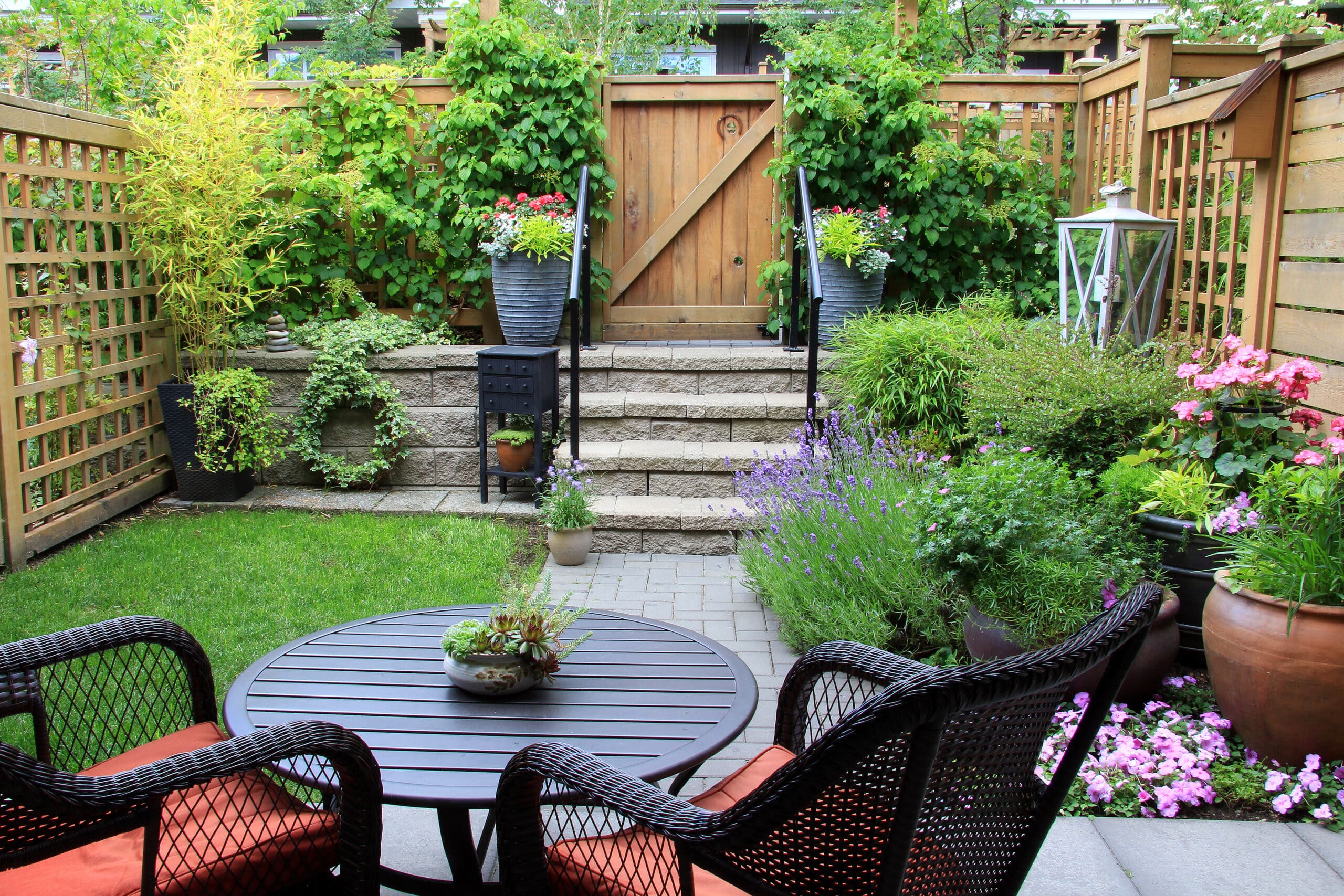
When you’re designing an aesthetically pleasing and functional space for clients with a small landscape, it’s critical to consider the installation and maintenance of the project as well.
“We can’t design something that we aren’t able to install,” says Rebecca Jacobson, vice president of sales and marketing for Santa Rita Landscaping, based in Tucson, Arizona. “Our design team works hand in hand with operations on each design so that we are able to have a creative approach to the space while also collaborating on the production of the product.”
Strategizing Construction
Susann Heller, a landscape architect with Piscataqua Landscaping & Tree Service, based in Eliot, Maine, says she doesn’t let a site’s size limit what features she’ll include in a design.
“It might dictate the scale of the item, but I don’t think it limits it,” Heller says. “I can still do a water feature with a beautiful sculpture. I could still use all of the plants because they come in dwarf varieties. They make every different kind and style and size of pergolas, stepping stones, hardscapes, etc. I feel like we can use all the elements. They just need to be scaled properly for that area.”
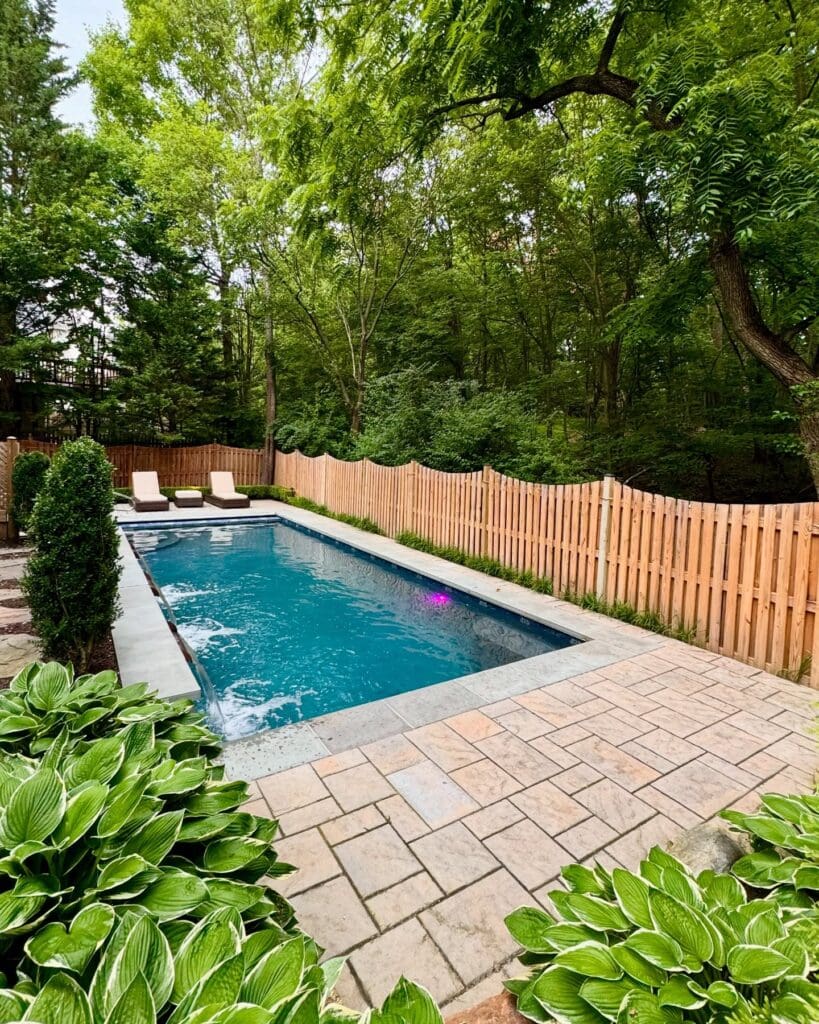
Because smaller properties have less room to maneuver and typically narrow access points, you need to have a battle plan of how your crew will go about installing the project as you create the design.
For instance, if you have a tree with a 1,000 lb. root ball going in the corner of the property, you have to determine if you want your crews trying to manhandle it into place or if you want to bring in equipment. Depending on when you install the tree, you may need to run the machine over the patio you just put down.
Emily Inglis, a landscape architect with Kane Landscapes, based in Oak Grove, Virginia, says in this instance, they would put the tree in a temporary stockpile and put it in later on. She explains that if they’re working in the early spring, a frost might kill the tree, or if the client fails to water it during a summer installation, they’d have to replace it so installing late in the project would be better.
“In all things, you mitigate the risk and you mitigate the amount of rework,” Inglis says. “You have to come to terms with the idea that some things you are not going to be as efficient as you’d hope them to be.”
The size of the property and its proximity to windows, walls, doors or other fixed elements also impacts the equipment your team will be able to utilize.
“We typically use equipment that is scaled for smaller spaces like hand tools, wheelbarrows and hand carts,” Jacobson says. “These spaces are also typically good times to use electric or battery-powered equipment instead of the typical heavy-duty equipment we have when working in larger landscapes.”
Heller encourages discussing with the client the different options and costs if you have limited access for bringing in elements. For some, paying for a crane is out of the question, while others will want to spare no expense. This is why it is important to have alternatives planned if a client can’t afford the more extravagant solution.
Streamlining Installation
Inglis says if a property has a fence, they will often remove it or the gate for the duration of the project.
“At the end of every day where we’ve taken a fence or a gate out, we’re putting up a silt fence,” Inglis says. “We’re putting up a safety fence. We’re basically protecting our job site because that fence was there for a reason, and we want to be protective of the client’s property. We’ll put it back at the end of construction because that is almost always going to be faster, cheaper and easier than doing everything by hand and bringing it in by wheelbarrows.”
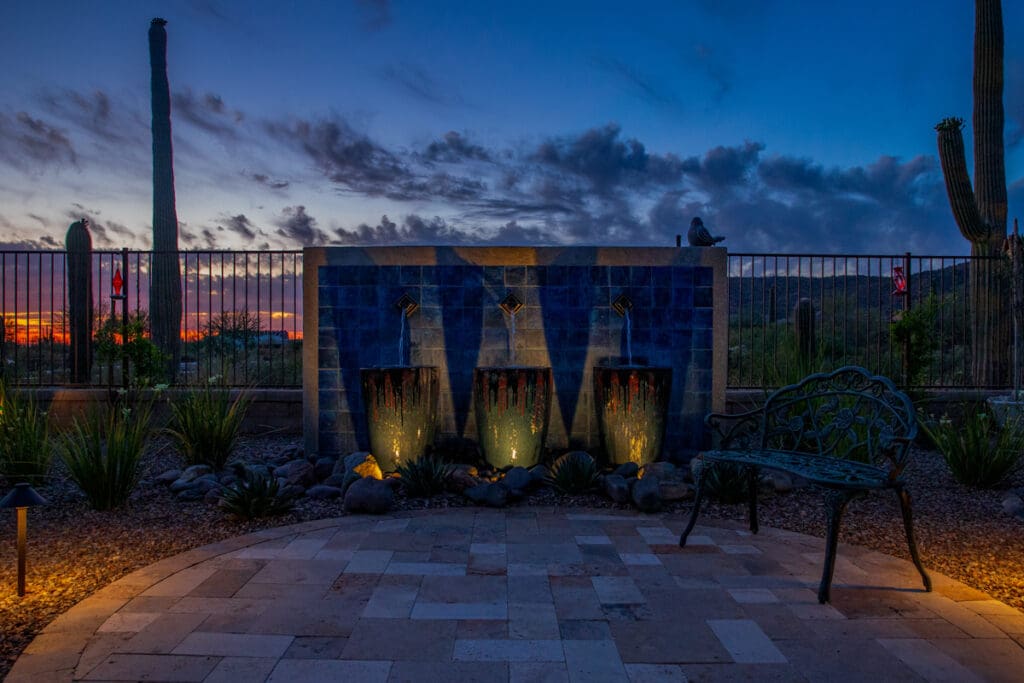
Heller says one way to make installation in smaller spaces go smoother is to focus on smaller-scale elements, such as using stepping stones instead of a full path or creating a tumbled pea stone patio space instead of using heavy stone.
Another key to streamlining the installation process is planning out your delivery schedule. While on a bigger jobsite, you could have all your hardscape material sitting out of the way throughout the job, you may not have the space to stockpile on smaller projects.
“If you’re spending half your time taking that thing and moving it out of the way in order to get something else and then having to move that and put it back, it’s so inefficient,” Inglis says. “Managing your material stockpile in a smart manner is probably the thing that’s going to save you the most headache and the most money at the end of the day.”
Anticipating Maintenance Needs
To ensure the long-term success of the project, you also need to think through the maintenance needs of the plant material installed.
Jacobson says they make a point to select plants that will mature well in the space. They will also create maintenance plans that support the selective removal of plants once they mature past what the space can accommodate.
“In this case we’d want to be planning ahead so that the removal of the mature plant doesn’t leave a noticeable gap in the landscape by either cultivating supporting plants in the existing landscape or replacing the removed plant with another signature item at the same time to limit the effective the change has on the space,” Jacobson says.
Heller says if you select full-size species, these can easily become a maintenance nightmare when it comes to pruning in the tight space.
“Eventually the tree or the shrub will decline and eventually die, because it wants to be big and it doesn’t want to stay small,” Heller says. ‘
Heller recommends using slow-growing varieties as these will require less maintenance.
“A lot of native plants do well in those particular conditions, because it really comes down to you putting the right plant in the right place,” Heller says. “Putting the plant where it’s happy, once the roots are established, it’s just a win-win for the homeowner, for the designer, and for the plant.”
Advice for Others
Inglis says you should have a thorough interview process with the client so they have realistic expectations and timelines for the project. Discuss the construction process as far as parking and how the project may impact the customer’s routines.
You should also ensure the plan meets local regulations like stormwater management.
“There’s nothing worse than ending up with a design that the client loves that you just can’t build,” Inglis says. “Then everyone’s heart breaks. You love the design you worked really hard on. The client really wants it. That’s the vision they have in their head now.”
Jacobson recommends that your sales and operations teams collaborate from the very beginning of the design to create a mobilization plan you can deliver on.
“Once we start a project, we continue that collaboration in support of the operations team to troubleshoot anything unexpected and codify learning for future projects,” Jacobson says.
Key Takeaways
- It’s essential to consider access, scale, and logistics from the start. Collaborate with your operations team to ensure the design is realistic and buildable.
- The client’s budget will often dictate which equipment and solutions can be used to overcome tight access.
- Select slow-growing, site-appropriate plants to prevent future overcrowding and reduce pruning challenges. Plan for how to replace mature plants without disrupting the space’s visual flow.
