

If you are looking to get into commercial landscape installation work or take on more projects that involve coordinating with electricians, plumbers and other specialty trades, don’t overlook some easy ways to establish rapport early on, communicate well and address common conflicts.
Strategies for Getting Off on the Right Foot
If collaborative projects are going to become a significant portion of your revenue stream, chances are you will be working with the same trades in your area frequently, so it’s important to build strong relationships with them from the start.
Jay Rotonnelli, vice president of sales and business development for Piscataqua Landscaping & Tree Service, based in Eliot, Maine, says it is best to introduce yourself early on in the project. They will conduct a project kickoff where all the trades can discuss their tasks, objectives and timelines.
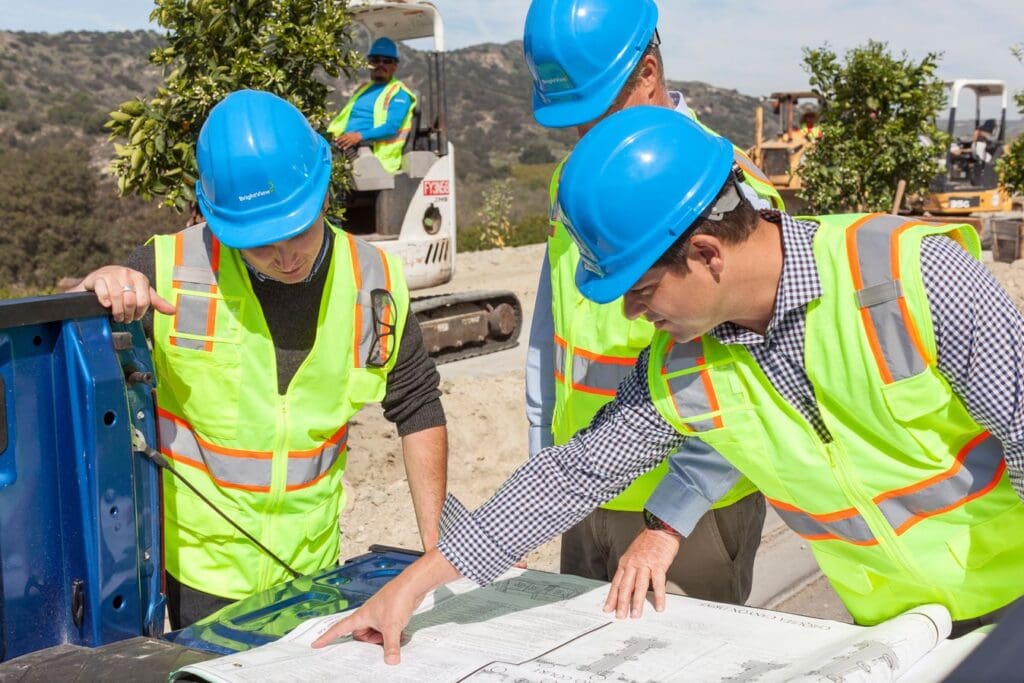
This will improve understanding on both sides and help you plan better your material deliveries and when you should have certain crews on site.
“We tell our onsite teams to always make sure they introduce themselves early because it helps when you are running into issues later on the job, especially during the final push to completion,” says Cory Hendrix, branch manager of Yellowstone Landscape’s, Charleston, South Carolina, location.
Also, don’t overestimate the power of pizza when it comes to creating a good first impression.
“If you’re going be on the project long enough, buy lunch,” says Damion Draeger, owner of 4D Exteriorscapes, based in Waukesha, Wisconsin. “It sounds stupid, but if you just show up a bunch of subs or pizzas ordered for their crew too, it goes a really long way.”
Strategies for Effective Communication
For jobs where there is a general contractor (GC), it’s typically best to communicate with both the GC and the subcontractors to ensure everyone is on the same page.
“The communication that occurs directly between subcontractors is usually the most effective,” says Ron Claassen, vice president & general manager of development for BrightView. “It also helps to include the general contractor where possible as they may have insights into possible impacts to others that may not be considered with the initial subcontractor-to-subcontractor dialogue.”
Hendrix says they take the mindset that while they are working for a general contractor, the more they can take off their plate and handle on their own, the more the GC will want to bring Yellowstone onto the next project.
“It is always good to communicate through the general contractor first as they are the lead on the project and most often who is paying the invoices,” Rotonnelli says. “However, oftentimes you are able to create relationships with the tradesmen and their teams so that some of the smaller questions or issues can be answered and you are not being hung up waiting for answers from the general contractor.”
Draeger says in some cases, you may have subcontractors who take the GC’s word as gospel and are not receptive to what they’re being told onsite by another trade.
If you’re struggling with other trades being uncommunicative, Claassen says the general contractor can be enlisted to help facilitate better communication and coordination.
Draeger and Hendrix both say it is rare for other trades to not communicate enough, but they will also loop in the homeowner or GC, so they’re aware of the issue.
“Piscataqua Landscaping will try to work it out with the trades that we are having challenges with,” Rotonnelli says. “If that is not successful, then we typically will reach out with an email to the tradespeople and the general contractor and try to get a meeting together so that we can get everyone back on the same page. We don’t like to have to do this, but sometimes it is necessary to keep the project moving and fluid.”
Strategies for De-Escalating Tensions Between Trades
Sometimes, tempers can run hot if different trades are under a stressful deadline or the work of one company impacts the ability of another to work effectively.
Draeger says tension can also occur if you’re not communicating with the other trades onsite until there is a problem.
“Encourage relationship building between individuals who work closely together,” Claassen says. “If there is mutual respect and understanding, there will also be less tension and a more productive work environment.”
Hendrix recommends having a calm one-on-one conversation to resolve situations like these.
“If this can’t happen immediately, we try to postpone the meeting so all parties involved can have time to de-escalate,” Hendrix says. “Time and space generally helps calm things down.”
Rotonnelli notes that pausing to buy some coffee or pizzas and discussing with the other teams some of the potential issues can help significantly.
“It is helpful to do this in a non-confrontational way, face to face,” Rotonnelli says. “It’s amazing what a hot coffee on a cold day, or a slice of pizza when everyone is hungry, will do to the spirits of a team. We are all human!”
Advice for Others
While everyone has their own specialty, it’s important to work with other trades as a team.
Rotonnelli advises gathering the different contractors together early on and performing a project kickoff, even if it may seem redundant to some.
“While this may also seem frustrating to the trades, when it is all said and done, they will find value in it and it also creates a level of respect among all of the teams,” Rotonnelli says.
Claassen says you should work hard together to determine the correct sequence for the work that happens simultaneously and concurrently with a focus on the mutual benefits to all parties.
“Landscaping is usually the last – or one of the last – trades to work in an area,” Claassen says. “The icing on the cake, if you will. It is in your best interest to ensure other parties have concluded their work prior to you completing the installation. The icing never looks quite as good the second time and you may not get paid for doing it twice.”
Hendrix adds that there shouldn’t be an ‘us versus them’ mindset. They always try to help other trades along the way because you never know when you might need their help down the road.
“It’s always good to have some helpful subcontractors in your corner if you get in a pinch,” Hendrix says. “You always want to make an impression on the GC, but you can also build up your business with the other trades talking highly about you. Trades like to work with other trades that make their life less stressful.”
Key Takeaways
- Introducing yourself early on and making small gestures like buying lunch can establish a positive rapport with other trades and foster a collaborative atmosphere.
- While it’s important to involve the general contractor (GC) for larger issues, direct communication between trades often resolves smaller questions efficiently and prevents delays.
- Avoid an “us versus them” mentality; focus on mutual respect and teamwork to make the project smoother for everyone.
