

Photo: Hustler
Mowers are one of the most ubiquitous pieces of equipment in the lawn and landscape industry, but they can also be the cause of numerous hazards.
Each year, approximately 70,000 people are treated in hospital emergency rooms for mower-related injuries, according to the U.S. Consumer Product Safety Commission. Additionally, about 90 people die annually due to these incidents, typically when riding mowers overturn or when the machines run over victims.
Thankfully, following safe work practices with mowers can greatly reduce these risks.
Roll-Overs
With riding mowers, roll-overs can crush operators or pin them under water if they are mowing near a body of water.
For instance, in August 2024, OSHA reported a zero-turn mower overturned in a residential front yard. The employee sustained fatal crushing and concussive injuries to the head and upper body due to the mower’s Rollover Protection System (ROPS) not being installed in the vertical position.
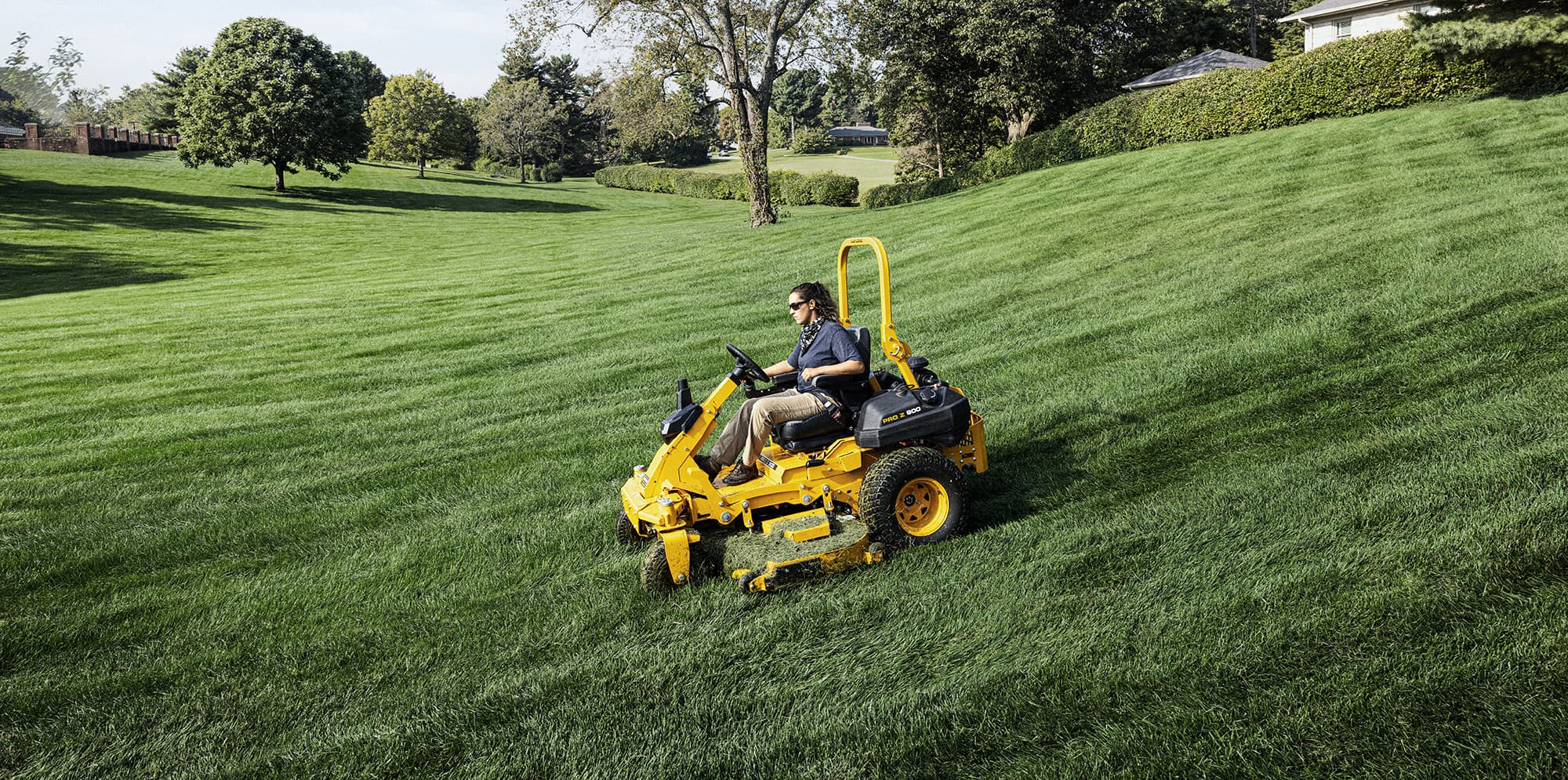
Roll-overs are more likely to occur on uneven terrain or slopes. In this case, the employee was mowing a slope ranging from 16 to 26 degrees. The manufacturer specified that the mower should not be used on slopes greater than 15 degrees.
Before mowing, scout the property for potential hazards like holes, rocks or other obstacles that could cause the mower to become unstable. Utilize a slope indicator to determine slope angles; you should avoid mowing those over 15 degrees.
Train your crews to always have the ROPS system engaged unless there is an overhead obstacle. If an operator needs to fold down the ROPS for clearance, return it to its upright position as soon as possible.

When mowing slopes on a ride-on mower, drive up and down, not across the site. Do not stop, start or turn on a slope. Reduce speed and use extreme caution on slopes.
Avoid mowing near ponds, creeks, lakes or other bodies of water, but when it is necessary, establish a safety zone to operate the mower a safe distance away. In another fatal incident, OSHA reported an employee was mowing the edge of a retaining pond. When the mower tipped over the employee was trapped underneath in the water.
In some cases, it is better to utilize string trimmers or robotic mowers to mow around bodies of water.
Lacerations
Contact with mower blades can lead to lacerations as well as finger, toe, hand or foot amputations. These types of injuries can occur from improper handling or maintenance. Crew members should wear steel-toed footwear and not try to unclog a mower deck with their hand or foot.
Turn off the engine and wait until all moving parts come to a complete stop. Trapped energy can cause the blades to spin once the material blocking it is removed.
Never leave a mower running. Always stop the engine before stepping away from the machine. When using a ride-on mower, also set the parking brake before dismounting a ride-on mower.
Projectile Injuries
Mowers are also capable of throwing sticks, stones, and other debris at a rate of 300 feet per second. If this debris strikes someone, it can cause severe injury. Discharge chutes are equipped with a protective guard or deflector to stop objects from becoming projectiles.
Crew members should wear long pants and eye protection to guard against projectiles.
When policing the area before mowing, remove objects that could easily become projectiles. Mow in a direction that blows discharge away from people, buildings, vehicles and roadways. Turn off blade rotation when crossing a sidewalk, driveway or road.
Burns
Burns can also occur from contact with hot engines or exhaust parts. Let the engine cool before refueling and ensure the nozzle is in contact with the rim of the tank when fueling up.
Take care not to touch hot parts of the machine. Wearing long sleeves and pants can also help mitigate the chance of burns.
Emergency Preparedness
Train your crews to understand safe mowing practices as well as how to responds to first aid emergencies like lacerations or burns.
Have first aid kits readily available and clear protocols on what do in case of an injury. Even if an employee experiences a near-miss, encourage they report these so you can regularly address repeat safety concerns and recognize employees for their safe practices.
