


It’s common for clients to have an extensive wish list when they’re thinking about the backyard of their dreams. While it’s easy to include all of these elements on a larger property, this can be much trickier when working within a smaller footprint.
“It’s very human of us to want everything and the kitchen sink,” says Emily Inglis, a landscape architect with Kane Landscapes, based in Oak Grove, Virginia. “We see all this stuff on Pinterest and Houzz and whatnot, and we say, ‘I’d really love this. I’d really love that.’ And then you get down to it, and you only have space for this.”
Inglis says it’s challenging trying to moderate client expectations and still create a functional space, but it’s not impossible.
Rebecca Jacobson, vice president of sales and marketing for Santa Rita Landscaping, based in Tucson, Arizona, says in their area, sun exposure, radiant heat and reflective heat all play a significant role when designing for smaller spaces.
“Sometimes, it’s easier to create microclimates and truly one-of-a-kind installations for a unique outdoor space in those smaller areas,” Jacobson says. “Other times we get the chance to be very creative to find the best horticultural matches for the customer’s vision within the space’s characteristics.”
Addressing the Wish List
When a client comes with their list of desired elements to include in the design, focus on determining the functionality of the space.
“I talk to them, how are you going to use the space?” says Susann Heller, a landscape architect with Piscataqua Landscaping & Tree Service, based in Eliot, Maine. “I think that’s the most important question. Do you have pets? Do you have children? Do you entertain a lot? Do you need more patio space? Then I work around the priority of the space. I try to fit as many aspects as I can into this space without it looking cluttered or becoming too crowded.”

Inglis says they will collaborate closely with the client to incorporate their high-priority features first.
“If you’re paying attention, even if you don’t outright ask them what their priorities are, which you should, they’ll let you know anyway,” Inglis says.
As she designs, Inglis says there will be opportunities to include some of the ‘nice-to-have’ elements.
“Then when you’re doing the presentation, you’re like, ‘And I even managed to make sure that you guys got your little X, Y and Z,’” Inglis says. “They will light up and say, ‘Oh my god, we can’t believe you fit that in!’ It’s just a thing that you don’t know if you’re going to be able to make it work until you get into the design process sometimes.”
Jacobson says they allow the project’s budget to dictate what aspects they can incorporate in the design.
“If the customer really wants their stated elements included in the project, we owe them the opportunity to choose to fund the project if their initial budget isn’t in line with their vision,” Jacobson says. “We must be transparent and free with the information we have so that our customers can make the best choice for them.”
Techniques for Making the Most of Space
Heller advises first addressing any site constraints you might find on a smaller property, such as poor soil drainage or limited sunlight.
Then decide on one element to serve as the space’s focal point.
“This could be a fountain, fire pit, accent wall, fireplace or seating area,” Jacobson says. “Focusing on a single element has allowed us to focus visually and experientially according to the priority in the yard and design the rest of the space with that in mind.”
Heller suggests leaning into vertical elements, such as having a pergola as the focal point and then growing clematis or another vining plant so it provides both shade and visual appeal.
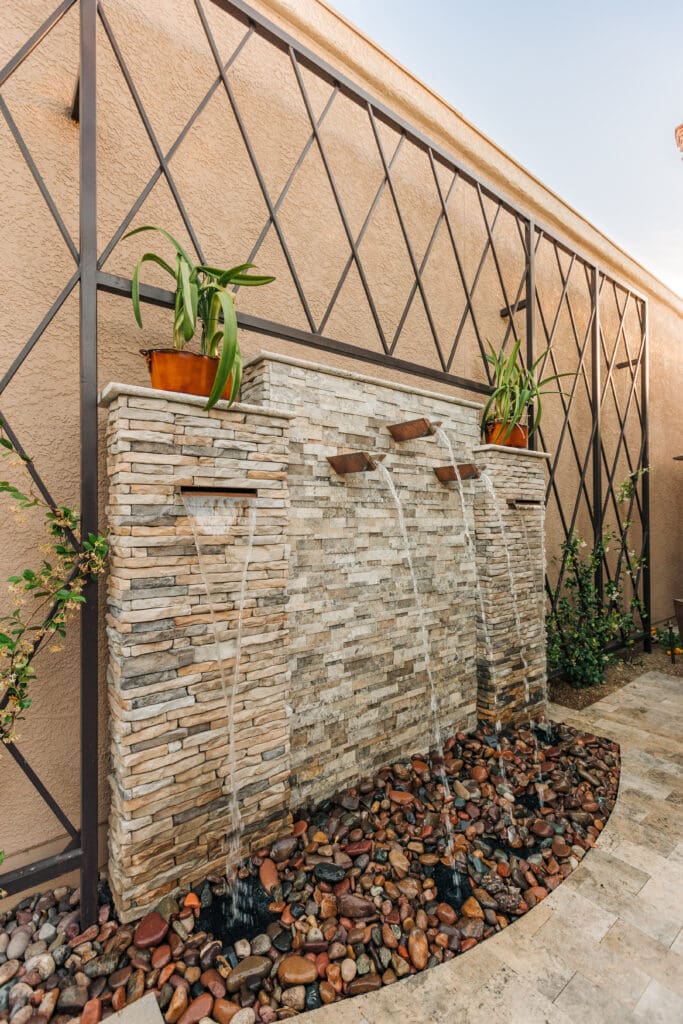
“Everything has to have more than one function, particularly if you are trying to fit in the entire wish list,” Inglis says. “You can’t just have a bench. That bench has to be a bench with storage underneath it. Or you can’t just have an outdoor kitchen. That outdoor kitchen has to serve as a serving bar.”
Inglis stresses that everything in a smaller landscape can’t only be beautiful. It also has to be useful.
“I think proportion and scale is also very, very important,” Heller says. “You’re probably more apt to choose dwarf plants that aren’t going to overgrow the space because if you use too many small plants, it’s going to look cluttered. If you use full-size plants, basically, they’re going to overgrow the space, and it’s going to look messy.”
Inglis also recommends showing restraint when it comes to your plant and material palette. The more stuff you have in the space, the more chaotic it will feel. Instead, she limits herself to five to six different materials for hardscapes and plantings.
“The non-fixed elements are where I tell them to go crazy with color and pattern, because if you get sick of it, or that thing goes out of trend, it’s not like you can take your outdoor kitchen countertop out and replace it like you can a pillowcase,” Inglis says.
Jacobson says they put thought and intention into the plant palette they select so the customer can enjoy the space safely. They avoid installing plants and trees that shed flowers or pods that attract small animals like rodents.
“Take into consideration that you’re going to be up close and personal with these plants more so than you might be in your traditional, more roomy garden,” Inglis says. “Are any of the plants irritants? If you want to walk around barefoot in your backyard, then maybe don’t put a holly in there.”
Inglis says some plants may look nice from afar but have mild skin irritants to them that the customer might brush past on a regular basis. She cautions even incorporating pollinator plants if the client or their guests have a bee allergy, as the lack of space will put them in close proximity to each other.
If you are designing for a more urban space, also consider plants that have heat tolerance, salt tolerance and pollutant tolerance.
Heller recommends using the rule of odds by installing uneven numbers of plants to make the design feel more organic and inviting.
Common Mistakes to Avoid
Failing to be selective about what you add to a smaller landscape can end up with the space feeling claustrophobic.
“I think the line between cozy and claustrophobic varies from person to person,” Inglis says. “What I would find cozy someone else might think is claustrophobic. So you really have to do an excellent job interviewing your client and making sure that you understand what their tolerance level is.”
Heller says when designers choose to use full-size plant varieties or fail to take a plant’s mature size into account, it can result in an overcrowded space.
Another common mistake is forgetting functionality.
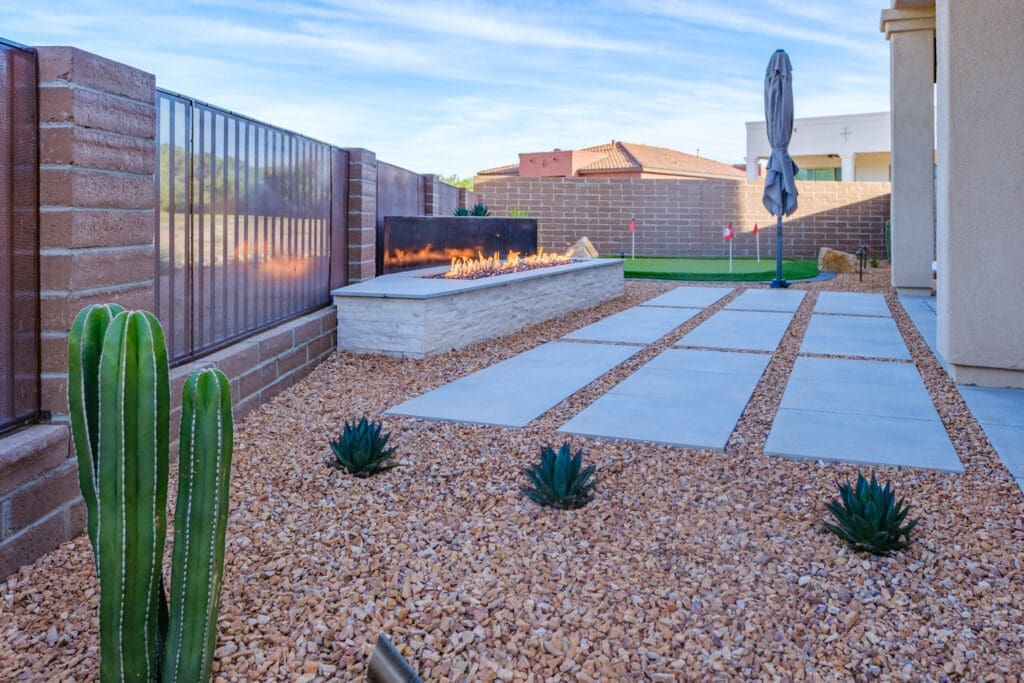
“If you crowd all these plants in and you overdo it in one area, you’ll lose the balance, and you’ll lose the function,” Heller says.
Inglis stresses taking your time with the design and thinking through the scale of elements.
“It is so easy if you’re used to designing in larger spaces to forget the human element of it, of how wide a walkway is,” Inglis says. “Could you squeeze two people past each other? What’s the scale of the client that you’re working with?”
Inglis says when you fail to take in the proportions of your clients, you’ll end up with a space that looks really pretty in photos and drives the client absolutely crazy because it’s not usable. Also, make sure what you’re designing is actually feasible for your construction crews to execute.
Heller encourages landscape architects and designers fresh out of college to gain some field experience and understand how their plans are brought to life.
“Conditions are super important,” Heller says. “If you have a client who wants all these beautiful flowers that need sun and they have a shade garden, you have to tell them, ‘Look, I can give you a lot of blooms, but I can’t give you those particular blooms because they require full sun.’”
Key Takeaways
- Narrow spaces require thoughtful conversations about how the client will actually use the space. Not every item on a client’s wish list can or should be crammed in.
- Limit your material and plant palette to avoid sensory overload.
- Failing to plan for mature plant size, using too many different materials, or designing for aesthetics alone leads to chaos. Designers must consider human scale, construction feasibility, and local site conditions.
