

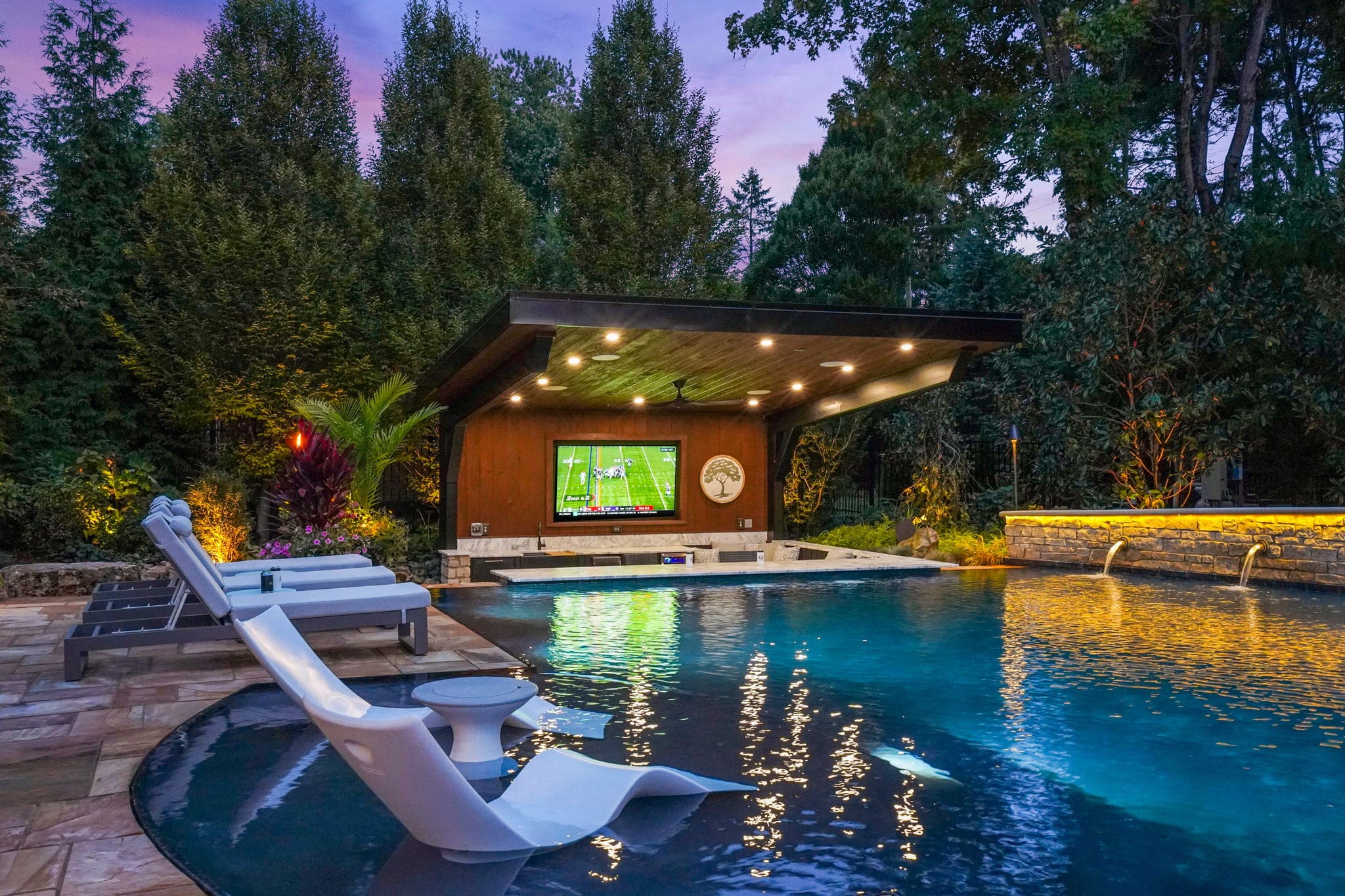
In 2026, continued inflation and a desire to stick to the budget will influence residential homeowners’ priorities for their landscapes.
“Homeowners are focusing on features that provide long-term value and low maintenance, like durable natural materials, efficient irrigation, and multi-functional outdoor spaces,” says Tyler Bigham, principal lead designer for Alterra Landscape Design, based in Richardson, Texas. “They are more focused than ever on ROI. While luxury elements are still desirable, they are being pushed to the back of the priority lists.”
Jake Leman, CEO of Singing Hills Landscape, Inc., based in Aurora, Colorado, adds that instead of trying to include everything at once, many are choosing to invest in high-quality foundational elements now and phase in finishes and smaller elements over time.
Defined Outdoor Rooms
One shift in customer priorities that landscape professionals are noticing is an increased demand for spaces that feel like home, rather than large, ostentatious showcase landscapes.
“A very strong trend that I expect to really explode in 2026 to these small, intimate spaces,” says Tara Piergies-Baker, a landscape designer with The Addison Group, based in Nashville, Tennessee. “Think of words like nook. People are really resonating with this, and it harkens back to some of these old-school landscape design methodologies of garden rooms. It’s less of these big, huge, open, clean, hard spaces, and much more of a personal, comfy, intimate aesthetic of a little nook with a comfortable chair.”
While being able to entertain friends and family is still the main goal for many installing outdoor living spaces, Piergies-Baker and Leman note that the desire for a space of refuge is becoming more important to homeowners.
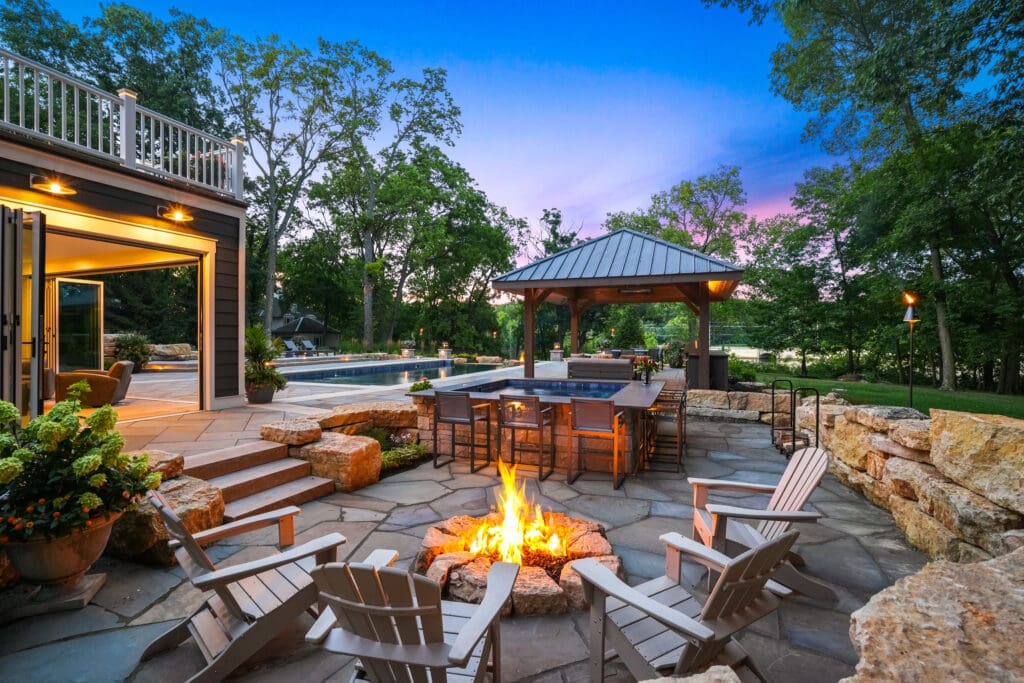
“Homeowners want a space that feels like a retreat and is somewhere to unwind, but also flexible enough for casual entertaining, small groups when needed,” Leman says. “Cozy seating areas, fire features, and quiet garden pockets areas are increasingly requested.”
Dan Waters, owner of Creative Environments, based in Tempe, Arizona, says he’s seeing fire pits become more popular as they are more communal than fireplaces.
“Really comfy furniture is being selected,” Waters says. “Furniture that once you sit down, besides maybe getting up to grab a drink, you want to relax and enjoy the fire and the company.”
Nick Berger, a designer with Hidden Creek Landscaping, Inc., based in Hilliard, Ohio, agrees fire features remain hot, especially larger ones that can fit larger groups of six to 10 people.
Part of the more intimate outdoor living spaces trend is the focus on wellness features such as cold plunge pools and meditation spaces. Piergies-Baker says she’s seen higher demand for smaller, but more high-end pools and reflection ponds.
“Shade structures, water features, and quiet seating areas will continue to be important as clients look for comfort and wellness in their outdoor spaces,” Bigham says.
Seamless Transitions
More and more clients are seeing the landscape as an extension of their homes and in response, they are seeking a natural flow from their interior living spaces into their yards.
“I’m seeing this continued blurring of the interior to the exterior, as far as architecture to landscape architecture,” Piergies-Baker says. “It used to be, you’d have the home, and then they might have a nice porch, and then it’s outside. Now it’s the home and the porch, but the porch has automatic screens and heaters, so it can be converted. Then you have another zone that’s more of a protected garden space, and there are these real connections visually from the inside of the home to the exterior of the home.”
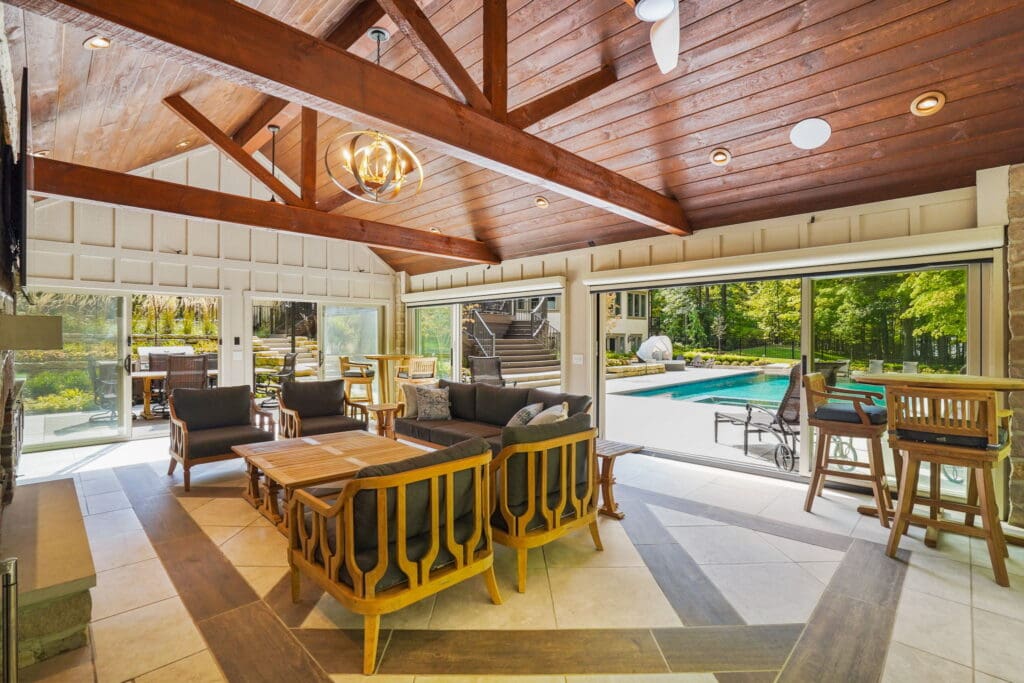
Tim McAuliffe, owner of The Outdoor Living Designer, based in Wilmington, North Carolina, says the seamless transition is one of the most sought-after features by clients. He suggests using pocket doors or barn doors to blur the lines between the home and the outdoor space.
Berger says another popular way this transition is achieved is by incorporating larger doorways, such as accordion doors or four to five-panel sliding doors from interior living spaces to the exterior to make them feel like one larger space.
McAuliffe says distinct outdoor spaces for dining, lounging, cooking and/or gaming also extend the indoor life to the outdoor experience. He notes that outdoor kitchens are particularly popular with the increased outdoor cooking applications from grills and smokers to wood-fired pizza ovens.
Waters agrees and says he’s seen more money spent on outdoor kitchens than on any other feature recently.
“If you’re in a fixed home, it’s 2,500 square feet,” Waters says. “The kitchen is pretty fixed on what the size is. When you start building kitchen areas outdoors, there’s a lot more that can be done. The list is ‘I want a pizza oven. I want a side burner. I want refrigerators. I want an ice maker. I want a barbecue. I want a teppanyaki grill. And then I’m looking for more drawers and storage.’ There’s a lot of that happening with design. Outdoor kitchens are becoming very important to a lot of people.”
For those with pools, Berger says the incorporation of a pool house is another feature that extends the time homeowners are able to enjoy their outdoor spaces.
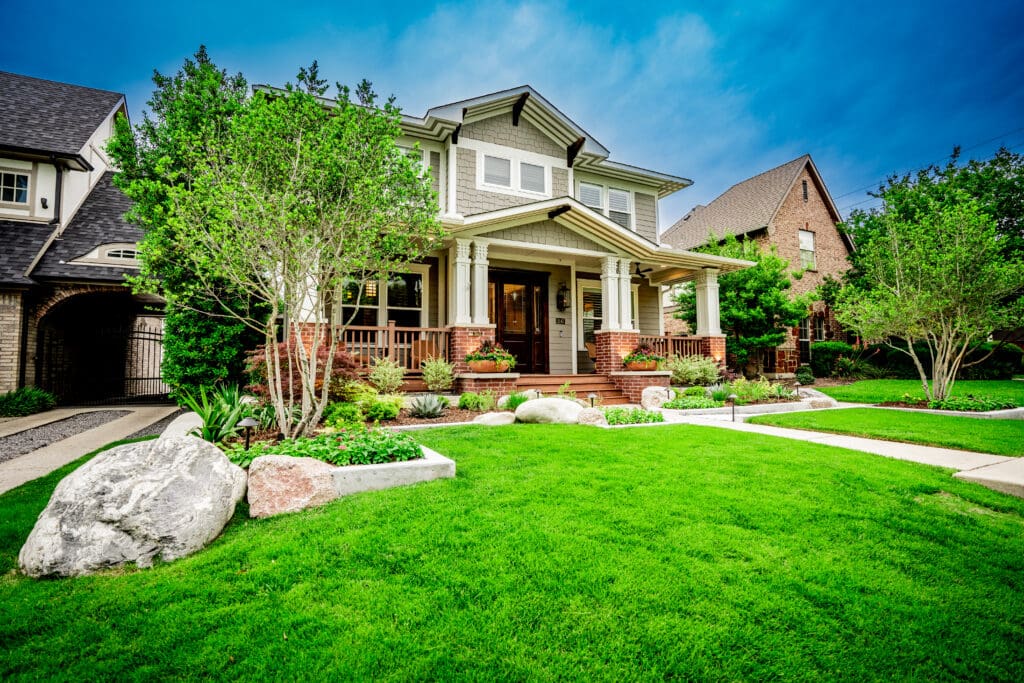
Waters says the front yard is also starting to be viewed once again as an extension of livable space.
“Now I’m seeing more and more the desire to have a front courtyard, the desire to have a space that we can come outside in the front and relax and say hello to the neighbor when they ride their bicycle by, or when they’re walking the dog, or the place to watch the kids play, if they’re playing ball in the street or skateboarding, riding bicycles, whatever it is, but I am definitely seeing that come back,” Waters says.
Authentic Natural Materials
Waters notes that material availability has expanded drastically compared to 15 years ago, and regional material styles are now blending across the country. As a result, another major trend for 2026 is a preference for natural materials. McAuliffe says this includes stone, gravel and reclaimed wood.
“Natural materials such as limestone, warm-toned pavers, and wood accents remain in demand,” Leman says.
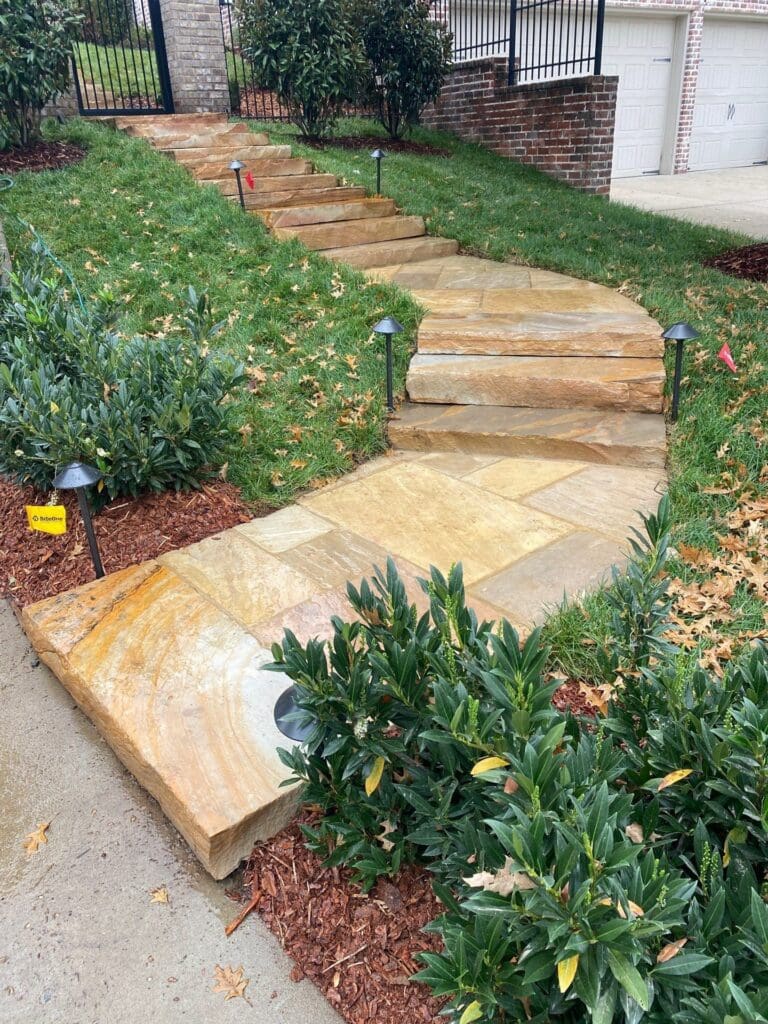
Piergies-Baker explains that clients are now looking for authenticity and character in their spaces.
“This is going to be really tough because I feel like we’ve lost a lot our true craftsmen over the years,” Piergies-Baker says. “There’s not a lot of high-end carpenters we’re talking about needing. We need the blacksmiths, we need the artists, the sculptors. We need all these people, because that’s what’s moving back into style.”
Leman adds clients are also seeking durability as well, swapping traditional wood elements for steel in pergolas, planters and fences. Waters and Berger say clients also favor porcelain pavers for their longevity.
This focus on more high-end and authentic materials is impacting the size of outdoor living elements such as kitchens. Piergies-Baker says rather than 40 linear feet of manufactured stone for their outdoor kitchen, clients are opting for 20 to 30 linear feet of natural stacked stone and high-end appliances.
A Space for Synthetic Turf?
Synthetic turf is one material in particular whose popularity is debated among landscape professionals.
Leman, Bigham and McAuliffe have all noticed more homeowners expressing interest in installing synthetic turf.
“Homeowners are drawn to its low maintenance, durability, and ability to keep their lawns looking green year-round, especially in areas with water restrictions or high heat,” Bigham says.
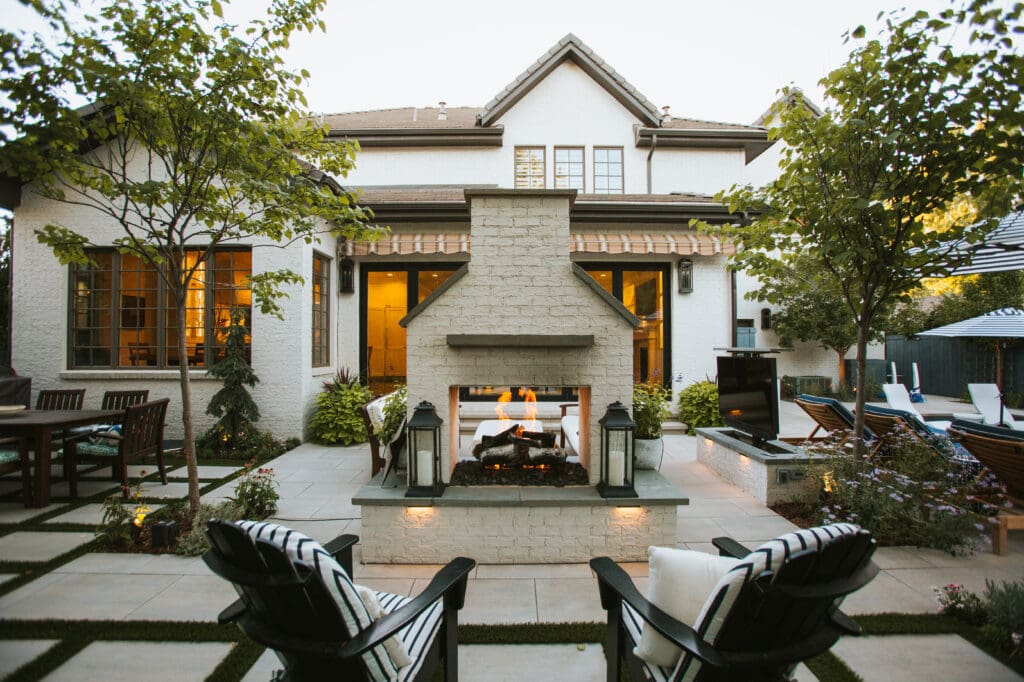
Leman says they make a point to educate interested clients on the targeted uses of artificial turf, including small or high-traffic areas, pet zones, or spots where natural grass struggles.
Berger says they mostly utilize synthetic turf for larger 6” joints between patio squares or diamonds to create a pattern.
Waters says he was anti-artificial turf for a long time, but the latest offerings now come with lifetime warranties and can be a good fit when they serve a specific purpose.
On the other side, Piergies-Baker argues that the demand for artificial turf is waning with high-end clients as more have encountered negative experiences with it, such as being hot on their feet, the seams coming up between pavers and having difficulties moving outdoor furniture across it.
“I think for utilitarian spaces it’s still going to be there and it should never leave,” she says. “I’m starting to see people actually starting to go back toward the natural turf.”
Automated Experiences
What was once clunky, niche technology is now evolving into more user-friendly systems that homeowners are coming to expect in their landscapes. This includes having apps that control everything from irrigation systems and low-voltage lighting to fire and water features.
“People are dialed into the ease of use and experience for things nowadays, so adding this as an option gives you more opportunity to create options for your clients,” McAuliffe says.
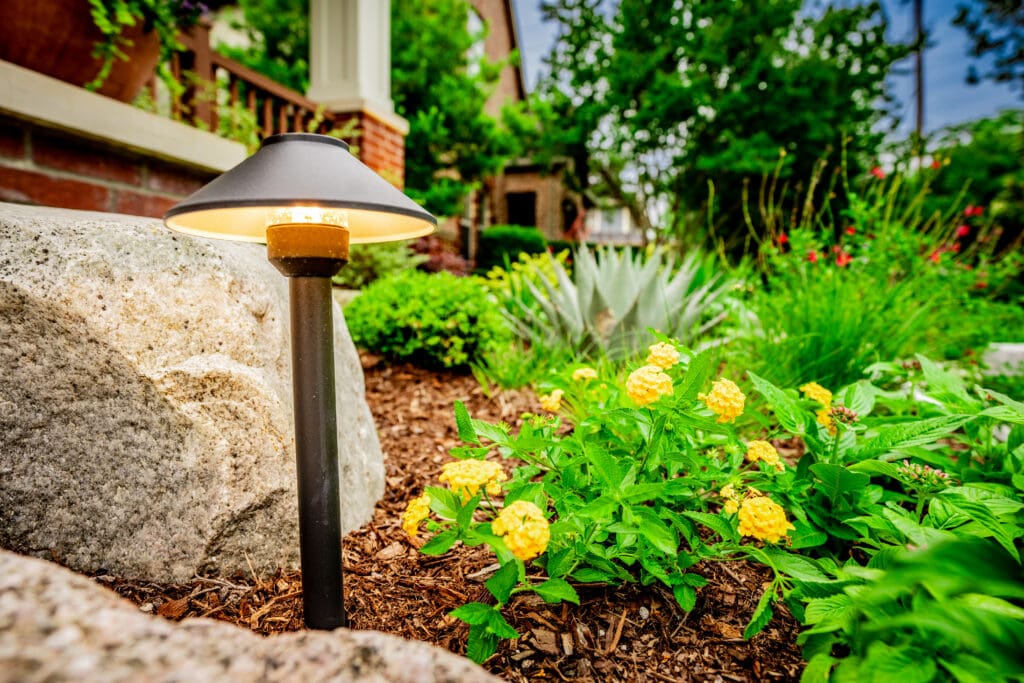
Waters notes that what once was a $20,000 to $50,000 system to install is now far more affordable.
“You can create light shows in your pool with the lights where it looks like it’s lightning or it’s dance party time,” Waters says. “Or you create your own, and as you create your own, you can save them as some of your favorites. The lighting is becoming smaller and more powerful. Some lighting that has just come out this year is 60% brighter with a range of colors. Instead of 10 colors, probably 50,000 colors.”
Leman says as robotic mowers improve, they’re starting to see designs with smaller lawn spaces with smoother transitions, fewer obstructions, and clearly defined boundaries to support automation.
Berger says while autonomous mowers haven’t taken off in their area yet, their clients are interested in other forms of automation.
“Automation is an element that still has a strong presence when we build swimming pools or include lighting and audio within our projects,” Berger says. “Clients like to be able to operate as much as possible through their phones for ease.”
Key Takeaways
- ROI is driving design choices. Homeowners want durable, low-maintenance features and are phasing projects.
- Outdoor living spaces are getting cozier. Expect more nooks, garden rooms, and refuge-focused spaces that still support entertaining.
- Clients want authentic natural materials and smart control of irrigation, lighting, and water/fire features.
