


Photo: Daniel Driensky
Pools are a nuanced feature of landscape projects that call for a particular set of skills. If you want to incorporate them into your designs, you’ll have to decide whether you want to subcontract the work or do it in-house.
Both routes come with their own pluses and minuses, and which is a better fit depends on your organization. In some cases, it may make sense to start out subcontracting a pool company and then eventually transition the service to an internal division or a sister company.
Benefits of Subcontracting
Randy Lee, owner of Landscapes by Randy Lee, Inc., based in St. Petersburg, Florida, says he started subcontracting pool work 10 years ago due to customer demand. He says subcontracting requires less equipment and labor.
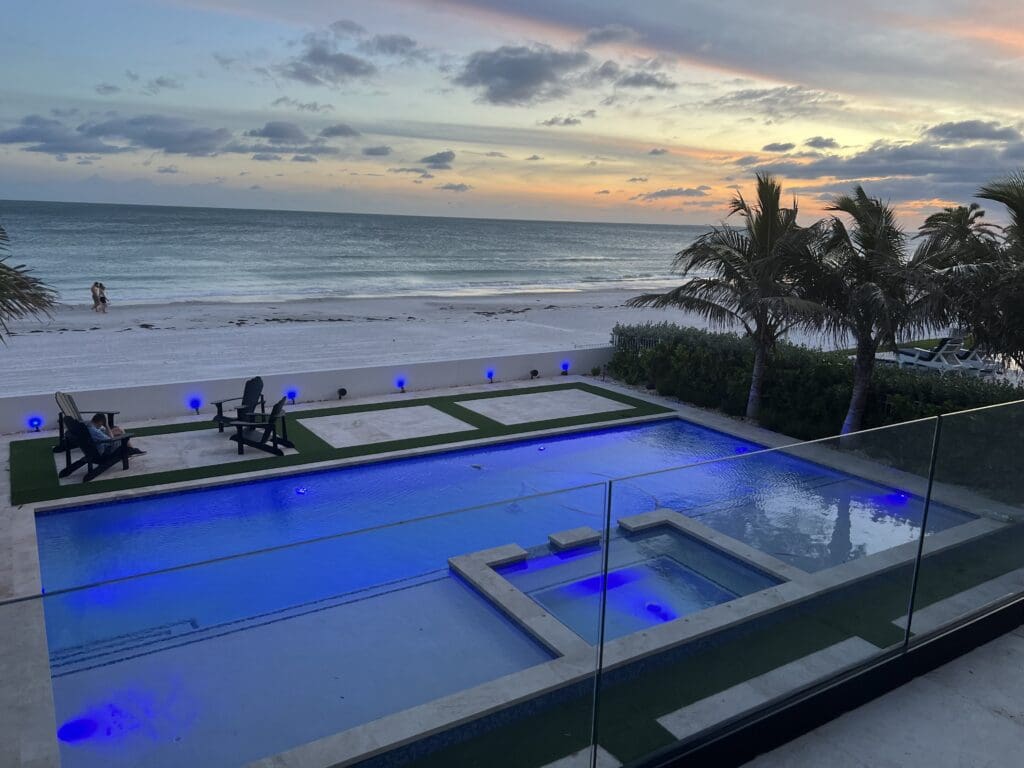
“It’s great if you don’t have the resources to do in house, the staff, or knowledge,” Lee says. “It can save time, money and equipment costs.”
Landscape by Randy Lee maintains design control as the subcontractor builds the pool to their specifications. Lee says they present the pool contractor as a separate entity to their clients but related to the design/build project.
Lee says the signs of a quality pool subcontractor include accuracy, design skills, quality communication and an ability to stick to the project timeline.
Drawbacks of Subcontracting Pool Work
The main drawbacks to subcontracting your pool work are lower profit margins and a lack of control. Lee estimates that pool contractors receive 50-60% of the project’s revenue for an entirely new pool, while they earn 20-25% for a pool remodel.
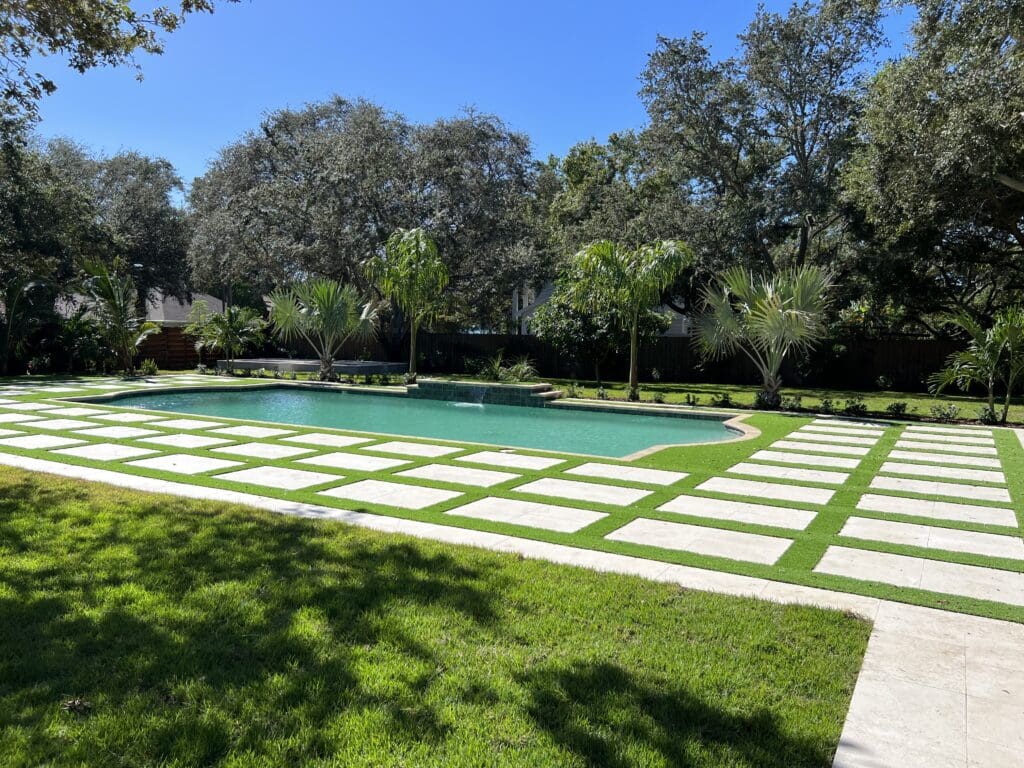
Because there is a high demand for pool contractors in Florida, scheduling can be a major challenge. Lee says pool subcontractors are notorious for falling behind schedule.
“Deadlines are very important!” Lee says. “We handle the hardscape, which solves some of the problem. Usually, we must wait, which can be costly – you must push the pool subcontractors. The client is always told the truth and quickly.”
Lee says some companies implement deadlines and charge a daily fee if the due date is not met.
Benefits of Building In-House
This lack of control over project timelines often prompts landscape companies to take over their pool work.
Ian McCarthy, owner of Blue Claw Associates, Inc., based in Osterville, Massachusetts, says it was after they had some tough experiences with pool subcontractors during COVID that prompted him to launch his sister company, Blue Water Pools & Spas.
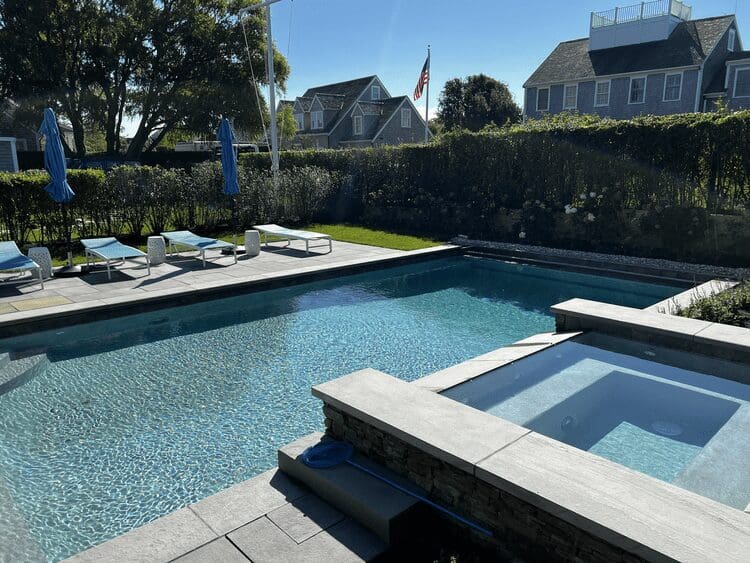
“(Our mason) kept doing the tasks that the pool company was not showing up to do,” McCarthy says. “So, we ended up finishing the pool. At that point, I just had this revelation. We’re going to start a pool company, and then we control the whole process.”
He says he primarily started the second company to convey their level of expertise. McCarthy says now they can present clients with a turnkey solution, and they have full control over their schedule.
He adds it also opens up a whole new revenue stream with pool maintenance.
Glenn Bonick, owner of Bonick Landscaping based in Irving, Texas, says he brought their pool work in-house over 15 years ago after dealing with challenges coordinating with pool subcontractors on specific details and modifications.
“We are able to work through problems, and we don’t have other people who are obstacles to us working through particular things that we want,” Bonick says. “We can move faster. It’s our schedule, and there’s not a middleman in our way. There is a profit increase because we’re able to charge more, and we’re making more on that.”

Photo: Clay Hayner
Bonick says their pool work makes up 30% of their revenue within the construction division.
McCarthy says since starting Blue Water Pools, they are getting more calls for pool work, and this opens the door for them to eventually earn the landscape portion of the job as well.
“It’s a great marketing strategy for landing high-end landscape construction projects, because some people decide one day they want a pool, but they’re not necessarily thinking I need a landscape and landscape design,” McCarthy says. “They’re just thinking of a pool as an end result, but when they’re presented with options by a designer that can lead to an outdoor kitchen, and how do you want the patio and all that kind of stuff. I think it’s a great way to grow your landscape construction, design/build or bid build, to be able to do both, and then to be able to convince people that their life will be easier by you handling everything.”
Drawbacks of Bringing Pools In-House
One of the biggest challenges of pool work is ensuring your team has the technical knowledge to install them properly. Bonick says ensuring the hydraulics are properly designed is the most important aspect.
McCarthy says they originally planned to frame their pools and then still subcontract the gunite work. However, he was unable to get even a bid from gunite contractors during peak COVID times, so eventually they bought a gunite machine and taught the team how to use it.
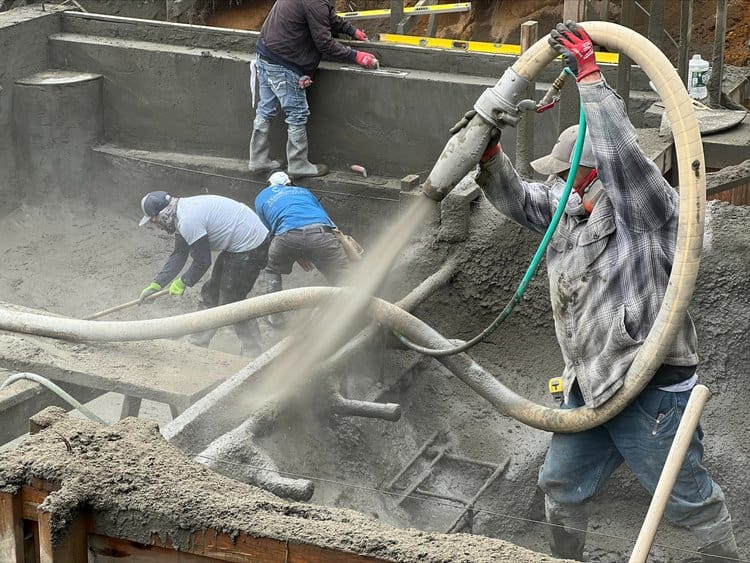
Bonick says they still rely on subcontractors for their steel and gunite work. He says having an aptitude for pool work is critical because there is a lot of liability around the service.
“It’s a massive piece of construction, and if it’s not built well, the worst thing that can happen is you’ve got to remove it and do it again,” Bonick says. “If you’re building a $200,000 pool, that is a lot of lost revenue and a lot of lost time.”
McCarthy says having separate companies has helped them manage liability because Blue Water Pools has its own insurance.
Advice for Others
McCarthy stresses you need to make sure you can deliver before starting a pool division or company.

Photo: Charles Davis Smith, FAIA
“If you plant things in the wrong place, you can dig them up and move them,” McCarthy says. “But if you make mistakes in a gunite pool, it’s tens of thousands of dollars to change or fix something at that point.”
You should not try to launch your own pool division if you do not have someone on staff with years of pool installation expertise.
“Building swimming pools is a technical end of the business, just like irrigation,” Bonick says. “You have to know how to do it, or it could be a big failure, but it also can be a lot of thrill to design something, execute it and it can bring a lot of joy.”
Key Takeaways
- Subcontracting pool work saves time and overhead, but cuts into profits and can result in scheduling issues.
- Bringing pool work in-house offers more control, higher margins, and business growth, but requires expertise.
- Pool work can be a strategic entry point for larger, high-end landscape projects.
