

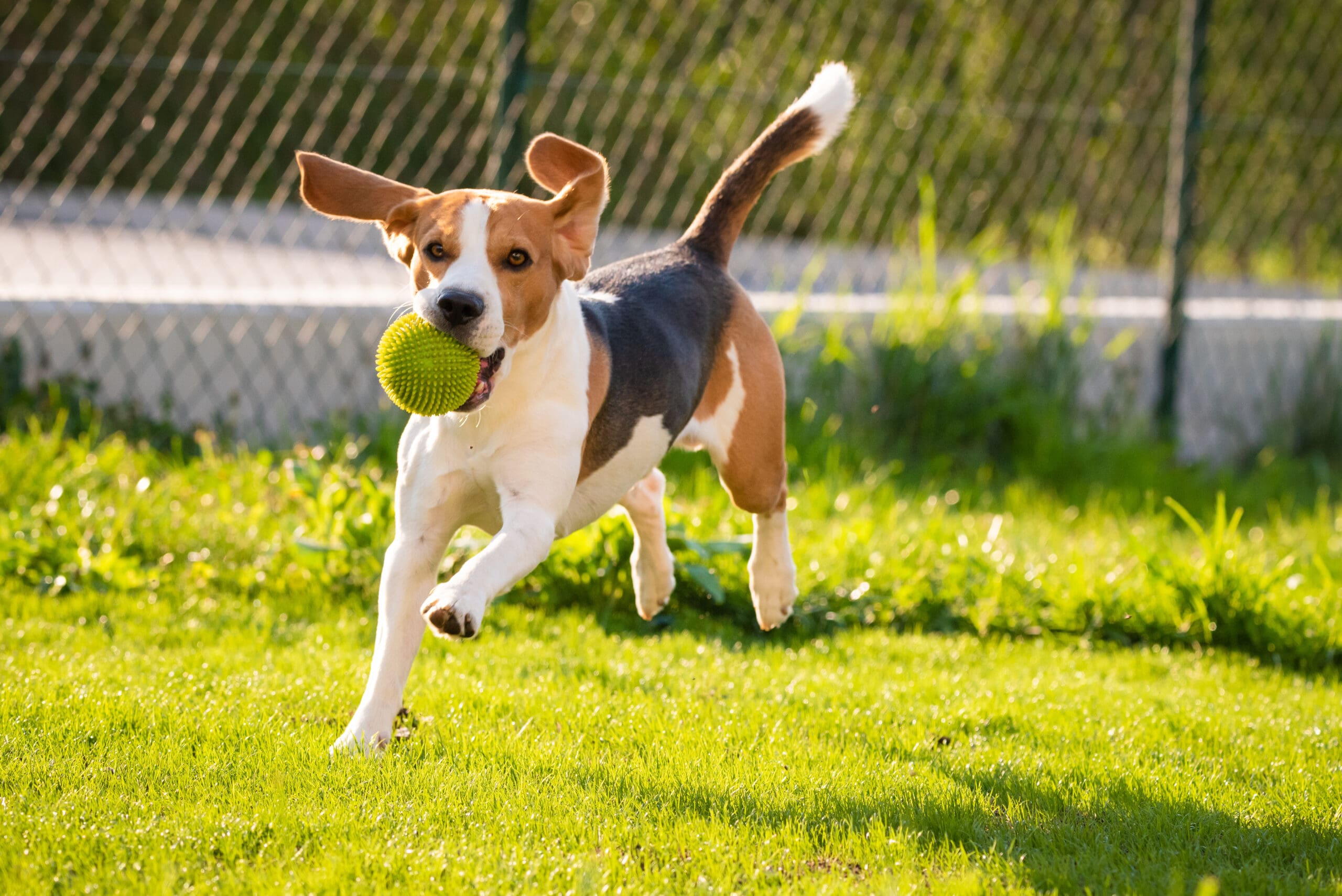
People love their canine companions and as a result, there is an increased demand for pet-friendly amenities in multifamily housing, HOAs, and municipal parks.
James Kole, DC branch manager with Level Green Landscaping, based in Upper Marlboro, Maryland, notes that during the pandemic, more people adopted pets, requiring more amenity spaces in high-density urban areas.
“Many families who are living in an apartment need a very close destination place for their families and dogs are ever-increasing part of their needs,” says Kevin Winkelman, national director of strategic initiatives with Barks and Rec, a dog park equipment manufacturer.
Geoff Salgado, enhancement area manager for Ruppert Landscape’s North Chesterfield, Virginia, branch, adds that dog parks are being used by apartments and condos to attract future residents.
“Dog parks offer a great space for dogs to safely burn pent-up energy,” Kole says. “Parks are designed to allow for the dogs to safely go off leash to play with other dogs or have a good game of fetch with their owner.”
Aside from providing a specialized space for pets to exercise, Salgado notes that they can also increase plant health as the parks encourage pet owners to use their facilities instead of the bush outside their door.
If you are tasked with creating a dog park for a client, check out some of the key elements to include as well as some challenges to be aware of.
Designing a Functional Dog Park
One of the first details to address is the size of the dog park space you’re designing. The minimum space required is subjective, but Kole says it should be long enough to throw a ball. Winkelman says most dog parks are no smaller than a 25’ x 25’ fenced-in area, and some are multiple acres for play areas.
Some of the must-haves for every dog park include a pet waste station, a water source like a pet fountain, seating and a double gate entrance.
“Fencing that has a double gate is helpful to keep dogs on a leash through the first gate and after entering the second gate, it allows the dog to go, explore and play,” Winkelman says.
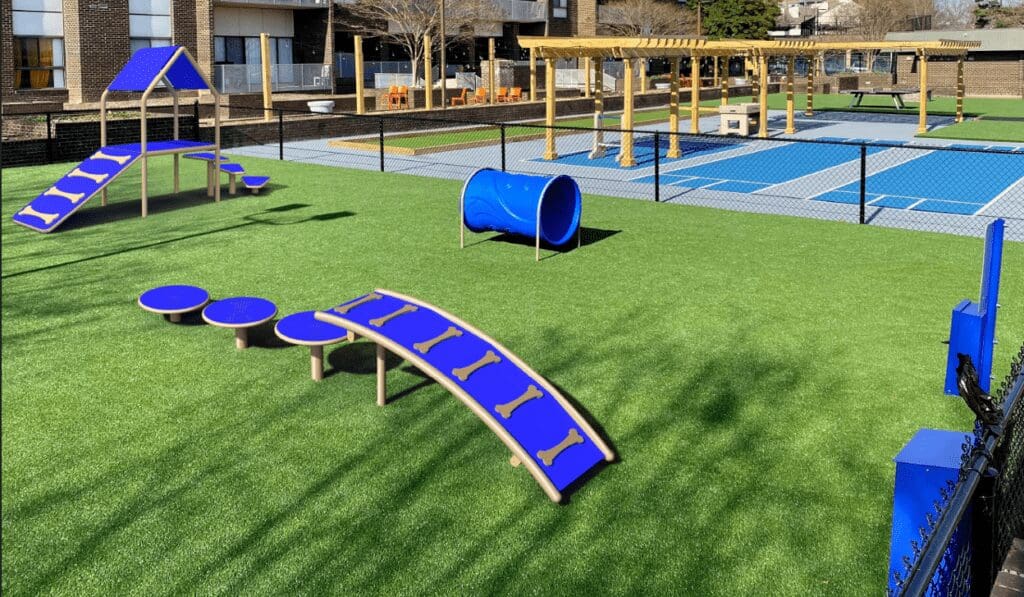
Kole says a commonly overlooked aspect of dog park design is providing adequate seating for owners or only having stationary seating options.
“Having sturdy, movable seating allows for owners to enjoy time with other pet owners, but also move the seating with the shifting sun/shadows,” Kole says.
If the space is particularly exposed, consider adding shade structures as well.
Salgado says landscapers should also consider drainage and how to clean the area. Consult with the customer what kind of surface they’d like in the space. Natural or artificial turf are typically used. He says deciding between artificial turf and other materials comes down to price but those who plan for long-term solutions tend to use artificial turf.
Kole says both types of turf have their own pros and cons. He says natural turf is more suitable for a suburban park.
“Artificial turf generally keeps a mud-free play surface and prevents most digging, but can become a breeding ground for odors and bacteria,” Kole says. “Installing artificial turf with irrigation to assist with flushing the pet waste from the park daily is recommended. Natural turf is cooler for pets, but requires more maintenance to keep alive. Digging and running can significantly disrupt natural turf exponentially the smaller the park is.”
Selecting Play Equipment
Aside from just providing open space for a game of fetch, discuss with the client if they’d like to include any play structures for the pets. Winkelman says dogs like to climb, jump and crawl so there are many different play structures available that allow them to have fun.
“Features to consider in choosing any dog apparatus would be ease of use, sanitary, height restrictions, how much space is needed on and around the equipment, is it for jumping, crawling, chasing, etc.,” Salgado says.
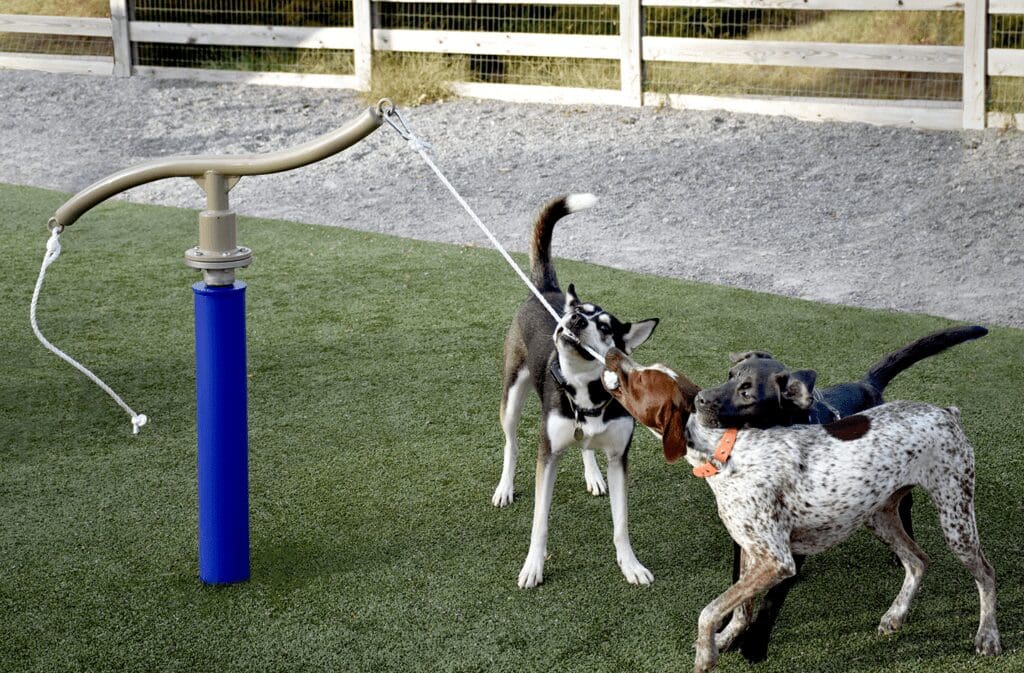
Kole suggests reviewing the durability of the play structures as well. Features that wear easily or may be chewed on quickly should be avoided.
Winkelman advises installing any play structure securely for stability. He adds it can also prevent theft.
“You do it for a couple reasons,” Winkelman says. “You don’t know who’s going to be on it. It’s for dogs, but you’d be surprised that people that will get on them and that’s why it’s got to be installed in concrete.”
Challenges to Be Mindful Of
Because there are so many options when it comes to designing dog parks, Salgado says some clients can become overwhelmed by the complexity combined with the cost.
It’s also important for the property owner to be aware of the maintenance that comes along with a dog park.
“After the initial installation, a dog park owner needs to be mindful of routine maintenance,” Kole says. “Many dogs playing in one condensed area can lead to faster wear and tear than normal landscaping.”
You also need to think through how to accommodate different dog sizes. If you have enough space, creating separate spaces for small and large breeds and selecting products for different-sized dogs is ideal.
While all owners are responsible for their dogs, it’s important to create a safe space for them within the park. Salgado advises treating the dogs like children by ensuring there are no sharp edges or things they can get stuck on.
Include signage to remind everyone to keep the gates shut, pick up after their pet, and curb/leash their pet during signs of aggressive behavior.
“Park owners should also install locks to limit the guests of the park to their tenants,” Kole says. “This also helps identify potential park users should something happen in the park.”
Winkelman says treats or toys should not be used in dog parks due to the likelihood of increased aggressive behavior. Kole also recommends avoiding landscaping within the park beyond the natural turf.
“Trees planted inside the park quickly become a hot spot for dogs to ‘mark,’” Kole says. “Excessive pet urine will quickly kill a tree. A dog park should not be a barren landscape, but the landscaping is best kept to the exterior fence perimeter around the park.”
Keys to Success
Salgado recommends seeking out guidance from professionals with dog park manufacturing and artificial turf options.
“Real time needs to be spent researching different options, common practices, know your customer and their needs, how many pets may use it at one time, etc,” Salgado says. “If you can build a patio and lay carpet, then you have a good chance at building a great dog park with long-lasting artificial turf.”
Winkelman suggests getting the community’s input on the specific products they would like to see in their dog park, beyond the basics like pet waste stations and open spaces.
“Set yourself apart from so many other companies selling the same products, give your customers the advantage of a creative-looking dog park based on their budget,” Winkelman says.
Kole says you should be open and honest with your clients about the long-term maintenance costs associated with the dog park design of their choice.
“Dog parks are not a static environment,” Kole says. “They are constantly changing.”
Key Takeaways
- Key elements include a double-gate entrance, pet waste stations, water sources, and adequate seating. Drainage, turf selection, and shade should also be considered.
- Artificial turf is often preferred for long-term durability, while play structures should be installed securely and resistant to chewing.
- Conduct thorough research to know what design options are available and don’t forget the maintenance aspect when creating the dog park.
