
Sponsored Content
By mid-summer, cool-season lawns can feel like they are running a gauntlet. Heat turns up the pressure, insects hit their stride, humidity keeps leaves wet for maximum disease pressure, and weeds move into thin spots. The good news? With a well-built management plan, summer stresses do not have to win. The best programs are not about reacting to every problem after it shows up but about staying steps ahead and giving turf what it needs to hang tough until fall recovery begins.
Maintain Rooting by Stopping Grubs Quickly
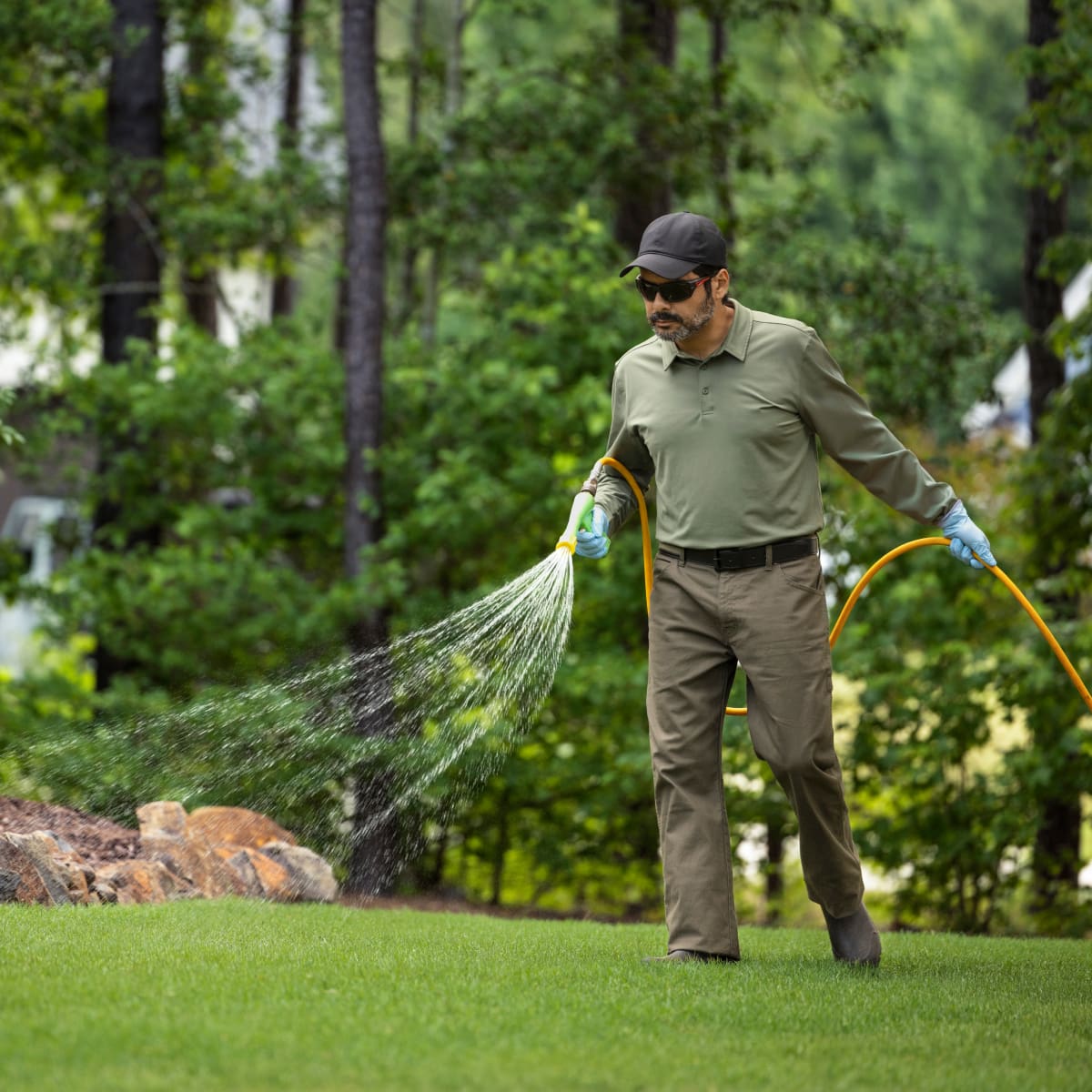
White grubs are the underground troublemakers of summer turf. By the time damage becomes visible, root injury may be extensive. Dylox® insecticide remains the best curative option for quick knockdown of late instar white grubs. For best results, treat when soil moisture is adequate and while grubs are still near the surface. Water the application in with at least 1/8” of irrigation as soon as possible.
Just remember, once turf roots have been damaged, killing the grubs is only step one. Irrigating to avoid stress, fertilizing to encourage regrowth, mowing higher (≥3”), and overseeding are what help turn a damaged lawn into a comeback story. To prevent root injury next year, apply Durentis® insecticide from spring into early summer for season-long protection from white grubs and caterpillars with fewer callbacks.
Shut Down Surface Insects
Chinch bugs do not wait politely for ideal treatment windows. They can build quickly during summer, so frequent scouting is the difference between catching a small issue and chasing a customer complaint. Chinch bug injury can look like drought stress, so confirm activity with a soap flush before treating. Talstar® and Triple Crown® T&O insecticides are useful options for quick knockdown of chinch bugs and other surface-feeding insects, with Triple Crown T&O also offering residual activity.
Caterpillar infestations in cool-season lawns can ramp up quickly in late summer and early fall. Cutworms, fall armyworms, and sod webworms can move in and begin feeding on leaf tissue causing wide-scale damage in a short period of time. Symptoms first appear as thinning, ragged turf, or drought-like patches that expand quickly as larvae continue feeding. Durentis® can be used preventatively when adult moths are observed, or young caterpillars are present, and will provide residual control of both white grubs and caterpillars throughout the remaining summer and into fall. Talstar and Triple Crown T&O are good curative options for quick knockdown of caterpillars when they are actively feeding.
Clean Up Weeds
Summer weed control gets trickier as temperatures rise and turfgrass growth slows. Thin turf, heat stress, and limited irrigation create open invitations for annual grassy and broadleaf weeds to encroach into turf areas.

Postemergence herbicides work best when weeds are small, actively growing, and not under severe drought or heat stress. For summer grassy weeds, such as crabgrass and goosegrass, in cool-season turf Acclaim® Extra herbicide is a strong fit where selective grass control is needed. Solitare® herbicide provides another option when crabgrass pressure is paired with sedges or broadleaf weeds, making it useful in mixed weed populations when turf tolerance and label directions align with the site.
For summer broadleaf weeds, Terradex™ Power Premix is positioned for difficult-to-control spreading broadleaves such as ground ivy, wild violet, clover, docks, and other persistent species. Quicksilver® herbicide can be used as a tank-mix partner with other broadleaf herbicides to provide the rapid visible herbicide activity that customers desire.
The key is to match the product to the weed, the turf species, and the weather. In mid-summer, good judgment matters as much as good chemistry: avoid piling herbicide stress onto turf that is already struggling from heat, drought or poor rooting. Don’t magnify a weed problem, do no harm!
Kill the Wet-Spot Specialists, Sedges and Kyllingas
Sedges and kyllingas love over-irrigated and compacted areas where turf is least able to compete with weeds.
Dismiss® NXT herbicide provides fast visible activity on yellow nutsedge and kyllingas, but timing is critical. Ideally, applications should begin soon after emergence in the spring when enough leaf tissue is present for uptake but before plants have expanded beyond the 2-3 leaf stage. Multiple applications across several seasons are often required for complete control, especially with well-established populations of kyllingas and sedges.
Herbicides can knock these weeds back, but optimizing turf growing conditions will help keep them from staging a return tour. Improve drainage, correct irrigation patterns, relieve compaction where practical, and encourage dense turf cover through higher mowing and adequate fertilization. Without those changes, sedges and kyllingas often return even after good initial herbicide activity.
Fight the Fungus
When warm nights, high humidity, prolonged leaf wetness, and lush growth show up together, disease pressure can climb fast. Brown patch is favored by warm, humid weather and nighttime temperatures above approximately 65°F. Gray leaf spot can also be problematic during warm, wet conditions, especially on tall fescue and perennial ryegrass in the transition zone when nighttime temperatures remain above approximately 75°F.
Armada® and Fame® fungicides are important components of a preventative or early curative disease management program. Applications should begin before disease becomes severe, especially on sites with a history of brown patch or gray leaf spot. Fungicides are at their best when the whole program is working with them: avoid excessive nitrogen and overirrigation, reduce leaf wetness duration, and improve air movement and sunlight where possible.
Bring it All Together
The strongest mid-to late-summer programs are proactive, flexible, and driven by site history and weather forecasts. Most importantly, evaluate the condition of the turf before every cultural practice or pesticide application; the goal is not just to survive summer but to keep turf healthy enough to bounce back strong when fall growing conditions return. And lastly, when in doubt, reach out. Envu® is always here to support you and your business with best practices to maintain healthy lawns and happy customers.
ALWAYS READ AND FOLLOW LABEL INSTRUCTIONS. Environmental Science U.S. LLC, 5000 CentreGreen Way, Suite 400, Cary, NC 27513. For additional product information, call toll-free 1-800-331-2867. www.envu.com. Not all products are registered in all states. Envu® and the Envu logo are trademarks owned by Environmental Science U.S. LLC or one of its affiliates. Other trademarks are the property of their respective owners. ©2026 Environmental Science U.S. LLC.