

Photo: Pete LaSage
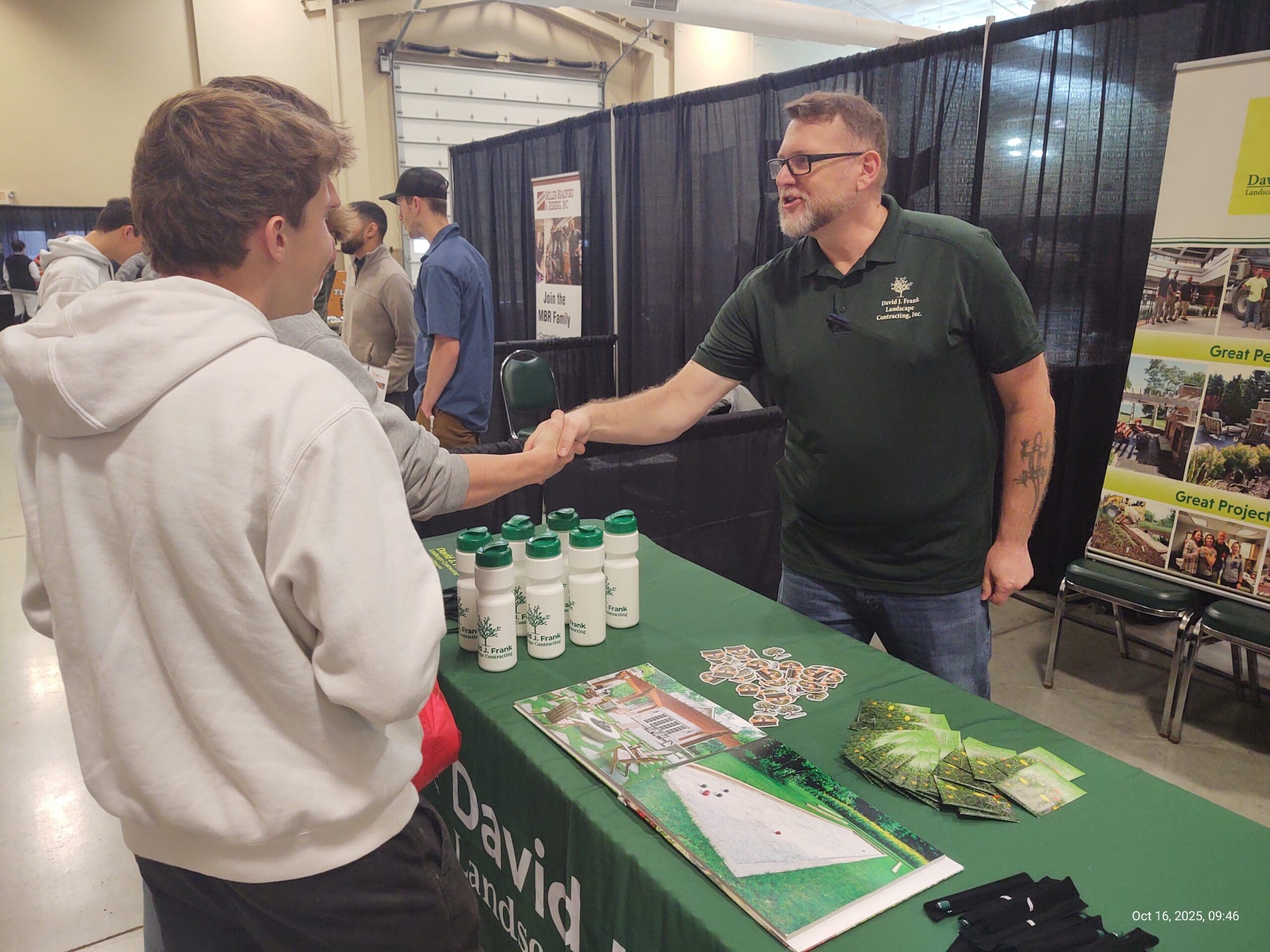
Chances are you’ve had a former employee come back to work for your company after a handful of years, but for Pete LaSage, he ended up returning to David J. Frank Landscape Contracting, Inc., almost 30 years later.
During this interlude, LaSage gathered relevant and necessary skills for his current role as a human resources specialist with the Germantown, Wisconsin-based company.
First Tour of Duty
When an Army recruiter presented LaSage with the opportunity to enlist at 17, he liked the idea of it but didn’t feel ready at the time.
Yet after struggling to pay the bills while attending a tech college, he dropped out and knew he needed a fresh start.
“I eventually became ‘ready’ and walked into an Army recruiting office,” LaSage says. “I enlisted and shipped out to training within a month. It was one of the best decisions I have ever made to this day.”
LaSage trained as an 11B infantryman and served a tour in Hawaii before moving back home, where he transitioned to serve part-time in the Wisconsin Army National Guard for five years. However, he needed a full-time job and knew he preferred working outside.
“I was already in great shape for labor work and wanted to give David J. Frank a try because it was outdoor work and very close to where I lived,” LaSage says. “I returned home from active duty in early June 1996, and in that same summer I walked in and asked to be considered for a role with the company.”
LaSage admits that at the time, he was not aware of the long-term career opportunities with David J. Frank.
“I look back and appreciate the experience working on a couple of different landscape/hardscape crews,” LaSage says. “The outdoor work life and team structure reminded me a lot of being part of an Army unit. Everybody wearing company uniforms reinforced that feeling of Army teamwork for me.”
After working for David J. Frank’s construction side of the business for a few years, he took a hard look at the Active Guard Reserve program, which allowed him to serve as an active-duty soldier in his home state.
With a young family and a need for work stability, LaSage went to his local National Guard unit and asked them for a temporary transfer to the Army Reserves to attempt to be an Army Active Duty/Reserve Recruiter. He was informed there was an open spot for their Milwaukee recruiting team, and he should apply for that role first.
“I did apply, and three days after 9/11/2001 on a Friday afternoon, I went to Madison, Wisconsin, for my scheduled military board to interview for the role as a ‘79T Recruiting and Retention Non-Commissioned Officer (RRNCO),’” LaSage says. “They shook my hand and handed me my ‘new hire packet’ before I left Madison that day. It was quite an emotional week.”
As a full-time recruiter for the Wisconsin National Guard, LaSage says he found he had the skills and drive to become pretty successful doing the job even though he previously thought he never wanted to be a recruiter.
“I learned that building working relationships inside and outside the military, earning trust, practicing teamwork, living with integrity and by example are keys to future success and opportunity,” LaSage says.
Rejoining the Ranks
Four years ago, when LaSage’s son, Austin, was looking for a job after the restaurant he was working at closed, LaSage suggested he apply to David J. Frank. When Austin was hired at the company’s nursery, LaSage’s advice was for him to go to work every day.
“I stated that if he went to work every day that would be half the battle,” LaSage says. “I also highlighted that there aren’t too many things better than working outside.”
When LaSage stumbled across David J. Frank’s ad looking for a recruiter, he says it took him less than a minute to decide to submit his application.
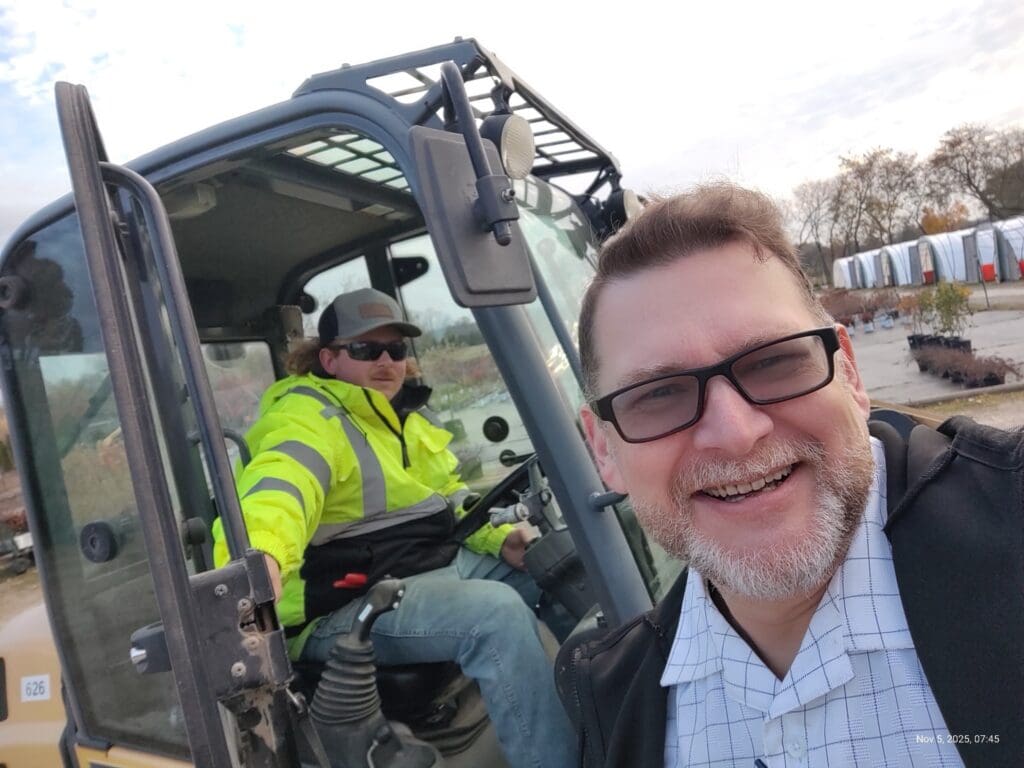
Photo: Pete LaSage
“I considered it a perfect opportunity for me to have that ten-year career doing work I was very familiar with and for a company I once worked for,” he says.
LaSage says his son’s experience with the company was a major factor in his wanting to apply for the job.
“I was watching David J. Frank for a good three and a half years with him working here, and listening to those stories,” LaSage says. “That’s why, when I saw the job ad, I knew right away that it’s my time to at least try to come back.”
LaSage recommends that individuals considering returning to a past employer re-engage with their thoughts and feelings that prompted them to work for that company the first time. If you don’t know someone within the company currently, conduct research to see what has changed since leaving the organization.
“Review the experience and skill sets to see if another career field industry opportunity within that company is possible,” LaSage says. “I picked up many new skill sets and experiences in between those thirty years.”
On his first day back with the company in August 2025, LaSage was given a tour, and he was struck by how much bigger the company headquarters had become.
“Unfortunately, I had learned that Mike Frank, the former VP of operations/LCD production manager and brother of David J. Frank, passed away just the fall before I started,” LaSage says. “I remember seeing and talking to him most every morning like it was yesterday.”
What hadn’t changed over the years was the culture of the workforce, which still reminds LaSage of being part of an Army unit.
“After 67 plus years, the potential for growth here at David J Frank is still apparent,” LaSage says. “It is important to me in my role that we are not stuck in stagnation. I embrace the chances to meet and engage with new people while maintaining certain recruiting skills. I desire to help them now find long-term work and give them a chance to enhance their lives – like Austin and I.”
As the company’s human resources specialist, LaSage’s military recruiting background has allowed him to recognize the needs of the company to fill landscaping roles and the ability to reach out to quality applicants of all backgrounds.
He explains that the Army National Guard Recruiting Commands have their own recruit sustainment program, and this secondary responsibility of preparing recruits before they leave for basic training has helped him better understand and reinforce the big picture of the full-cycle recruiting and onboarding process.
If you don’t want to miss out on returning team members, strong employee record-keeping can help provide a fairly precise picture of how employment ended previously. LaSage advises considering each employee termination situation separately as you look at them again as an applicant today.
“Realize that there may have been a lot of growth and development that has taken place or a change of circumstances that allow for a better employee now,” he says. “Reach out to them and explore these things with the applicant before simply rejecting them from the glance of an old file. They may just turn out to be a much better employee the second time around, or if they are not too good for landscape production work anymore, they might now be good in an administrative setting.”