

When you work with residential clients, much of their decision-making is based on emotions. Obviously, logical aspects still play a factor in their decision, but connecting with homeowners through design narratives can be crucial for getting a sale across the finish line.
Forging An Early Bond
Finding common ground early on can help you quickly build trust and rapport with your client. Sophie Malis, an enhancement manager with Southern Botanical, Inc., based in Dallas, Texas, says one of the easiest ways for her to connect is with her Texas A&M class ring as at least half of her clients are Aggies as well.
“If I’m not bonding over that with them, I’ll try to find something else in their home that I can relate to them on,” Malis says. “Sometimes, I’ll try to bond with their dogs too. I’ll write down their dog’s name sometimes so I can remember it visit after visit. If the clients can tell that I care about them on a more personal level, then they’ll care about me on a more personal level.”
Nick Ackerman, senior project designer with Glengate Company, based in Wilton, Connecticut, notes that getting to know clients beyond the surface level can foster trust and openness. He says authentic relationships drive successful projects, which is why he encourages clients to share a bit about themselves.
“This emotional connection allows me to tailor designs that feel personal and reflective of their lives,” Ackerman says. “When clients see themselves and their stories embedded in the design, it transforms the project into something more meaningful. It’s not just about building a space; it’s about creating an experience that resonates deeply with who they are and the memories they hope to make.”
Susann Heller, a landscape architect with Piscataqua Landscaping & Tree Service, based in Eliot, Maine, adds that listening and being empathetic helps show the client you care.
“Make the experience about them and not yourself,” Heller says. “Stay positive and share some laughter. Establishing the fact that we are both ‘human’ goes a long way.”
Heller says your passion for your work can also be infectious, causing the client to become excited about the project as well.
Creating Effective Design Narratives
In order to create a design that is personal to the client, you have to delve deep into what’s important to them. Ask questions to determine why a homeowner sought you out and what challenge they are facing.
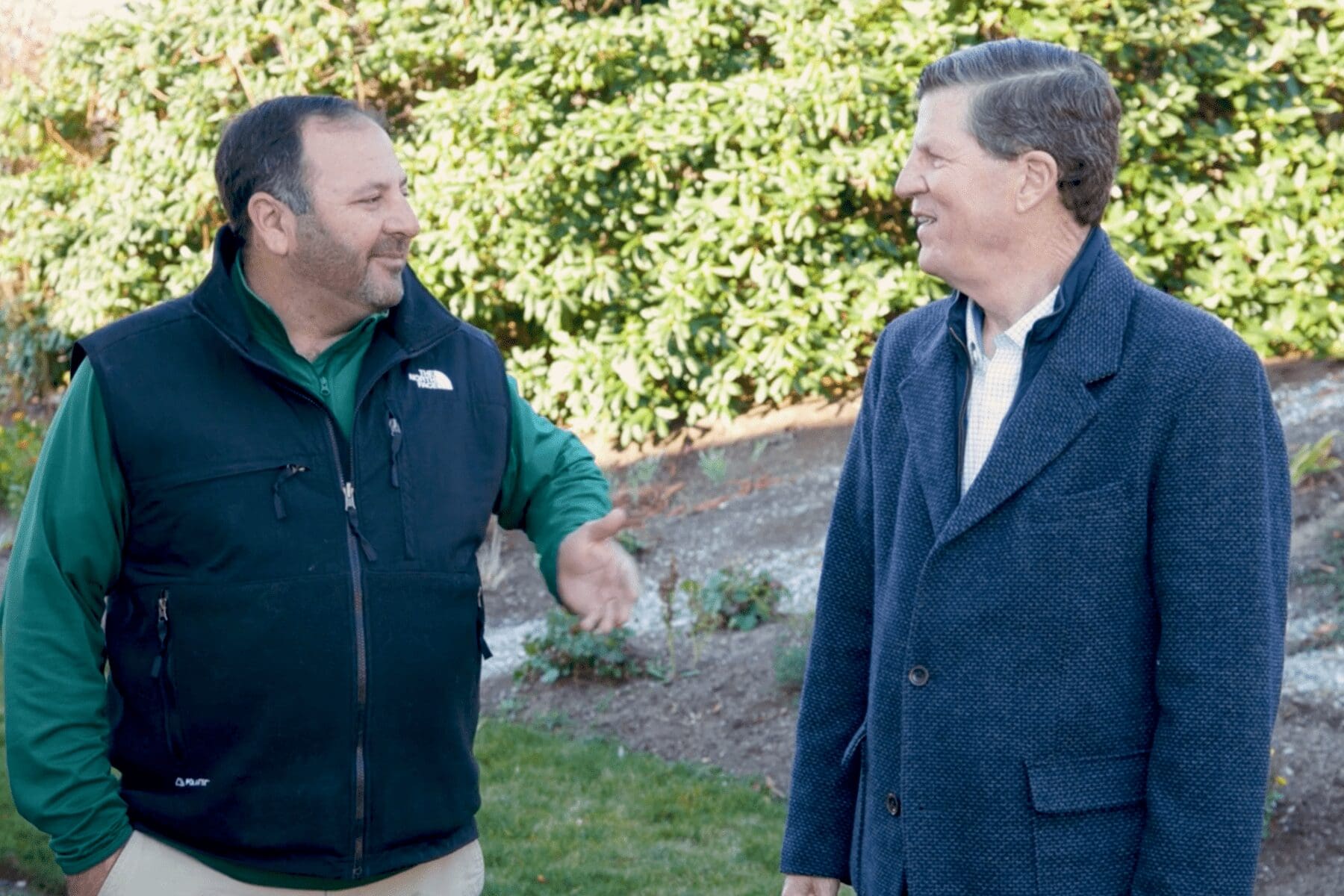
“I begin by spouting out design ideas to the client while we walk the property to gauge the ‘likes’ and ‘dislikes,’” Heller says. “I don’t give the entire plan away, just enough to get the client interested and talking. This helps me to connect ideas to the space and already have the client’s approval. By the time I leave the property, I basically have the design already pulled together in my head and in my notes and the photos I take of the property. This cuts down on the ‘back & forth’ time and keeps me and my project lists efficient.”
Malis says she’ll listen to clients tell stories about their childhood, which enables her to design a landscape that represents them and their lifestyle.
“It’s just a true picture of their upbringing and their whole lives,” Malis says.
Ackerman says he guides his clients through a sample design process to set clear expectations and paints mental pictures that evoke joy and nostalgia, like sun-drenched terraces or sparkling pool waters.
“Many clients struggle to visualize designs from plans alone, so I lean on descriptive language to ignite their imagination,” Ackerman says. “By involving them in the process and encouraging playfulness, it transforms the design journey into a collaborative, inspiring experience.”
Balancing Functionality with Emotional Impact
Sometimes, a client’s problem doesn’t have a ‘sexy’ solution, such as drainage, but it is still an important aspect to consider and discuss with the client. Heller says to prevent clients from tuning out, she’ll discuss fun and interesting options, like a rain garden for drainage.
Malis says she approaches all of her project designs from a practical perspective and then figures out ways to make them pretty.
“Ultimately, to me, it’s most important to solve the functional issues first because if I design a beautiful landscape that doesn’t solve any of their issues, then I haven’t done my job,” Malis says.
Heller says you should also use your expertise to bring potential pitfalls to your client’s attention when designing their space.
“A good example of this is a pool patio,” Heller says. “I had a client who wanted a particular stone for the pool patio, but I knew that the product heated up in the sun and would be hot to walk on, so I immediately brought this to the client’s attention, and we selected another product and avoided a potential problem down the road.”
Ackerman notes it isn’t just about creating a functional layout either. He says it’s about crafting a story reflecting the clients’ lives. By truly understanding the family dynamic, he can create spaces that are authentic, purposeful and unique to the homeowner.
“If they have children, I incorporate elements that foster play and connection, like a lawn that transforms from a serene green space into a lacrosse field,” Ackerman says. “If they have a dog, I design with their furry family member in mind, ensuring the space feels inclusive and personal.”
Tools for Success
Ackerman says visual aids are essential tools for bridging the gap between ideas and emotions.
“3D renderings can immerse clients in the design and something as simple as a hand-drawn sketch can evoke an equally powerful response,” Ackerman says. “These visuals become even more impactful when infused with personal touches like a coffee cup on a garden table or a book by a poolside lounge, helping clients see themselves and their lifestyles reflected in the design.”
Malis agrees personalized touches in landscape designs can help the concept feel more real for the client. For instance, when she presented a design for an HOA, she listened to how they wanted a space where kids and pets would be able to run around and for adults to relax. In her rendering, she featured children playing on a playground and dogs running in the dog park.
“Since I really took the time to listen to their needs and put together a really comprehensive design, I ultimately was selected to be the vendor for the multi-phase project,” Malis says. “They let me know that they could tell I really cared the most about the project.”
Malis says she provides photo renderings for almost all her clients so they can know exactly what to expect.
“It’s happened for me before where sometimes I try to rush things, don’t have a rendering, and then we get out there to install plants, and they’re like, ‘I hate the color yellow. Why did you install these ‘Sunshine’ ligustrums?’” Malis says. “Something that would have been so avoidable had I gone that extra mile. It’s important to me that the clients know what to expect because this is one of the largest investments they can make, so it’s only fair to them that they get a visual for what it’s going to look like and make sure they like it.”
Heller says she will create a slide deck for some of her clients that includes images of plants and hardscapes as well as other elements related to the project like gazebos or firepits.
“I will use this presentation to tell the story of what their property is going to look like,” Heller says. “It assists with the connection to the client because I offer to ‘walk’ the client through the presentation over the phone, in person or by utilizing Teams. It also helps with expectations and builds client confidence.”
Highlighting successful past projects can also be beneficial in building out the design narrative for the client. Malis says a lot of situations are more common than a client thinks, and she is able to share how their solutions look during and after the installation.
“Not only does it show the clients an accurate representation of the solution, but it also shows them that I’m capable of providing an effective solution for them, and then they have more confidence in me in turn,” Malis says.
Heller says she won’t talk about another client’s project in depth, but if there is a particular element the client is interested in, like a stone wall, she will take the client to a few properties to get a sense of what they like.
“Understanding what clients don’t like can be just as revealing as what they do like, helping us refine the narrative and design to resonate deeply with them,” Ackerman says.
Ackerman says being open and sharing about past challenges and how they were overcome can demonstrate humility, transparency, and a willingness to adapt.
“This openness fosters a deeper level of trust and reassures them that you will handle their project with care and professionalism, no matter the circumstances,” Ackerman says. “Ultimately, honest storytelling, whether of triumphs or lessons learned, creates a stronger connection and inspires confidence in the design process.”
This article was published in the May/June issue of the magazine. To read more stories from The Edge magazine, click here to subscribe to the digital edition.
