
The 2026 ELEVATE Expo, presented by NALP and powered by Cat, was filled with solutions and innovations with lawn and landscape professionals in mind.
“This is a place to get all the information you need for the year,” says Vince Torchia, vice president of The Grow Group. “We’re in the fourth quarter of the year. Everybody’s got 2027 or the following year on their mind. This is a great time to unplug for a few days, make and commit to some purchasing and buying decisions, so that you can start the year off with all of these decisions made, and you can focus on operating and not questioning whether you’ve got the right equipment or got the right software. You’ve already made those plans, and now you’re running.”
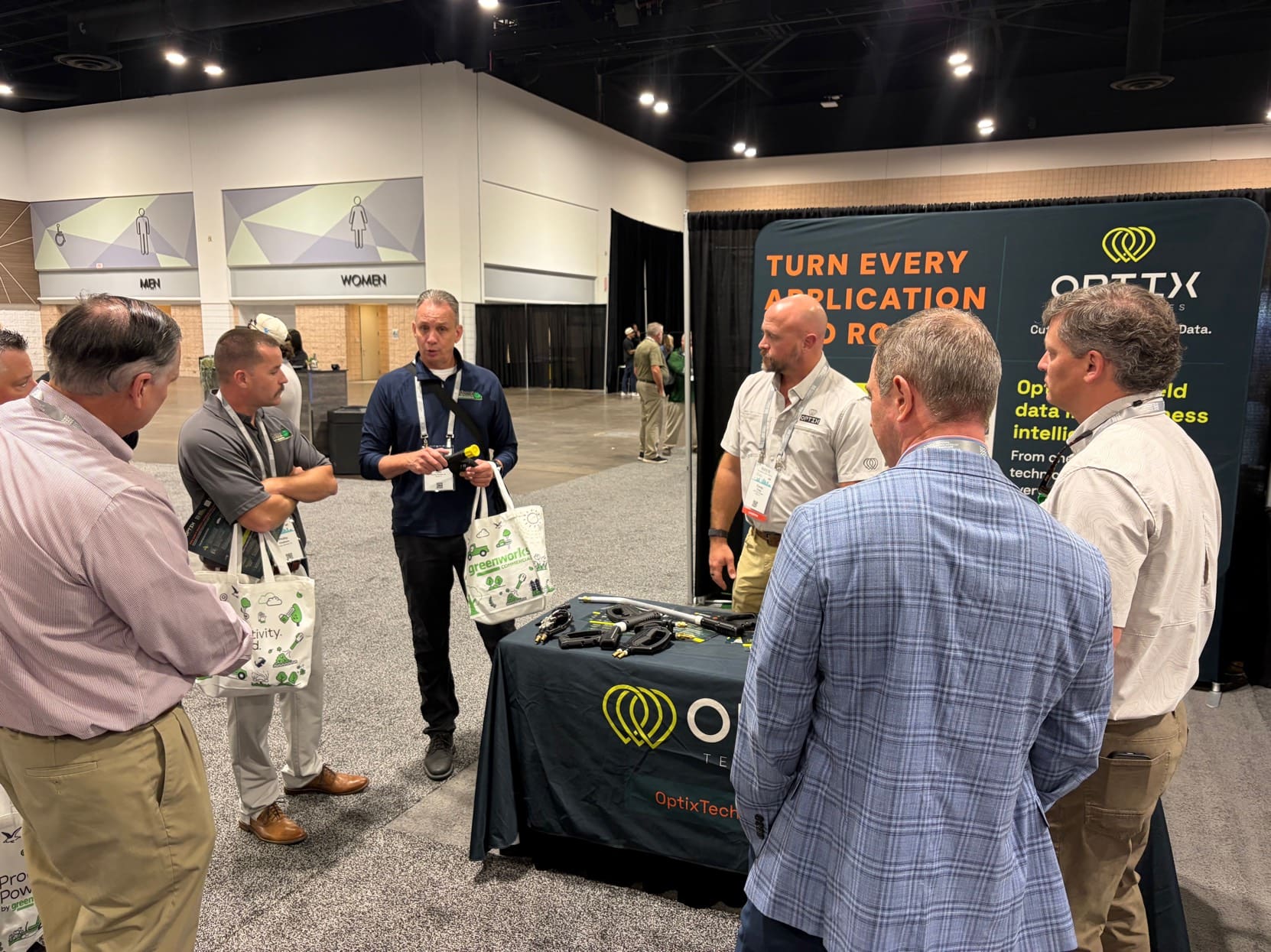
With 221 exhibitors, ELEVATE Expo gave landscape professionals plenty of opportunities to compare solutions, talk with manufacturers and discover technology to address their business challenges.
“Technology is changing,” says Troy Brantley, senior maintenance account manager with Frisella Landscape Design & Nursery, based in Defiance, Missouri. “I think it can be good and bad, but I think overall, I think it’s the wave of our future. I think we control it very well. It’ll be something that will benefit us. Time is money, so I think if we use it the right way, it could be monumental to every business here.”
Technology That Supports Field Operations
One example of a new technology designed to aid landscape companies is Launchpad OS, a system of intelligence built with a heavy focus on the crew experience, unlike other software built for the back office first.
Drew Wagner, founder and CEO of Launchpad, says they are trying to build the last piece of software that a company is going to need. He says their software is much more customized to their customers and can bring specific details to the attention of different team members proactively.
“AI is an amazing tool, but AI is only as good as the context you give it,” Wagner says. “One of the things that we’re really focused on is just bringing all that context under one window, making it easy to do and easy to operate.”
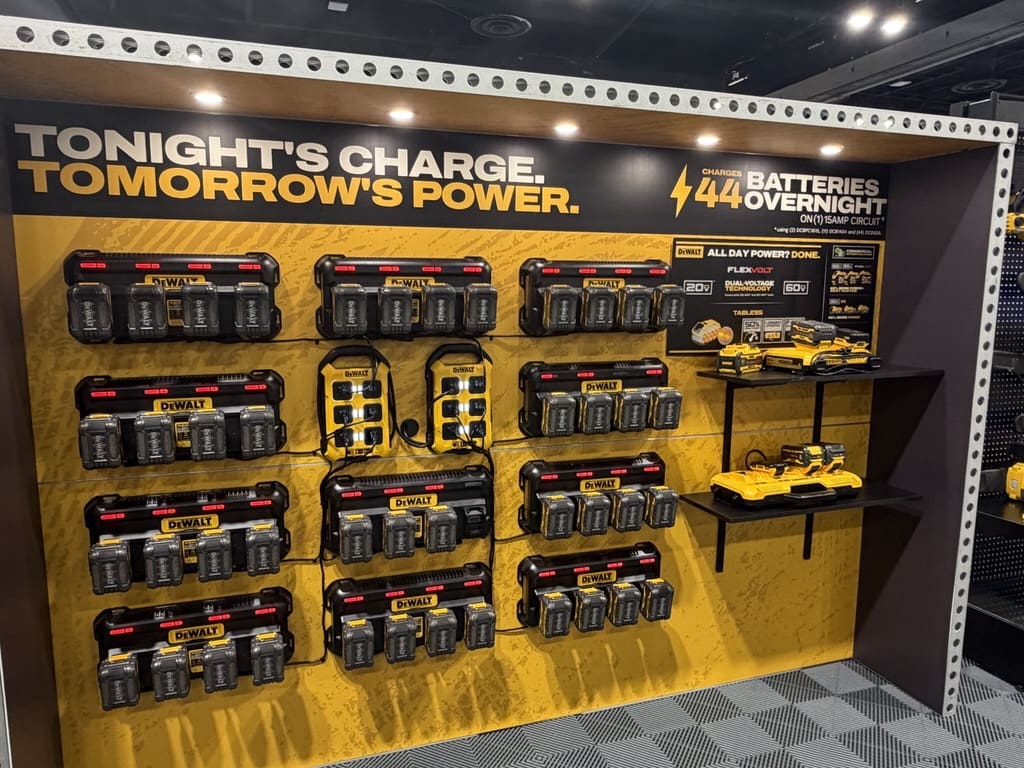
Meanwhile, as more landscape companies are exploring the possibilities of battery power, Stanley Black & Decker is answering the issue of charging infrastructure with a power manager that serves as a smart charger.
“It monitors all of the amperage and voltage that the chargers are needing that are plugged into it, so you don’t blow the breaker,” says Aaron Griffith, director of professional dealer sales with Stanley Black & Decker. “This setup right here will charge 44 batteries in roughly 10 hours.”
Rather than having to invest in rewiring and upgrading their infrastructure, this new system allows landscapers to plug into a dedicated outlet, and the system ensures only the necessary amps are sent out to the chargers.
“The reason we love coming here is to talk to leaders in the landscape space,” Griffith says. “Also, at ELEVATE, it’s not just the leaders in the landscape space, but it’s the ones who are looking for new opportunities and new ways of doing things. That’s why we like to bring this new technology here, and then also have probing conversations with them.”
Compact Equipment for Tight Worksites
As worksites continue to shrink, Caterpillar introduced three brand new pieces of equipment, including their first compact utility loader, the 253 compact track loader, and the 301 compact excavator.
“We’ve been designing compact track loaders and skid steers for the last 30-plus years, and so we’re taking a lot of that same design DNA from the compact track loaders and putting it into a smaller package,” says Dustin Adams, product application manager covering North America for all compact equipment with Cat. “We have things like creep control and two-speed speed control on that machine, adjustable aux flows and adjustable operator controls, and they’re not industry firsts, but it does set us apart in that stand-up loader market with electro-hydraulic controls, and so we’re also putting telematics on these machines so that you can track and trace them from the comfort of your office.”
Adams says the compact utility loader was developed in response to their loyal customer base asking for a smaller compact track loader and deciding it made sense to provide a machine without a cab.
“It’s providing a solution to our customers,” Adams says. “There’s a massive labor shortage out there. This machine is not displacing labor. It’s filling a gap for a labor shortage. It’s moving guys from using a shovel and a wheelbarrow to using a mechanical advantage to be able to do the job faster.”
As for the compact excavator, this is an update to their one-ton size class machine and will replace the 300.9. Adams says this new model will have improved travel speeds and breakout forces. This machine will hit the market mid-next year.
New Options for Lawn Insect Control
On the lawn care side of the business, Envu highlighted their latest product, Durentis Surface, which has two modes of action for above- and below-ground insect control, providing quick knockdown from bifenthrin and seasonal residual control from chlorantraniliprole. Envu says their product allows LCOs to be more effective and efficient, reduce callbacks and grow their business.
“We’re hearing more from some conversations with customers this week they’re looking for a solution that they can provide really one solution for above- and below-ground insect control,” says Kyle Richards, senior product manager, insecticides – North America for Envu.
Learning from Other Landscape Professionals
New this year was the Innovation Stage, where landscape professionals shared firsthand how technology is shaping and impacting their business. Chad Reinhart with Reinhart Landscaping & Snow discussed how they have utilized their data to provide proof of service and move beyond making gut decisions. Then Justin White with K&D Landscaping encouraged attendees to experiment with AI because even where there were losses, he gained lessons that will help them avoid bigger mistakes as they scale.
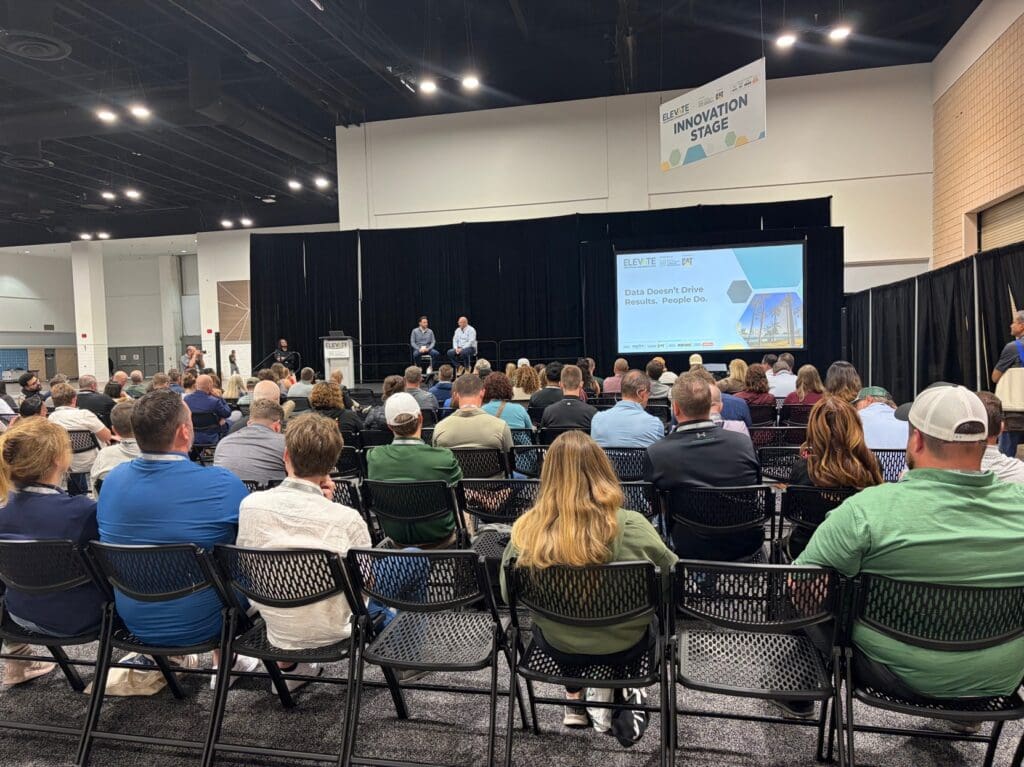
For attendees who were looking for solutions more related to people, the new Peer Circle Chats served as a time for them to listen to how a handful of their peers are tackling a specific problem such as training or hiring teams that stay.
Brantley says one reason why others should come to ELEVATE is the ability to talk to others.
“We’re probably one of the bigger companies here, but there are things that we don’t know yet that they figured out,” Brantley says. “I think just being able to network with people is probably the number one reason why you should come here is to be able to talk to other people.”