

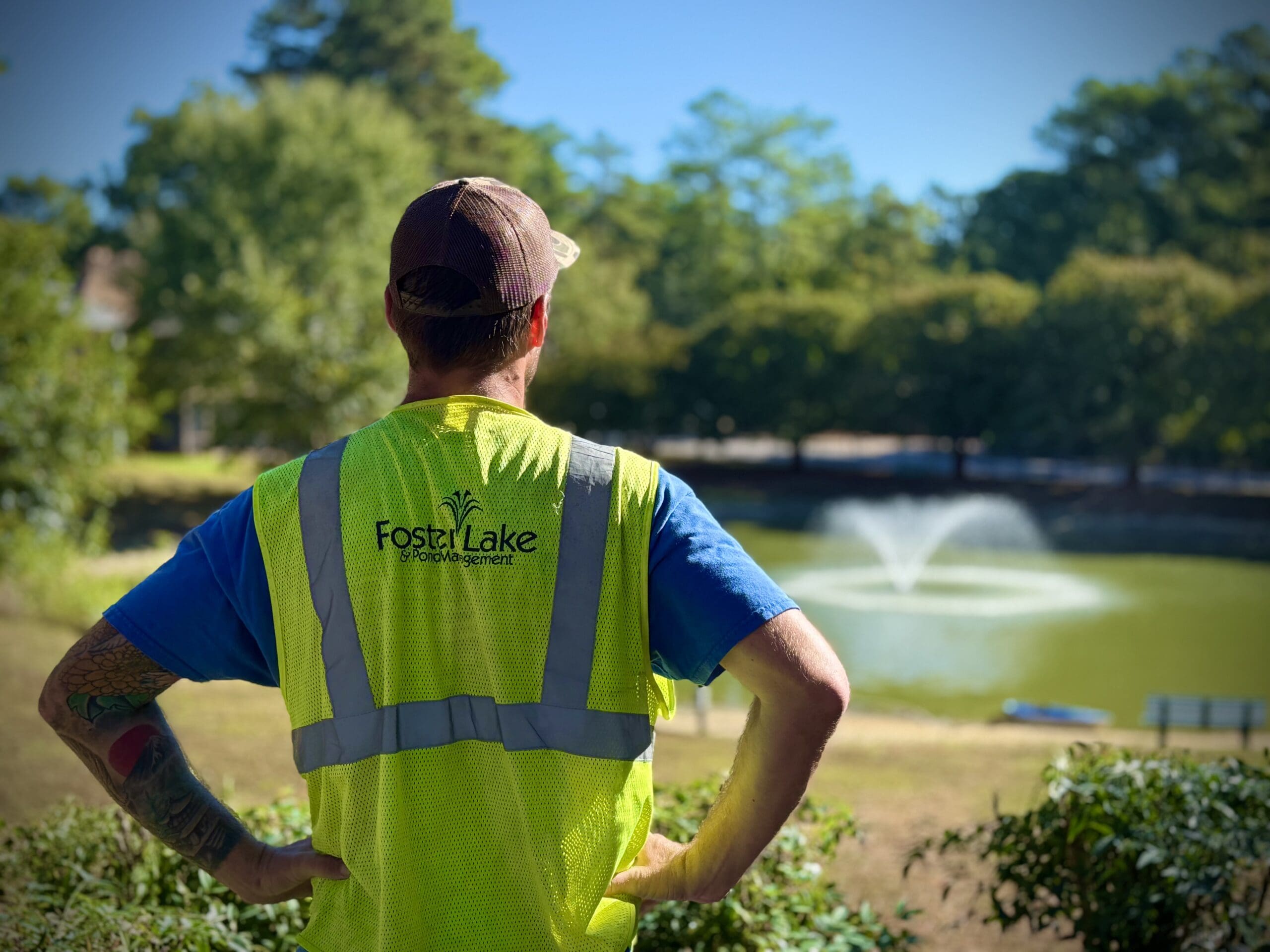
When you’re maintaining your commercial clients’ properties, you may see a pond or lake and wonder if that is something you could add to your services. After all, you already mow the turf around it, so how different could it be?
A lot, as it turns out.
“It’s complementary to landscaping, but it requires a different set of skills,” says Mitchell Morton, fisheries biologist and general manager of Foster Lake & Pond Management, based in Clayton, North Carolina.
Morton says the complexity of the ecosystem calls for aquatic biologists who can consider watershed management when caring for these aquatic spaces.
“We’re looking at the whole watershed when we’re making decisions,” Morton says. “Are we compliant with all the regulations? Do we have the right product to kill the targeted vegetation? Are there any irrigation restrictions we need to know about? Are we mitigating any side risks like dissolved oxygen drops? Can we avoid killing fish?”
Bland Landscaping Company, based in Apex, North Carolina, realized the distinct skills needed to be successful in aquatic maintenance and chose to subcontract Foster Lake & Pond Management before acquiring them in December 2023. Morton says while they are the aquatics division of Bland Landscaping, they retained their branding as they are well known in the industry.
“It was really when they bought Foster Lake & Pond is when they decided to go full force into the whole separate brand and the aquatics division,” Morton says.
What Services Are Included in Aquatic Maintenance?
Aquatic maintenance can cover everything from stormwater compliance, vegetation management, fisheries management, construction and repair of bodies of water, and fountain and aeration installation.
“We try to give a comprehensive quote so that our clients don’t have to go to too many other places to get the answers that they need,” Morton says.
Morton says customers often seek them out when they are dealing with a pond full of algae or nuisance aquatic vegetation. Others will reach out after receiving a notice of violation from a municipality related to their stormwater compliance.
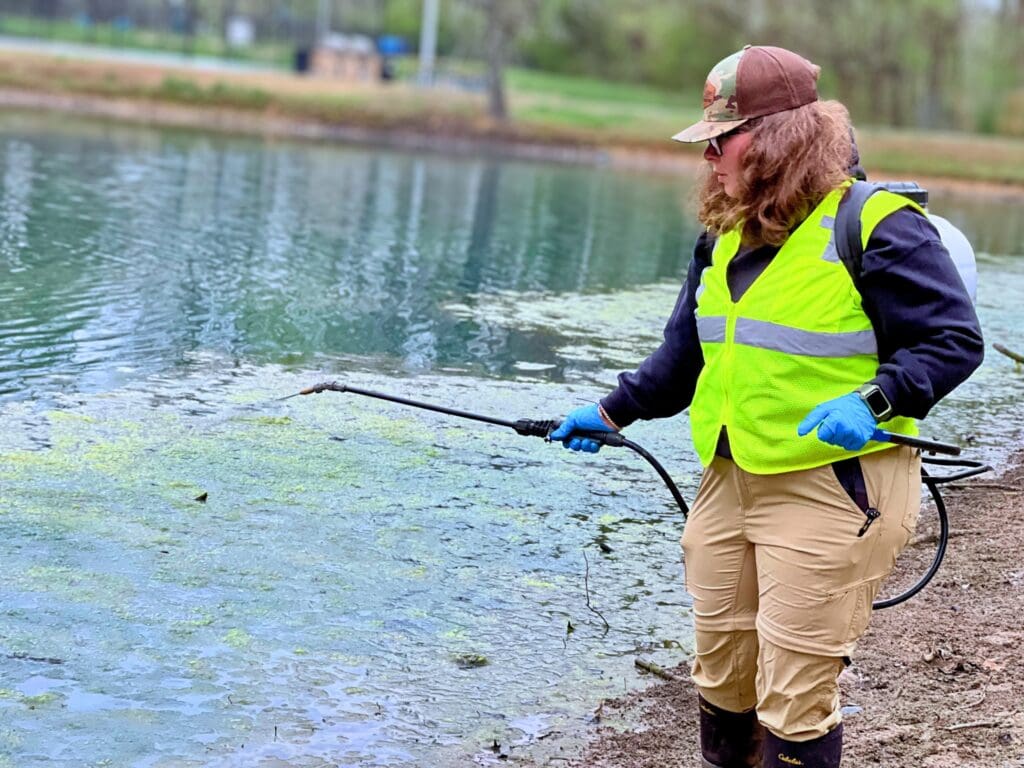
Morton says their main customer base is HOAs, but they will work with everyone from private homeowners with a half-acre pond in front of their house to commercial sites.
How frequently a lake or pond will need to be maintained depends on several factors, including the client’s objective and the watershed. Some customers may only need to meet stormwater regulations while fisheries management clients might want or need more frequent visits.
If a body of water receives heavy runoff from heavily fertilized areas, Morton says they may need to visit these sites more frequently in the summer, but they try to be proactive by adding filter strips with littoral shelf plants to address it.
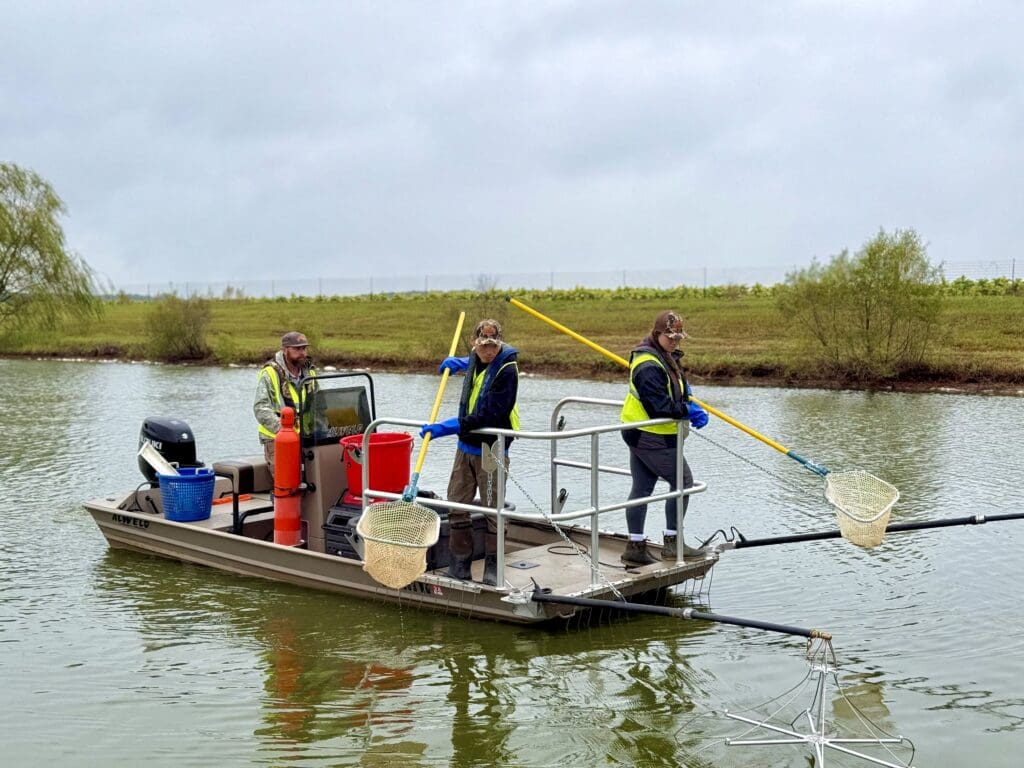
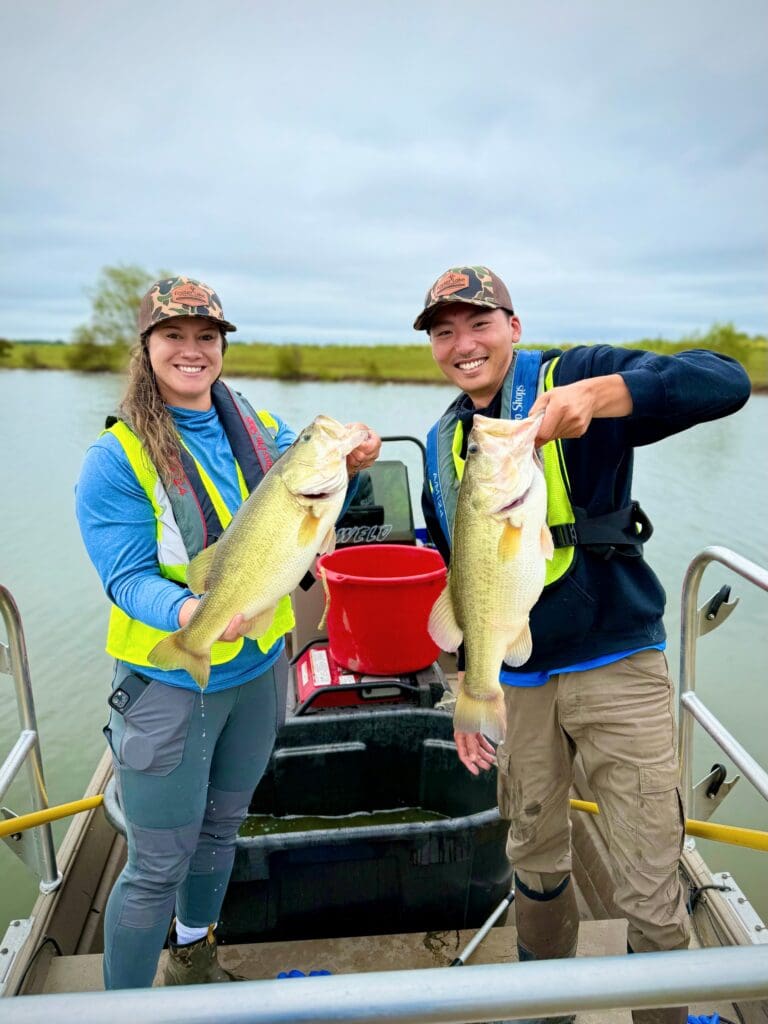
When it comes to fisheries management, Morton says they use shocking boats to temporarily stun fish and collect data on their populations. Based on these findings, they will harvest or supplementally stock the pond to maintain a balanced ecosystem or meet the client’s objective.
How Aquatic Maintenance Complements Landscape Services
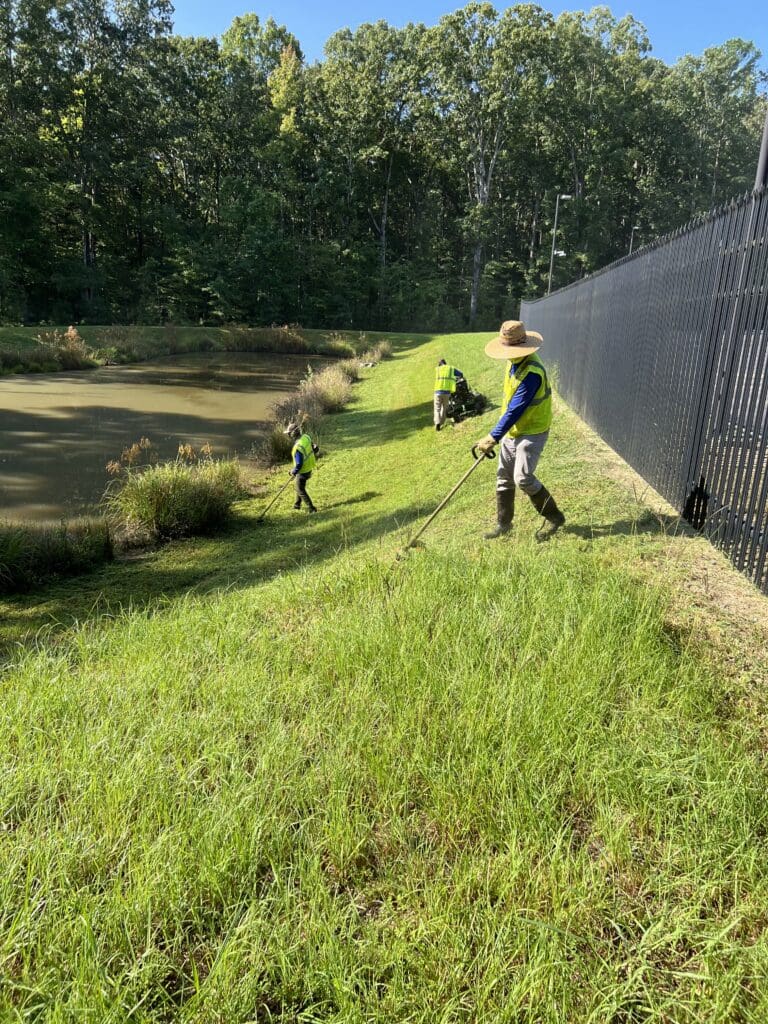
Morton says a good percentage of the sites they service also utilize Bland for their landscape maintenance.
“Our service managers communicate with the account managers to make sure that we’re leaving buffers from a fertilization standpoint, or if one of us is doing a treatment, we’re letting the other one know, so we don’t cause problems like irrigation or runoff,” Morton says.
Morton says one benefit of offering aquatic maintenance is it serves as a differentiator for Bland.
“This is a very specialized service that we provide,” Morton says. “It’s not just throwing a backpack on and spraying copper sulfate. I think the pro is being able to provide solutions for two complementary needs to a lot of clients.”
What Takes to Start an Aquatic Maintenance Division
While aquatic maintenance is complementary to landscape maintenance services and has similar margins, it does have a large upfront investment. The work calls for specialized equipment including spray pumps, shocking boats and blowers that can mount to boats.
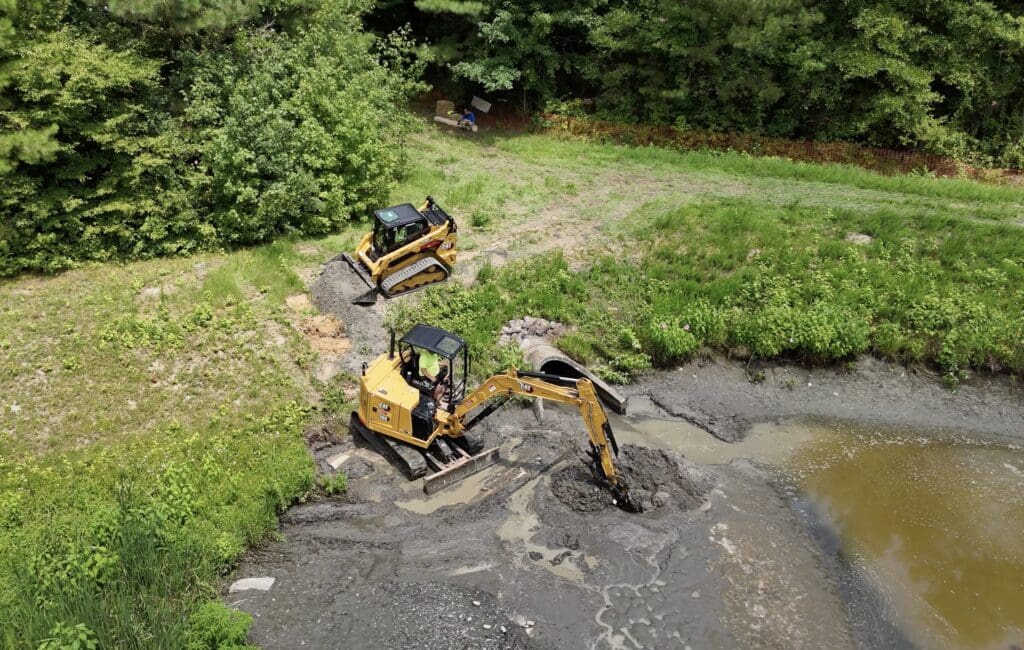
“Anything that you use on land, we have to modify that for aquatic distribution,” Morton says. “We have drop hoses and different things. Because it’s very much a science-backed situation. We have a lot of specialty stuff: dissolved oxygen meters and different water quality meters, particularly for our fishery side. And then skid steers and excavators and things like that for our construction team. There is some investment into proper equipment for sure.”
Additionally, Morton says their employees need pesticide applicator licenses as well as stormwater certifications that vary from state to state.
“We try to get them as much individual fountain training and troubleshooting training, which involves using voltmeters and megohmmeters and that sort of thing,” Morton says. “We’re very much into continuing education. We feel like that’s a huge principle that needs to constantly be driven home, and so continuous improvement is a big motivation for us.”
Morton says about 90% of their clients have some sort of fish population in their lakes and ponds, even if it’s not formally stocked.
“Even a stormwater puddle, you’ve got aquatic life in there, tadpoles, eventually some gambusia, perhaps some green sunfish,” Morton says. “It doesn’t matter if there’s one little green sunfish in there or a hundred trophy bass. Folks don’t want to see those floating up upside down.”
He says this is one of the reasons they spend so much time training their team members because different products can have a different effect given the pH and temperature that day.
“Even in stormwater ponds, you have to be respectful of the aquatic life, so that’s why everything we use is labeled for aquatic use,” Morton says.
He stresses there are no turf products that can be used in aquatic systems.
“Dead fish is the worst thing you could ever want to have,” Morton says. “You want to really make sure that the folks who are doing that work are very experienced.”
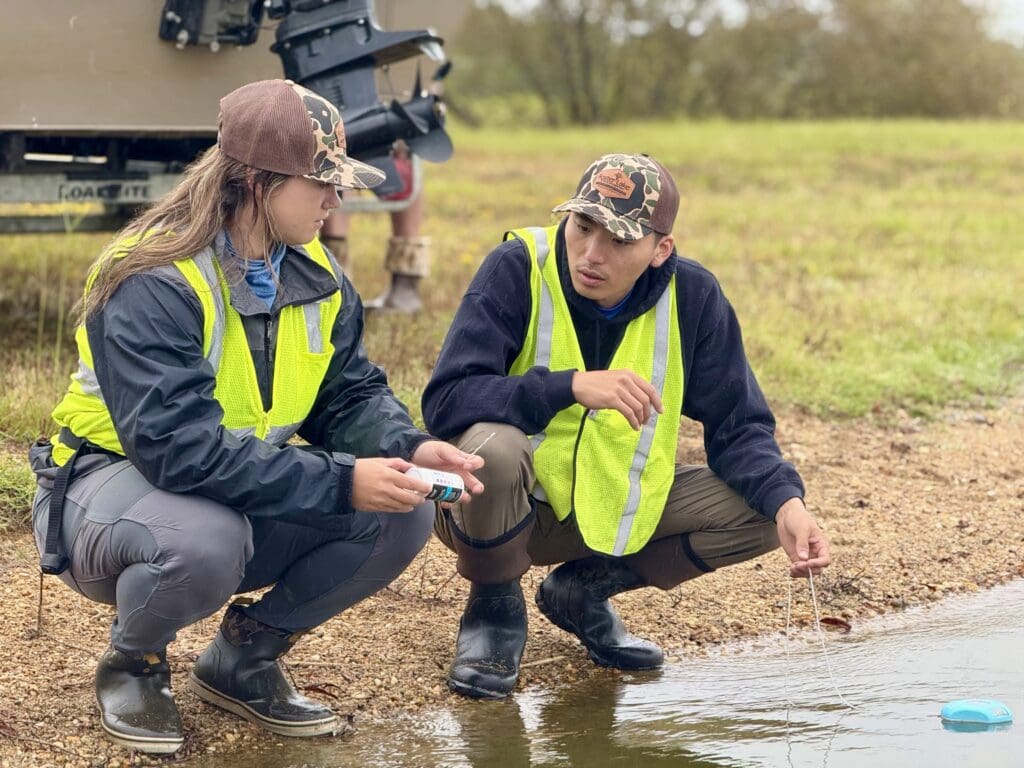
Safety is another big element to successful aquatic maintenance. Morton says they have weekly tailgate topics and staff are required to wear personal flotation devices any time they’re next to a body of water or on watercraft.
“We do full company trainings, multiple times a year, and then within each branch, we’re constantly doing weekly truck inspections, weekly equipment inspections, that sort of thing,” Morton says. “For specialty equipment, say the electro-shocking boat. We have a very small team that gets on that boat. We don’t allow everybody to jump on there.”
The Challenges of Aquatic Maintenance
Morton says the biggest challenge of aquatic maintenance is keeping your clients educated.
“There’s a lot of good and bad information on the on the internet, and there’s the emotional aspect of this job,” Morton says. “Even stormwater ponds, people are very connected to wildlife.”
He says it’s very important for their clients to understand the products they’re using and what management strategies.
Another challenge of aquatic maintenance is keeping up with the varying regulations in different municipalities.
“It may look simple, but there’s a lot of training and experience that goes into being capable of making decisions to get the best service,” Morton says. “A customer would want their service manager to have multiple years of experience, knowing the best product to use or the best strategy to implement in order to meet their objectives.”
Morton stresses that if you’re considering adding on aquatic maintenance as a service line, you need to understand what you’re getting into and be able to do it right.
“We have seen some companies try to do it in-house,” Morton says. “What really comes across is that it isn’t apples to apples. What we provide is a very specialized service. That makes it more important to make sure that all the Ts are crossed and I’s dotted when you’re performing this kind of work.”