

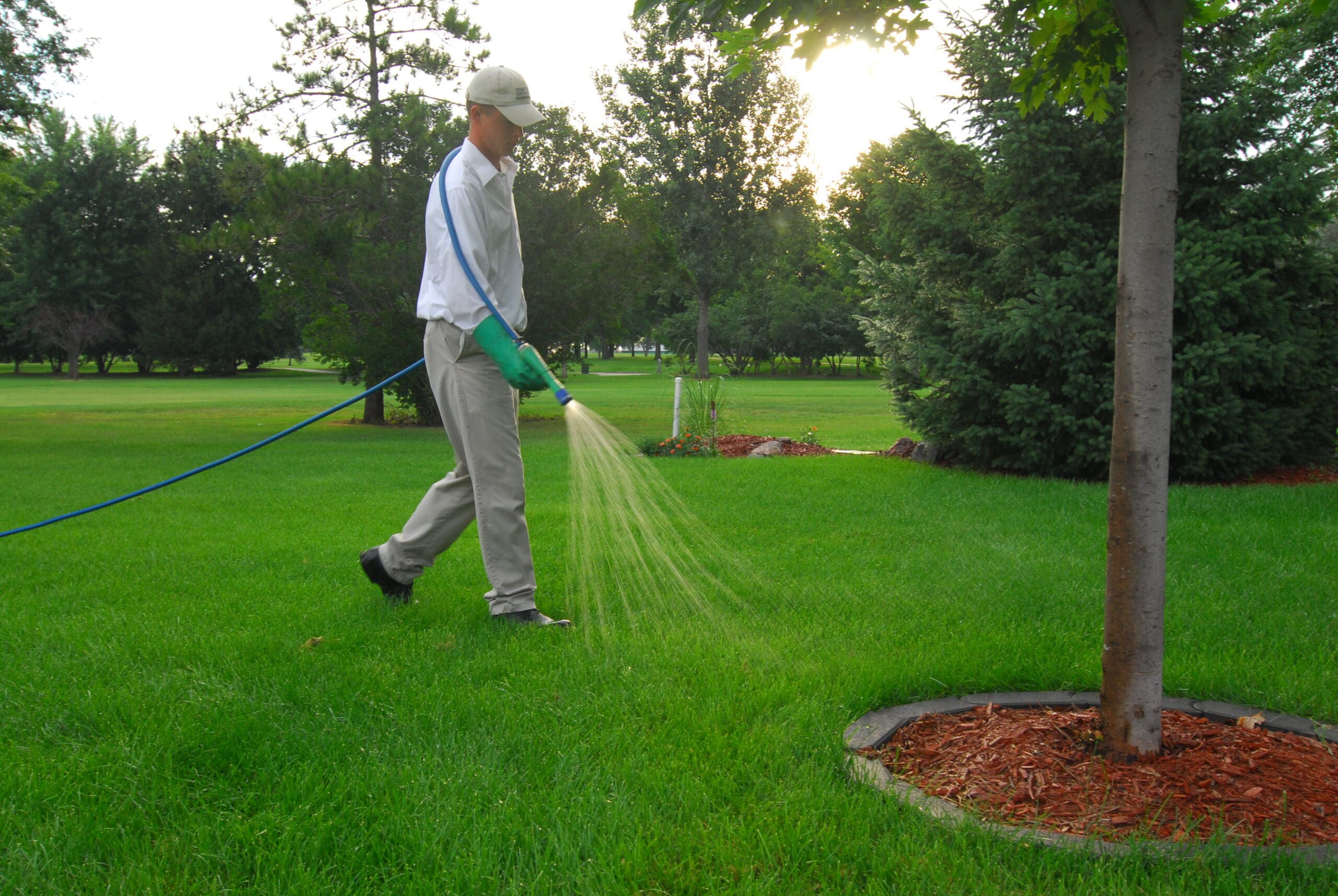
Lawn care is a tough business, being at the mercy of Mother Nature. Despite tight application windows, customers still expect their turf to be vibrant and healthy.
One tool that can help open up LCOs’ calendars and reduce callbacks is the use of insecticides that offer season-long control.
“We cannot ignore customer expectations regarding the results delivered from these control products,” says Luke Zimmerman, co-president of Green Image Lawn Care, based in York, Pennsylvania. “There have been times where perhaps you select other grub control products to fit a timing window, but you might not get the same longevity that is needed towards the end of the season, and that can be a problem. It seems the growing seasons continue to get longer and longer for all of us, so we are stretching and trying to control Mother Nature’s chaos as much as possible.”
What Long Residual Insecticides Offer
The key benefit of using season-long insecticides is increased application flexibility. This is thanks to the shift in chemistries to the diamide class, which has a wider application window compared to neonicotinoids like imidacloprid.
“When you’re using a shorter-control product, there’s a strict window that we have to abide by to know we’re going to get the control that’s needed,” Zimmerman says. “There’s a must-start date and a must-end date to make sure we get the seasonality we need out of that product. With Durentis insecticide, you can incorporate the product, when it makes the most sense, into other rounds — be it a little earlier, mid-round, or later this season. The window is so wide. It provides a tremendous amount of flexibility.”
Lisa Beirn, a technical service manager with Syngenta, adds that most long residual insecticides cover a number of different pests, including white grubs, bill bugs and turf caterpillars.
“If you are a lawn care operator, maybe I want to do this in April, maybe I want to do it in May, maybe I want to do it in June, so that I could pick up some of these pests like chinch bugs and ants with the Acelepryn Xtra, so it brings flexibility based on what they’re doing,” Beirn says.
Utilizing long residual insecticides also allows your company to be proactive with preventive applications versus only responding once damage is spotted.
“If an LCO uses short-duration insecticides only once a pest has been identified, it may require multiple service calls throughout the year to properly manage this pest,” says Jason Fausey, director of technical services for Nufarm.
Building a Full-Season Program Around Long Residual Control
The flexibility that long residual insecticides offer allows LCOs to decide which application round makes the most sense to include the product in their operations.
“The first step in a program is to outline the key target pests and lifecycle of these pests,” Fausey says. “Once the key insects are identified, proper product selection to ensure activity on these pests is needed. Ideally, a single product can be applied just prior to the predicted first outbreak of the target pests.”
Fausey says an additional benefit of using long-lasting soil-active insecticides is they can be sprayed or spread.
“Sprayable formulations, for instance, can be combined with herbicides or liquid fertilizers so two tasks can be completed with a single trip over the lawn,” Fausey says. “Overall, extended control products have greater application flexibility and provide a larger application window than short residual insecticides.”
Beirn recommends that if you plan on mixing different products with a season-long insecticide for the first time, conduct a jar test first.
Be mindful of dry periods, as rainfall or irrigation is the key to avoiding poor control. However, Fausey notes these products have a rather forgiving window after application for exposure to the first rainfall event. He says generally, if rainfall occurs within a week of application, the control will remain as expected.
Even though these products extend your application window, you can still apply them too late in the season.
“The most sensitive stage and easiest to control is when the eggs first hatch,” Fausey says. “With insects having overlapping generations, it’s not always possible to make a truly preventative application, and that’s a time when combining a short residual, but fast-acting adulticide with a long-residual insecticide makes for a solid management option.”
Beirn adds that if you apply long-residual insecticides in the late summer, you could face challenges where the product hasn’t had enough time or moisture to be effective.
“If folks are going to go out in a later timing in the summertime, they certainly want to make sure to use liquid applications,” Beirn says. “That would be my preference over granular at that time point, and making sure that they could get some kind of water if they were going to go that late.”
Messaging to Clients
If you opt to consolidate some of your site visits by using a season-long insecticide, it is critical to communicate your reasoning to your customers, so they understand they are not being short-changed with fewer visits.
Zimmerman says they share with their customers that they are using a more advanced product that offers more efficacy and has a better safety profile. He says clients need to know that what you’re doing is what’s right for them.
“First, I think customer expectation is always something to think about,” Zimmerman says. “Am I enhancing my customers’ experience? Am I providing more value? Am I providing an edge over my competition, right? Second, will it enhance our reputation? Obviously, you never want to go backwards. Reputation means everything in this industry, so we must have full confidence that we will get the control that we are charging our customers for.”
Beirn says another positive to highlight is how the diamide class of chemicals is more pollinator-friendly compared to neonicotinoids.
Zimmerman adds that you can also explain how you will be able to spend more time on the property looking for issues, such as turf disease or a need for aeration.
“And with more time and more communication means a better customer experience, right?” Zimmerman says. “At the end of the day, it’s always about the customer. It’s about doing it right, but also giving them feedback. They want what they signed up for: a healthy and high-quality lawn. It’s your shared expertise that achieves that.”
Common Mistakes to Avoid
While long residual insecticides can provide season-long control and peace of mind, you still need to follow best practices to ensure strong results. Failing to properly calibrate your equipment is one major misstep.
“Everything comes down to a solid application calibration,” Zimmerman says. “So, without that, you have nothing.”
Beirn adds it’s important to get familiar with the different diamide products available as each one works a little differently.
“I would suggest they read up on the materials and they get really familiar with them, so that they can understand how they work,” Beirn says. “If they are using granulars, which is really popular in lawn care, make sure they’re reading those labels to know what the loading is of the active ingredient. Because sometimes they’re all a little different, so know what the loading is, and knowing what else is in there will really help get them set up for success.”
Zimmerman encourages other LCOs not to be afraid to innovate and incorporate season-long insecticides for more flexibility in their business. Fausey adds they should consider these products, especially when a single application can control their primary insect pests all year round.
“Installing a plan that includes a residual insecticide brings increased customer satisfaction while maximizing profits with fewer callbacks and insecticide applications,” Fausey says.
Key Takeaways
- Season-long insecticides can give LCOs more flexibility in their production calendars. Wider application windows allow companies to work around weather, labor availability and existing service rounds instead of being locked into a narrow treatment window.
- These products offer more flexibility, but LCOs still need to understand pest life cycles, follow the label, calibrate equipment and account for rainfall or irrigation.
- Customer communication is critical when consolidating visits. Explain to customers the benefits of this change and how they are receiving longer-lasting control, improved product performance and continued property oversight, not less service.