
April is the month when many lawn care companies are out in force, waking up their existing customers’ yards and taking on new clients, so it is fitting that April is also National Lawn Care Month.
This month serves as a time to educate consumers on the value of lawn care, combat misconceptions about turfgrass and promote the professionalism of the industry.
Taking Advantage of National Lawn Care Month
Kyle Lyne, director of marketing for Weed Man, says this month is prime time for creating first impressions and showing people the good that lawn care provides.
“We can control what we can control, and that’s how we communicate with people in the field, how we communicate with people who are not our customers and how we communicate with people who have different views than us,” Lyne says. “Those are all the first impressions that we as an industry need to make sure that we keep at the top of our mind at all times.”
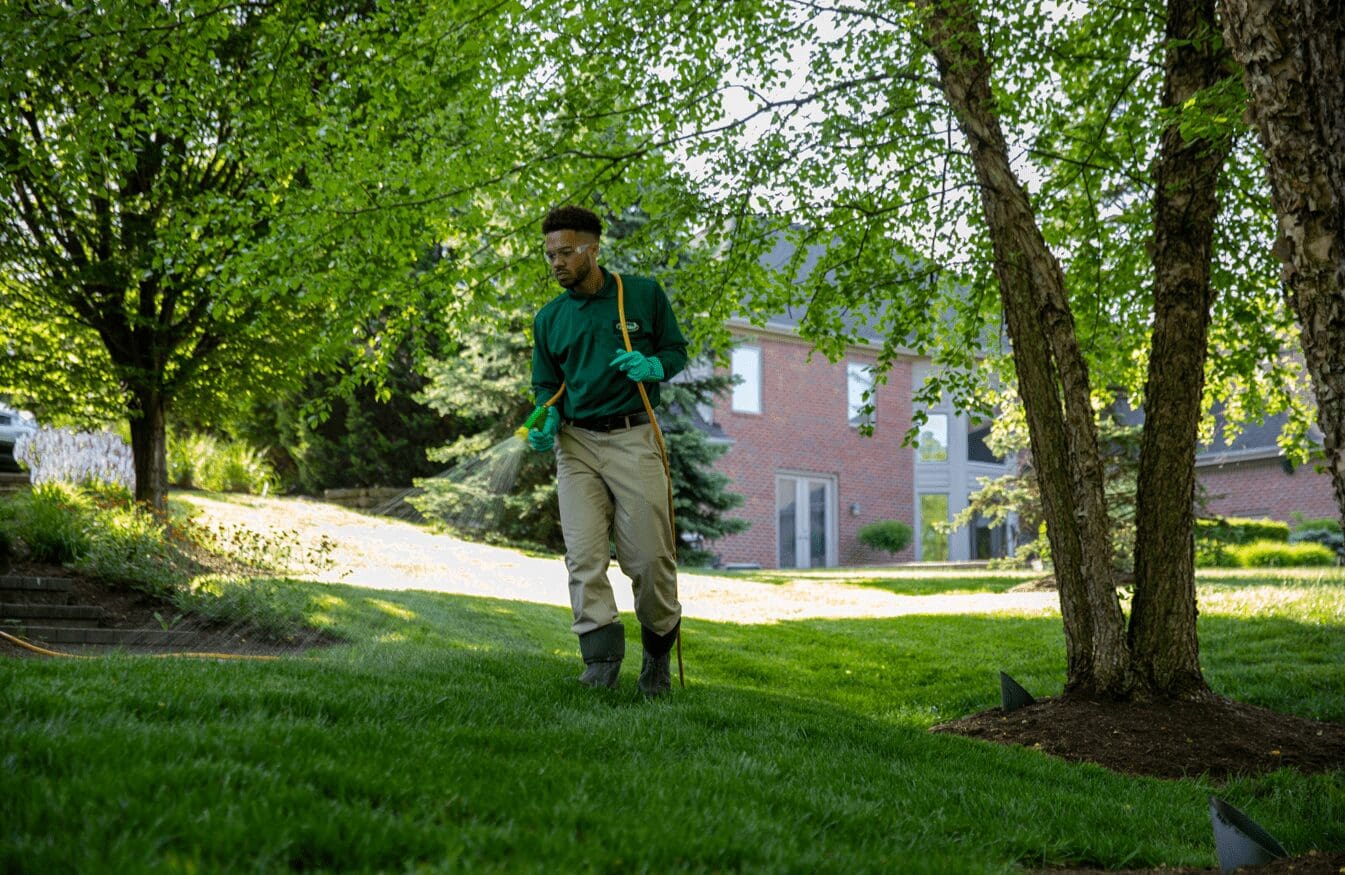
Andrew Ziehler, owner and CEO of Ziehler Lawn Care, based in Centerville, Ohio, says they like to use National Lawn Care Month as a time for educating their customers.
“During this time, we used to think, ‘Hey, they have enough going on right now. Let’s not bombard them with too much information,’” Ziehler says. “But we found that increasing the types of communication around what to expect for the season, things they can do, things they should be looking out for, how they can be a better partner with us to ultimately have a healthier, better lawn serves them well.”
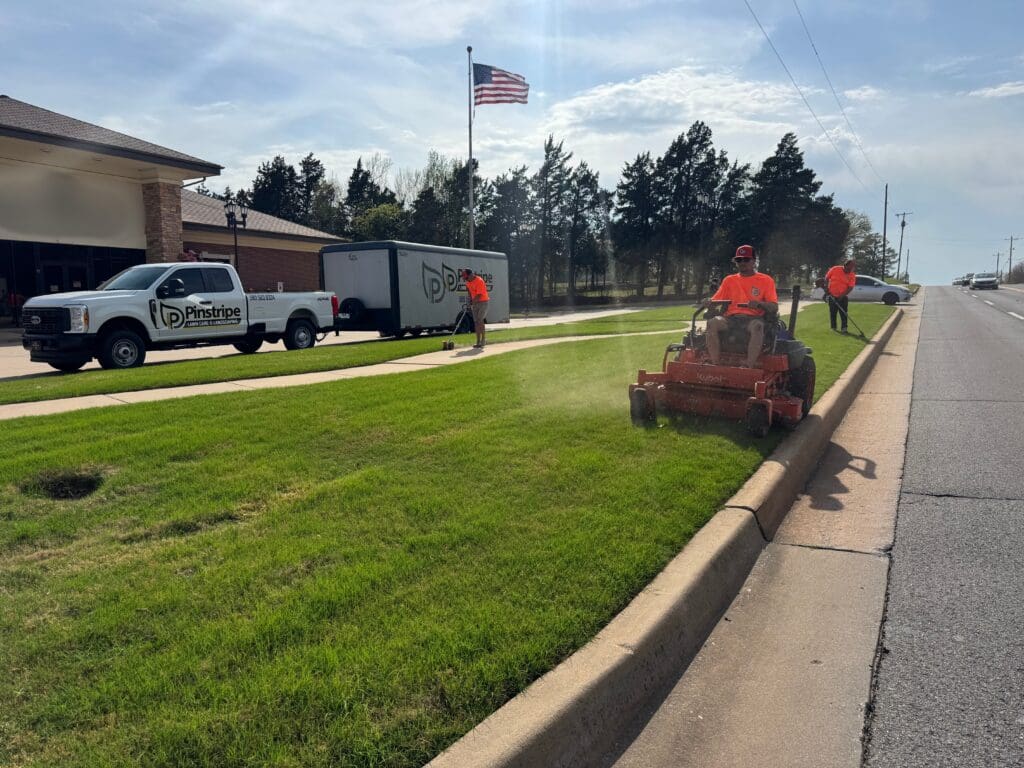
Josh Canfield, president & CEO of Pinstripe Lawn Care & Landscaping, based in Guthrie, Oklahoma, says this month provides an opportunity to shed light on the industry and the value lawn care brings. He says this is their first year celebrating National Lawn Care Month, but they are focused on having a deeper emphasis on training their team of professionals.
“We deal primarily with commercial customers,” Canfield says. “However, our messaging is the same and resonates with them by us fulfilling our mission statement. We view our customers as partners in their business. We want to partner with them and beautify their property so that their employees love coming to work. If nothing else, we don’t want to be the reason they don’t want to come to work.”
The Value of Lawn Care
Lawns are often taken for granted, but they provide significant environmental benefits and can boost individuals’ quality of life.
“It’s a canvas,” Ziehler says. “Lawn care creates the beautiful canvas that allows so many things to happen. The lawn is somewhere that a customer gains a lot of value from. They can see that as something to be proud of. They can get compliments on it. It could be just the way that they enjoy it. The lawn is that place where people spend time outside. They connect with nature. They calm down and relax after a stressful day.”
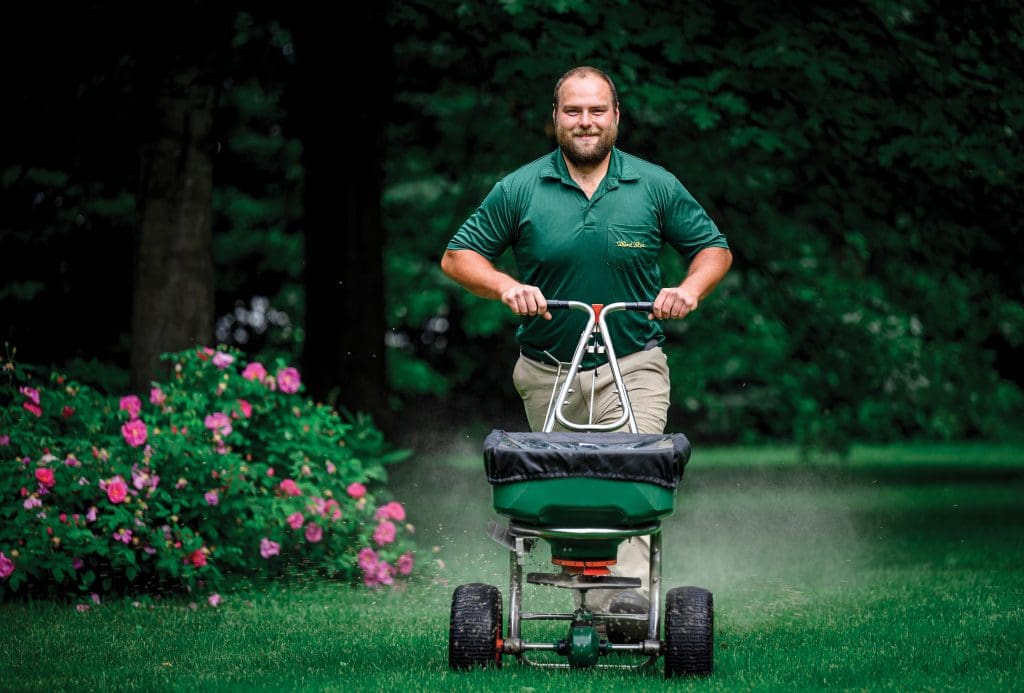
Cam Cundiff, director of administration with Weed Man – Kansas City franchise, adds that lawn care gives customers their time back.
“Our business exists to take that piece off of somebody else’s plate where they don’t deal with the math, they don’t have to deal with storing all the products or anything like that,” Cundiff says. “Lawn care for us is just the ability to provide a service that lets people enjoy their outdoor spaces.”
Not only do these spaces serve as a place to create great memories with family and friends, lawns also are one of nature’s best filters from the air to ground.
“Pour a pour a glass of water down the hill that’s just dirt,” Lyne says. “What happens? You’re just taking all that runoff right to the bottom. Now do the same thing on a grass hill. That’s what I think of when I think of filtration. The air filtration is incredibly impactful on the macro side.”
Cundiff says his own 5,000 square feet yard offsets 5,000 miles of driving, producing 5,000 cubic yards of clean air. Additionally, it benefits four people and sequesters 3,500 pounds of carbon dioxide.
Lawn care also provides both customers and technicians with a sense of pride in a well-cared-for property.
“We have a job where we get instant gratification after each property we service,” Canfield says. “Our crew can show up and service 8-10 properties per day and have instant gratification when they are stepping off a property. They get to step back before leaving and know what they do matters. They see that each property looks better than it did when they got there. There are a lot of jobs out there where you can’t see the fruit of your labor daily. But we work in an industry where, if you do your job right, you get instant gratification every day.”
Busting Common Lawn Care Myths
Some of the major misconceptions you can counter this month include assumptions that all lawn care is the same, that more inputs equal better results, and that the industry lacks professionalism.
Ziehler says while many consumers believe lawn care services only come down to price, this couldn’t be further from the truth.
“You want to pick a company that’s bought into you and making sure that they’re going to do all the investments necessary within their company to make sure you get really good, consistent results, and not just the results of what happens on the lawn, but in their communication and all their dealings with that company,” Ziehler says. “I find that there are vastly different experiences that happen between companies.”
Lyne says they often work to combat the concept that ‘more is better,’ where customers believe that applying more off-the-shelf weed control, more fertilizer, and more water must be better.
“We really try to hold on to a specific, systematic geographical location program applied at the correct rates based on studies and research,” Lyne says. “That’s why we’re called professionals versus DIYers.”
Canfield says he frequently encounters those who believe the lawn care industry is full of uneducated individuals.
“We have worked diligently at changing that narrative at Pinstripe by providing training and resources for our crews,” Canfield says. “I think our industry has been looked down on, often. We are doing our part to change that misconception.”
Ziehler adds that while it’s great to amplify your efforts during National Lawn Care Month, your messaging needs to be consistent throughout the year.
“Also, the message can’t be all about you when you’re crafting what you’re putting out there; you have to make sure that your audience is going to gain just as much, if not more, from what you’re providing,” Ziehler says. “If you do that, then it’s a win-win for both sides, and that’s how you build trust, and eventually, down the road, that will help you.”
You can also promote National Lawn Care Month utilizing these resources from NALP.
Key Takeaways
- National Lawn Care Month is a prime opportunity for education and advocating for the value of lawn care.
- Lawn care delivers more than appearance alone. Well-maintained lawns provide environmental benefits, create spaces for relaxation and family time, and give customers back time they would otherwise spend managing their yards.
- Consistent, customer-focused messaging builds trust. The strongest communication centers on customer outcomes — pride, enjoyment, convenience and partnership — and should continue beyond just National Lawn Care Month.