

As the year winds down, it’s easy to want to simply repeat what worked for next year. However, being intentional with your strategic planning can ensure that your company is poised to take advantage of the fresh start a new year offers.
Setting Your Company Up for Success
To create a meaningful game plan for your team in 2026, you first need to have a long-term vision for your organization.
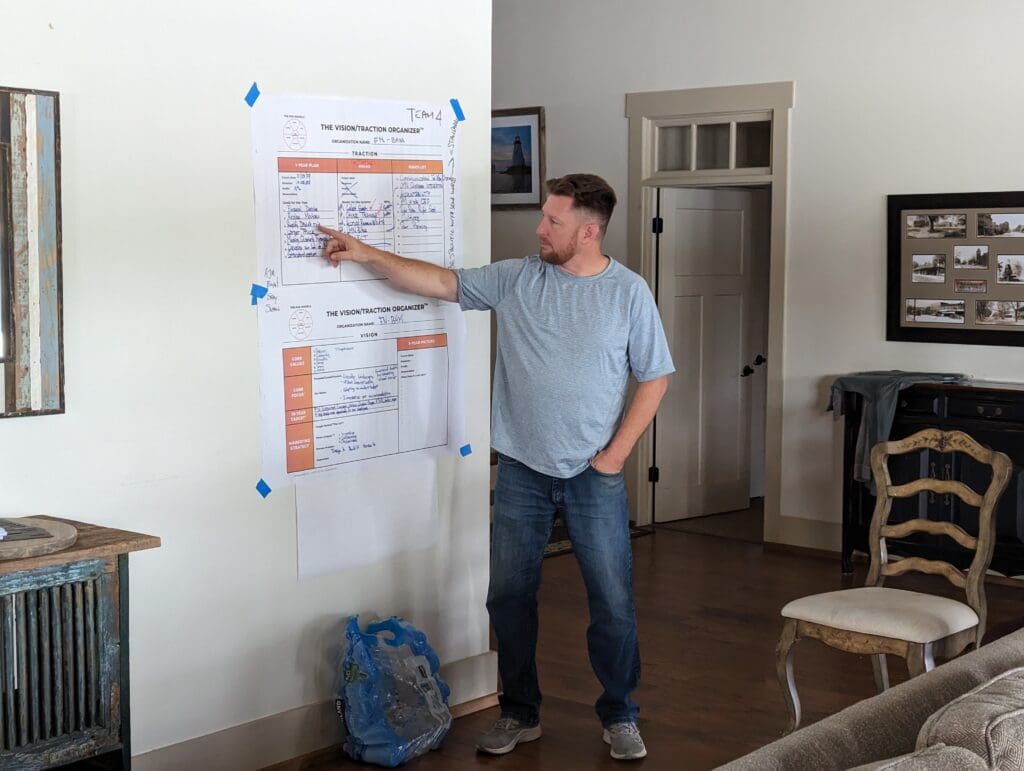
“Where do you want to be in 10 years?” says Justin White, owner of K&D Landscaping, Inc., based in Watsonville, California. “Where do you want to be in five years? You back that down into your one-year goal. Most people will undershoot on what they can do over a long period of time, and then overestimate what they can do in a short period of time. We want to set a really big goal out there of 10 years, and then we want to back that down to the one-year goal.”
White says once they’ve determined their one-year goal, then they can determine what key performance indicators they need to track that will get them to that goal.
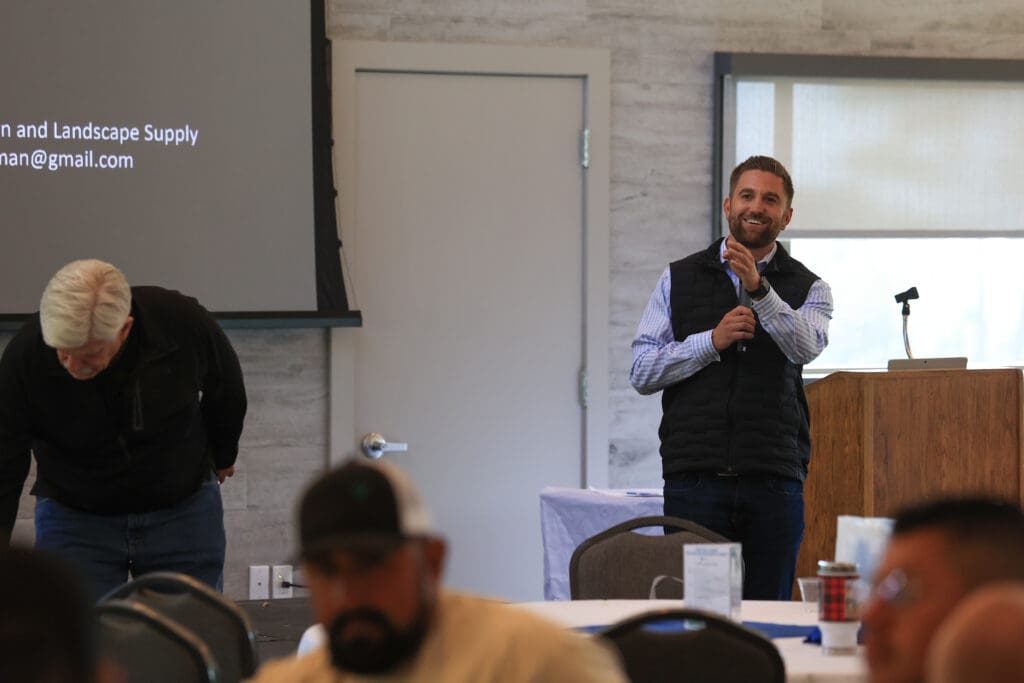
Ashly Paladino, COO of Sun Valley Landscaping, based in Omaha, Nebraska, notes that having clarity and focus is critical for setting their company up for success.
“We believe our success is built on alignment on a few key goals for the year, which then aligns with our quarterly rocks,” Paladino says. “Our quarterly rocks tie back to our annual vision. We also think that the entire company needs to understand where we are heading and what goals we are going to reach.”
Joe Chiellini, VP of Florida for Yardnique and founder of ASI Landscape Management, based in Tampa, Florida, agrees you need to be transparent so your team is all rowing in the same direction.
“If they’re not rowing and talking the same language and talking about the same rocks, it’s not going to work,” Chiellini says.
Budgeting and forecasting are other necessities. Barry Schneider, president of Surrounds Landscaping, based in Sterling, Virginia, says they create a well-thought-out budget and work to sell plenty of work in the 3rd and 4th quarters so they can start spring out strong.
White says they’ve implemented zero-based budgeting this year, so they have to justify every dollar in revenue, cost and overhead.
“We want to justify why are we adding that to the budget, not just simply saying, ‘Well, let’s grow 10% over last year,’” White says. “Because some years we may not grow that much. Other years, maybe we should double the company because of certain reasons. It’s a very intense exercise. It takes a lot of time and energy, but it’s definitely worth it.”
It’s also important to keep an eye on external factors such as the economy and government regulations when planning for the following year.
“As a company, we stay actively involved in NALP committees, as well as state and regional landscaping associations, in order to help us spot and track ever-changing conditions,” says Bryan Christiansen, CEO of Mariani Premier Group, based in Lake Bluff, Illinois.
Chiellini says they monitor the H-2B situation closely as this directly impacts their budgets. Paladino says they pay attention to economic trends that are tied to construction, housing development, and labor costs in their market.

“We don’t panic with every headline, but we do scenario plan based on different outcomes when it comes to pricing and hiring decisions,” Paladino says.
White notes that he seeks out insights from NALP’s partner, ITR Economics, for forecasting.
“I’ve been following them for eight years now, since 2018, and they’re spot on almost all the time, and they give us the data we need,” White says. “That partnership that NALP has is incredibly powerful; that’s what you need to pay attention to.”
White says ITR’s data doesn’t influence their goal setting, but it does inform them how much power they need to put into their sales engine.
“Coming into 2025, I told the team, imagine we’re a sailboat, and we’ve had the winds at our back just pushing us along for the last three years,” White says. “In 2025, the winds are going to shift, and we’re going to have to get the paddles out and start rowing the sailboat, because the wind is just not going to keep us going.”
Reviewing the Year
Analyzing your company’s performance for the current year can also help you make more informed decisions. This can be a time to celebrate your wins with the team and also identify losses, what changes can be made and if any practices need to be left behind.
Schneider says they start by recognizing their wins from the current year. They pay out profit-sharing bonuses and gather the team at their annual holiday party.
“Our current year’s performance is a critical feedback tool,” Christiansen says. “It serves as a clear scorecard on the assumptions and strategies we implemented — whether it was to hit certain numbers or improve an operational issue. If a business segment performed well, we know the decision-making criteria we used was sound, and we’ll apply that same successful framework to our future planning.”
Andrew McCurry, owner of Father Nature Landscapes, based in Birmingham, Alabama, says some of the elements they will review include their leads, sales funnel and confidence in work that will close.
“Your existing year indicates your team’s ability to perform with the existing infrastructure and team,” White says. “So if you did a really good job year over year, you may A) have a great team that could do another good job. Or B) you may have hit your ceiling as a team and fulfilled your full potential with very little left in the tank to go to the next level. So you really have to understand what cycle are you in.”
If your team is at the beginning of that cycle, it’s easy to double down and grow even more the following year. However, if your team is hitting their limit, this can indicate the need for additional training, growing your leadership team and improving your capacity so you can reach that next level.
Schneider says if they missed any goals, they look at the root causes so they can implement solutions that will allow them to reach next year’s goals.
Paladino says they go through a process regularly to see what current practices no longer serve them.
“You have to decide when something isn’t working and you have to make a change quickly,” White says. “The speed of your decisions is going to be one of your most important key performance indicators, as a leader.”
McCurry cautions against removing ‘old-fashioned’ procedures if they can still scale, as not everything needs to be new, shiny and software-driven.
“If you’re not looking at what didn’t work and making adjustments, you’ll fail,” Chiellini says. “Listen, it’s okay to fail too, because that’s how we grow and get better. We literally take on that thought process. Just because it was a great idea six months ago doesn’t mean it’s a great idea now.”
Collecting Team Feedback
Another aspect to consider as you prepare for 2026 is feedback from your team members. Sending out surveys and requesting feedback in various meetings are two main ways to gather their input.
White says they send out an employee Net Promoter Score on a quarterly basis, followed by a more in-depth employee engagement survey that asks how they would improve the company. Paladino says they also conduct a quarterly pulse check survey with a longer survey in the fall.
“We utilize company-wide quarterly town hall meetings as a way to tackle and communicate about the feedback we get from these surveys,” Paladino says.

Schneider says he is always open to hearing new ideas, especially from those who are executing the work.
“I have always believed in the principle of asking for feedback from my teams and working with them to find ways we can improve,” Christiansen says. “At the Mariani Premier Group we ask for regular feedback from our family company leaders on how we can do better to serve them, our clients and our associates. We also do annual NPS surveys across our field and office associates to learn more about how we can be more helpful as a leadership team.”
Christiansen says if you want to get the best insights from your team, you have to create a culture where team members feel safe being honest with their leaders about how to improve.
“Great ideas for improvement can be found at all levels of the organization and should be encouraged and supported,” Christiansen says.
Selecting Initiatives and Priorities
Once you’ve taken the time to review your past performance as well as your goals for the new year, then you can determine what initiatives will help drive you forward.
There are often multiple ideas you may want to implement, but it’s important to narrow these down to a feasible number.
“Throughout the year, we see and hear so many great ideas from attending peer group meetings to reading The Edge Weekly or going to NALP’s ELEVATE or Field Trip,” Schneider says. “The great ideas are endless so we gather all the ideas and narrow the list down to four or five achievable initiatives for the coming year.”
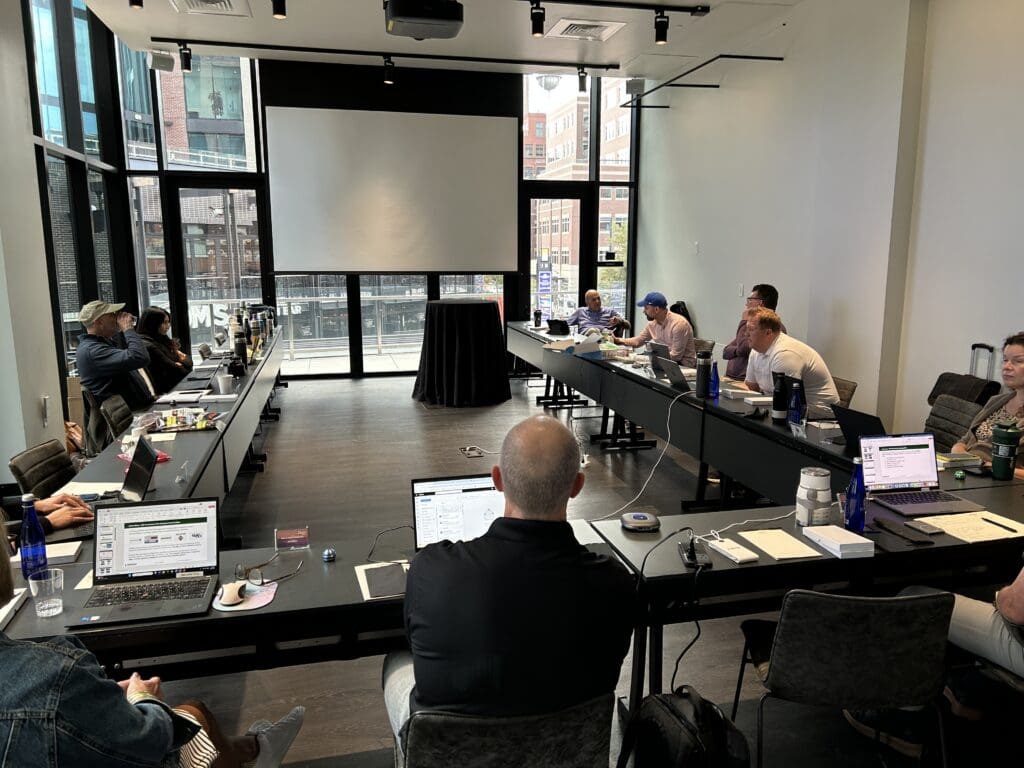
White says they will list all the ideas they’ve gathered throughout their planning session on a board, and then everyone votes for their top two initiatives they want to select.
“From there, we’ll do another round of voting, and the majority wins,” White says. “The leadership team decides those five initiatives through that process. It’s fun, it’s fair, and usually yields the best results.”
Christiansen says they have several core strategic pillars that they build their initiatives around.
“Every potential new initiative is first filtered through our strategic planning framework, starting with the question, ‘What would we have to believe for this to happen?’” Christiansen says. “If an idea fails to meet the core criteria of this initial test, it’s an immediate ‘deal killer.’ Alternatively, if a potential initiative meets the ‘what would we have to believe’ criteria and moves forward to become a focus for the next year, we proceed with confidence that this choice is a solid one.”
McCurry says when they evaluate the changes they want to make next year, they look at what is needed the most and analyze the cost/benefit that the organization will see as a result of the new changes.
“Our desired changes are based on analysis of things like retention data, margins, NPS, etc.,” Paladino says. “We also do an annual SWOT (Strengths, Weaknesses, Opportunities, Threats) analysis and evaluate levers from this for long-term growth.”
Advice for Others
Just like how you are unlikely to actually run a marathon without setting the initial goal and following through with the necessary training, you need a vision and a strategic plan if you want to reach your targets in 2026.
“You’re never too small or too big to do strategic planning,” Chiellini says. “It is a must if you want to be successful and then share that plan. That’s big too. Don’t just keep it to yourselves. Everybody needs to share in that plan and what the vision is. Within that strategic plan, everything should go back to the vision of who we are and what we are.”

Schneider suggests networking with fellow landscapers to learn from them. McCurry also recommends hiring a coach to walk you through a planning session so you can structure you meetings to get the best return.
“A good coach can also teach you how to write your first budget as well as walk you through many other issues that you will face being a business owner,” McCurry says.
Christiansen and Paladino stress the importance of knowing your numbers.
“If you don’t know your numbers, you don’t know your business,” Christiansen says. “Second, stay true to a disciplined decision-making process to guide your choices. Discipline provides stability to your clients and team. Third, listen to your clients and team. Great clients and great team members want the business to be successful. Embrace their feedback and use it to inform your decision-making process. And finally, empower your team. The best team is one that truly works as a team.”
White adds as a leader, in order to take your company to the next level, you have to work on yourself as well.
“As we go into the new year, ask yourself, ‘How can I show up in a more positive, more mindful way to our team and be a bigger support to them?’ rather than showing up stressed out and concerned about things.”
This article was published in the November/December issue of the magazine. To read more stories from The Edge magazine, click here to subscribe to the digital edition.
