

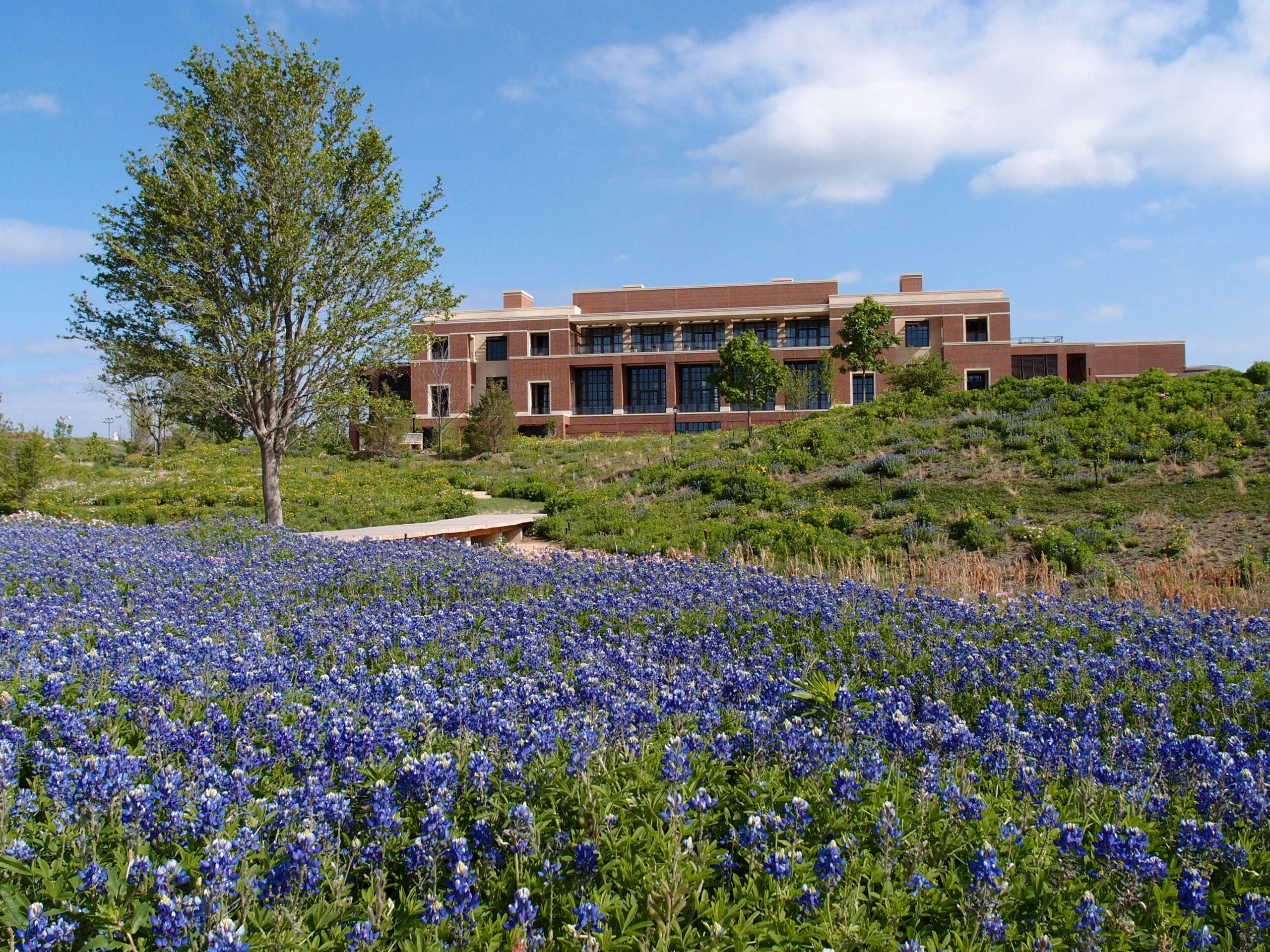
For nearly 15 years, this park has been a highlight of the Southern Methodist University campus in Dallas, Texas. But it hasn’t always been this way. Before 2011, the site was underused and covered in pavement.
As plans came together for a change, the goal was clear: Create a native plant community in the heart of Dallas. Southern Botanical, based in Dallas, was selected to install and maintain this 15-acre park. Their efforts led to them receiving an Exterior Landscape Management Decade Award in the 2024 Awards of Excellence.
“Winning the Award of Excellence for the Laura W. Bush Native Texas Park is an incredible honor for our team,” says George Herrera, account manager with Southern Botanical. “It reflects the dedication, expertise, and care that go into maintaining one of the most unique and ecologically significant landscapes in Dallas. This recognition validates the collaborative effort between Southern Botanical and everyone who contributes to the park’s ongoing success. More importantly, it highlights the value of preserving native Texas prairies and serves as a reminder of what can be accomplished when sustainability and stewardship are prioritized.”
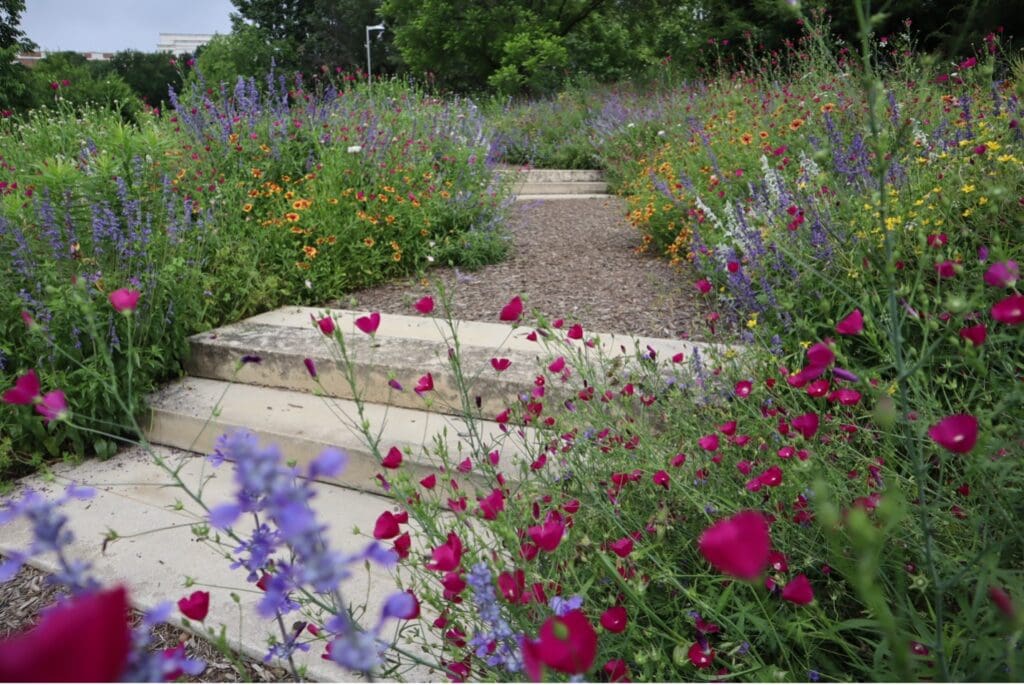
As the install began, the team sought to transform the space into a Blackland prairie. This ecosystem was once common in Texas, but now it’s endangered.
“The Blackland prairie is defined by its deep, fertile clay soils and its unique mix of native grasses and wildflowers,” Herrera says. “The park reflects this ecosystem through its plant palette and sustainable design. In addition to its extensive native grass and wildflower communities, the park features trees like native pecans, Texas ash, Shumard red oak, and several other varieties of oak, including chinkapin and live oak.”
Before the prairie was installed, the soil was engineered in layers to form the right topography for the space. These efforts paved the way for pilot projects that would determine the plant mix for the park.
“Pilot projects were essential in helping us learn how to balance cost, sustainability, and plant performance,” Herrera says. “For example, we tested the use of wood chip mulch in targeted areas that our trees have taken over with shade. This experiment proved effective in improving soil health, retaining moisture, and reducing costs without compromising the natural look of the park.”
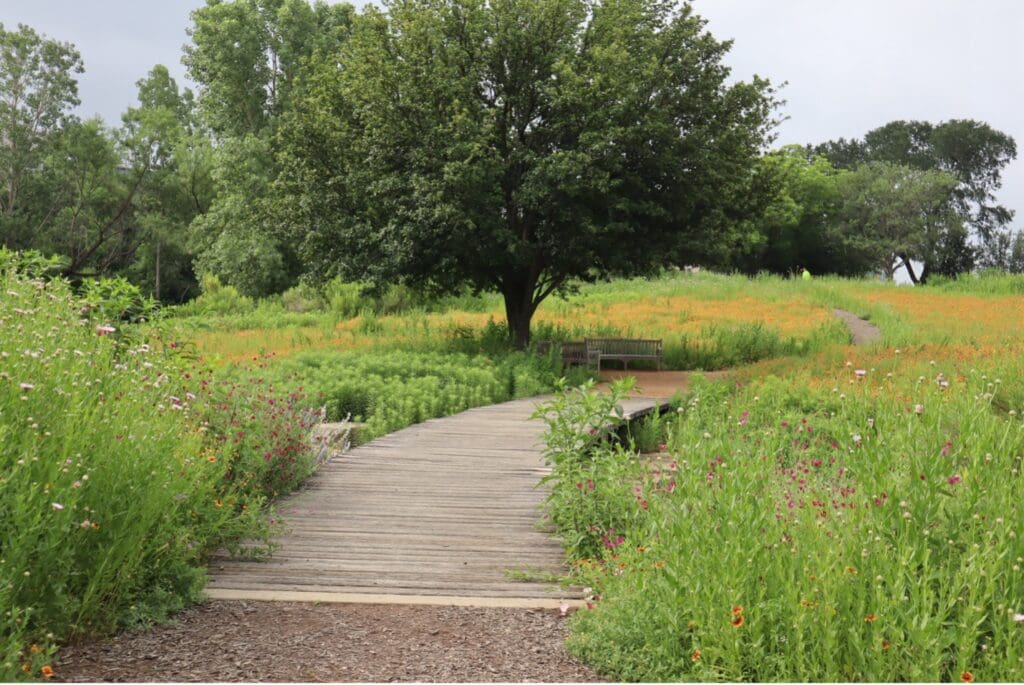
With sustainability in mind, the team wanted species that would thrive with minimal irrigation and look good in every season. Southern Botanical partnered with the Lady Bird Johnson Wildflower Center to fine-tune the design. The pilot projects determined that irrigation would be needed in the first year to avoid failure. Once the plants became established, the center began saving over 6,000,000 gallons of water each year by not having to irrigate the herbaceous species.
Today, over 200 native species are found on the property.
“Some of the plants we’ve used over the years are prairie grasses like switchgrass, little bluestem, Indian grass, side oats grama, and buffalo grass,” Herrera adds. “Other wildflowers include bluebonnets, Indian paintbrush, basket flower, blue flax, salvias, and scrambled eggs.”
To make use of local genotypes, the team sourced seeds from within 250 miles. With such a diverse palette, it was hard to find certain species. The team worked with private seed owners to obtain seeds for the rarer species. They also had contracts with various nurseries to ensure the seed was available.
Besides using natives, the park has swales and a cistern to collect rainwater.
“More than 2,560 feet of vegetated bioswales filter stormwater into a 252,000-gallon cistern, eliminating the need for use of potable water,” Herrera says.
Each year brings new challenges for the maintenance program, starting with the weather.
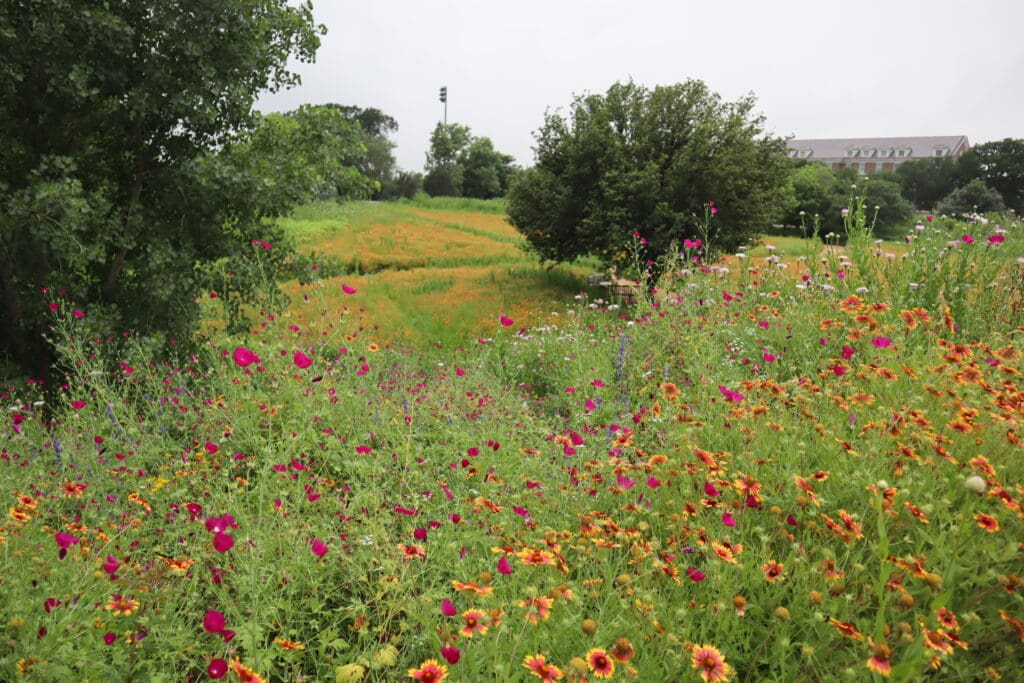
“This year’s abundant spring rainfall brought a surge in wildflower blooms and increased growth in our prairie grasses,” Herrera says. “Basket flower had a strong season. While it provides a beautiful display, we worked carefully to control it because it resembles thistle and can compete with other species if left unchecked.”
Spring rains also encouraged fungal diseases on certain shrubs, so the team used targeted treatments to manage any issues. In a drier year, the cistern is used to irrigate trees and shrubs, while the herbaceous plants require no extra water.
With thousands of visitors each year, the park receives occasional damage from humans.
“Bicyclists occasionally ride through wildflower areas, so we use natural materials like branches to create barriers that protect the prairie while preserving its natural look,” Herrera says.
For over a decade, Southern Botanical has partnered with their client, Robert Favela, to uphold the high standards for the park.
“Robert has a background in native park ecosystems, and his passion for preserving this space makes him an invaluable partner,” Herrera says. “He’s highly engaged, regularly walking the park with our team and participating in seasonal evaluations. His feedback helps guide our priorities, whether it involves plant selection, ecological adjustments, or refining our maintenance practices.”
The impact goes beyond this park as Southern Botanical has seen an uptick in demand for native designs that resemble this stunning property.
Interested in participating in the Awards of Excellence? Be sure to enter your projects when entries open in early 2026.
