

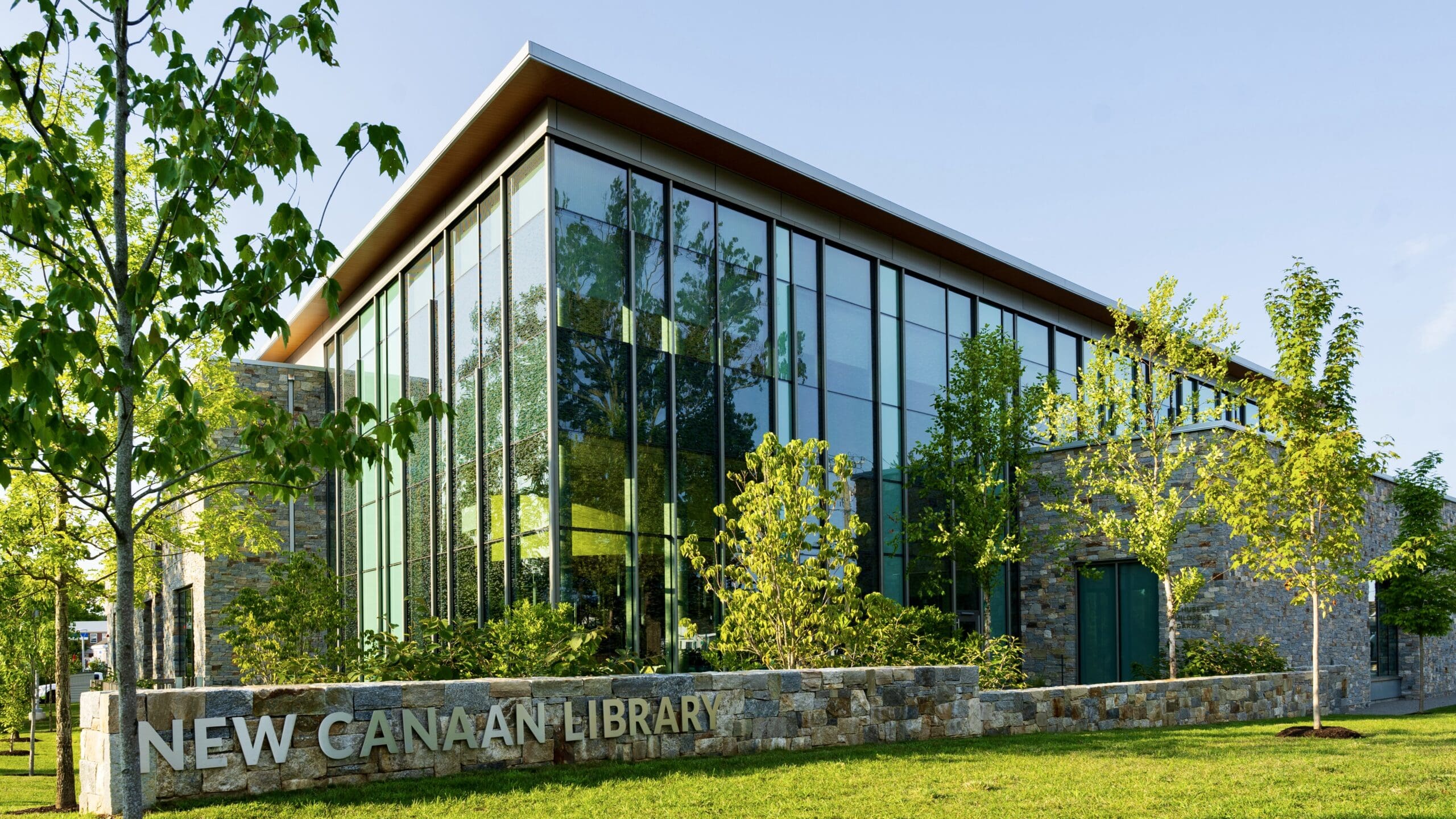
This library in New Canaan, Connecticut, has been at the center of the community since 1877. About 10 years ago, the leaders of the library began exploring ways to make the property more nature-centric to connect visitors with their natural surroundings. Years of planning led them to create a landscape that encourages outdoor learning and meets the library’s climate action goals for sustainability. Once the plans were finalized, the leaders worked with Eastern Land Management, based in Stamford, Connecticut, to meet their ambitious goals. These efforts led to a 2024 Gold Award of Excellence.
“The library is a prominent part of downtown and boasts an amazing space for residents and visitors to enjoy a modern, open, and airy space,” says Chris Koenig, a branch manager for Eastern Land Management. “It’s nice to receive recognition within the landscape industry for the work we performed because that’s not the focus within the community. Local recognition is good, but it’s more about the people being able to enjoy the space itself, regardless of who did the install.”
Before the renovations began, this landscape was like most libraries in New England. With the new sustainability goals, the ELM team focused on using water efficiently through smart irrigation, along with adding pollinator-friendly perennials. They also wanted to source materials from the local region.
For ELM, the install began in November 2022 and finished in early summer 2024.
“The project was a long one, as different areas of the site were turned over to us as other trades began to move into the next area,” Koenig says. “While there were only two formal phases, each phase had several microphases.”
Over 50 varieties of plants were added to the site, including 30 trees. The variation posed a challenge for availability.
“Certain trees become available after spring digs and others after fall digs,” Koenig says. “Many times, the job site was not ready for us until the off-season for that species to be dug. If not purchased and picked up from vendors closely following the seasonal digs, we run the risk of lesser quality specimens being available when the job site is ready.”
Perennials and shrubs had the same issue with availability, so ELM made a temporary nursery at their Connecticut and New York locations.
“At times, this was close to a thousand pieces,” Koenig adds. “All these materials needed to be watched over and maintained until the time of installation, including over winter.”
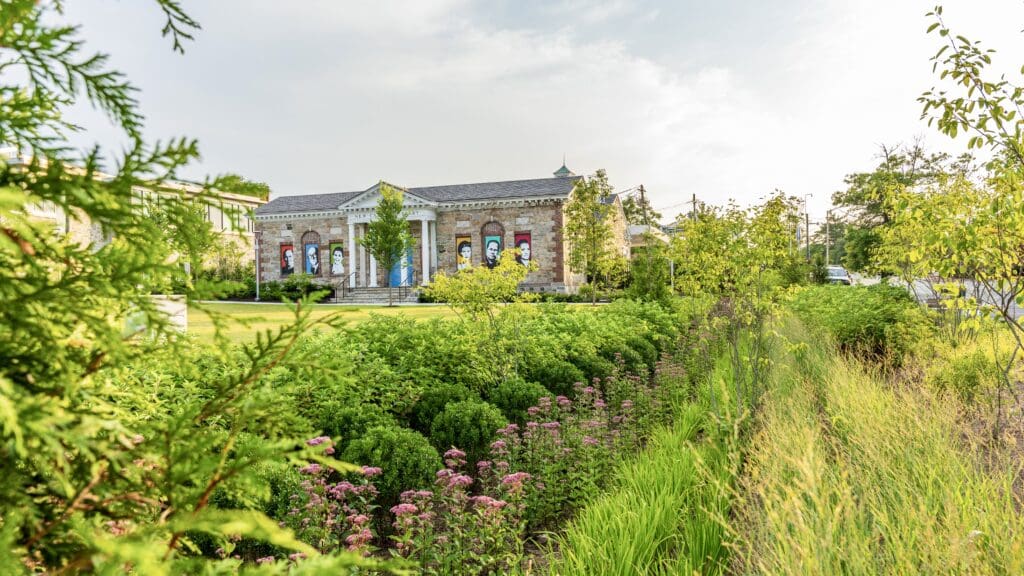
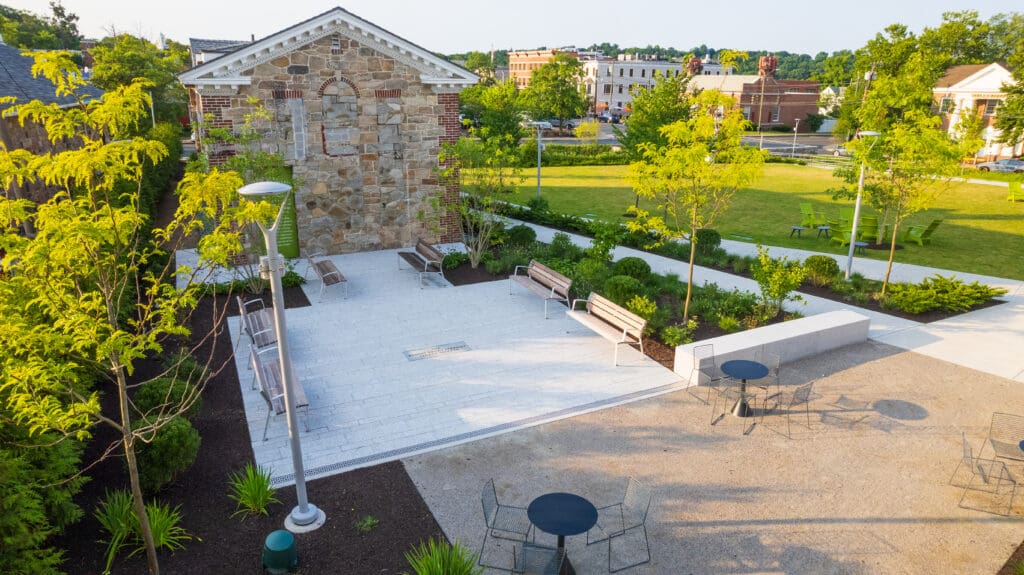
One building on the property, known as the Legacy Building, was relocated to a more prominent area of the site during construction. This older structure complements the newer buildings, providing the perfect backdrop for the new lawn. A paver patio on the building’s southside creates open space for events, while beds of shrubs and trees soften the patio perimeter.
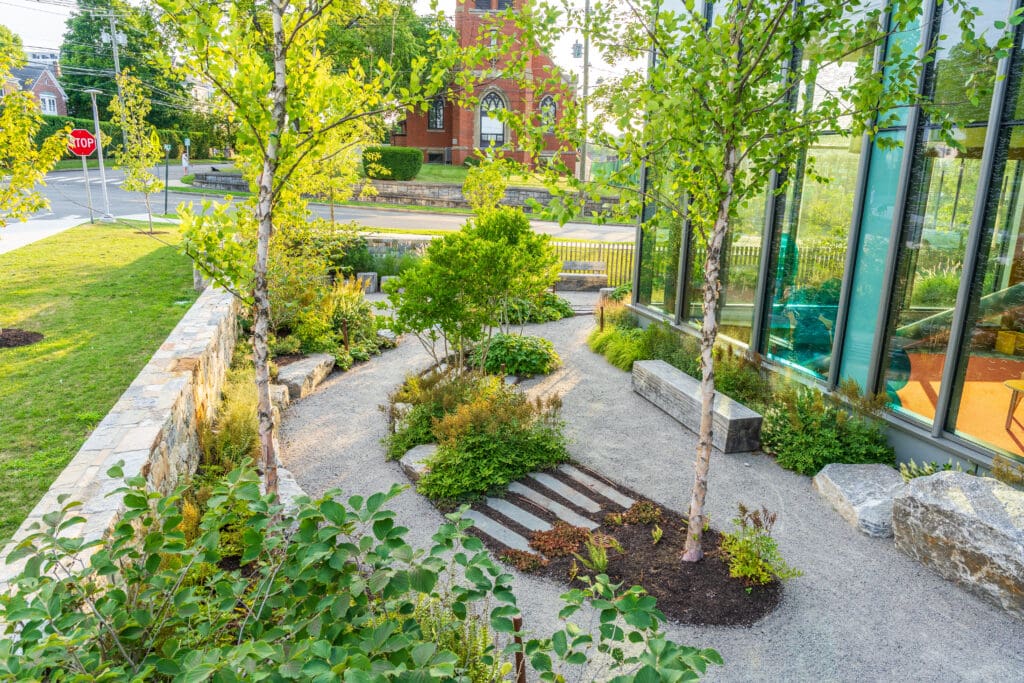
Several areas are designed to immerse visitors in the natural environment. A children’s garden features winding gravel paths and a variety of trees, shrubs, and perennials. The garden is right outside the indoor children’s wing, with large windows that illuminate the space, creating a “nature TV” to enjoy in every season. A stone wall surrounds the garden, while boulder benches and stumps provide ample seating.
Boulders were another key part of the install. Over 20 granite benches and natural boulders were used in various areas. Each of them was hand-selected at quarries and ranged in weight from a couple of hundred pounds to nearly 4,500 pounds.
A common theme of the landscape is ‘biophilia,’ which emphasizes a desire to connect with nature. This is evident throughout the property, including the meadow garden that is adjacent to the legacy building. In addition to using natives, the meadow provides a wide buffer between the central lawn and the street.
From visitors to other contractors, the team took careful steps to minimize disruption.
“The general contractor held weekly meetings across all trades to keep those informed as to what coordination needed to happen,” Koenig says. “Day to day, we worked closely with those on-site to coordinate scheduling and work areas as best as possible.”
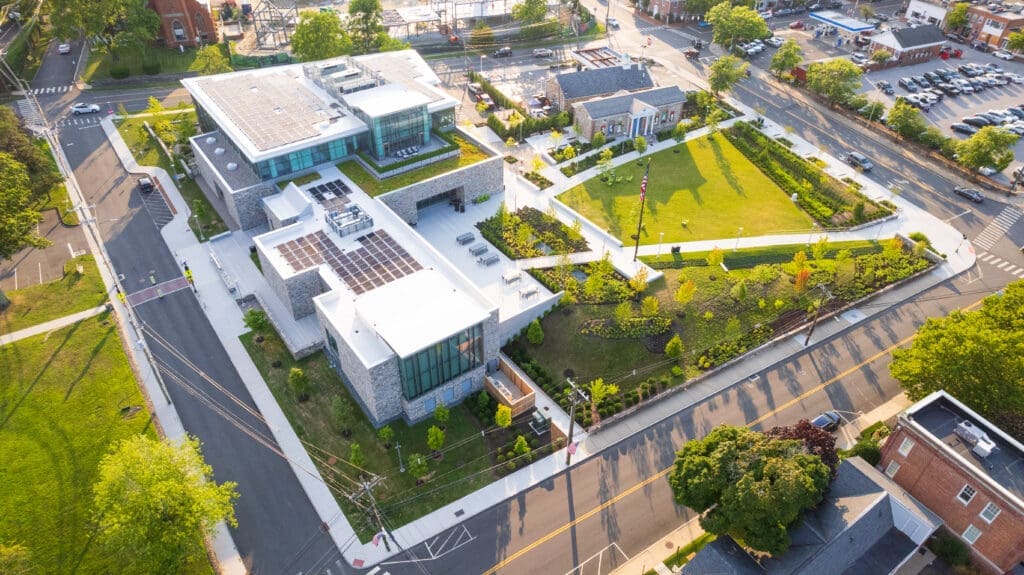
Each area was done in phases to let visitors access the buildings and reduce safety concerns.
With the addition of the new landscape and buildings, the space has brought a renewed sense of community.
“Feedback from both the client and the public has been great,” Koenig says. “When visiting the area, there is often overhearing of remarks and conversations amongst people that are around and in the space.”
Interested in participating in the Awards of Excellence? Be sure to enter your projects when entries open in early 2026.
