


For years, landscape lighting has been more of an afterthought than an essential element to customers’ landscape projects. However, more landscape companies are including it as a standard feature, allowing them to create a more cohesive design that is stunning both day and night.
“For us personally, we automatically include it in every single design that we do,” says Landon Kirby, owner/CEO of Knob Hill Landscape Company, based in Springfield, Illinois. “We automatically include it, and then I present my designs with a 3D design software, so we’re able to show the nighttime version. I would say that on average, we probably have less than 5% of our projects that have no lighting.”
Jeff Rossen, CEO of Rossen Landscape, based in Great Falls, Virginia, says for his clients, it is a given that their designs will include landscape lighting.
“Sometimes they opt out, but we always design it in,” Rossen says.
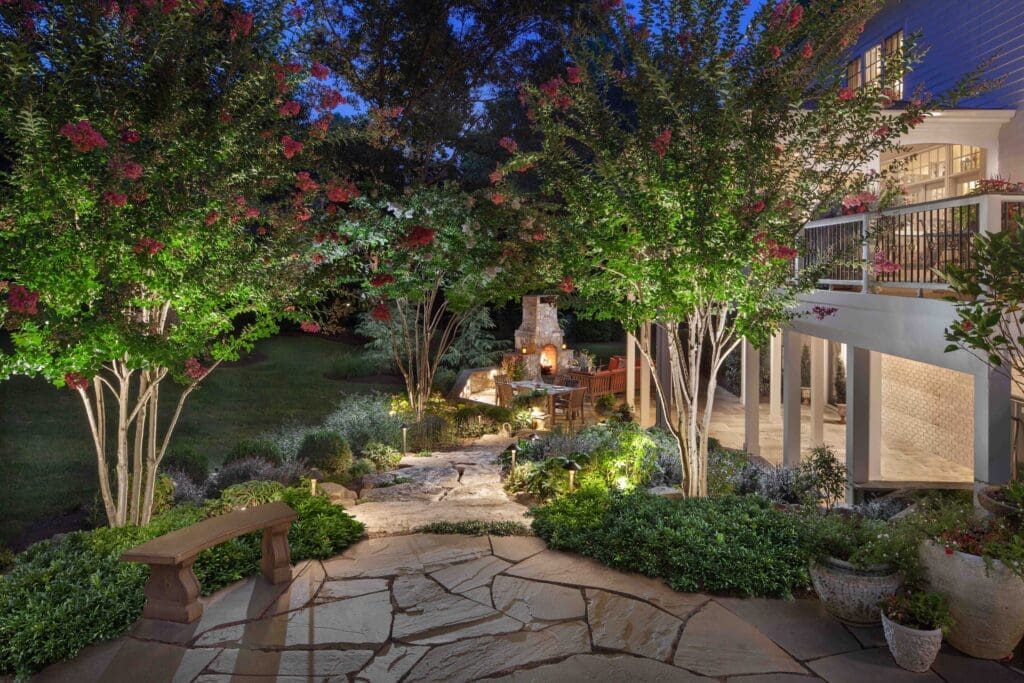
Robert Karleskint, lead sales and designer for lighting, irrigation and audio departments at Frisella Landscape Group, based in Richmond Heights, Missouri, says they encourage their clients to see landscape lighting as part of the whole design, planned alongside their designers and installers for maximum impact.
“Our clients consistently say lighting adds incredible value and beauty, and we seamlessly fit into the landscape project as one of the final touches that lets our clients fully appreciate their investment in beautifying their home,” Karleskint says.
Even if your clients opt to save lighting as a future enhancement, Cole Jenkins, associate landscape designer with Weller Brothers Landscape Professionals, based in Sioux Falls, South Dakota, recommends planning for its future installation by incorporating any necessary conduit and wiring during initial construction.
Creating Cohesive Illumination
Pathway lighting is one of the most commonly requested types of landscape lighting by customers. Jenkins says he challenges clients to think beyond utility and embrace lighting as a design element.
“Thoughtfully placed fixtures such as up lights, flood lights, canopy lights, etc., can accentuate key features, create depth, and cultivate a warm, inviting ambiance that transforms the outdoor experience,” Jenkins says.
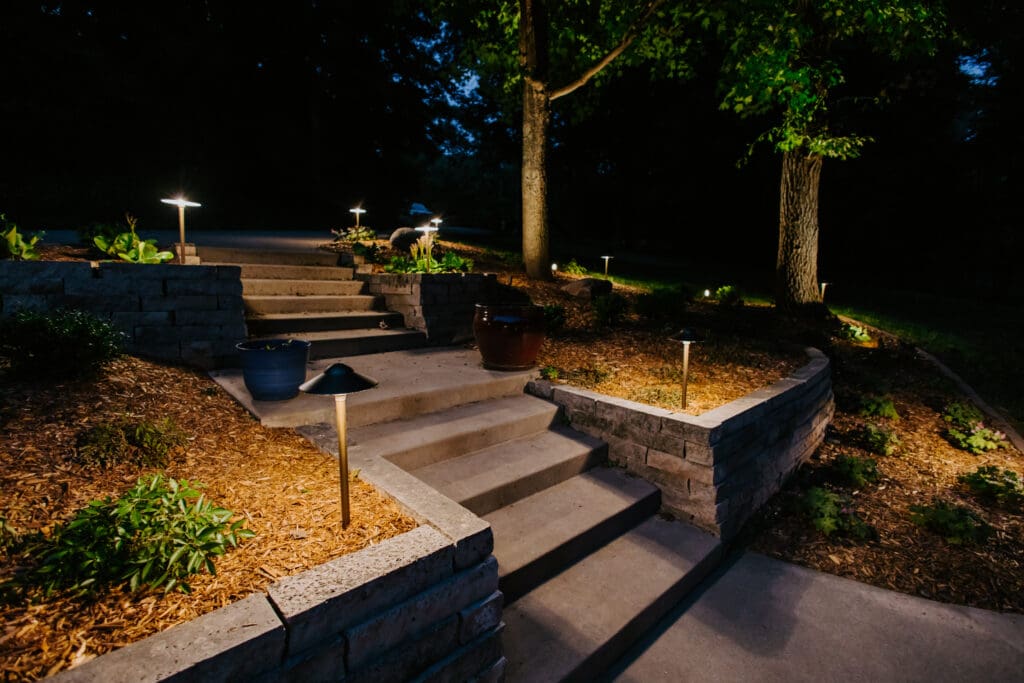
Rossen says customers also tend to want structural lighting for pool houses and gazebos. Karleskint adds their clients are most interested in focal point and full home lighting.
“We design layered lighting that goes from low plantings and walkways, retaining wall lighting to mid and tall tree lighting so there is an even ambient illumination that allows you to see the perimeter of your yard at night, enjoy your features like beautiful tree plantings, water features or hardscapes,” Karleskint says.
One frequent practice when designing is to match the lighting to the architectural style of the house.
“I also like to highlight the stonework on the stone columns on the house, on the front door, or the corners of the house are wrapped in stone,” Kirby says. “Let’s really highlight that two-story. Let’s really show how grandiose that front entrance is. I think it’s really important that you’re blending and designing your lights in your landscape, but also to complement whatever the style of the home is.”
Karleskint says not only do they match the shape and style of the fixtures to their client’s home but also the lighting color, brightness and amount of illumination to specific tree species. The color of the home will determine whether a warm or cooler look is needed.
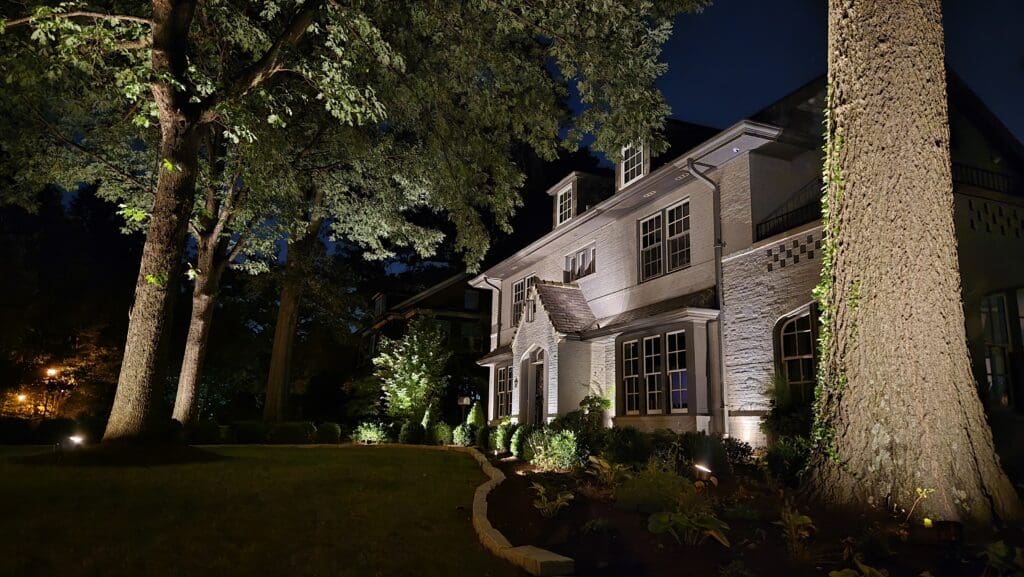
“We also add lighting at varying heights of the house to attract the eye to architectural features like peaks, beams or features and ensure no odd shadows are cast due to improper lighting design,” Karleskint says.
Jenkins says modern homes lend themselves to clean subtle lighting while traditional style homes benefit from classic, warm-toned fixtures. For rustic spaces, soft natural lighting blends best.
“Matching the lighting to the home creates a cohesive and intentional look,” Jenkins says.
Going Beyond the Basic
There are numerous lighting techniques that can enhance the overall design. Layering these different lighting methods can help you move past mere functionality and create a truly dynamic outdoor experience.
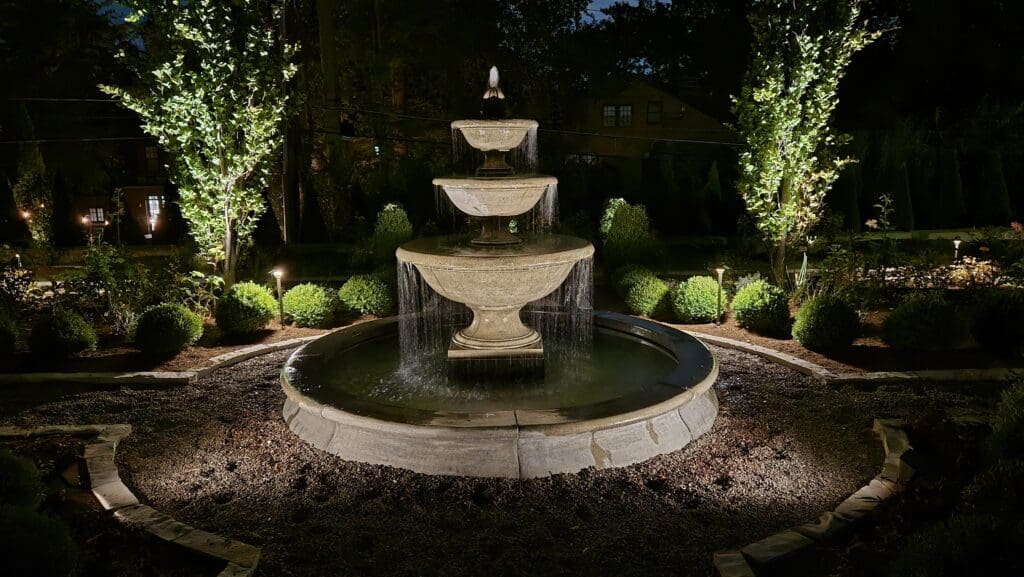
Uplighting can be used to highlight trees, architectural features and focal points. Karleskint says he loves using larger bulbed fixtures that can go up to 13 watts and light up a 50-foot-tall oak canopy and trunk when properly placed.
Jenkins also suggests lighting water features, steps and hardscape features. Subtle underwater or perimeter lighting can enhance the movement and reflection of water, while hardscape lighting can seamlessly improve the overall ambiance of the space.
Wash lighting can highlight the texture of stonewalls, woodwork or other surfaces.
“One of my personal favorite’s power-controlled wash light as it gives powerful, but even lighting to everything from walls to broad, but shorter tree canopies,” Karleskint says.
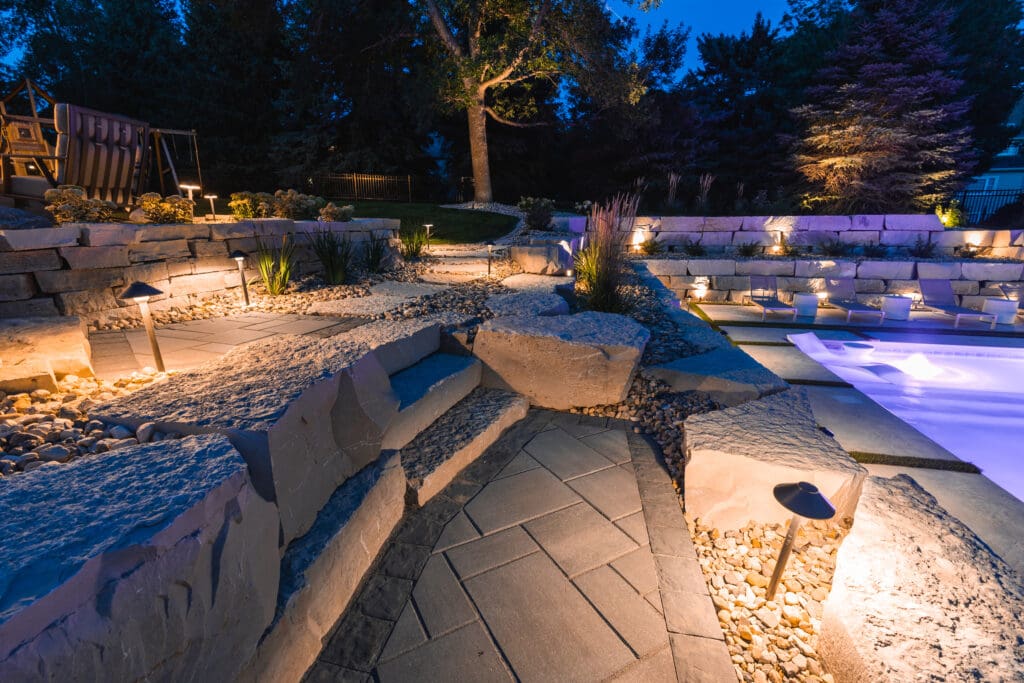
Kirby says that while customers are accustomed to seeing path lighting or uplighting on a tree, downlighting in large mature trees can really set the tone for the space.
“When you have those lights that are fairly powerful, it just lights up the whole space, so you’re able to see it under like a moonlit glow,” Kirby says.
Rossen also likes installing moonlighting because it can cast shadows down on the patio or walkways with the branches and leaves.
“As the wind blows, it kind of creates a little fluttering movement within the walkways and pathways, so that can be an interesting way to light things,” Rossen says.
Tapping Into Trends
Another way to elevate your landscape lighting is to take advantage of the new technological capabilities available. Many clients are looking for smart home integration where they can control their lighting via an app.
“You can do a lot more with your lighting, being able to set certain moods,” Rossen says. “You got weekday mode, where maybe you’ve got the lights turning off at 10 o’clock, whereas you put it in weekend mode, and the lights will stay on a little later, midnight or 1 a.m. where you may be entertaining or want to show off the home in the evening, and also you’re using it more on the weekends.”
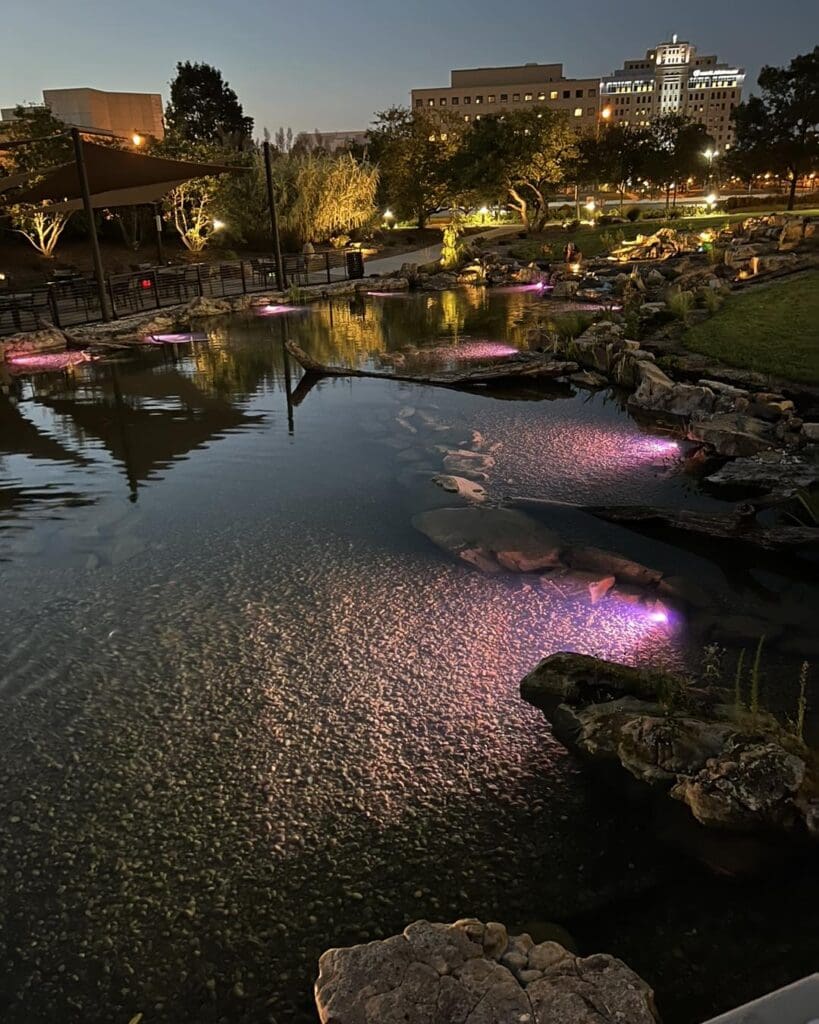
Color-changing technology is particularly popular as it allows customers to access a full spectrum of hues for seasonal looks at Christmas, the 4th of July or Halloween. Karleskint says some clients even opt for their sports team colors on game day.
“As more reliable options have become available in color-changing fixtures we have seen an increase in the desire for these types of fixtures that allow full spectrum color management, dimming capabilities and specific fixture or zoning light and color control,” Karleskint says.
An additional benefit to offering color-changing technology is it allows clients to switch between vibrant colors and more classic, soft whites.
“I think people are crazy to not use it just because of those options,” Kirby says. “It gives you so much flexibility and the infrastructure is all the same. Literally, you’re usually only having the increased cost of the bulb itself. I let them prioritize how they want to spend their money. We include several of those upgrades or options in there. I let them decide do you want to have the lighting, or do you want to have smaller plants? Where do you want to spend your money? A lot of times people like that wow factor.”
Key Takeaways
- More landscape companies now include lighting in every design, shifting it from an optional upgrade to an integral part of the overall aesthetic and function.
- Successful lighting design enhances architectural features, matches home styles, and uses layered techniques to create ambiance and depth.
- Smart home integration, color-changing fixtures, and mood settings are growing in popularity, allowing homeowners to tailor lighting to seasons, events, and personal style.
