

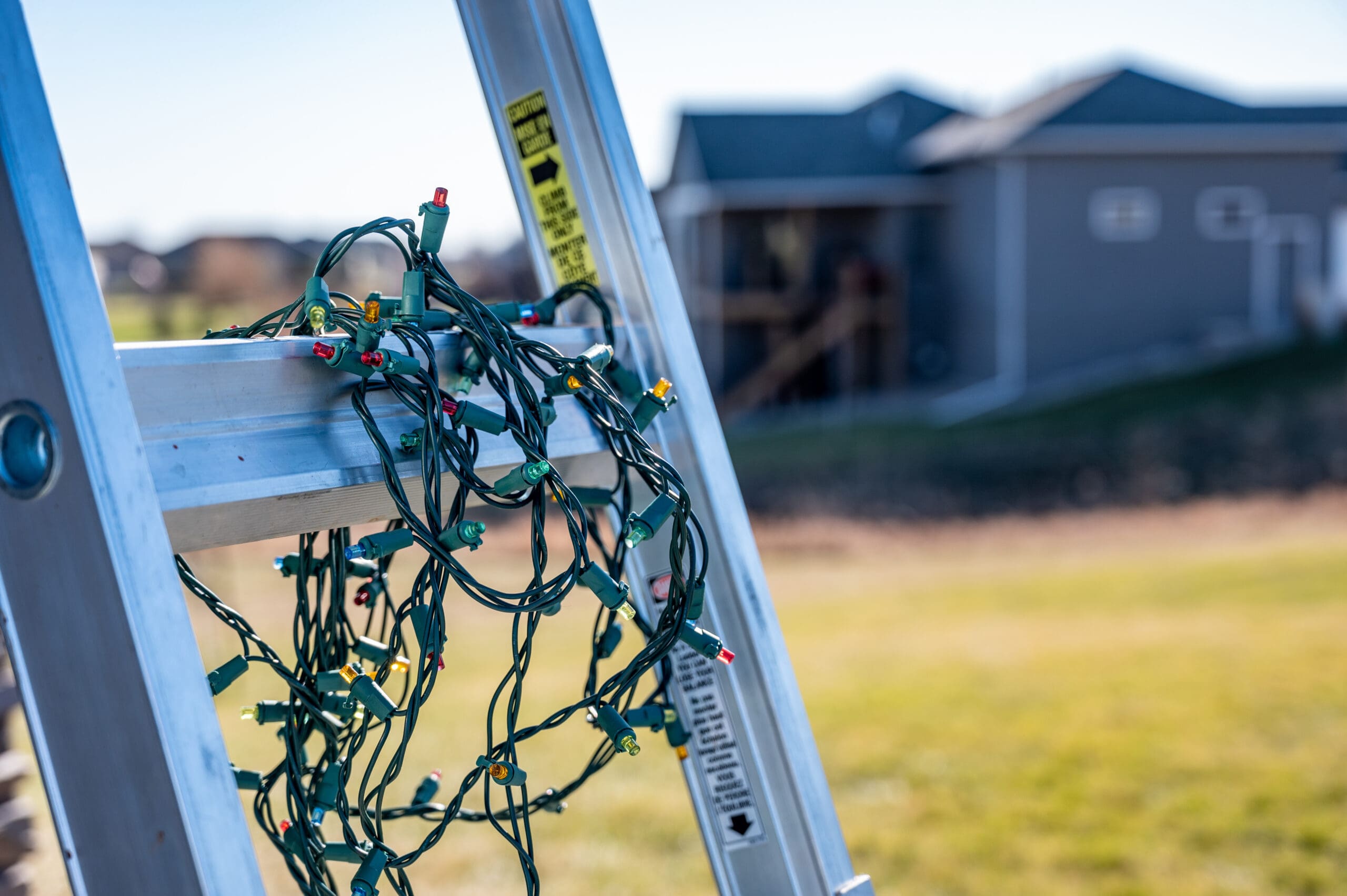
If your landscape company offers holiday decor services, chances are you’ve been installing lights for a while already if you have commercial clients and probably some eager residential clients as well.
However, no matter how long your business has been hanging lights, it’s always important to stress ladder safety to your crews. Your team may not assume there’s much risk to working on ladders, but most ladder deaths occur from falls of 10 feet or less.
Common Accidents Installing Holiday Lighting
According to the Consumer Product Safety Commission (CPSC), there are an average of 200 decorating-related injuries per day during the holiday season, most of which are falls.
Falls can occur when employees place ladders on unstable surfaces, overreach on the ladder or slip on rungs due to wet or icy conditions.
High winds can also make ladders less stable. Ladders can tip over if the wrong type is selected for the task or if they are placed on a slippery surface. Always ensure someone is stabilizing the ladder for the crew member climbing.
Employees can also lose their balance if they overload themselves with lighting or tools while climbing.
What to Watch For
Make sure your crews are mindful of weather that can impact their ability to install holiday décor safely. While you want to stay on schedule, it’s not worth working in a drizzle, as it can make ladders slippery and cause accidents.
Also, review the condition of the ladders going out with your holiday lighting crews. Ladders with cracks or splits in the rungs should not be used. Take into consideration the material of the ladder as well as the duty rating. Don’t forget to account for the additional weight of PPE and equipment/supplies being used.

Use the 1:4 ratio rule to ensure the ladder is on level ground. The base of the ladder should be 1 foot from the wall or have support for every 4 feet of vertical extension. To check this quickly, stand with your feet at the base of the ladder and extend your arms straight out. Your palms should touch the top of the rung at shoulder level.
Avoid leaning out beyond the ladder’s side rails, as this increases the chances of the ladder tipping or slipping. Climb down and reposition the ladder as needed.
Safe Ladder Practices
When selecting the right ladder, make sure it extends at least three feet beyond the roofline or support point. For most homes, a 24’ extension ladder will work and a 32’ extension ladder can reach extra-high peaks. A-frame ladders can be used for lower spots like garages and trees.
Always maintain three points of contact with the ladder while climbing, as this minimizes the chances of falling. Make calculated movements as sudden jerks can cause you to lose balance.
Towlines, a tool belt or an assistant should convey materials so you can have your hands free as you climb.
You can also consider implementing additional safety measures, such as a ladder hook that attaches a rigger’s belt to the ladder rung, providing a third point of contact when both hands are needed to work. A ladder lock system can help add stabilization at the top of the ladder. If it is difficult to find a flat surface on a property, leg levelers can provide even footing.
If you want to highlight to your crews what not to do when installing holiday lights, you can always show them the infamous clip of Clark Griswold decorating his house from “Christmas Vacation.”
Why reinvent the wheel? Our Safe Company Program will help build a stronger safety culture, which will help reduce injuries and hazards, demonstrate your commitment to a safe workplace and lower your costs. This program is free to NALP members, so join today!
