


If you’re opting to hire your employees based on their attitude and work ethic, rather than a particular set of skills, chances are not all of them have an encyclopedic knowledge of all the plants they may encounter out in the field.
While you should work to increase their recognition of different plant species through training, a tool you can use to augment their expertise is plant identification apps. There are a number of these available so we’ve outlined a handful of the options as well as their pros and cons, and if there is a free versus paid tier.
PictureThis
With this app, users can snap a picture and not only receive an ID put also plant disease diagnosis and intelligent care suggestions. PictureThis says it has 12,000+ plants, flowers, succulents and trees in their database.
According to Michigan State University, which has been evaluating plant identification apps since 2018, PictureThis has been the top performing app out of the ones they reviewed. Students found in 2023 that this app was correct 73% of the time and if the partial ratings (16%) are added to the correct ratings, the app was helpful 89% across all plant categories.
PictureThis does require a network connection. When offline, photos taken with the app will be saved automatically to the MyPlants section and be identified when the connection is back. One of the cons is the app will always provide an answer and when it is wrong, it can be extremely incorrect.
There is a week-long free trial for the app, but you have to make sure to cancel the subscription afterward if this isn’t the app for your team. It’s possible to sustain a free account, but users will have to log in to an account and watch commercials to earn more free credits.
The paid version of the app is $39.99 for a year-long subscription.
PlantNet
PlantNet allows you to take a picture of a photo and then you are provided with a list of plants, classified by the percentage of certainty.
It is straightforward and is based on image recognition and member involvement. It provides near-instantaneous results. PlantNet claims its database contains 46,050 plant species.
The mobile version of PlantNet allows you to perform plant observations in the field, possibly geolocated (if your GPS is activated and you share your location with the app) without a mobile connection.
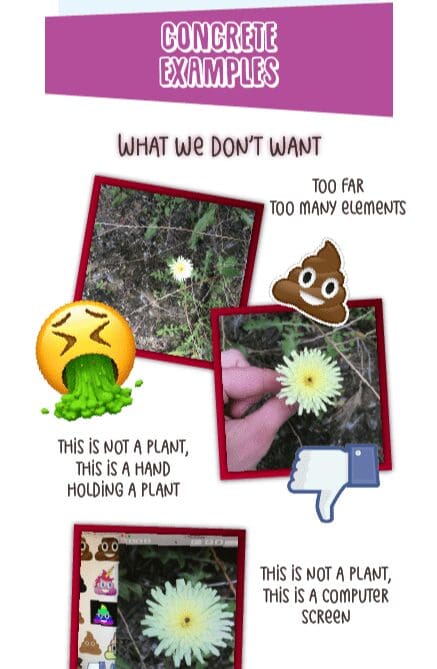
The only con for this app is it is particular about the type of pictures it needs to properly identify a plant, so your crews might get frustrated with that aspect.
This app is completely free and has no ad tier.
LeafSnap
LeafSnap boasts of a database of more than 32,000 plant taxons from all over the world. The app features a basic plant identifier and an Advanced Identify function. The Advanced Identify function can identify a plant from a photo of the whole plant, from a photo of its flower or from its leaf only.
The app also provides a diagnostic feature that provides care information, recommendations and step-by-step guides. The main con is the free version has ads, but it does not limit the app’s other capabilities.
LeafSnap has free and paid tiers. A year subscription is $25.99 and a monthly subscription is $4.99.
PlantSnap
PlantSnap allows users to identify plants, flowers, cacti, succulents and mushrooms in seconds with the click of a button on their mobile device. It has 600,000+ plants in its searchable database. The app claims it can currently recognize 90% of all known species of plants and trees.
It has an auto-detect feature that can automatically find the plant in your photo and help you know when to take the picture.
The main con is that in reviews, this app isn’t as accurate as some of the other options.
This app has a free seven-day trial, monthly access for $2.99, yearly access for $19.99 or lifetime access for $59.99.
Mistakes to Avoid
Technology is only as good as the people who use it. The main issue your team might encounter while using plant identification apps is taking poor quality photos. Educate them on how to take images that are in-focus, well-lit and include the key features like leaves or flowers for the best results.
Another mistake is overreliance on the apps. Educating your team on the common plants they’ll encounter while working should still be a priority. The apps should merely serve as a stopgap until you bring new hires up to speed.
Stress to your team that these apps are not infallible. Don’t ignore the overall context of the environment the plant is in when making identifications. The U.S. Department of Agriculture (USDA) PLANTS Database can help you double-check the known distribution of your identified plant.
