

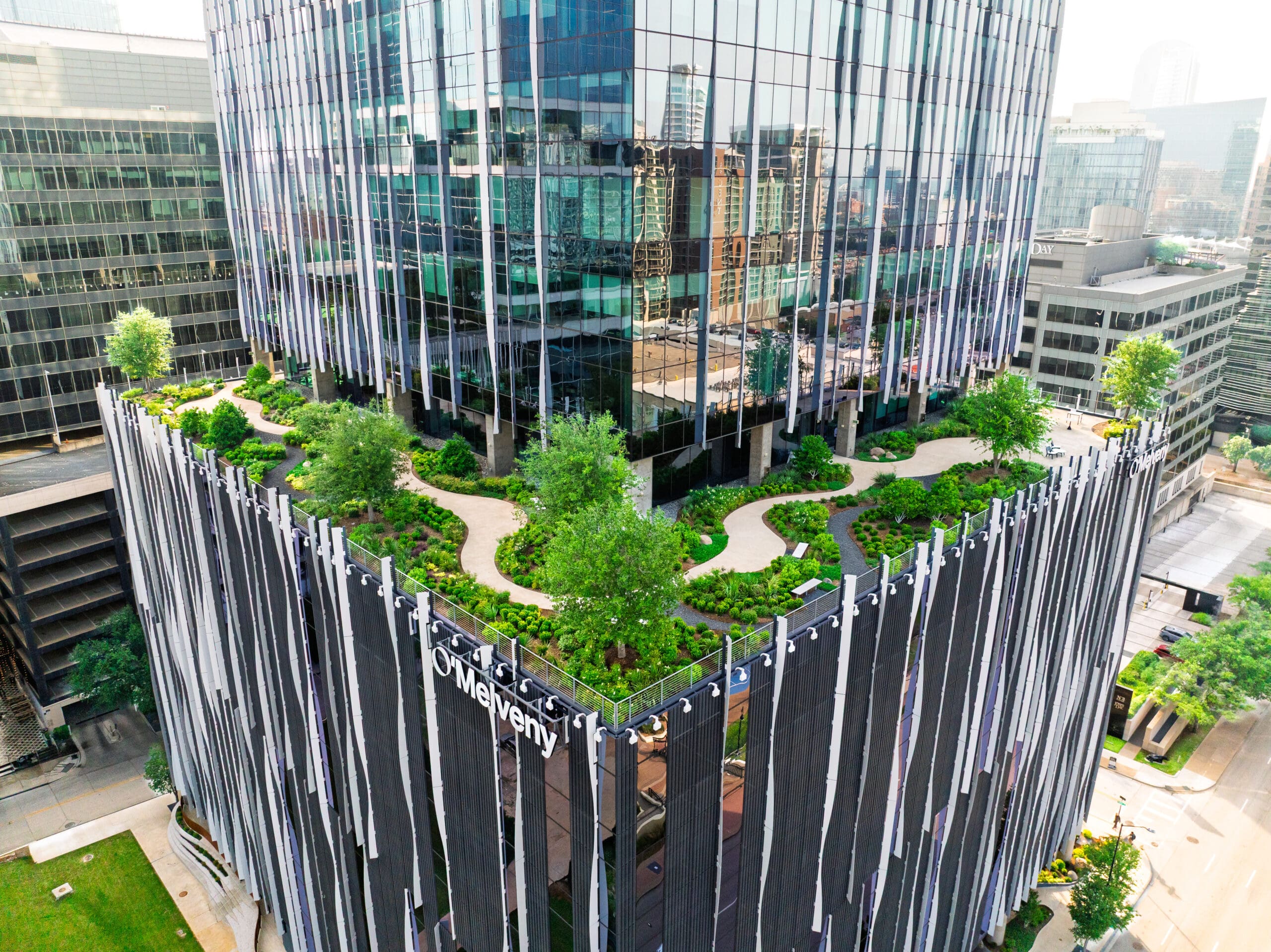
Southern Botanical, based in Dallas, Texas, was tasked with developing a sky garden for their client Harwood by blending culture, art and landscape on a 12th-floor terrace as part of their ‘trophy portfolio.’ The client wanted to evoke the calm, meditative beauty of a Japanese garden in the space.
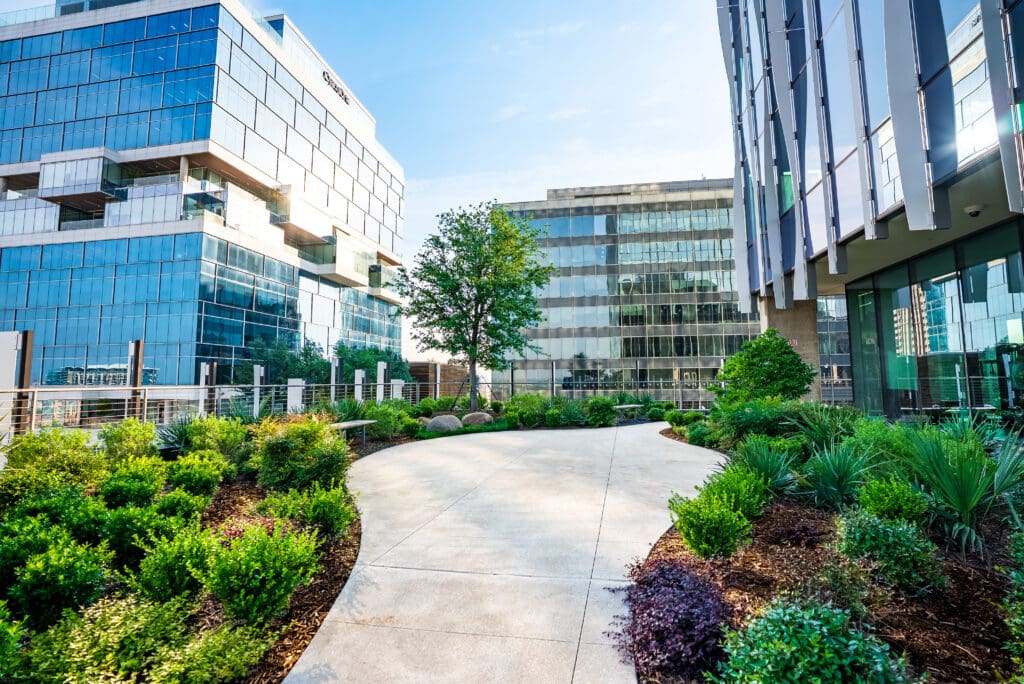
Throughout the 17,000-square-foot space, tenants can enjoy winding walkways of natural stone that meander through beds of boxwood, abelia, dwarf palmetto, juniper, nandina, and Texas sage. Visitors can slow down and reflect under the canopies of live oaks, star magnolias, and Japanese maples, all selected to balance movement, shadow, and seasonal interest across the rooftop.
Southern Botanical’s work on this rooftop garden earned them one of the three prestigious Judges’ Awards presented in 2025, which are selected from the highest-scoring Gold Award winners of the Awards of Excellence.
“It’s truly an honor to be named a Judges’ Award winner,” says Seth Jackson, operations manager for Southern Botanical. “We take great pride in our work, and we always strive to push ourselves to the highest standards. This project really exemplifies that commitment, and it’s incredible to have NALP recognize our efforts. Our entire team has been celebrating from leadership to our frontline members! Everyone is excited to display this award proudly with our clients and in our office.”
Working Alongside Other Trades
Jackson says their total time on the project, including pre-construction, was about 15 months, while the installation phase lasted roughly five to six months.
From the earliest planning stages, Southern Botanical worked closely with the project partners as multiple trades were working in the tightly confined space. They coordinated detailed schedules, maintained open lines of communication and executed the installation in carefully planned phases.
To minimize timeline disruptions, Southern Botanical self-performed every aspect of the landscape installation, including planting, irrigation, drainage, hardscape, and site furnishings. No subcontractors were used for these tasks, giving the company full control over quality, safety, and scheduling.
“We decided to self-perform a lot of this work because at Southern Botanical, we really hold ourselves to a higher standard,” Jackson says. “One of our core values is to never stop growing, so when a challenge comes up, we dive right in. Honestly, nothing about this project intimidated us. We knew it was a high-end property, and we felt confident that we were the right team for both the installation and ongoing maintenance.”
At times, the company was running three to four crews on the site. For the majority of the project, they had one irrigation crew of around four and one landscape crew of roughly three workers.
“Crew sizes shifted depending on the phase we were in and what the work required that day,” Jackson says. “The site itself was extremely tight, with multiple trades operating at the same time, so managing crew size and ensuring we had enough room to work was a consistent challenge we had to overcome.”
Addressing Access
One of the biggest challenges was the client’s desire for instant impact on the site. Jackson says they had multiple 8-inch caliper Southern live oaks that had to be installed on the 12th floor, which created significant logistical and installation challenges on the structure.
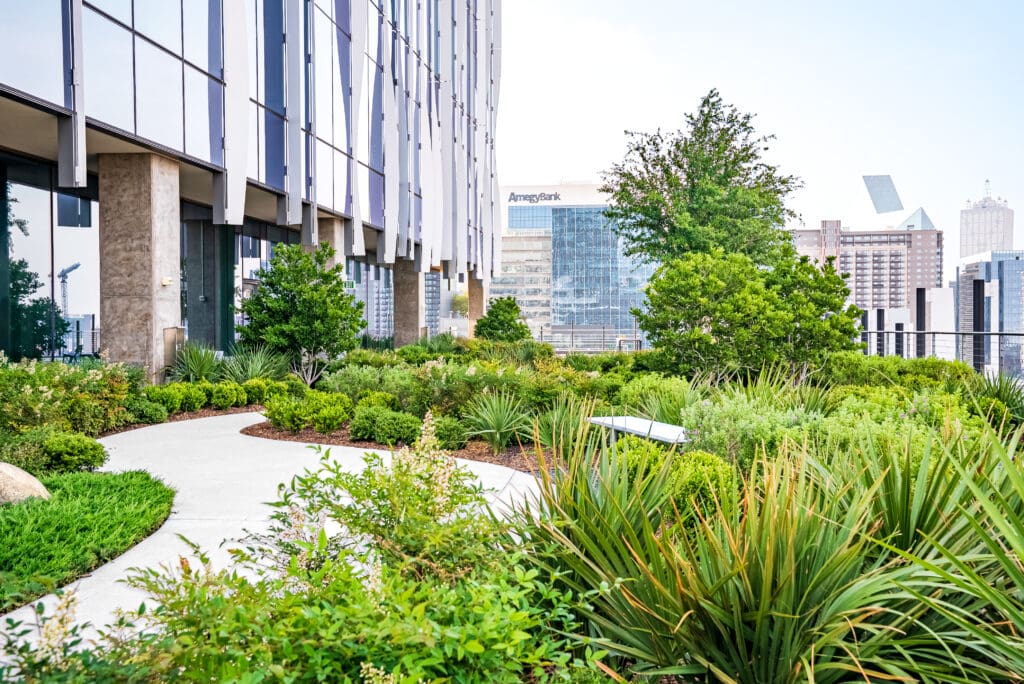
“Even on the ground floor, we were installing 6- to 8-inch live oaks in tree wells surrounded by concrete,” Jackson says. “Managing tree size, sourcing, placement, and installation was a complex process. It wasn’t just our landscape installation team involved; our in-house arborists played a key role as well. Many trees were on deep root programs during this time, and we still monitor and care for them even now.”
The elevated nature of the project also heightened the complexity of the project. Materials, including mature trees, large boulders, custom stonework, and specialty paving, had to be installed via crane and bucket hoist. Each element needed to arrive on schedule and be maneuvered into place on the terrace with no margin for error.
Jackson says because so many other subcontractors were on site, the only time they could efficiently get crane access to unload was overnight. Their crews worked roughly nine nights overnight, typically from 1:30 a.m. to about 7 a.m. so they could efficiently move materials while keeping the project on track.
“Our team worked closely with the general contractor to meet the project’s tight deadline,” Jackson says. “For the major push, about three weeks before Christmas, we used time and material tickets to ensure all overtime was tracked and properly compensated. This collaborative approach allowed everyone to coordinate effectively and keep the project on schedule, and I’m proud of the strong partnership that made it possible.”
This article was published in the March/April/May issue of the magazine. To read more stories from The Edge magazine, click here to subscribe to the digital edition.