

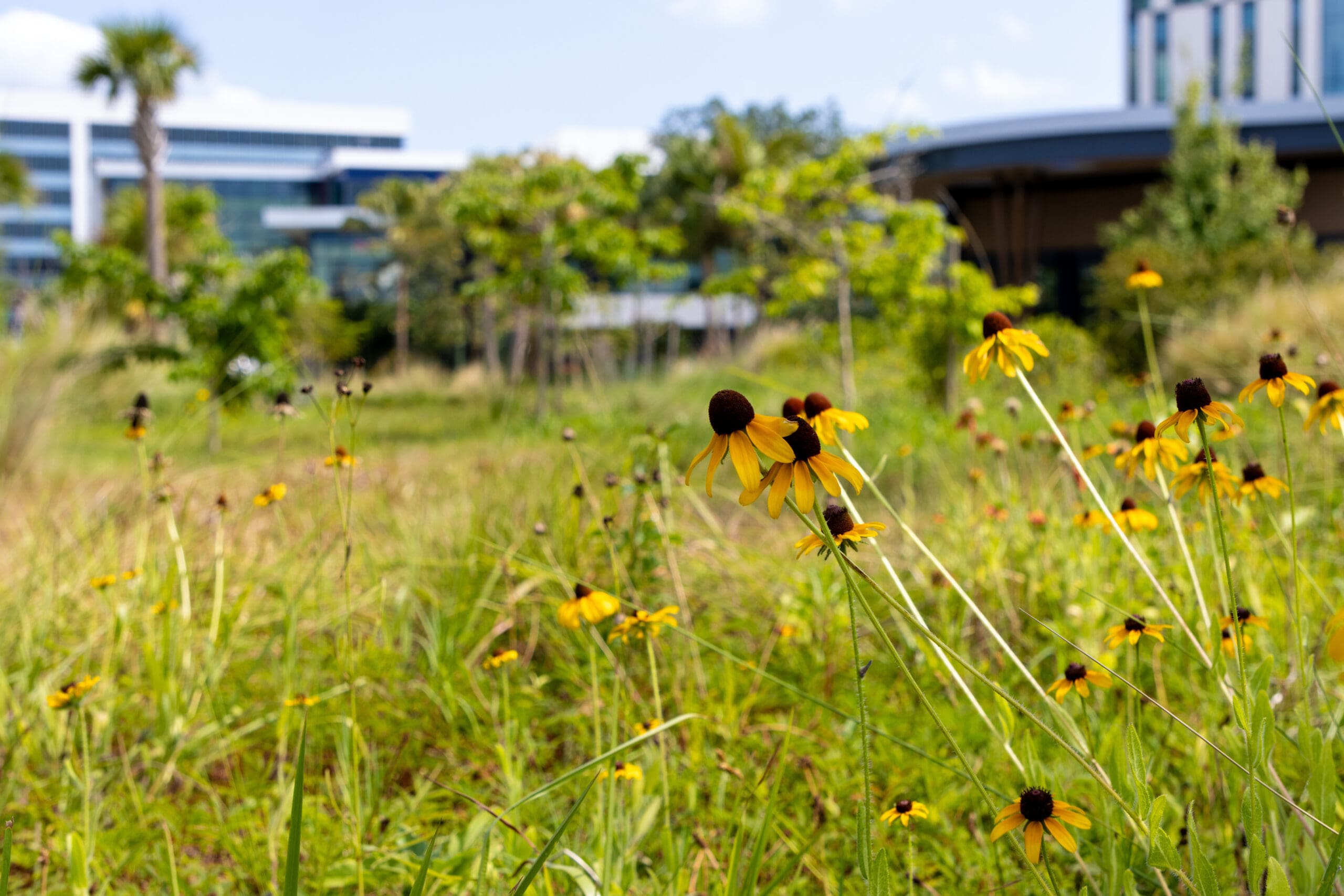
Healthy plants depend on pollinators and other wildlife to flourish. However, much of the American native prairie, woodlands, and wetlands have disappeared, replaced by concrete, asphalt and non-native plantings that require more upkeep and do not support the local ecosystem.
“In England in the 1700s and 1800s, the norm was to have lawns around the houses, so that custom was brought to America,” says Ron Bowen, founder of Prairie Restorations, Inc., in Princeton, Minnesota. “There was so much native habitat that people took it for granted, but over time, it disappeared with urban sprawl.”
Bowen, who has been installing and maintaining natural landscapes in the Midwest since 1977, is seeing his business continue growing as more customers seek to return their properties to their native states.
Why Is Ecological Restoration Growing in Popularity?
A focus on sustainability is the main reason for the increasing interest. According to the Society for Ecological Restoration (SER), ecological restoration is a key tool to limit or reverse the progress of climate change.
“Pollinators need native plants,” Bowen says. “As plants disappear, pollinators disappear. Without pollinators, some species of plants will become diminished and extinct. We need a diversity of insects and plants for air quality, water quality, and to save our world. We don’t have control of our environment, even if we think we do. As things become more jeopardized, they become more valued and more interesting to people.”
Some people are attracted using well-adapted plants for landscapes in an effort to simplify their lives and save money. Prairie land requires no fertilizer and uses less water.
“Natural landscapes can be beautiful, but some of our customers aren’t even in it for the aesthetic,” Bowen says. “For them, it’s more about providing wetlands, savannas, or prairies as a habitat for birds, insects, and plants. The aesthetic is secondary to air quality and water quality. For a lot of people, it’s a way of being part of the solution.”
How to Get Started in Landscape Restoration
For landscape professionals who want to provide native restoration services for customers, the first step is to become deeply familiar with the native or well-adapted plants in the areas where they operate. Many states have wildflower societies that may offer educational opportunities focused on native or well-adapted plants to the region. National and international organizations like SER also provide educational resources.
“Plant knowledge is key,” Bowen says. “Beyond that, it’s standard landscaping, such as weed control and just being patient.”
The best way to design a plan for a customer who wants to restore their native landscape is to start by identifying the plant community they’re interested in, rather than specific plant species. That might be a prairie, savanna, woodland, wetland, or other plant community. After working with the customer to identify the right plant community, the next step is to find the right species for that community to create an interesting garden, Bowen says.
There are a number of online sources for native seeds and plants, such as Prairie Nursery in Westfield, Wisconsin. Some universities and government organizations, such as the Tallgrass Prairie Center at the University of Northern Iowa, also provide access to native plants or plant education for people aiming to restore lands to their original state.
Providing native landscape restoration usually involves several different services, including research, educating the customer, purchasing a mix of seeds and plants, removing existing plantings (which are often exotic), installing new native or well-adapted plants, and maintaining the landscape.
Looking to the Future
Is adding prairie restoration a worthwhile pursuit for your landscaping business? Bowen’s experience says yes. His company, completely focused on native landscaping, has grown to 100 employees and five locations across Minnesota. Customers interested in native plantings and ecological restoration include homeowners, business owners, solar fields, cemeteries, golf courses, and others.
“I have no doubt this area of landscaping will keep growing,” Bowen says. “The world needs this. People are still waking up to the reality of the environmental challenges that lie ahead and the need for a diverse ecosystem. In the future, landscape restoration will be in demand no matter where you are.”
