

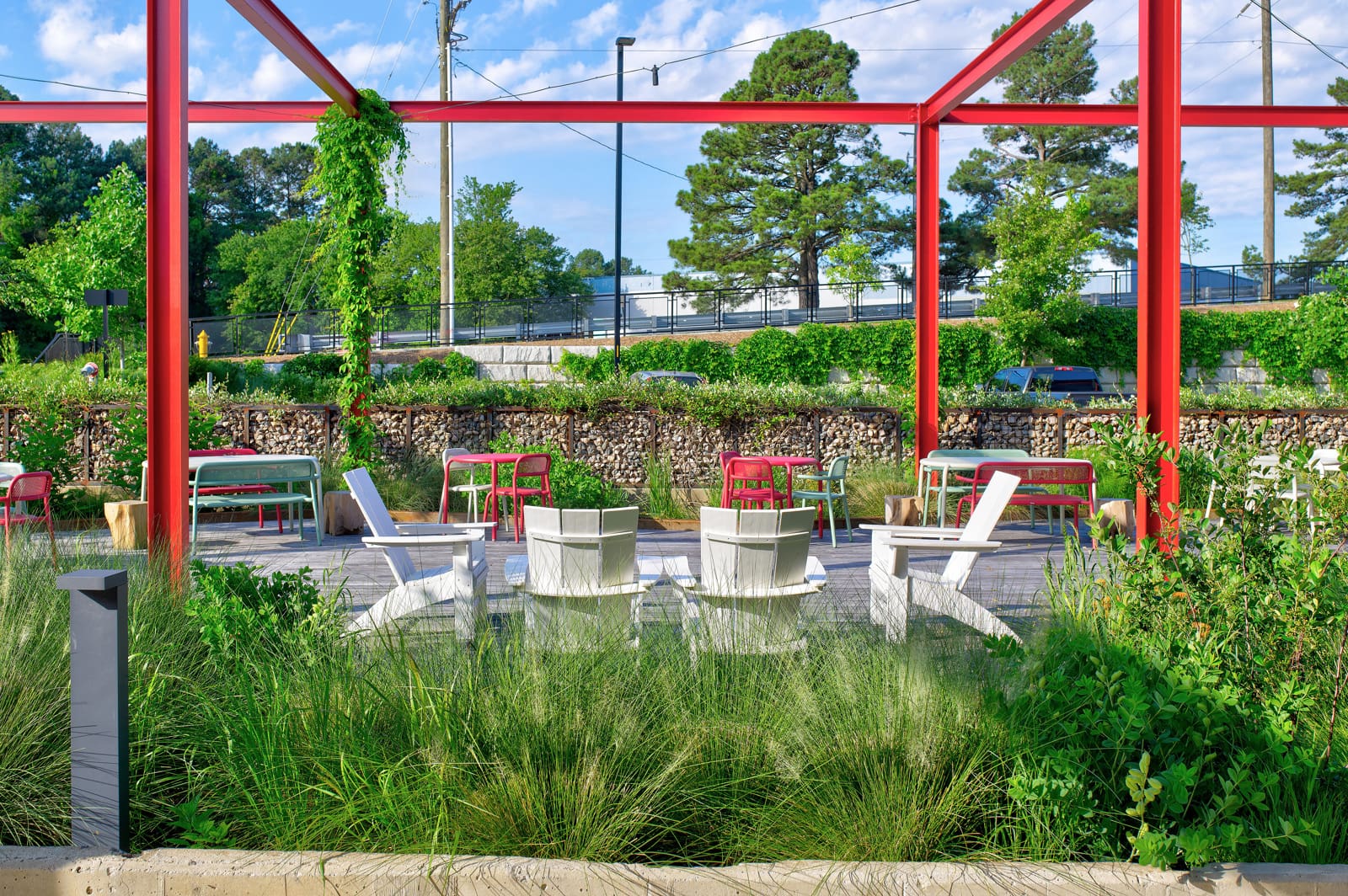
Photo: Myatt Landscaping & Construction
Leadership in Energy and Environmental Design (LEED) is one of the most comprehensive certifications out there, denoting whether a building is energy- and resource-efficient. Most consider indoor elements to be the most important, but landscaping and outdoor influences carry equal weight.
LEED Certification Requirements and Credits
LEED certification criteria vary based on the type of property. Each action earns different credits, which amount to the site’s LEED level. Landscapers earn points toward their LEED certification levels by completing objectives in the credit library. These areas of opportunity are relatively universal for residential and commercial properties and focus more on outdoor factors:
- Sustainable sites: Look at the site holistically and note how each component — such as the types of plants or even outdoor furniture — relates to eco-conscious land development.
- Water efficiency: Consider how outdoor management impacts water consumption and if more sustainable methods are possible.
- Materials and resources: Use local and recycled materials in landscaping projects. Utilizing compost is also a great way to extend the life cycle of already-used materials.
- Energy and atmosphere: Install indoor fixtures — such as faucet aerators or energy-efficient HVAC systems — to control and reduce energy waste.
Crafting Sustainable Sites
Sustainable site management is the most robust and in-depth category. Outdoor professionals must start with a site assessment. The review outlines the land’s health alongside cultural, social and ethical considerations. The document must assess the following:
- Topography
- Hydrology
- Climate
- Vegetation
- Soils
- Human use
- Human health effects
Once landscapers have this awareness, they can engage in other activities. Preserving the land and reducing the number of disturbances is crucial. This includes invasive construction or resource extraction. Landscape professionals should restore native plants and species. During this phase, they can also incorporate erosion and sedimentation control to reinforce the property.
Landscapers can also heavily influence city temperatures. A recent study examined the impacts of adding 30% more tree cover in 93 European cities. The results suggested that increased tree cover could lower premature deaths related to the urban heat island effect. Enhanced cooling and shading are why planting more trees and making green roofs are suggestions for landscapers aspiring for LEED certification. Here are a few other ways outdoor factors can help a building’s LEED qualifications:
- Minimizing the strength and prevalence of light fixtures
- Installing rainwater harvesting systems
- Using permeable pavers
- Incorporating infrastructure to support public transit and cycling
Tackling Water Efficiency by Monitoring Use
It is estimated that daily residential outdoor water usage across the United States is around eight billion gallons. Commercial properties could require even more. A good portion of it evaporates or gets wasted because the land is not healthy enough to absorb it. Therefore, landscaping should minimize water needs by xeriscaping — focusing on drought-tolerant species and installations. Some plants known for their resilience are:
- Yucca
- Aloe
- Kangaroo paw
- Lavender
- Trumpet vine
Hydrozoning is another vital practice, as this pairs plants with similar water needs together. It prevents overwatering. Many landscapers incorporate smart controllers and sensor-based technologies to automate these processes, which cuts consumption further. Practices like these can be part of a water management plan, which will describe how the landscaping elements are actively reducing energy demands.
Using Smarter Materials and Local Resources
One of the LEED requirements is called Building Product Disclosure and Optimization. This requirement asks that landscapers use materials with Environmental Product Declarations, which explain their source, extraction practices and ecological responsibility.
Ideally, materials are from local organizations using sustainable management and harvesting frameworks. Local soil, metals and other materials are better adapted to the region’s climate and wildlife.
Timing is also critical. Autumn is the best time to manipulate these sensitive materials because temperatures are mild enough to keep plants safe from intense heat and cold. Builders should also consider how landscaping causes construction and demolition waste, primarily with new properties. These projects must reduce their output by recycling and reusing materials as much as possible.
Cleaning the Atmosphere and Optimizing Energy Setups
Planting more trees, shrubs and flowers creates a cleaner atmosphere, as they sequester carbon and some species filter out atmospheric contaminants. All this flora also absorbs heat and provides shade, which helps indoor energy systems work more efficiently. A cooler building means conditions are easier to manage and fluctuate less. Additionally, sturdy, large trees can act as windbreaks, adding another layer of defense against the elements. They prevent damage to the structure and nearby plants or crops.
Innovating Beyond LEED Requirements
The LEED council appreciates it when applicants think outside the box to incorporate energy-efficiency upgrades. Landscapers should consider how they can go beyond what the organization recommends to make structures more ecologically balanced. For example, making the green spaces that surround a property inviting for residents and employees will encourage deeper engagement with nature. Inventive community-focused solutions include adding a community garden, building wildlife habitats to promote biodiversity, and creating educational materials to describe landscaping decisions to the community.
Pursuing LEED-Certified Landscaping
Every one of these actions is in the control of landscapers. The amount of influence outside structures and plants have on indoor air, energy and water is irrefutable, making it just as important as indoor LEED qualifications. Landscape companies can contribute to creating intentional outdoor spaces with these elements to achieve LEED’s stamp of approval.
