

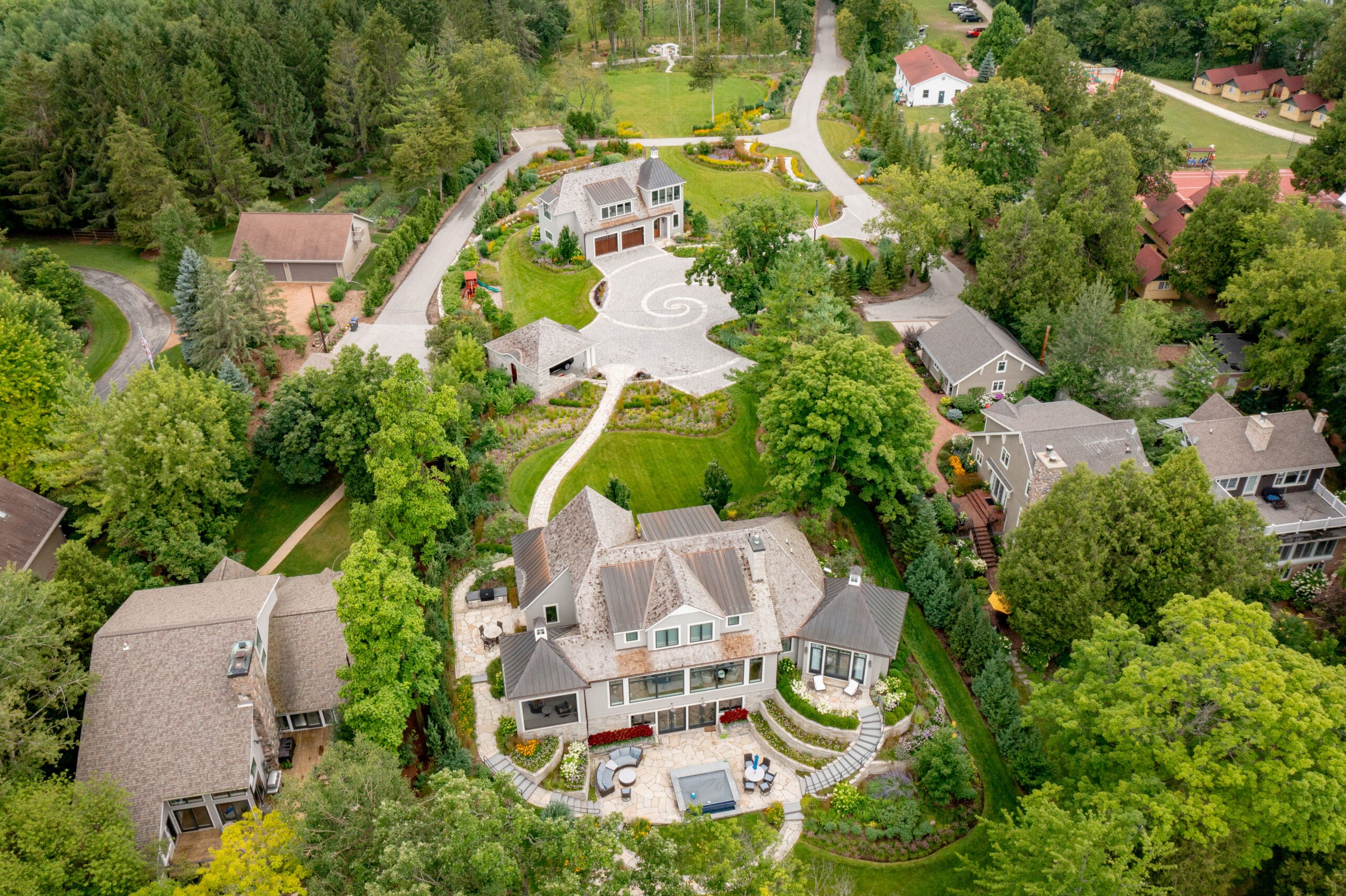
Along the shores of Elkhart Lake, Wisconsin, sits a home transformed from the ground up. Before this project, the property was outdated and featured a woodland of invasive plants and dying ash trees. After working with Landmark Landscapes, based in Sheboygan Falls, Wisconsin, the home has become a vibrant lakefront retreat for the family and their guests.
Landmark’s work earned them a Gold Award in the 2024 Awards of Excellence.
When the owners reached out to Landmark for help, their request was simple: Repair the loose bricks in the paving along the home. Soon afterward, Landmarks’ owner saw the potential in this property and made recommendations for other updates. As the design scope grew, Landmark brought in an architect to improve the curb appeal and inspire the owners to dream big. Before long, the old home was demolished to build a new home and landscape that would serve the family for generations.
As the project began, several challenges came up. The existing zoning laws didn’t allow two dwellings on a single plot, making it difficult to construct a guest house and carport. To solve the issue, Landmark submitted documentation and made a case to the town board to split the lot and allow the new buildings. After navigating the zoning codes and ordinances, they created a new tax parcel, allowing the guest house and carport to be added.
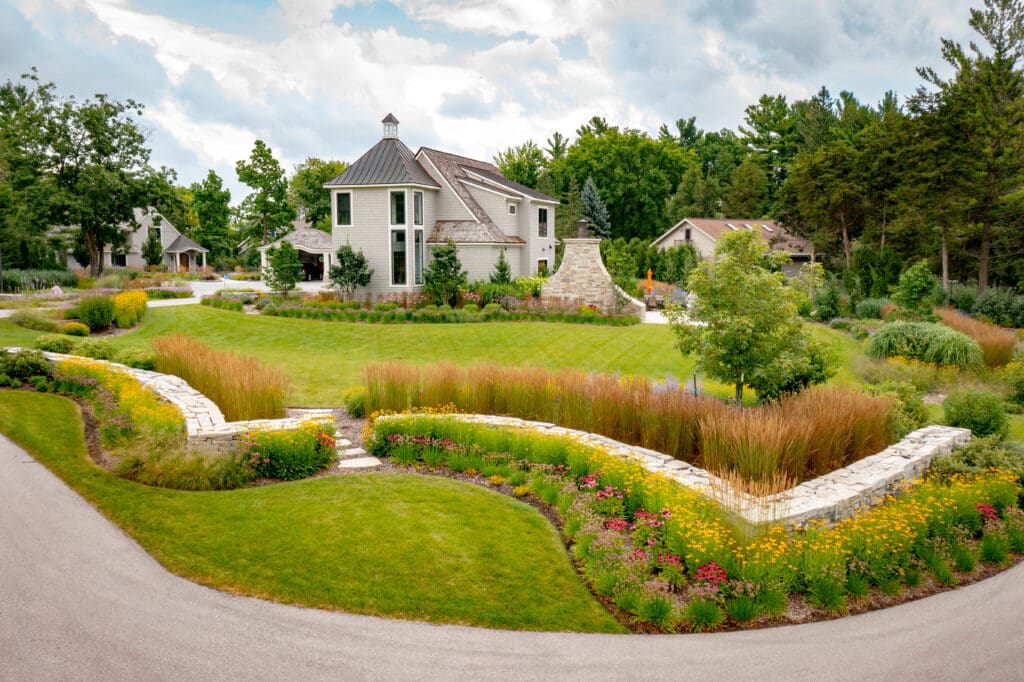
Drainage was another concern, as the sites grade caused water to drain through the yard, house, and into the lake. After surveying the property, the team designed the landscape to reroute the water into a nearby wetland. To make the changes, they added subtle berms, swales, and culverts that would take the water under the driveway and access road. With this design, the wetland acts as a natural filtration system.
The entrance to this property is a shared access road for this family and their neighbors. For the design to work, the road had to be rerouted to maximize space. With the new design, the access road meanders toward the house and creates a sense of mystery since visitors can’t see the home until the last second. The neighbors’ benefit, too, since the new road takes them further out and allows for more privacy.
Privacy was a primary focus of the project. Landmark added numerous plantings to create a sense of seclusion with the neighbors being close by. They also worked with the neighbors to ease any concerns about the nearby changes, even adding an overflow parking area for one neighbor.
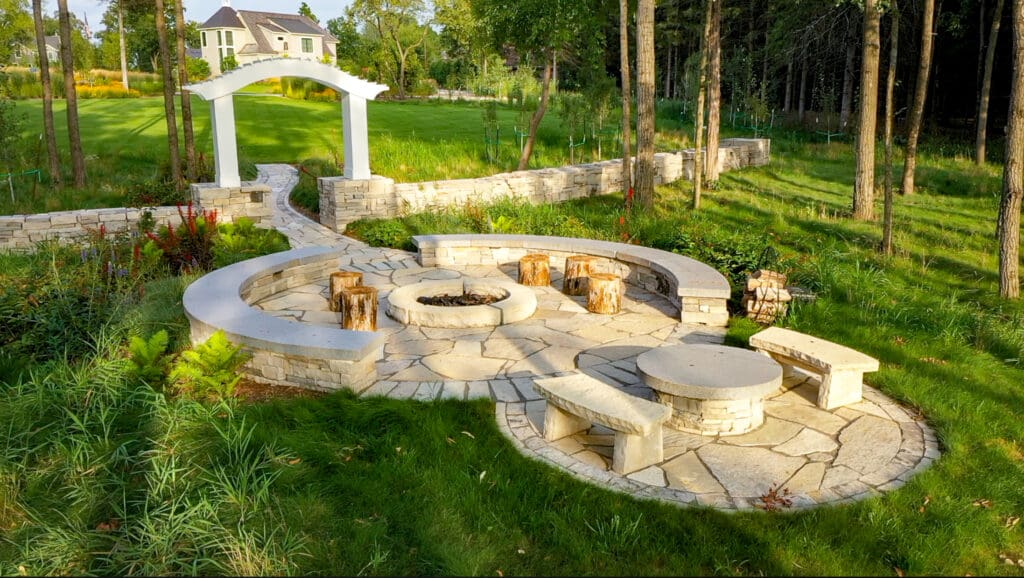
As part of the design, Landmark restored a large woodland area that had been decimated by Emerald Ash Borer (EAB). And it wasn’t just EAB. Buckthorn and other invasives had overrun these woods. After removing the dead ash and the invasives, Landmark added a native prairie to reinvent the space while improving the view. They also removed invasives from a mature aspen grove and planted new aspen. With the restoration, the owners could enjoy a new woodland meadow garden, featuring a stone fire pit, coffee table, and custom benches. A collection of native plants is also found along the walking path in this garden.
The topography near the lake posed challenges, especially on the slopes. Landmark used the hill to create a natural stone patio and retaining walls. For lake access, granite steps lead from the patio to the pier. A mixed bed of annuals and perennials above the retaining wall promotes a natural look.
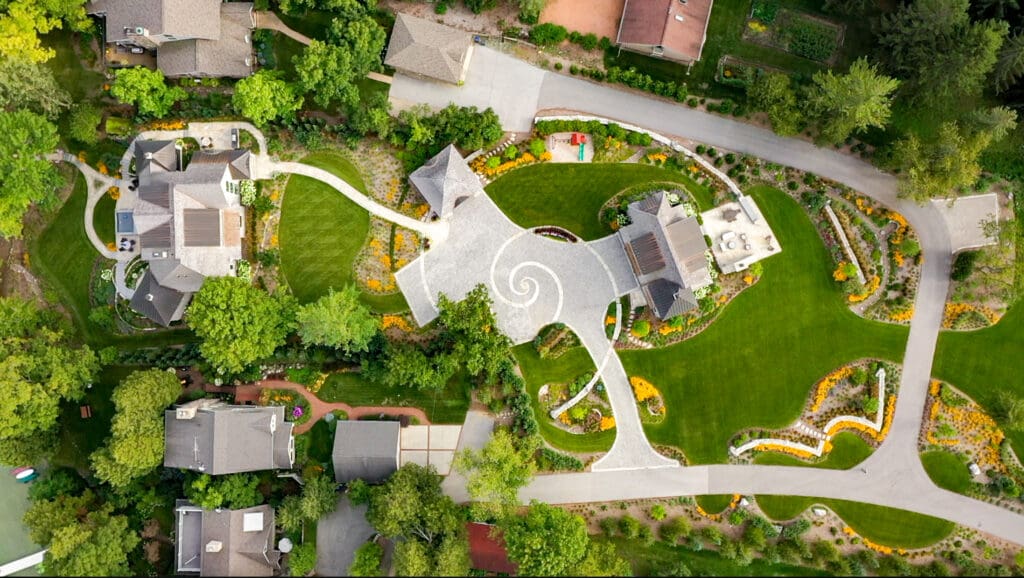
This design has many features, including a Fibonacci spiral that represents order and beauty. The spiral is the centerpiece of the design and lies in the driveway between the guest house and the main home. To create the spiral, Landmark used locally sourced limestone and inlaid within road-grade manufactured paving. Creating the spiral was tricky, so a surveyor was brought in to pinpoint the exact location of the spiral and keep track of the progress during construction. Like other areas of the property, the spiral creates a cohesive flow of nature and order.
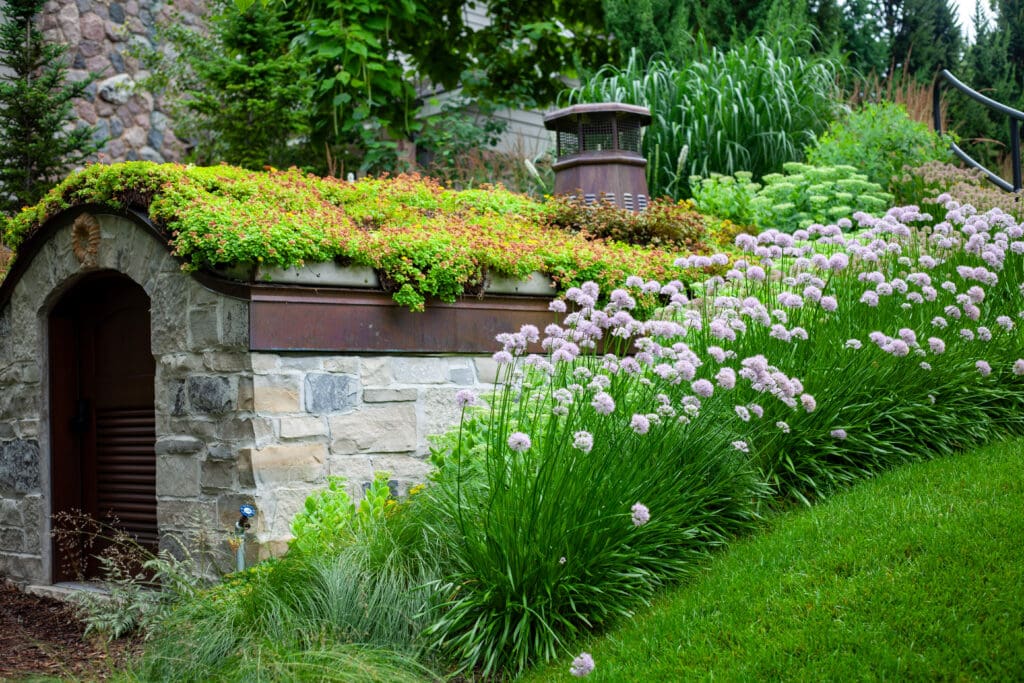
Another unique feature is a stone structure inspired by 19th-century ice houses, which were common in the Midwest. This small building features a green roof covered with a collection of sedums. Above the front door is a shell fossil from Madagascar that adds even more history to the structure.
In other areas of the property, the patios offer something for everyone. Some are large and spacious, while others are small and intimate to create a roomlike ambience. While each patio varies, the theme remains consistent with beds of plants that soften each space and provide a peaceful spot to unwind.
From the moment a visitor arrives, they’re greeted with drifts of perennials and shrubs along the driveway. These beds have distinct patterns that resemble the circular design of the spiral, giving them a carefree but maintained look. Since the owners often visit in summer, these plants were selected to hit their peak color during the warm months. As a bonus, these beds curve around the property edge, allowing the neighbors to enjoy the blooms.
With such a large project, the team relied on close communication to navigate the tight spaces and work with other contractors. As usual, attention was given to wearing PPE and visible clothing. This project also took place during the height of COVID-19, which limited how many people could be on-site. Despite the many obstacles, Landmark completed the project by the deadline while ensuring the family received a timeless retreat.
Interested in participating in the Awards of Excellence? Be sure to enter your projects when entries open in early 2025.
